
If your mower starts wandering and the steering feels nervous, Toro 77291 twitchy steering usually points to a small mechanical problem, not a major failure. The good news is that most cases can be traced with a few simple checks.
This kind of steering problem often comes from loose parts, worn front wheel components, uneven tire pressure, or a bent linkage. You can narrow it down fast if you inspect the right places in the right order.
Below, you’ll find the most likely causes, how to test each one, and the fixes that actually work. You’ll also see what to check first, what tools help, and when the problem may need a dealer or repair shop.
For wider troubleshooting context, compare this guide with Toro TimeCutter Steering Problems: Causes, Fixes, and Troubleshooting Tips, Toro zero turn safety switch problems, Toro TimeCutter steering problems.
Start with the most common steering problems
When a Toro rider feels twitchy, the most common cause is usually in the front end. Small play in a tie rod, a wheel bearing, or a steering bushing can make the mower feel unstable even at slow speed.
Before you dig deeper, look at the simple things first. A tire that is 3 to 5 PSI off on one side can change how the mower tracks, especially on flat lawns where the steering wheel feels extra sensitive. Uneven tire wear can do the same thing.
Also check whether the problem happens all the time or only on slopes, rough ground, or when turning one direction. That detail matters. A steering issue that shows up only on left turns often points to one side of the linkage, not the whole system.
What “twitchy” usually feels like
Twitchy steering is not the same as stiff steering. It means the mower reacts too quickly, darts slightly, or feels hard to hold in a straight line. You may make a small correction and the mower overreacts.
That response can come from too much free play in the steering system. It can also happen when the front tires are not matched closely enough in pressure or wear. On a riding mower, small differences matter more than many owners expect.
Check the easy fixes first
Start with the items that take less than 15 minutes. These checks often solve the problem without any parts replacement. They also help you avoid tearing apart a steering system that is actually fine.
1. Match the tire pressure
Use a reliable gauge and check both front tires. Keep them at the same pressure, and follow the pressure listed in the owner’s manual for your exact machine. Even a small mismatch can make the mower drift or feel jumpy.
If one tire is low, the mower may lean and respond oddly when you turn the wheel. If one tire is overinflated, it can reduce contact with the ground and make steering feel too sharp. This is one of the easiest fixes, and it gets overlooked often.
2. Inspect the front tires closely
Look for uneven tread wear, cracks, bulges, or a tire that is developing a flat spot. A worn tire can grab the ground in an uneven way, which feels like twitchy steering.
Spin each wheel by hand if you can. Watch for wobble. If the wheel looks like it moves side to side, the problem may be the wheel itself, the hub, or the bearing rather than the steering wheel.
3. Check for obvious loose hardware
Look at the steering wheel, front axle area, tie rod ends, and all visible fasteners. A loose bolt can create a small delay, then a sudden correction, which feels like the steering is jerky.
Use your hand to gently move the wheel and front linkage side to side. If you hear a clunk or feel extra slack before the wheels move, that is a sign of play somewhere in the system.
Inspect the front steering linkage and wheel components
If the easy checks do not fix it, move to the parts that control direction. On many riding mowers, steering twitchiness comes from worn joints or small amounts of looseness in the linkage. That looseness does not need to be large to affect handling.
A steering system can still work while being worn out. The problem is not always failure. More often, it is added play. A few millimeters at one joint can feel much bigger at the steering wheel.
Tie rods and ball joints
Check each tie rod end and joint for movement. A good joint should move smoothly but not flop around. If you can wiggle a joint by hand and see visible slack, it may need replacement.
Look for torn boots, rust, or dry joints. Dirt and water can wear these parts faster, especially if the mower is stored outside. Once the joint gets loose, the wheels may not return to center smoothly.
Front axle bushings and kingpin areas
Some steering problems come from the pivot points that let the front axle move. If these bushings or pivot pins wear down, the front end can shift unexpectedly on uneven ground.
This can make the mower feel like it darts from one side to the other. The steering wheel may seem fine, but the front wheels are not staying stable. If the front axle has visible side play, that is a strong clue.
Wheel bearings and hubs
A worn wheel bearing can create looseness, noise, and a wandering feel. Lift the front of the mower safely and try to rock each wheel at the top and bottom. If there is movement, check the bearing or hub.
Bearings do not always make loud noise when they fail. Sometimes the first sign is steering weirdness. That is why wheel play should always be checked before assuming the steering column is the issue.
Look at alignment, tracking, and steering geometry
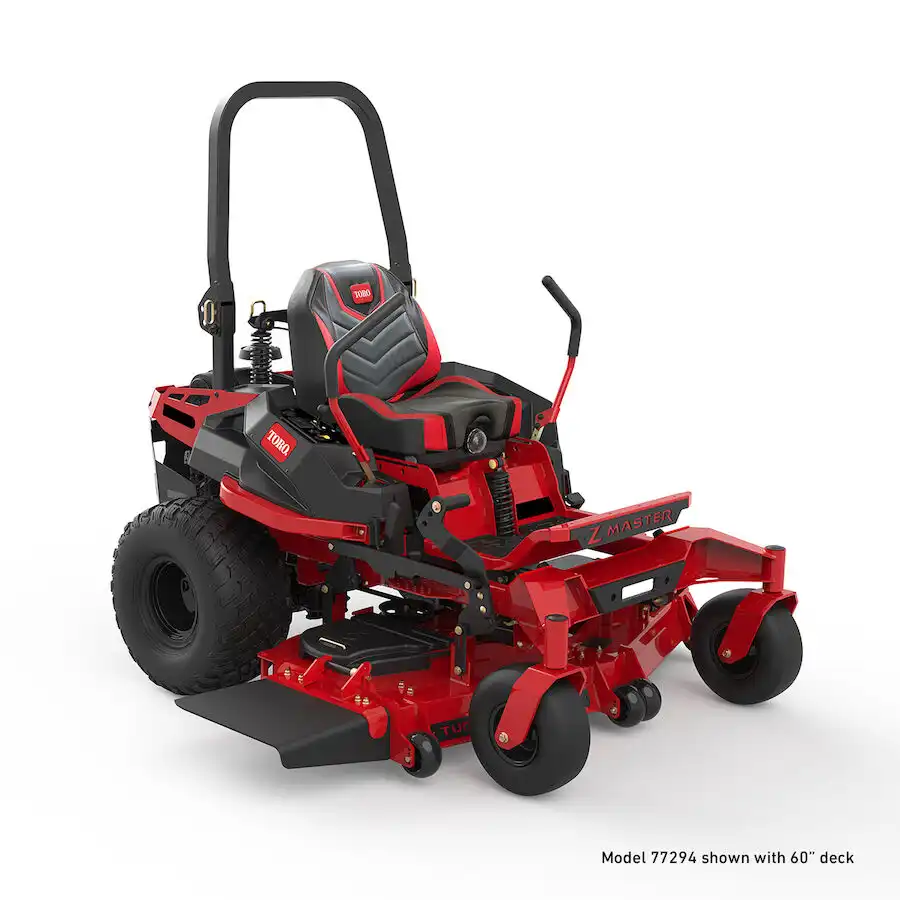
Even if every part is tight, the mower can still steer badly if the front end is out of alignment. Tracking is how straight the mower moves when the steering wheel is centered. If tracking is off, the mower may feel twitchy because you keep correcting it.
Alignment problems often show up after hitting a curb, a stump, or a hole. They can also appear after repairs if a tie rod was installed slightly out of position. A small angle change can make the mower feel much less stable.
Credit: oconnorslawn.com
Front wheel toe setting
Toe refers to whether the front wheels point slightly inward or outward. Too much toe-in or toe-out can make steering feel nervous. The mower may respond too quickly, then settle poorly.
Check the wheel position against the owner’s manual if adjustment is possible on your model. If the toe is out of spec, correct it carefully and retest. Do not guess if the system uses a fixed setting and no easy adjustment.
Steering wheel free play
Turn the steering wheel left and right while watching the front wheels. If the wheel moves a lot before the wheels respond, there is likely slack in the column, gear, or linkage. If the steering feels overly sensitive with almost no free play, the problem may be elsewhere.
Too much free play can cause the operator to overcorrect. Then the mower swings back and forth. That motion feels twitchy, but the root cause is usually delayed response followed by sudden movement.
How to tell if it is an alignment issue
A simple test helps. Drive the mower on a flat, open area at a slow steady speed. If it pulls one way consistently, alignment or tire mismatch is likely. If it only feels jumpy when you make small corrections, looseness in the steering parts is more likely.
| Symptom | Most likely cause | What to check first |
|---|---|---|
| Pulls left or right | Tire pressure, alignment, bent tie rod | Front tire pressure and wheel tracking |
| Feels nervous on small turns | Loose linkage or worn bushings | Tie rod ends and steering column play |
| Steers fine on smooth ground, bad on rough ground | Worn wheel bearings or axle play | Front wheel and axle movement |
| Sudden oversteer after a repair | Improper adjustment or misinstalled part | Recent work on steering linkage |
Review the steering column and internal wear points
If the front end checks out, the steering column itself may be the issue. Inside the column or gear area, wear can create uneven response. You turn the wheel a little, nothing happens, then the mower jumps.
That kind of response is common when a sector gear, shaft, or internal bushing is worn. It can also happen if the steering wheel is loose on the shaft. The result is not just slack. It is inconsistency.
Steering wheel and shaft connection
Make sure the steering wheel is tight on the shaft. A loose wheel can slip slightly before it fully engages. That makes the mower feel unpredictable because your hand motion and the wheel motion are no longer matched.
Check for cracks around the wheel hub and signs of movement at the shaft. If the steering wheel rocks independently of the shaft, tighten or replace the mounting hardware as needed.
Internal gears and bushings
Some mowers use a gear-and-sector setup or a similar steering mechanism. When those teeth wear unevenly, the mower may respond better in one part of the turn than another. That uneven response often feels twitchy.
If the steering gets rough, catches, or changes feel at certain points in the turn, internal wear is a strong suspect. At that stage, repair may require parts replacement rather than just adjustment.
For official model-specific guidance, the manufacturer support page is the safest place to confirm steering-related service details and parts for your exact machine.
Fixes that usually solve the problem
Once you find the cause, the repair is often straightforward. The key is to fix the worn or loose part, not just hide the symptom. A quick adjustment may help for a while, but true steering control depends on tight, stable front-end parts.
Credit: oconnorslawn.com
Replace worn tie rod ends or bushings
If a joint has visible play, replacement is usually the best fix. Do not try to “live with it” if the slack is obvious. Steering wear tends to get worse faster once it starts.
After replacement, retest the mower on flat ground. The change should be clear. The steering wheel should feel more direct, and the mower should stop wandering as much.
Correct tire pressure and replace damaged tires
If the tires are mismatched or worn badly, correct the pressure first. If that does not help, replace the damaged tire. On a riding mower, tires are not just for support. They affect steering response and traction.
Do not ignore a cracked sidewall or a tire with uneven wear on one side. That can keep causing steering problems even when the rest of the mower is fine.
Tighten or replace loose steering hardware
Use the proper tools and tighten every relevant fastener to the correct spec if you have the manual. If a bolt keeps loosening, the hole may be worn or the part may need replacement. Re-tightening a damaged connection is only a short-term fix.
One non-obvious issue: a bolt can feel tight while the part still has movement because the mounting surface is worn. That is why visual and hands-on checks matter, not just a wrench.
Repair bent parts after impact
A bent tie rod, spindle, or axle component can make steering feel odd even if it is only slightly bent. This often happens after striking a curb, rock, or hidden root. The mower may still drive, but it will not track cleanly.
If you suspect a bent part, compare both sides. Symmetry matters. If one side looks different in angle or length, that is often the clue.
How to troubleshoot in a clean order
Use a simple process so you do not miss the real problem. Start from the easiest checks and move toward deeper mechanical wear. That saves time and prevents unnecessary parts replacement.
- Check front tire pressure and match both sides.
- Inspect the front tires for wear, cracks, and wobble.
- Look for loose bolts, tie rod ends, and visible play.
- Lift the front end safely and test each wheel for bearing or hub movement.
- Watch the steering linkage while turning the wheel slowly.
- Check the steering wheel, shaft, and internal gear area for slack.
- Inspect for bent parts if the mower recently hit an object.
This order works because the most common causes are also the easiest to confirm. A lot of steering complaints come from the front wheels and linkages, not from a major steering failure. Finding the actual source is faster than replacing multiple parts at random.
Safety notes while inspecting
Always park on level ground, shut the engine off, remove the key, and set the parking brake before checking under or around the mower. If you lift the front end, support it with proper stands. Never rely on a jack alone.
Keep hands clear of pinch points while someone else turns the steering wheel. Small movements can still trap fingers. If a part is bent or cracked, do not keep testing it at speed.
Common mistakes that make twitchy steering worse
One common mistake is replacing only one worn part when the rest of the linkage is also loose. The mower may feel better for a short time, then the problem returns. Front-end wear often happens in more than one spot.
Another mistake is overinflating the front tires to “improve” steering. That can make the mower more sensitive and reduce grip. More pressure is not always better.
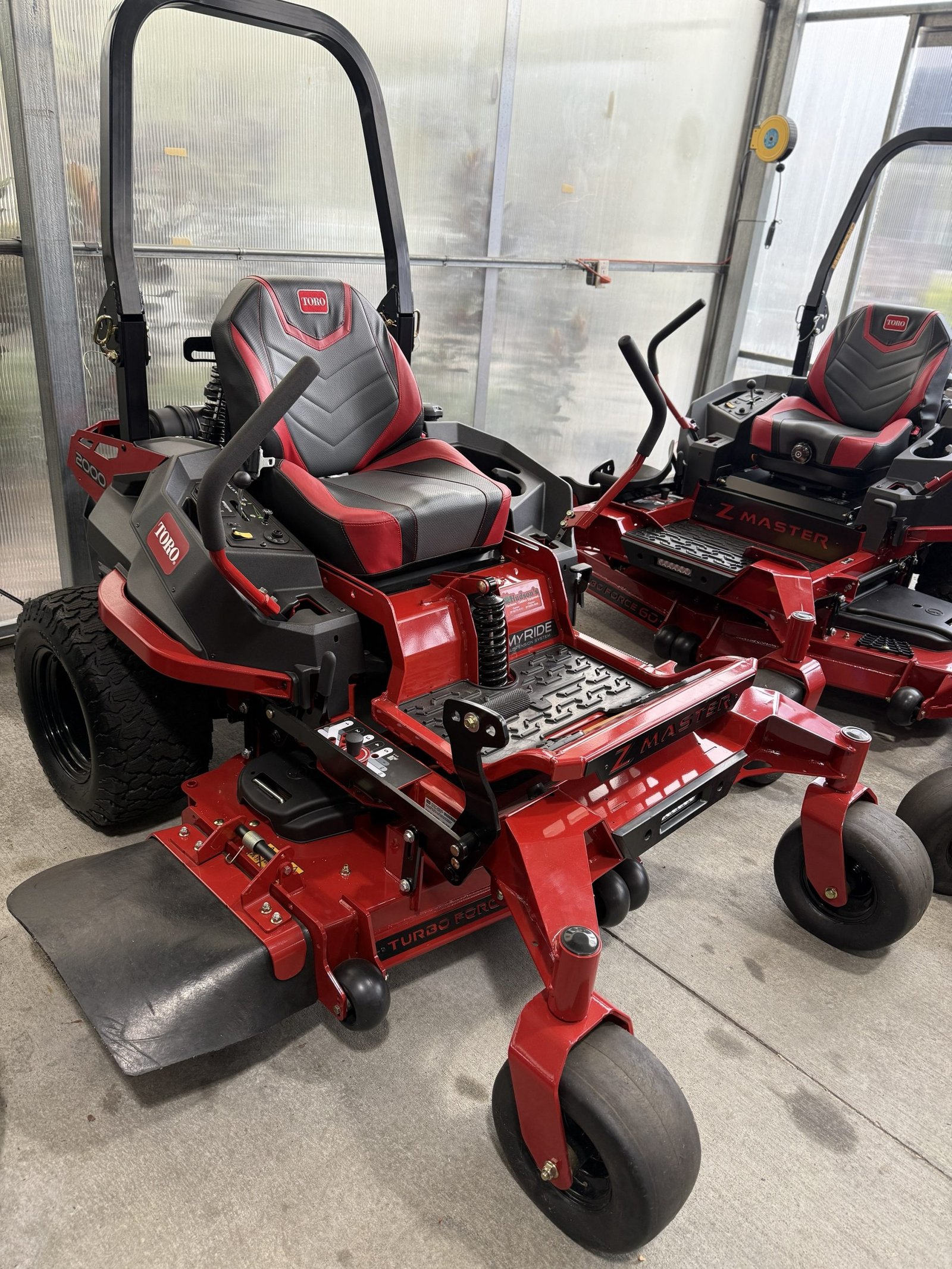
A third mistake is ignoring how the mower was stored. Long outdoor storage can cause rust, dry joints, and tire flat spots. If the machine sits for months, steering issues can show up even without heavy use.
Credit: hudsonshardware.com
When the problem needs professional help
If you find cracked steering components, a bent axle, or damage inside the steering column, a dealer or mower repair shop may be the better choice. These parts affect safety and control, so a bad repair can create bigger problems later.
Professional help is also a smart move if the steering feels fine at rest but becomes unstable only under load or at speed. That can point to a hidden alignment or structural issue that is hard to confirm without proper tools.
For general mower safety and operator guidance, the CPSC offers useful owner safety information through its lawn mower safety guidance.
Final thoughts on restoring steady steering
Most cases of Toro 77291 twitchy steering come down to small worn parts, bad tire balance, or loose front-end hardware. The fix is usually found by checking the mower in a careful order, starting with pressure and ending with internal wear.
Once the loose part is corrected, the mower should feel calmer, more predictable, and easier to hold in a straight line. If you keep the front end tight and the tires matched, the steering will usually stay stable much longer.
After the main fault is fixed, run the machine briefly under light load and recheck the related belt, wiring, fuel, fluid, and safety-switch areas before returning it to normal work.
FAQs
Why does my Toro 77291 steering feel twitchy on smooth ground?
The most common reason is too much play in the front-end parts or uneven tire pressure. Smooth ground makes small steering flaws easier to feel, so looseness shows up fast.
Can low tire pressure cause twitchy steering?
Yes. If one front tire is lower than the other, the mower can pull or react too sharply. Even a small pressure difference can change how stable it feels.
What part fails most often when steering gets loose?
Tie rod ends, bushings, and wheel bearings are common wear points. These parts can develop slack slowly, which makes the mower harder to control before they fully fail.
Should I replace both front tires at the same time?
If one tire is badly worn, cracked, or mismatched in size or tread condition, replacing both is often the better choice. Matching front tires helps the mower steer more evenly.
When should I stop troubleshooting and call a repair shop?
Call for help if you find bent steering parts, cracked metal, or internal steering wear that you cannot inspect safely. If the mower feels unstable at speed, a professional inspection is the safer option.