
If your mower is moving slowly, slipping on hills, or refusing to drive, you are likely dealing with Ariens YT1238 hydrostatic transmission problems. The good news is that many of these issues come from a few common causes, and several can be checked at home before you assume the transmission is worn out.
The Ariens YT1238 uses a hydrostatic drive, which means it moves with fluid pressure instead of a gear shift. That design is smooth and easy to use, but it also reacts quickly to low fluid level, dirty oil, weak drive belt, air in the system, or simple linkage issues. Knowing the symptoms helps you fix the right thing the first time.
Below, you will find the most likely causes, how to tell them apart, and the fixes that usually bring the tractor back to normal. You will also learn which problems are minor and which ones point to deeper internal damage.
For wider troubleshooting context, compare this guide with Ariens hydrostatic transmission problems, Hydro Gear ZT-3100 problems.
How the hydrostatic drive on the YT1238 should behave
The hydrostatic transmission in the Ariens YT1238 is designed to give smooth speed control without shifting gears. When it is working properly, the tractor should start moving almost immediately when you press the pedal, keep a steady speed under normal load, and change direction without jerking.
That smooth behavior depends on three things working together: clean hydraulic fluid, a tight and correctly routed belt, and a healthy pump-motor system inside the transmission. If one of those weakens, the mower may still drive, but it will feel lazy, noisy, or inconsistent. This is why hydro problems often start small before they become obvious.
One detail many owners miss is that hydrostatic systems often act worse when hot. A tractor may drive fine for 10 minutes, then lose power after 30 to 40 minutes of mowing. That pattern usually points to thinning fluid, air in the system, belt slip, or internal wear rather than a simple pedal issue.
Most common signs of transmission trouble
Before you open anything up, watch for the symptoms. The pattern tells you a lot. On the YT1238, the most common Ariens YT1238 hydrostatic transmission problems show up as slow movement, weak hill climbing, delayed response, or uneven speed.
1. Tractor moves slowly in both forward and reverse
If forward and reverse both feel weak, the problem is often not the direction control. It is usually low fluid, trapped air, belt slip, or a transmission that is no longer building enough pressure. This is the classic “it moves, but barely” complaint.
2. Speed drops on slopes or in thick grass
Hydrostatic systems lose efficiency under load when something is wrong. If the YT1238 slows down on hills or in tall grass but seems okay on flat ground, the belt may be slipping, the fluid may be old, or the transmission may be overheating.
3. Pedal feels normal, but the mower barely moves
This symptom often points to a linkage problem or a belt issue. The pedal may be transferring motion correctly, but the transmission is not receiving full input. In some cases, the trunnion or control linkage is worn or out of adjustment.
4. Jerking, surging, or hesitation
Jerky movement usually means air in the system, dirty fluid, or a control problem. A hydro drive should feel smooth. If it pulses instead of flowing, the transmission is struggling to maintain steady pressure.
5. Whining, grinding, or unusually loud operation
A light hydro whine can be normal, but a loud new noise is not. If the sound gets worse as the tractor warms up, the transmission may be low on fluid or internally worn. Grinding is more serious and can mean bearing or pump damage.
For safety and maintenance guidance on riding mower operation, the official lawn mower safety guidance from the U.S. Consumer Product Safety Commission is a useful reference.
What usually causes Ariens YT1238 hydrostatic transmission problems
Most hydrostatic issues on this model come from a short list of causes. Start with the simplest checks first. In many cases, the transmission itself is still fine, and the real problem is outside the unit.
Low or contaminated hydraulic fluid
Hydrostatic systems depend on the right fluid level and clean fluid. If the level is low, the transmission can draw air, which causes weak drive, noise, and hesitation. If the fluid is dirty or broken down, it loses its ability to transfer pressure smoothly.
Dirty fluid is especially common on older machines that have worked on hot days or after long storage. Heat, moisture, and small internal wear particles all shorten fluid life. That is why a tractor may seem fine one season and start acting weak the next.
Drive belt wear or incorrect tension
The belt is often the hidden cause behind a “bad transmission.” If the belt is glazed, stretched, cracked, or loose, it cannot spin the transmission pulley with enough force. That creates slip, especially under load.
A worn belt may also look normal at a glance but fail under pressure. One non-obvious clue is black dust around the belt cover or pulleys. That dust often means the belt is slipping and shedding material.
Air trapped in the hydro system
Air makes a hydraulic system feel spongy. If the tractor was serviced recently, ran low on fluid, or had a hose issue, air may be the reason it drives poorly. Air bubbles compress, so the transmission loses consistent pressure.
Worn linkage, pedal, or trunnion parts
Sometimes the transmission is not the main issue at all. If the control linkage is loose, bent, or worn, the pedal may not move the transmission arm through its full range. That can reduce speed without any internal damage.
This is a common miss because the tractor still responds, just not fully. The driver assumes the hydro unit is weak, when the real problem is that the control arm is not reaching the correct position.
Overheating during use
Hydrostatic units work harder when mowing thick grass, climbing grades, or pulling heavy loads. If cooling is poor or the system is already weak, heat makes the symptoms worse. A tractor that starts strong and fades after 20 to 30 minutes often has a heat-related issue.
Blocked debris around the transmission area, a slipping belt, or old fluid can all raise temperature. Heat does not just reduce performance; it also speeds up wear inside the pump and motor.
Internal wear inside the transmission
If the fluid, belt, and linkage check out, the problem may be inside the hydro unit. Worn pumps, seals, or internal valves can cause weak drive in both directions. At that point, the transmission may need professional rebuild or replacement.
Internal failure usually shows up as a steady loss of power over time, not a sudden one-day failure. It may also show up as loud whining that does not improve after basic service.
How to diagnose the problem step by step
Work from the outside in. That approach saves time and helps avoid unnecessary repairs. Most owners can do the first few checks with basic tools.
-
Check the fluid condition and level.
Look for low level, dark fluid, burnt smell, or visible contamination. If the tractor has been sitting a long time, old fluid may be part of the issue even if the level looks okay.

Credit: ebay.com
-
Inspect the belt path and belt condition.
Look for cracks, glazing, fraying, and slack. Make sure the belt is seated properly on the pulleys and that no debris is trapped in the drive path.
-
Watch the pedal and linkage movement.
Press the pedal and see whether the control arm at the transmission moves fully and smoothly. If it does not, suspect linkage wear, adjustment problems, or a bent part.
-
Test the tractor cold and warm.
If it works better cold than hot, the issue may be fluid breakdown, overheating, or an internal seal that fails once temperature rises.
-
Try the tractor on level ground first, then on a slope.
If the problem only shows up under load, the belt or hydro unit may be losing efficiency rather than failing completely.
A good diagnostic trick is to compare forward and reverse. If both directions are equally weak, think fluid, belt, air, or internal wear. If one direction is worse, the issue may be more likely in the linkage, control setup, or the transmission itself.
Fixes that solve the most common issues
Start with the repairs that give the biggest payoff. Many Ariens YT1238 hydrostatic transmission problems can be improved without removing the transmission. The goal is to restore proper input and pressure before assuming the unit is damaged beyond repair.
Replace old or contaminated fluid
If the fluid is dark, smells burnt, or looks dirty, change it according to the tractor’s service guidance. Use the correct type recommended for the model. Wrong fluid can make the drive worse, not better.
After changing fluid, watch for improvement in smoothness, noise, and hill performance. If the tractor still feels weak after a proper service, move to the next likely cause instead of repeating the same step.
Bleed out air if the system was opened
If air got into the hydro system during service or after a leak, the tractor may need to be cycled gently to purge trapped air. Move slowly, without heavy load, until response becomes steadier.
A common mistake is to test too aggressively right after service. Fast throttle changes or heavy mowing can keep air pockets moving around and make the unit seem worse than it really is.
Replace a worn belt
A slipping belt is one of the easiest problems to miss and one of the easiest to fix. If the belt is glazed or stretched, replace it. If the belt tensioner is weak, inspect that too. A new belt with a bad tensioner will not solve the issue.
After replacement, check that the belt runs true and does not rub against guards or pulleys. Misrouting a belt can create the same symptoms as a failing transmission.
Adjust or repair the control linkage
If the pedal is not moving the transmission control arm through its full range, repair the worn parts or adjust the linkage. This can restore full travel and bring speed back to normal.
Look closely at pins, bushings, and spring points. Small wear in these spots can create a surprisingly large loss of motion. That is why the tractor may feel “half dead” even when the transmission is still healthy.
Improve cooling and reduce load
Clear grass buildup around the drive area and keep the mower deck clean. Heavy debris traps heat. Also avoid towing more than the tractor is designed to handle, because extra load exposes weak hydro components fast.
If the unit runs better after a cool-down break, overheating is probably part of the problem. That does not always mean failure. It may mean the system needs maintenance before it can handle full workload again.
| Symptom | Most likely cause | First fix to try |
|---|---|---|
| Weak in both directions | Low fluid, air, belt slip, internal wear | Check fluid and belt |
| Slows on hills | Belt slip or overheating | Inspect belt and clean debris |
| Jerks or surges | Air in system or dirty fluid | Bleed system and check fluid condition |
| Pedal moves but tractor barely responds | Linkage or control arm issue | Inspect linkage travel |
| Loud whining when warm | Overheating or internal wear | Check fluid, cooling, and load |
Common mistakes that make the problem worse
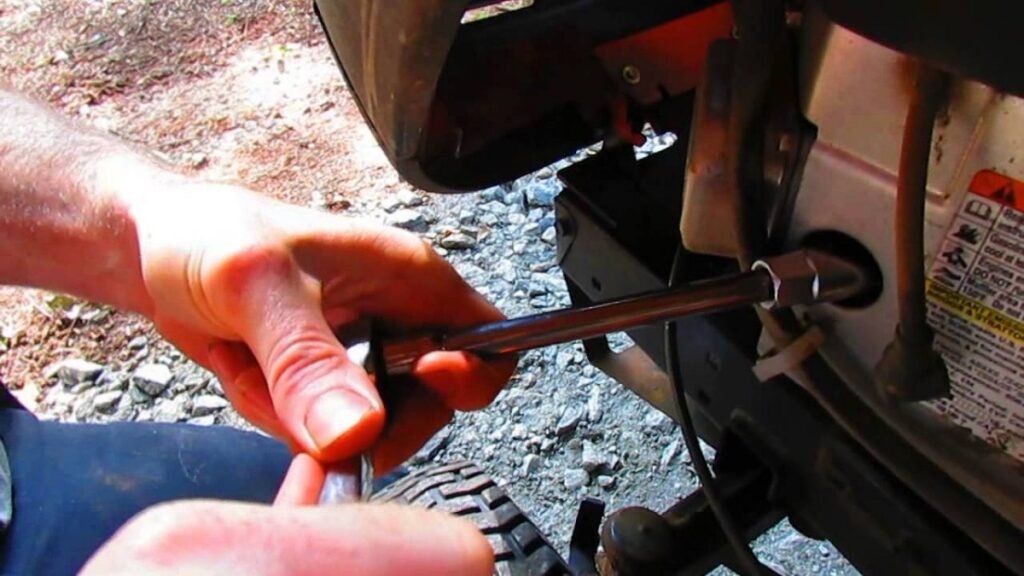
One mistake is assuming the transmission is bad just because the tractor is moving slowly. In many cases, a belt or linkage issue causes the same symptom. Replacing the wrong part wastes time and money.
Another mistake is using the wrong fluid or mixing fluid types. Hydrostatic systems are sensitive to viscosity and additives. If the fluid is not what the system expects, the mower may work for a short time and then become inconsistent.
Owners also often ignore a small belt problem until it becomes a big one. A belt that slips a little today can fail completely after a few hot mowing sessions. The earlier you catch it, the easier the repair.
A final mistake is testing only on flat ground. Some hydro problems only appear under load. If you never test on a slope or in thicker grass, you may miss the real failure pattern.
Credit: backyardcorner.com
When the transmission itself is likely failing
If you have checked the fluid, belt, linkage, and cooling, and the tractor still has weak drive in both directions, the hydro unit may be worn out internally. This is more likely if the problem has slowly gotten worse over months rather than appearing suddenly.
Signs of deeper failure include persistent whining, poor response even after warm-up, reduced power that does not improve after maintenance, and severe weakness under any load. If the tractor barely moves on level ground with proper input, the pump may no longer build enough pressure.
At this point, rebuilding or replacing the transmission becomes the realistic path. For many owners, that is a job best left to a qualified repair shop, especially if special tools or fluid procedures are required.
If you are unsure whether the issue is internal, compare your findings against the owner’s guidance in the official manufacturer support page before opening the transmission further.
How to prevent repeat hydrostatic problems
Prevention is mostly about keeping heat, dirt, and wear under control. Change fluid on schedule, inspect the belt regularly, and keep grass clippings from building up around the drive components. These simple habits go a long way.
Do not overload the tractor. A hydrostatic drive can handle normal mowing work, but repeated heavy towing, steep hills, and thick overgrown grass will shorten its life. If you know the yard is rough, mow in shorter passes instead of forcing the machine to do everything at once.
Also pay attention to the first warning signs. A slight slowdown today is often the earliest sign of belt wear or fluid trouble. Fixing it early may prevent a full transmission repair later.
One useful rule: if the tractor suddenly changes behavior, look outside the transmission first. If it gets worse gradually across a season, internal wear becomes more likely.
Credit: ebay.com
Bottom line on the YT1238 hydro drive
Most Ariens YT1238 hydrostatic transmission problems start with simple causes: low or dirty fluid, a slipping belt, trapped air, or worn linkage parts. Those issues can make a healthy transmission act weak, noisy, or unresponsive.
The smartest repair path is to diagnose in order: fluid, belt, linkage, cooling, then internal wear. That saves time and helps you avoid replacing a transmission that only needed basic service. If the tractor still struggles after those checks, the hydro unit itself may be reaching the end of its life.
Handled early, many of these problems are manageable. Left alone, they tend to spread from a small performance loss to a complete drive failure.
After the main fault is fixed, run the machine briefly under light load and recheck the related belt, wiring, fuel, fluid, and safety-switch areas before returning it to normal work.
FAQs
Why does my Ariens YT1238 move slowly but still drive?
That usually means the hydrostatic system is weak, not completely failed. The most common causes are low fluid, a slipping belt, air in the system, or linkage that is not moving the control arm fully.
Can old fluid really cause hydrostatic transmission problems?
Yes. Old or dirty fluid can reduce pressure, create noise, and make the tractor feel weak or jerky. In some cases, fresh fluid makes a noticeable improvement right away.
Why does the mower work better when it is cold?
If performance drops after the tractor warms up, heat is likely part of the problem. That can point to thinning fluid, belt slip, poor cooling, or internal wear that shows up under temperature.
Should I replace the transmission if the mower will not climb hills?
Not yet. Hill-climbing problems are often caused by a belt issue or load-related overheating. Check the belt, fluid condition, and linkage before assuming the hydro unit is bad.
When should I take the tractor to a repair shop?
Take it in if the tractor still has weak drive after fluid, belt, and linkage checks, or if you hear loud grinding or see serious leakage. Those signs can point to internal failure that needs professional repair.