
If your tractor slips, grinds, or refuses to shift, you are likely dealing with Kubota L3350 shuttle shift problems. The good news is that many of these issues come from a few common causes, and several can be checked without tearing the tractor apart.
The shuttle shift system is meant to let you change direction smoothly and quickly. When it stops working right, the problem may be simple, like low hydraulic oil, or more serious, like worn clutch parts or linkage wear. This guide walks through the most likely causes, how to diagnose them, and what fixes usually solve the issue.
You will also learn the warning signs that point to hydraulic trouble, mechanical wear, or operator-related mistakes. That makes it easier to avoid guesswork and fix the right part the first time.
For wider troubleshooting context, compare this guide with Kubota shuttle shift problems, Kubota tractor clutch problems.
How the shuttle shift system should work
The shuttle shift on a Kubota L3350 lets you move between forward and reverse without using a full manual gear change each time. On many tractors in this class, the system depends on a combination of mechanical linkage, clutch action, and transmission components working together. If one part is weak, the whole shift feel changes.
Most problems show up as hard shifting, gear grinding, delayed engagement, jumping out of gear, or a shuttle lever that feels loose or stiff. Some owners notice the issue only when the tractor is cold, while others see it after the machine warms up. That difference matters because cold oil, worn bushings, and weak clutch release often act differently.
One thing many owners miss is that shuttle shift complaints are not always a transmission failure. In many cases, the real problem is clutch drag, poor linkage adjustment, or contaminated hydraulic oil. Those are far cheaper and faster to correct than a major rebuild.
Common symptoms to watch for
- Lever is hard to move into forward or reverse
- Grinding noise when changing direction
- Tractor hesitates before moving
- Shuttle lever does not stay in position
- Tractor creeps even with clutch pressed
- Shifts feel worse after the tractor warms up
If your tractor has one of these symptoms, start with the easiest checks first. That saves time and avoids replacing parts that are still good.
Most common causes of Kubota L3350 shuttle shift problems
The 80/20 rule applies here: most Kubota L3350 shuttle shift problems come from a short list of causes. Start with fluid condition, clutch release, linkage wear, and internal adjustment before assuming the transmission is damaged.
1. Low, dirty, or wrong hydraulic fluid
Hydraulic and transmission systems depend on correct oil level and clean fluid. If the oil is low, aerated, or dirty, the shuttle can feel stiff or slow. Thick contaminated fluid can also make cold shifting much harder, especially during the first 5 to 10 minutes of use.
Dirty oil can cause valve sticking and poor lubrication. Water in the fluid is another hidden issue. It can create milky oil, corrosion, and inconsistent shift response.
2. Clutch not fully releasing
If the clutch does not disengage all the way, the transmission keeps turning when you try to shift. That causes grinding, a creeping tractor, and extra force needed at the shuttle lever. On older tractors, a worn clutch disc, weak pressure plate, or misadjusted pedal free play is a very common reason.
Even a small adjustment issue can make a big difference. Too little pedal free play can create clutch slip. Too much free play can stop the clutch from releasing fully. Both conditions hurt shuttle performance.
3. Worn or loose linkage
The external shift linkage connects your lever movement to the transmission. After years of use, pins, bushings, and rods can loosen. That creates vague lever feel, incomplete engagement, or a lever that pops out of position.
This is one of the easiest problems to overlook because the tractor may still “sort of” shift. But partial engagement is dangerous. It can wear gears and make the problem worse fast.
4. Internal shuttle or transmission wear
If the tractor has high hours, internal wear becomes more likely. Worn synchro parts, damaged shift forks, or gear wear can create persistent grinding or jumping out of gear. These issues usually do not improve much with adjustment alone.
Internal damage is more likely if the tractor was shifted hard for years, operated with poor maintenance, or used while grinding gears repeatedly. A tractor with around 3,000+ hours is not automatically worn out, but wear risk increases as service history gets worse.
5. Cold-weather oil drag
Some shuttle complaints only happen in cold weather. Thick oil slows internal movement and makes worn parts feel worse. If the tractor shifts better after 15 to 20 minutes of warm-up, oil drag is likely part of the problem.
This does not mean the issue is harmless. It often means the fluid is old, the wrong viscosity was used, or the tractor has enough wear that cold operation exposes it first.
How to diagnose the problem step by step
Good troubleshooting starts with simple checks and moves toward deeper mechanical inspection. That approach helps you isolate whether the problem is outside the transmission or inside it.
-
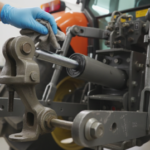
Check the fluid level and condition.
Look for low oil, foaming, burnt smell, or milky color. If the fluid looks dirty or contaminated, service it before doing anything else.
Credit: tractorpartscentral.com
-
Test the clutch pedal free play.
Use the tractor’s service specification if you have it. If you do not, compare pedal feel to normal operation and inspect for obvious misadjustment. A clutch that is too tight or too loose can create shuttle issues.
-
Inspect the linkage.
Watch the lever and rods while someone moves the shuttle. Look for worn pins, bent rods, missing clips, and slack movement. Any loose point can reduce the lever’s travel at the transmission end.
-
Test shifting with the engine off.
If the shuttle moves smoothly with the engine off but not while running, the issue may be clutch drag or internal load. If it is hard even with the engine off, linkage or lever wear is more likely.
-
Compare cold and warm operation.
If the tractor shifts poorly cold but improves after warming up, focus on fluid condition and wear. If it gets worse when hot, look harder at hydraulic pressure loss, clutch problems, or internal wear.
A simple test many owners skip is listening for change under light load. If the tractor shifts okay while parked but grinds under even small motion, that suggests clutch drag or incomplete disengagement rather than pure lever trouble.
| Symptom | Most likely cause | What to check first |
|---|---|---|
| Grinding into gear | Clutch not releasing | Pedal free play, clutch wear |
| Hard lever movement | Linkage wear or binding | Rods, bushings, pivots |
| Delayed forward/reverse response | Hydraulic issue or worn internals | Fluid level, fluid condition |
| Tractor creeps with clutch down | Clutch drag | Adjustment, clutch assembly |
| Shifts better when warm | Thick or degraded oil | Fluid type and service history |
Fixes that solve the problem most often
Start with the fix that matches the symptom. That keeps you from replacing expensive parts too early. In many cases, the first three fixes below are enough to restore normal operation.
1. Service the hydraulic and transmission fluid
If the oil is old, dirty, or contaminated, change it with the correct spec for your tractor. Clean fluid helps the shuttle respond more smoothly and protects seals, valves, and internal parts. If the tractor has been sitting for years, drain and refill may be better than topping off.
After service, run the tractor through the operating cycle and check again. Sometimes a clogged screen or filter is part of the issue, so cleaning those components matters too.
2. Adjust the clutch pedal correctly
Incorrect clutch pedal free play is a major cause of shift problems. If the clutch is not separating fully, the transmission keeps turning and the shuttle will grind or resist engagement. Correct adjustment can make the tractor feel dramatically better without replacing the clutch.
If adjustment does not help, the clutch may be worn or warped. A tractor that has started to creep at idle or needs force to shift even after adjustment usually needs a deeper clutch inspection.
3. Repair loose linkage parts
Replace worn bushings, pins, clips, and bent rods. These parts are not expensive compared with internal transmission work. Tightening up the linkage often restores the full motion needed to engage the shuttle completely.
Do not ignore a lever that feels “almost normal.” Partial movement can leave the gears half engaged, which accelerates wear and can damage shift components.
4. Check for external binding
Sometimes the lever or linkage rubs against the floor, a worn bracket, or another component. A small bend can create a big drag point. Clean the area, watch the full movement, and look for metal-on-metal contact.
If the tractor was recently repaired, also check whether a part was installed in the wrong position. A misrouted rod or reversed bushing can create a problem that looks internal but is actually external.
5. Inspect internal components when basic fixes fail
If fluid, clutch, and linkage are all in good shape but the problem remains, internal wear is more likely. That can include shift forks, synchro parts, gears, or bearings. At that point, the tractor may need professional teardown and measurement.
This is where many owners benefit from the official manufacturer support page for model-specific service information and manuals. The exact adjustment values and procedures matter a lot on older tractors.
Common mistakes that make shuttle shift issues worse
Several habits can turn a small issue into a bigger repair. The biggest mistake is forcing the shuttle lever when it resists. That can round shift parts, bend linkages, or damage forks.
Another mistake is shifting without fully depressing the clutch. Even if the tractor seems to accept the shift, repeated partial engagement creates wear. On a machine with already loose linkage, the extra load adds up quickly.
A third mistake is ignoring fluid changes because the tractor still runs. Old oil may not stop the tractor immediately, but it often makes cold shifting worse and shortens component life. A small service now can prevent a much larger repair later.

Credit: tractorbynet.com
What not to do
- Do not hammer or force the lever
- Do not keep using the tractor if it grinds badly every shift
- Do not assume all problems are “just old age”
- Do not mix fluid types without confirming compatibility
- Do not ignore creeping with the clutch pedal down
When the problem is probably internal
If the tractor still has hard shifting after correct fluid, proper clutch adjustment, and tight linkage, the issue may be inside the transmission or shuttle assembly. That is more likely when the tractor pops out of gear, grinds in multiple ranges, or makes metal noise.
Internal problems also become more likely if the tractor has a history of repeated hard shifting. Each bad shift adds wear. A single small problem can create a chain reaction over time.
Signs that point toward internal repair include metal in the oil, inconsistent engagement in more than one gear, and a lever that feels normal but still fails to move the tractor correctly. These symptoms usually mean the outside controls are not the real issue.
When that happens, a teardown may be the only reliable fix. The key is to confirm the diagnosis before opening the transmission, because that repair is far more involved than basic service work.
How to reduce future shuttle shift problems
Once the tractor is working again, a few habits can help keep it that way. Use the clutch fully and avoid rushed direction changes under load. That reduces stress on the shuttle system and helps the tractor shift cleanly.
Keep fluid clean and at the proper level. Service intervals matter more on older tractors because seals, gaskets, and bushings are already past their newest condition. A tractor with fresh fluid and good linkage will usually shift much better than one that is simply driven until something fails.
Warm the tractor before heavy use in cold weather. That gives oil time to circulate and reduces harsh shifting. If you live in a colder climate, this step can make a noticeable difference on startup.
Finally, pay attention to small changes. A lever that starts feeling loose, a clutch pedal that changes height, or a shift that grinds once a week is often the first warning sign. Catching those early can save the transmission from long-term damage.
When to call a mechanic
Call a qualified tractor mechanic if the shuttle still grinds after fluid service and clutch adjustment, if the tractor jumps out of gear, or if you find metal in the oil. These are signs that the problem is more than a simple external fix.
You should also get help if the tractor will not move at all, if the linkage is broken in a way that affects safe operation, or if you are not sure whether the clutch is releasing correctly. Transmission work is not the place to guess.
If the tractor is under load and the issue gets worse quickly, stop using it. Continuing to drive it may turn a repairable fault into a major rebuild.

Credit: orangetractortalks.com
Final take
Most Kubota L3350 shuttle shift problems come from fluid issues, clutch drag, or worn linkage before they come from major internal damage. That is good news, because the simplest fixes are often the ones that work.
Start with the basics: check the fluid, confirm clutch adjustment, and inspect the linkage for wear or binding. If those steps do not solve the issue, then look deeper into the shuttle or transmission assembly. A careful diagnosis saves time, money, and unnecessary parts replacement.
After the main fault is fixed, run the machine briefly under light load and recheck the related belt, wiring, fuel, fluid, and safety-switch areas before returning it to normal work.
FAQs
Why is my Kubota L3350 hard to shift into forward or reverse?
The most common cause is a clutch that is not fully releasing. Low or dirty fluid and loose linkage can also make the shuttle hard to move.
Can old hydraulic fluid cause shuttle shift problems?
Yes. Old or contaminated fluid can make shifting stiff, especially when the tractor is cold. It can also increase wear inside the transmission system.
What does it mean if the tractor creeps with the clutch pedal down?
That usually means clutch drag. The clutch may need adjustment, or the clutch assembly may be worn and not separating fully.
Is it safe to keep driving if the shuttle grinds sometimes?
No. Repeated grinding can damage gears and shift parts. It is better to diagnose the cause before using the tractor more.
When should I suspect internal transmission damage?
Suspect internal damage if the problem remains after fluid service, clutch adjustment, and linkage inspection, especially if you also hear noise, find metal in the oil, or see the tractor jump out of gear.