
If your Kubota tractor is hard to shift, slips under load, or smells like burnt lining, the clutch may be trying to tell you something. These problems often start small. A little extra pedal play, a slight grind when changing gears, or a tractor that feels weak on hills can quickly turn into a costly repair if you ignore it.
The good news is that many kubota tractor clutch problems have clear causes. Some are simple, like bad pedal adjustment or a worn linkage. Others point to deeper issues inside the clutch housing. If you learn the signs early, you can often fix the problem before it damages the pressure plate, release bearing, or transmission.
This guide explains the most common causes, symptoms, and fixes in plain English. It also shows the mistakes many owners make when they try to diagnose clutch trouble too fast. That way, you can save time, avoid guesswork, and know when a small repair is enough and when a full clutch job is the smarter move.
How a Kubota tractor clutch actually works
The clutch connects the engine to the transmission. When you press the clutch pedal, the connection opens so you can shift gears or stop the tractor without killing the engine. When you release the pedal, the clutch should grab firmly and transfer power smoothly.
Most Kubota tractors use a dry clutch system, and some models have a dual-stage setup for PTO work. That means one part of the clutch controls the drive wheels, while another part may control the power take-off. Because of that, a problem can show up in only one function at first. For example, the tractor may still move fine, but the PTO may slip. Or the PTO may work, but shifting may become rough.
One important point many beginners miss is this: not every clutch problem is inside the clutch itself. A wrong pedal setting, a stuck linkage, or a leaking seal can create the same symptoms as worn clutch plates. That is why good diagnosis matters before you buy parts.
Common causes of Kubota tractor clutch problems
Clutch trouble usually comes from wear, poor adjustment, or contamination. In some cases, operator habits also speed up damage. Here are the most common causes.
Worn clutch disc
The clutch disc is the part that grips and transfers engine power. Over time, the friction material gets thin. When that happens, the clutch may slip under load, especially when pulling, climbing, or using heavy implements.
A worn disc is one of the most common reasons for kubota tractor clutch problems. It often happens slowly, so owners may get used to the reduced performance before they realize something is wrong.
Oil or grease on the clutch disc
If engine oil, transmission oil, or grease reaches the clutch disc, the disc cannot grip well. The result is slippage, shuddering, or a burning smell. A seal leak from the rear main seal or input shaft seal is a common source of contamination.
This issue is easy to overlook because the clutch parts may not look badly worn. But even a small oil leak can ruin a good disc.
Faulty clutch adjustment
If the pedal free play is too little or too much, the clutch may not disengage or engage correctly. Too little free play can keep pressure on the release bearing. Too much free play can stop the clutch from fully disengaging, which makes shifting hard and may cause grinding.
This is one of the simplest issues to fix, but many owners skip it and assume the clutch is worn out.
Worn release bearing or pilot bearing
The release bearing helps the clutch disengage smoothly. The pilot bearing supports the transmission shaft. When either one wears out, you may hear noise when pressing the pedal, feel vibration, or notice rough shifting.
These parts are small, but they matter a lot. If they fail, they can damage other clutch components too.
Sticking linkage or pedal mechanism
Rust, dirt, bent parts, or missing lubrication can make the pedal or linkage move poorly. If the pedal does not travel correctly, the clutch may not release fully or may drag.
Sometimes the tractor feels like it has a major clutch problem, but the real issue is outside the bell housing.
Overheating from poor driving habits
Riding the clutch, holding the tractor on a hill with the pedal, or slipping the clutch too much while moving heavy loads creates heat. Heat wears the friction material faster and can warp parts inside the clutch assembly.
Many tractors lose clutch life because of usage, not because of a bad part.
Hydraulic or dual-clutch system faults
Some Kubota models may have systems that affect clutch action through hydraulic components or dual-stage control. If these parts fail, the symptom may look like a clutch issue even when the friction disc is still in decent shape.
That is why model-specific diagnosis is important. A symptom on one Kubota tractor may not mean the same thing on another.
Symptoms you should not ignore
Clutch problems usually leave clues. Some are obvious. Others are small at first. The sooner you notice them, the better your chance of avoiding a bigger repair.
| Symptom | What it may mean | Urgency |
|---|---|---|
| Hard shifting | Clutch not fully disengaging, linkage issue, or low free play | Medium to high |
| Slipping under load | Worn disc, oil contamination, weak pressure plate | High |
| Burning smell | Clutch overheating or slipping | High |
| Grinding when shifting | Clutch drag or incomplete release | High |
| Pedal vibration or noise | Release bearing, pilot bearing, or pressure plate issue | Medium |
| Tractor moves weakly | Clutch is slipping and not transferring full power | High |
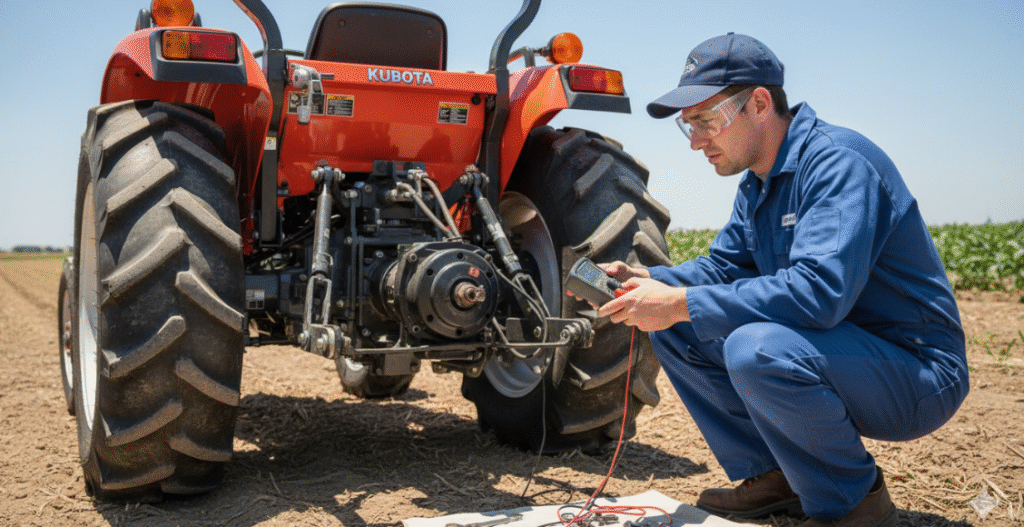
Credit: tractorpartscentral.com
Hard shifting or gear grinding
If the tractor grinds when you shift, the clutch may not be releasing fully. You may also notice the tractor creeps forward a little even with the pedal pressed down. This is called clutch drag.
Common causes include incorrect pedal free play, worn linkage, or warped internal parts. Sometimes the issue is simple. Other times it means the clutch disc is sticking on the shaft or the release mechanism is failing.
Slipping under load
This is one of the clearest signs of clutch trouble. The engine revs rise, but the tractor does not move with normal power. You may notice it most when pulling a trailer, climbing a slope, or running heavy implements.
A slipping clutch should be checked quickly. If you keep working the tractor this way, the heat can damage the pressure plate and flywheel. That raises repair cost.
Burning smell
A burnt smell often means the clutch is overheating. This happens when the disc slips against the flywheel instead of gripping tightly. It may happen after heavy work, but if the smell appears often, the clutch is likely wearing out or contaminated with oil.
One helpful clue: if the smell gets worse after hard pulling, the clutch is probably slipping. If it appears after long downhill control or stop-and-go work, riding the clutch may be the cause.
Pedal feels odd
A clutch pedal should feel smooth and predictable. If it feels too loose, too stiff, or uneven, something is wrong. You may also feel chatter, vibration, or a squeal when pressing the pedal.
Do not assume pedal feel is just a comfort issue. It often points to early wear or a linkage problem.
Tractor creeps with the clutch pressed
If the tractor wants to move while the pedal is fully down, the clutch is not disengaging fully. This can make it hard to start, shift, or stop safely. It may happen because of bad adjustment, a stuck disc, or worn internal parts.
This is a safety issue as much as a repair issue. A creeping tractor can surprise the operator and make close work risky.
How to diagnose the problem the smart way
Before replacing parts, start with simple checks. Many kubota tractor clutch problems can be narrowed down with a few careful steps.
-
Check pedal free play.
Measure how much pedal movement you have before resistance begins. Too little or too much free play can cause poor clutch operation. Always compare with your owner’s manual for the correct setting.
-
Look at linkage and pivots.
Inspect rods, springs, pins, and pivot points for wear, rust, or bending. A stiff linkage can mimic a bad clutch.
-
Listen for noise.
Press the pedal slowly and listen. Noise only when the pedal is pressed often points to the release bearing. Noise when the pedal is released can suggest another bearing or internal wear.
-
Test for slip.
With the tractor in a safe area, use a higher gear and moderate throttle. If engine speed rises but travel speed does not match, the clutch may be slipping.
-
Check for contamination clues.
Oil spots, wet bell housing areas, or repeated clutch slip after a repair may point to a seal leak. If oil is the real cause, replacing only the disc will not solve the issue for long.
One non-obvious point many owners miss is that a clutch can fail in stages. The first stage may be drag. Later it becomes slip. So if the symptoms seem to change over time, that does not mean the problem is gone. It often means the clutch damage is progressing.
Fixes that often solve the problem
The right fix depends on the cause. Some issues need only adjustment. Others need parts replacement. Start with the least invasive fix first, unless the symptoms are severe.
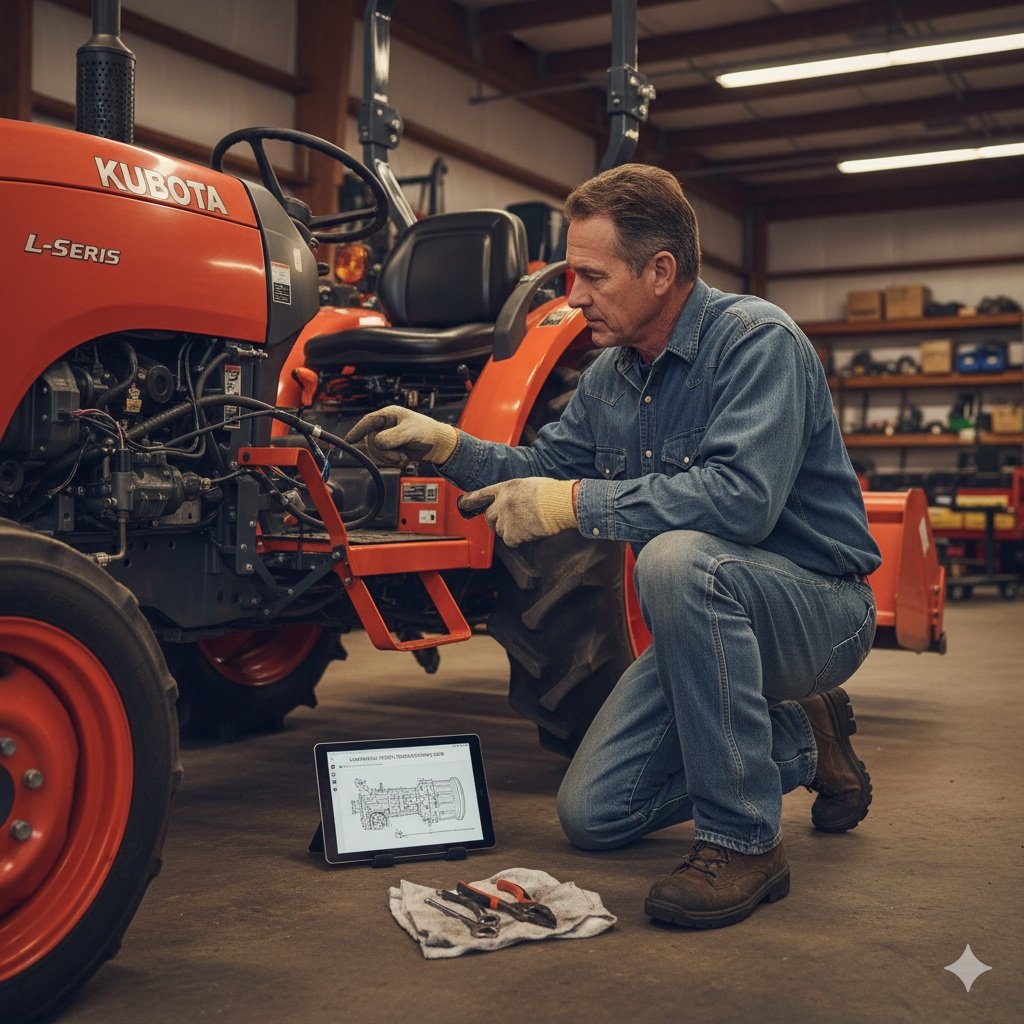
Credit: lawnmowerly.com
Adjust the clutch pedal correctly
If the problem is related to free play, correct the pedal setting first. Use the tractor manual for the proper measurement. Small changes can make a big difference.
After adjustment, test shifting again. If the gears engage cleanly and the tractor stops creeping, you may have solved the issue without major repair.
Lubricate and free sticky parts
If the linkage is dry or stiff, clean it and lubricate the moving points as recommended by Kubota. Replace worn bushings or bent parts if needed. Do not force the pedal, because that can break linkage parts.
Replace damaged external components
If the release bearing, pedal spring, or linkage parts are worn, replace them before they damage the clutch further. These parts are less expensive than a full clutch job and can restore normal operation if the main friction parts are still healthy.
Repair oil leaks before installing new clutch parts
If the clutch has been soaked with oil, find and repair the leak first. Then replace the clutch disc and any related parts that were contaminated. If you skip the leak repair, the new clutch will likely fail again.
This is one of the most common mistakes in clutch repair. People replace the clutch, but not the source of the leak.
Replace the clutch assembly when wear is advanced
If the disc is worn thin, the pressure plate is weak, or the flywheel is damaged, a full clutch replacement is usually the best answer. In many cases, it makes sense to replace the disc, pressure plate, release bearing, pilot bearing, and related seals together while the tractor is already split.
That may sound expensive, but it often saves labor later. A second teardown costs more than replacing smart parts the first time.
Resurface or inspect the flywheel
If the flywheel has heat spots, grooves, or warping, it can prevent even clutch contact. A damaged flywheel can cause chatter, slip, or fast wear on the new disc.
Have the flywheel inspected carefully. A smooth, flat surface is important for good clutch life.
Repair mistakes that make the problem worse
Some repairs fail because the real cause was missed. Others fail because the tractor is put back together with one weak part left in place. Avoid these common mistakes.
- Ignoring pedal adjustment and assuming every problem means a worn clutch.
- Replacing only the disc when the pressure plate, bearings, or flywheel are also worn.
- Not fixing oil leaks before installing new parts.
- Using the clutch to control speed during heavy work, which creates heat and wear.
- Testing only at idle and missing slip that appears under real load.
Another important insight: a tractor that is used lightly can still have a bad clutch if the seal failed and soaked the disc. Low hours do not always mean low clutch wear. Storage time, leaks, and poor adjustment can matter just as much as working hours.
How to prevent future clutch trouble
A few simple habits can make the clutch last much longer.
- Keep the pedal adjusted to the correct free play.
- Do not rest your foot on the clutch pedal while driving.
- Use low gears instead of slipping the clutch for too long.
- Check for oil leaks during routine maintenance.
- Listen for new noise or vibration before it becomes severe.
Also, teach anyone who drives the tractor to avoid riding the clutch. Many clutch failures happen because one person uses the tractor carefully and another uses it like a car in traffic. Heavy equipment needs a different driving style.
When to stop troubleshooting and call a mechanic
If the tractor slips badly, grinds hard, or will not shift safely, it is time to get help. You should also call a mechanic if you suspect internal contamination, seal failure, or a dual-stage clutch issue that requires splitting the tractor.
Some repairs are not worth guessing on. A wrong diagnosis can lead to buying parts twice. If you are not sure whether the problem is external or internal, an experienced technician can save you money in the long run.
If you want a trusted source for general drivetrain and clutch care principles, the John Deere parts and service resource offers useful maintenance context that applies broadly to tractor owners.
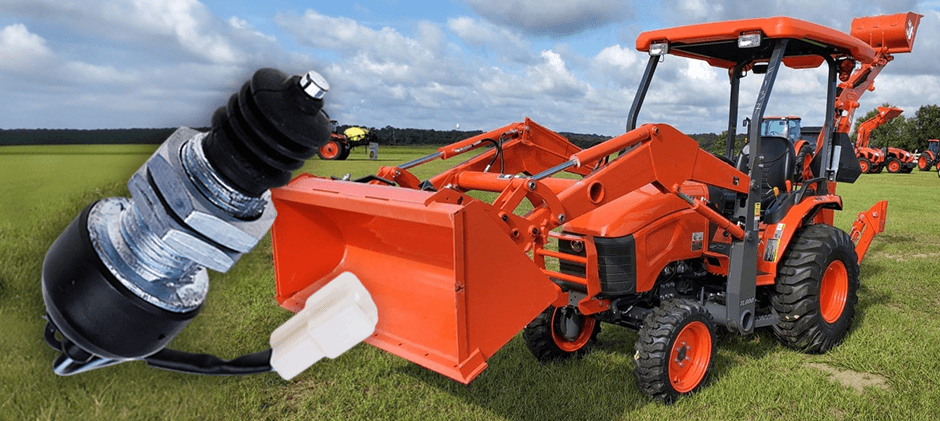
Credit: fridayparts.com
Final thoughts
Kubota tractor clutch problems usually start with small warning signs. Hard shifting, slipping, noise, burning smell, or pedal changes should not be ignored. The most common causes are worn clutch parts, oil contamination, bad adjustment, or linkage trouble. In many cases, a simple fix can solve the issue if you catch it early.
The best approach is to diagnose carefully, fix the root cause, and avoid short-term repairs that hide deeper damage. That is how you protect your tractor, save money, and keep it working reliably in the field.
FAQs
1. What are the first signs of Kubota tractor clutch problems?
The first signs are usually hard shifting, gear grinding, slight slipping, a burning smell, or a pedal that feels different. If the tractor starts creeping with the clutch pressed, the problem may be more serious.
2. Can a clutch issue be caused by bad adjustment only?
Yes. Bad pedal free play or a stiff linkage can cause drag, poor disengagement, and rough shifting. Always check adjustment before assuming the clutch is worn out.
3. Why does my Kubota tractor clutch smell burnt?
A burnt smell usually means the clutch is slipping and overheating. It can happen from worn friction material, oil contamination, or riding the clutch too much during heavy work.
4. Is it safe to keep using the tractor if the clutch slips a little?
It is not a good idea. Even mild slip can get worse fast and damage the flywheel or pressure plate. It is better to inspect and fix the issue early.
5. Do I need to split the tractor for every clutch repair?
No. Some problems are external and can be fixed by adjustment, lubrication, or linkage repair. But if the disc, bearings, pressure plate, or seals are damaged, splitting the tractor is usually necessary.