
A Briggs V-twin governor surge usually means the engine speed hunts up and down because the governor is not holding a steady throttle position. In plain words, the engine keeps trying to “find” the right speed, then overshoots and drops back again.
This problem is common on riding mowers and small equipment with Briggs & Stratton V-twin engines. The good news is that the cause is often simple: dirty fuel, a sticking throttle linkage, a weak governor spring, or an airflow issue. A few careful checks can usually narrow it down fast.
Below, you’ll find the most likely causes, how to diagnose them, the fixes that actually work, and the habits that help prevent surging from coming back.
For wider troubleshooting context, compare this guide with Briggs and Stratton V Twin Governor Problems: Causes, Fixes, and Troubleshooting Guide, Briggs and Stratton V-twin governor problems, Kohler 7000 Series Smart Choke problems.
What the governor is doing when the engine surges
The governor’s job is to keep engine speed stable as the load changes. When the blades hit thick grass, the governor opens the throttle a little more. When the load drops, it closes the throttle to stop the engine from racing.
With a healthy system, that movement is smooth and small. With a Briggs V-twin governor surge, the control loop becomes unstable. The governor opens too far, the RPM climbs, then it closes too much, and the RPM falls. That cycle repeats over and over.
This is not just annoying. Surging can point to a fuel delivery issue, a bad adjustment, or a part that is hanging up. If ignored, it can lead to poor cutting performance, extra wear, and hard starting later.
Why surging is different from normal load changes
A healthy engine may dip slightly when you engage the deck or mow thick grass. That is normal. Surging is different because the speed changes on its own even when the load is steady.
If the engine sounds like it is “revving, then falling, then revving again,” the governor or fuel system is usually the reason. The pattern often gets worse at no-load or light-load idle, which is a useful clue during diagnosis.
Most common causes of Briggs V-twin governor surge
Most surging problems start with fuel, air, or linkage. In many cases, the governor itself is not broken. It is reacting to another problem and trying to correct it.
Here are the causes that show up most often on Briggs V-twin engines.
1. Dirty carburetor jets or passages
This is the most common cause. Even a small amount of varnish or debris in the carburetor can lean out the mixture. A lean engine hunts because it gets too little fuel, then the governor tries to compensate.
The main jet, idle circuit, and emulsion tube are the usual trouble spots. A carburetor can look clean from the outside and still have a restricted passage inside. That is why a quick spray on the exterior rarely fixes a true surge.
2. Vacuum leaks
Air leaks make the engine run lean, which often creates hunting at steady throttle. Common leak points include the intake gasket, carburetor mounting gasket, and cracked vacuum lines, if your setup uses them.
A loose carb mount or hardened gasket can cause a problem that looks like a carburetor failure. One non-obvious clue is that surging may improve slightly when the engine warms up, then return later as parts expand and contract.
3. Weak, stretched, or incorrectly installed governor spring
The spring helps balance governor movement. If it is stretched, installed in the wrong hole, or no longer has proper tension, the governor can respond too slowly or too aggressively.
This can create a rhythmic surge that seems random. On many engines, a spring problem shows up after someone has worked near the throttle linkage or replaced parts without confirming the correct hole locations.
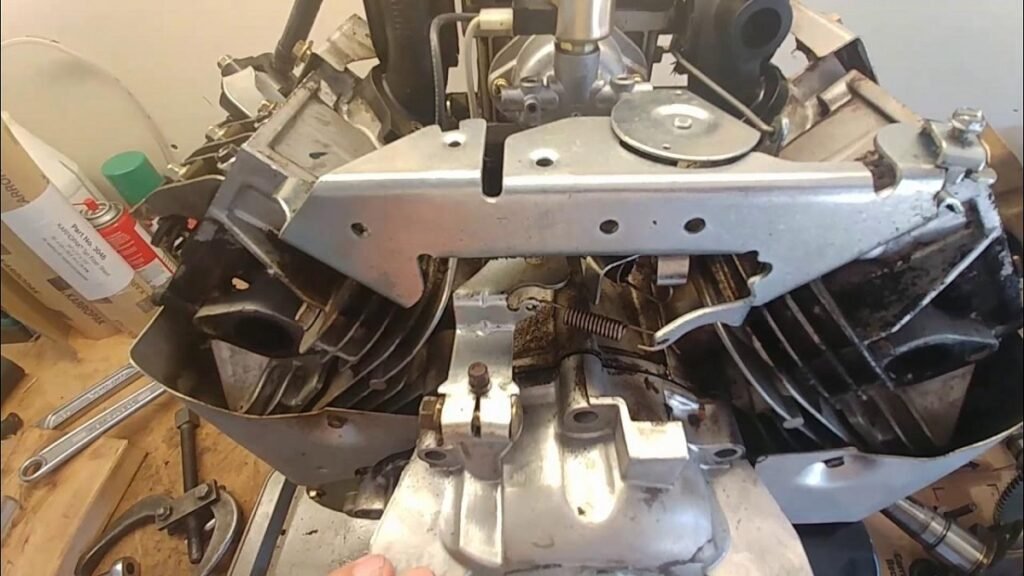
4. Sticky throttle linkage or governor arm
Linkage that binds, rubs, or sticks causes delayed throttle movement. The governor then overcorrects because it does not get a clean signal from the throttle system.
Rust, dirt, bent rods, and missing clips are common causes. On V-twins, the linkage geometry can be tight, so even a small bend can change how the engine responds.
5. Improper governor adjustment
If the governor arm was removed or the engine was serviced recently, the governor may need to be reset. A misadjusted governor does not “know” the correct throttle position, so it keeps chasing the right speed.
This is one of the least understood causes. Many people replace parts before checking the adjustment, but a wrong governor setting can mimic a bad carburetor almost perfectly.
6. Restricted air filter or intake path
A clogged air filter usually richens the mixture, but on some engines it can disturb airflow enough to create unstable running. A badly restricted intake can also mask other issues and make diagnosis confusing.
If the filter is soaked with oil, packed with dust, or installed incorrectly, start there. It is a fast and cheap item to rule out.
7. Fuel quality problems
Old fuel, water in the tank, or ethanol-related phase separation can all cause surging. Gasoline that sits too long loses volatility and leaves deposits behind.
This matters more than many owners realize. Fuel that is only a few months old can still cause trouble if it was stored in a vented container or mixed with contaminants.
How to diagnose the surge without guessing
Do not replace parts in random order. A few simple checks can tell you whether the problem is fuel, air, linkage, or adjustment.
Start with the easiest signs first. That saves time and prevents unnecessary carburetor swaps.
- Listen to the pattern. If the engine surges most at idle or light throttle, lean fuel or a vacuum leak is likely.
- Check the air filter. Remove it and inspect for dirt, oil, or damage.
- Inspect the fuel. Look for stale odor, water, or dark debris in the tank and fuel bowl.
- Watch the linkage. Move the throttle by hand and see whether anything sticks or rubs.
- Look for loose intake parts. Tighten carburetor mounting bolts and inspect gaskets.
If the engine smooths out briefly with choke applied, the mixture is likely too lean. That is a strong sign of carburetor restriction or an air leak. If the choke has little effect, the issue may be mechanical, such as linkage or governor adjustment.
One useful test is to observe whether the surge happens under load, with blades engaged, or only at idle. A no-load surge often points to carburetor or governor control issues. A load-related surge can also involve fuel starvation from a weak pump or plugged line.
Credit: backyardcorner.com
Simple diagnostic clues and what they usually mean
| Symptom | Likely cause | What to check first |
|---|---|---|
| Surges at idle, smoother at higher throttle | Lean carburetor circuit | Jets, passages, intake leaks |
| Surges after recent service | Governor adjustment or linkage issue | Governor arm, spring, rod positions |
| Surges more when warm | Vacuum leak or weak spring | Intake gasket, throttle shaft wear |
| Runs rough and surges under load | Fuel delivery problem | Fuel line, filter, carb bowl, tank vent |
Fixes that usually solve the problem
Begin with the simple fixes first. They are fast, low risk, and solve a large share of surging complaints.
Clean or rebuild the carburetor
If the fuel is old or the engine has sat for weeks or months, carburetor cleaning is often the best move. Remove the bowl, inspect the jet, and clean the passages with proper carburetor cleaner and compressed air.
Do not jam wire into tiny openings unless the service guide allows it. That can enlarge passages or damage the carburetor. If the carburetor is badly varnished, a rebuild kit or replacement may be more reliable than repeated cleaning.
Replace bad fuel and inspect the fuel system
Drain stale gasoline and refill with fresh fuel. Check the fuel line for cracks, collapse, or soft spots. If there is a fuel filter, replace it if it looks dirty or if you do not know its age.
Also check the tank vent. A blocked vent can create a vacuum in the tank and starve the carburetor after a short run. This is a subtle cause that many people miss because the engine starts fine and only surges after a few minutes.
Correct the governor adjustment
If the governor arm was removed or loosened, reset it carefully according to the engine’s service procedure. The basic idea is to place the throttle at full speed, move the governor shaft to the proper position, and tighten the arm so the system starts from the correct baseline.
This step is easy to get wrong, so follow the official procedure for your engine model. Briggs & Stratton’s official support page is the safest place to find model-specific guidance and service resources.
Fix linkage and spring problems
Replace any spring that is stretched, rusty, or deformed. Make sure the linkage moves freely through its full range. Bent rods should be corrected or replaced, not forced into position.
Pay close attention to hole locations. On many engines, one spring hole change can alter engine behavior enough to cause hunting. That is why a “close enough” setup sometimes makes the surge worse instead of better.
Seal air leaks
If the engine responds to choke or carb cleaner around the intake area, suspect a leak. Replace hardened intake gaskets, tighten mounting hardware, and inspect any rubber boots or seals for cracks.
Air leaks are often small, but they have a big effect. A leak that you cannot hear can still lean out the mixture enough to trigger surging at steady speed.
Preventive tips that reduce surging later
A few habits go a long way. Most repeat surging problems start with fuel storage, skipped maintenance, or rushed reassembly after repair.

Credit: reddit.com
Use fresh fuel and stabilizer when needed
Use clean gasoline and avoid letting fuel sit for long periods. If equipment will be stored for more than 30 days, a fuel stabilizer can help reduce varnish and gumming.
Keep containers sealed and dated. Old fuel is one of the easiest causes to prevent, yet it remains one of the most common sources of carburetor problems.
Run the engine regularly
Engines that sit unused are more likely to surge later because fuel residues form inside small passages. Running the machine long enough to reach operating temperature helps keep the system cleaner.
Short starts are not enough. If you start the engine for a minute and shut it off, condensation and fuel residue can still create problems over time.
Inspect the air filter and intake system often
A clean filter supports stable airflow. Check it more often during dusty mowing conditions. Replace it if it is oily, torn, or packed with debris.
Also look for loose clamps and missing seals. One loose intake clamp can create a tiny leak that is hard to spot but easy to feel in engine performance.
Keep linkage clean and free-moving
A light cleanup around the governor arm, throttle shaft, and spring points helps prevent sticking. Remove grass buildup, rust flakes, and sticky residue before they harden.
Do not over-lubricate. Too much oil or grease can attract dirt and make the linkage bind again later.
Common mistakes that make the surge worse
Some fixes sound helpful but cause more trouble. Avoid these common errors when dealing with a Briggs V-twin governor surge.
- Replacing the governor first without checking fuel and carburetor condition.
- Forcing linkage into place instead of finding the bent or incorrect part.
- Using old fuel again after cleaning the carburetor.
- Guessing at spring locations instead of matching the correct hole positions.
- Ignoring intake leaks because the engine still starts and runs.
One non-obvious issue is that a clean-looking carburetor can still surge if the throttle shaft is worn. Air leaks around the shaft are small but powerful enough to upset mixture control, especially at idle and light load.
Another mistake is changing several parts at once. If the engine improves slightly, you may never know which fix helped. That makes future diagnosis harder.
When the problem is more than a DIY repair
Some surging issues are better handled by a small engine technician. If the engine has low compression, internal governor wear, damaged flyweights, or a broken control shaft, the repair may require deeper teardown.
Call a professional if the engine surges even after a clean carburetor, fresh fuel, correct linkage setup, and leak checks. Also get help if the engine backfires, stalls under normal load, or has metal noise from inside the crankcase.
Safety matters too. Work on a cool engine, disconnect the spark plug before touching linkage or blades, and keep fuel away from hot surfaces and sparks. That is basic, but it prevents the kind of accident that turns a small repair into a big one.
Credit: justanswer.com
What usually works fastest in real-world cases
If you want the shortest path, start here: fresh fuel, clean carburetor, inspect the intake gasket, and check throttle linkage movement. Those four checks solve a large share of surging complaints on Briggs V-twin engines.
If the engine was recently serviced, move the governor adjustment higher on the list. If the machine sat unused, fuel quality and carburetor varnish move to the top. If the surge changes with choke position, think lean mixture first.
The key is to diagnose in order, not by guesswork. The governor is usually reacting to another fault, so the real fix is often one step behind the symptom.
Once the underlying cause is corrected, the engine should hold a steady speed with only small governor movement under load. That steady behavior is what you want to hear when mowing or running the machine at full working speed.
After the main fault is fixed, run the machine briefly under light load and recheck the related belt, wiring, fuel, fluid, and safety-switch areas before returning it to normal work.
FAQs
1. What causes a Briggs V-twin engine to surge at idle?
The most common cause is a lean fuel mixture from a dirty carburetor, clogged idle circuit, or small air leak at the intake. A weak governor spring can also make the idle hunt up and down.
2. Will bad gas cause Briggs V-twin governor surge?
Yes. Old fuel, water in the tank, or varnish buildup can restrict fuel flow and make the engine run lean. That lean condition often shows up as surging.
3. Can a dirty air filter cause surging?
It can contribute, especially if the filter is badly restricted, oily, or installed wrong. But a fuel or governor issue is more likely than the filter alone.
4. Do I need to replace the governor if the engine surges?
Usually no. In many cases, the governor is working correctly and reacting to a carburetor, linkage, or air leak problem. Replace the governor only after checking the common causes first.
5. How do I stop the surging from coming back?
Use fresh fuel, keep the carburetor clean, inspect the intake gaskets, and make sure the linkage and springs are installed correctly. Regular maintenance and proper fuel storage prevent most repeat problems.