
If your mower or tractor has a Briggs & Stratton V twin engine, a bad governor can turn a simple job into a very frustrating one. The engine may race too fast, run unevenly, surge under load, or lose power when you need it most. These are common briggs and stratton v twin governor problems, and the good news is that many of them can be found and fixed with careful checks.
The governor is a small system, but it does an important job. It helps keep engine speed steady when the load changes. When it works well, the engine responds smoothly as you cut thick grass, climb a hill, or engage the blades. When it does not, the engine can feel wild, weak, or hard to control. In many cases, the issue is not the governor itself. It may be a linkage problem, a weak spring, dirt, or a carburetor issue that looks like a governor fault.
This guide explains the most common causes, the best fixes, and a clear way to troubleshoot the problem step by step. You will also learn a few details that many beginners miss, like how a bad throttle setup can mimic governor failure and why the governor arm may be correct, while the carburetor is the real problem.
For nearby engine-speed issues, compare this guide with Kawasaki governor problems, Kohler 7000 Series Smart Choke problems, and why a lawn mower will not start. These related checks help separate governor faults from fuel, choke, ignition, and safety-system problems.
What the governor does on a Briggs & Stratton V twin
The governor keeps engine speed under control. Without it, the engine could speed up too much when the load is light, then slow down too much when the load gets heavy. On a lawn tractor or riding mower, that would mean poor cutting and possible engine damage.
On a Briggs & Stratton V twin, the governor reacts to engine speed using internal force from the engine itself. It moves the throttle through a linkage system. When the engine slows down under load, the governor opens the throttle more. When the engine speeds up too much, it closes the throttle a little.
This is why governor issues can show up in different ways. The engine may not be truly “stuck.” It may simply be getting the wrong signal, or the throttle may not be moving the way it should.
Common signs of governor trouble
- Engine surges up and down at idle or high speed
- Engine races too fast and sounds uncontrolled
- Engine lacks power under load
- Throttle does not respond correctly
- Engine hunts or bounces between speeds
- Blades slow down when mowing thick grass
One important point: these symptoms can also come from dirty fuel systems, vacuum leaks, or a weak carburetor. That is why smart troubleshooting matters.
Main causes of governor problems
Most briggs and stratton v twin governor problems come from a few simple causes. Before replacing parts, it helps to understand what usually goes wrong.
1. Incorrect governor adjustment
If the governor arm is not set correctly, the engine may run too fast or too slow. A wrong adjustment often happens after repair work, part replacement, or a carburetor swap. Even a small mistake can change throttle behavior.
This is one of the most common beginner mistakes. People often replace parts first, when the real issue is just a wrong governor setting.
2. Sticking throttle linkage
The governor can only work if the linkage moves freely. Rust, grass dirt, bent rods, or old grease can cause the throttle to stick. When that happens, the governor tries to correct engine speed, but the throttle does not follow smoothly.
3. Weak or stretched governor spring
The spring helps balance governor action. If it is weak, stretched, or installed in the wrong hole, the engine may surge or fail to hold speed. A tiny spring issue can create a big performance problem.
4. Carburetor problems that look like governor failure
This is a very common hidden cause. A dirty carburetor, clogged jet, or bad fuel flow can make the engine surge and hunt. The governor is often blamed first, but the real issue is fuel delivery. This is especially true when the engine runs fine for a few seconds, then starts changing speed on its own.
5. Internal governor wear or damage
If you are trying to tell whether the internal governor gear or governor pin is broken, watch for speed that cannot be controlled even after the outside arm, spring, throttle plate, and carburetor are confirmed correct. A broken internal governor usually acts different from a dirty carburetor because the linkage may move freely but engine speed still races, hunts, or fails to react normally under load.
Inside the engine, the governor gear or components can wear out. This is less common than linkage or carburetor issues, but it does happen. If the engine suddenly goes to high speed and the external linkage looks fine, internal failure becomes more likely.
6. Throttle plate or choke problems
If the throttle plate is not opening and closing normally, the governor cannot do its job well. A choke that stays partly closed can also make the engine act like the governor is faulty.
7. Past incorrect repairs
Many governor issues start after someone removes the carburetor, bends the linkage, or resets the governor arm the wrong way. A previous repair can create a new problem even when the engine itself is healthy.
How to diagnose the problem step by step
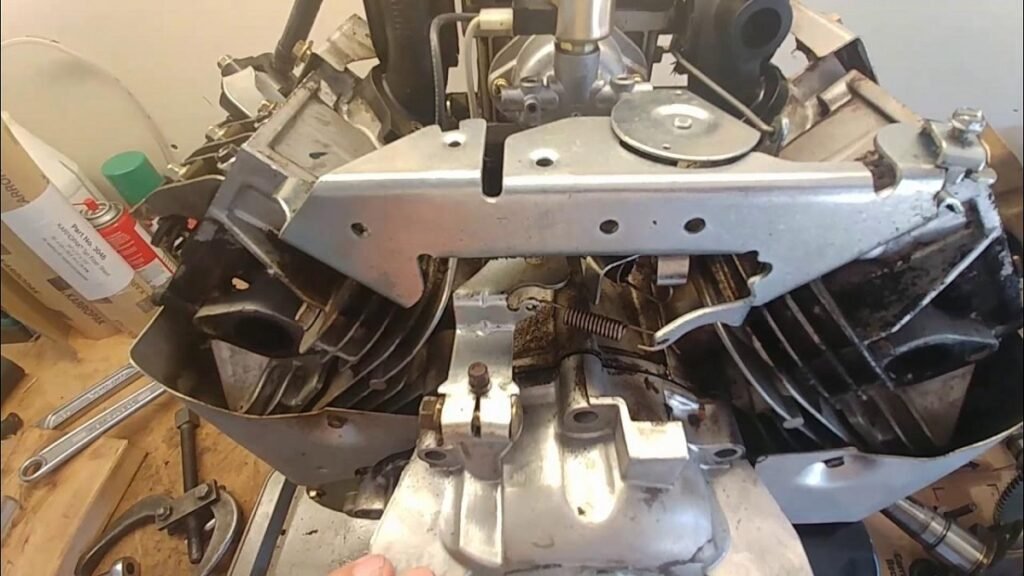
The best way to solve governor trouble is to start with the easiest checks first. Do not jump straight to engine teardown unless you have clear signs of internal damage.
Credit: backyardcorner.com
Step 1: Watch the engine behavior
Start the engine and listen closely. Does it surge at idle? Does it race only under load? Does it react slowly when you move the throttle lever? Each pattern tells you something different.
If the engine surges without load, the issue is often fuel or carburetor related. If it holds speed at idle but weakens badly under cutting load, the governor spring or linkage may be the issue.
Step 2: Check the throttle movement by hand
With the engine off, move the throttle lever and watch the linkage. It should move smoothly and return properly. If the lever is stiff, the problem may be rust, a bent rod, or an obstructed control cable.
Step 3: Inspect the governor arm and spring
Look for a spring that is loose, stretched, or hooked into the wrong position. Check whether the governor arm is secure on the shaft. If the arm is slipping, the engine may behave unpredictably.
Step 4: Look for fuel system issues
Before you blame the governor, make sure fresh fuel is in the tank. Check the fuel filter, fuel lines, and carburetor bowl. Old gasoline can cause surging and unstable speed. In many cases, stale fuel is the real source of what seems like governor trouble.
Step 5: Test for air leaks
A vacuum leak can cause the engine to run lean and surge. Check the intake manifold, carburetor gasket, and mounting bolts. A small leak can create a problem that looks like a bad governor.
For a broader technical reference on engine governing principles, the Briggs & Stratton support page can be useful when you need model-specific guidance or documentation.
How to fix common governor issues
Once you know the cause, the fix is usually much easier. Many repairs do not require special tools, but they do require patience and correct setup.
Fix 1: Reset the governor arm
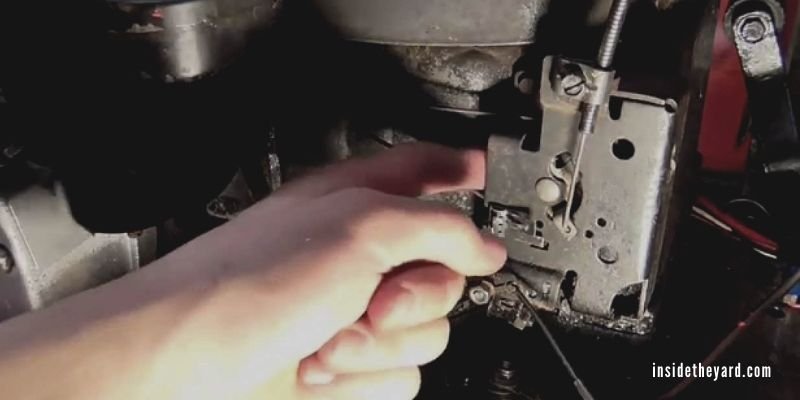
If the governor arm was removed or loosened, it may need to be reset. This is a common repair after carburetor work. The exact method depends on the model, but the basic idea is to align the governor shaft and arm correctly before tightening the clamp.
Do not force the arm. If it is set wrong, the engine can run dangerously fast or too slow. When in doubt, use your engine model information before adjusting.
Fix 2: Clean and free the linkage
Remove dirt, rust, and old debris from the linkage area. Check each rod and pivot point. A little spray cleaner and careful movement by hand can restore smooth action. If a rod is bent, replace it instead of trying to force it back into shape.
Fix 3: Replace a weak governor spring
If the spring is stretched, broken, or installed incorrectly, replace it with the correct part. Do not guess on spring size or hole location. A wrong spring setup can change the engine response more than many people expect.
One non-obvious detail: a spring that seems “close enough” may still cause hunting at certain throttle positions. The engine may look fine at idle but act poorly under load.
Fix 4: Clean the carburetor
If the engine surges or fails to hold steady speed, a carburetor cleaning often helps. Remove dirt from the main jet, bowl, and passages. Use fresh fuel and make sure the float and needle move freely.
This is one of the best places to look if the governor seems bad but the linkage is moving correctly.
Fix 5: Repair fuel supply problems
Replace cracked fuel lines, clogged filters, and old fuel. If fuel cannot flow smoothly, the governor will keep chasing engine speed changes that come from fuel starvation.
Fix 6: Check the throttle cable and control lever
If the control cable is too tight, broken, or misrouted, it can hold the throttle partly open or prevent smooth movement. Make sure the lever returns freely and does not bind.
Fix 7: Replace worn internal governor parts
If the external parts are fine and the engine still over-speeds or acts unstable, internal governor wear may be the cause. This repair is more advanced and may require removing engine covers or opening the crankcase, depending on the model.
When the governor is not the real problem
Many people spend time on the governor when the true fault is somewhere else. Knowing these look-alike problems can save time and money.

Credit: reddit.com
Fuel starvation
When the engine runs out of fuel flow under load, it may surge or slow down. The governor reacts to the changing speed, but the fuel system started the problem.
Dirty air filter
A clogged air filter can make the engine run rich and unevenly. It may also affect throttle response. Always check the filter before deep repairs.
Bad spark plug
A worn spark plug can cause weak firing, rough running, and poor load response. The governor may seem to be working hard, but the combustion problem is the real issue.
Loose mounting bolts or intake leaks
Air leaks can make the engine run lean and unstable. This is one of those problems that often gets missed because the engine still starts and runs.
How to troubleshoot safely
Working around the governor system is not hard, but safety matters. The engine can move suddenly when parts are disconnected or adjusted.
- Turn off the engine and remove the key.
- Disconnect the spark plug wire before touching linkage parts.
- Keep hands away from moving belts and blades.
- Do not run the engine with guards removed unless you need a short diagnostic test and can do it safely.
- Use the correct replacement parts for your exact engine model.
One helpful habit is to take photos before removing any rod or spring. That simple step prevents many reassembly mistakes.
Quick reference for symptoms and likely causes
| Symptom | Likely cause | Best first fix |
|---|---|---|
| Engine surges at idle | Carburetor dirt, vacuum leak, weak spring | Clean carburetor and inspect intake gaskets |
| Engine races too fast | Governor arm adjustment, internal governor issue | Check governor setting and linkage |
| Engine lacks power under load | Fuel starvation, weak governor spring, carburetor issue | Check fuel flow and spring condition |
| Throttle feels sticky | Bent linkage, dirt, rust | Clean and free the linkage |
| Speed changes randomly | Governor, fuel, or air leak problem | Test fuel system and inspect for leaks |
Common mistakes to avoid
Governor repair is often simple, but a few mistakes can make the problem worse.
- Replacing the governor before checking the carburetor
- Using the wrong spring position
- Bending linkage rods to “make them fit”
- Skipping fuel and air leak checks
- Adjusting the governor without knowing the model procedure
Another mistake many beginners make is testing the engine only at idle. A governor problem often appears under load, so always test the mower while cutting grass or applying working load, if it is safe to do so.
Practical tips for long-term reliability
Once the engine is fixed, a few small habits can help prevent repeat problems. Use fresh fuel, keep the air filter clean, and inspect the linkage during regular service. If the mower sits for long periods, stale fuel can clog the carburetor and create symptoms that look like governor failure.
It also helps to avoid forcing the throttle or moving the linkage by hand when the engine is running. Governor parts are designed to work in a specific range, and rough handling can bend or loosen them.
A second non-obvious tip: if your engine has repeated surging after every carburetor cleaning, do not assume the cleaning failed. There may be a tiny intake leak or a spring issue that keeps the governor from stabilizing speed. The carburetor is often only half the story.
Credit: insidetheyard.com
Final thoughts
Most briggs and stratton v twin governor problems are not mysterious. In many cases, the cause is a sticky linkage, weak spring, wrong adjustment, or fuel issue that looks like a governor failure. If you work step by step, you can usually find the real source without replacing expensive parts too early.
Start with the simple checks, then move to adjustment and cleaning, and only then consider internal wear. That approach saves time, reduces mistakes, and gives you the best chance of a smooth-running engine.
FAQs
1. What are the most common signs of a governor problem on a Briggs & Stratton V twin?
The most common signs are surging, racing, weak power under load, and unstable throttle response. If the engine speed keeps changing on its own, the governor system or a part that affects it may be the cause.
2. Can a dirty carburetor cause governor-like symptoms?
Yes. A dirty carburetor is one of the most common reasons an engine surges or hunts. In many cases, the governor is working correctly, but fuel flow is not steady.
3. Do I need special tools to fix governor problems?
Usually, no. Basic hand tools are enough for cleaning, inspection, and many linkage fixes. However, internal governor repairs may need more advanced tools and experience.
4. Is it safe to run the engine if the governor is not working right?
It is not a good idea. A failed governor can let the engine overspeed, which may damage the engine or create a safety risk. Test only as needed and only with proper care.
5. When should I replace the governor instead of repairing it?
Replace internal governor parts if they are worn, broken, or confirmed faulty after external checks are done. If the problem is only a spring, linkage, or carburetor issue, replacement is usually not needed.