
Fire ant mounds can spread fast, sting hard, and turn a nice garden into a painful job site. If you need to know how to kill fire ants in garden areas without wrecking your plants, the key is to use the right method at the right time.
The best control method depends on the size of the infestation, how close the mound is to vegetables or flowers, and how quickly you need results. Some treatments work in hours. Others take a few days but reach the queen, which is what really stops the colony.
Below, you’ll find safe, fast, and effective ways to handle fire ants in garden beds, lawns, and planting areas. You’ll also see which methods work best around edible plants, which ones to avoid, and how to keep the ants from coming back.
Start with the right control strategy
Before choosing a treatment, look at the mound and the garden around it. A small, fresh mound near a flower bed may need a different approach than a large colony beside tomatoes or herbs. The goal is not just to kill worker ants on the surface. You need to destroy the queen and the brood inside the nest.
That is where many people go wrong. They pour boiling water or spray the top of the mound, see fewer ants for a day, and think the problem is gone. In many cases, the colony survives underground and rebuilds quickly. Fire ants can also move their nest if disturbed, which makes random treatment less effective.
For most garden situations, the best results come from a bait treatment followed by direct mound control if needed. Baits spread through the colony because worker ants carry them home. Direct treatments act faster, but they often only kill the ants you can see.
Choose based on speed and garden safety
If you want the fastest visible knockdown, a labeled mound treatment can reduce ant activity within minutes to hours. If you want the best long-term control, a bait usually gives better colony kill because it reaches the queen. In a vegetable garden, many gardeners use both: bait for the wider area and a safer direct treatment for active mounds.
For general safety guidance around insecticides and garden use, the EPA guidance on safe pest control is a helpful reference. Always follow the label exactly. The label is the law, and it also tells you what is safe around edible plants, pets, and soil.
Use fire ant bait for the most effective colony kill
Bait is usually the smartest first step when you want to know how to kill fire ants in garden spaces without disturbing plants. It works because fire ants carry the bait back to the nest and share it with the colony. This can reach the queen, which is the part most sprays miss.
Good bait does not kill instantly. That is a strength, not a weakness. The slower action gives worker ants time to spread it through the nest. Most baits need dry weather and active foraging, so they work best when ants are moving well and not stressed by heavy rain or cold.
How to apply bait the right way
- Choose a labeled fire ant bait product for garden use.
- Apply it when the ground is dry and rain is not expected for at least 24 hours.
- Broadcast it lightly around the area, not in piles.
- Do not disturb the mound before or after applying bait.
- Wait several days and check for reduced activity.
One non-obvious point: fire ants do not always feed strongly in very hot weather, especially in the middle of the day. Early morning or late afternoon often gives better bait pickup. Another useful detail is that too much bait can reduce feeding. Ants may ignore a heavy pile, so a light, even application is better.
If the mound is in a garden bed, keep bait away from direct contact with leaves, mulch piles, and irrigation runoff. Water can wash it away or make it less attractive. Reapply only as the product label allows.
Use direct mound treatments for fast knockdown
When you need quick visible control, direct mound treatment is the faster option. This works well if the nest is close to a path, play area, or high-traffic part of the garden. It is also useful when a mound is already causing bites and you need to reduce activity now.
Direct treatments include mound drenches, granular insecticides labeled for fire ants, and some ready-to-use products. These usually kill on contact or within a short time. The trade-off is simple: they may not eliminate the whole colony unless the product reaches deep enough.
Best use cases for mound treatments
- Mounds near garden edges where you can treat only one area.
- Active nests blocking access to vegetables or tools.
- Situations where you need a fast reduction in stings.
For safety, avoid random home remedies like gasoline, kerosene, bleach, or ammonia. They can harm soil, roots, and nearby plants. They also create fire and health risks. Boiling water can kill some ants on contact, but it often injures plant roots and usually does not destroy the full nest.
Here is a useful rule: if the mound is in turf or open soil, a labeled drench may be reasonable. If it sits very close to delicate roots, use bait first. The wrong direct treatment can do more damage to the garden than the ants themselves.
Protect vegetables, flowers, and pollinator areas
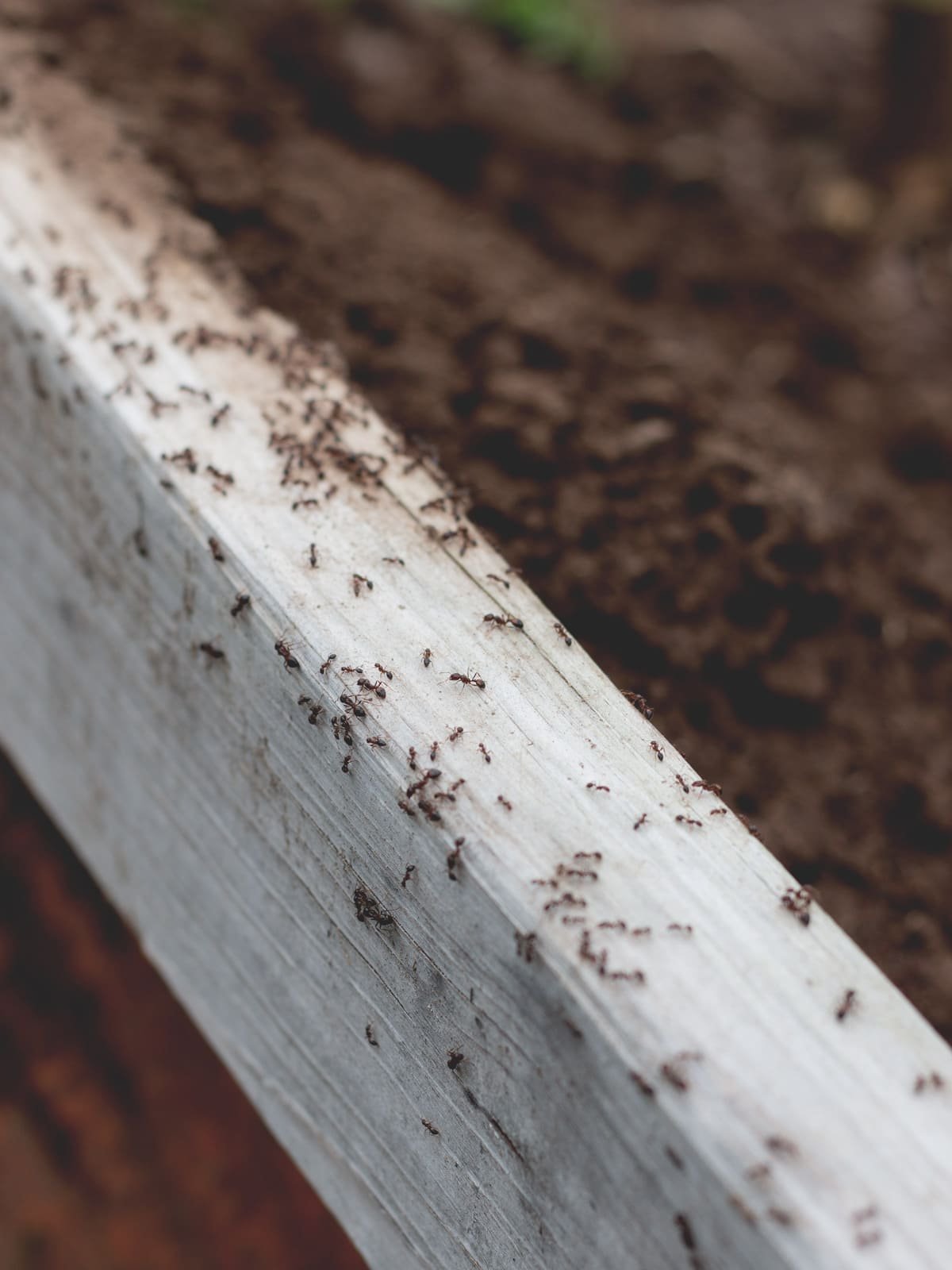
Garden control is not just about killing ants. It is also about avoiding damage to the plants you want to keep. Fire ants often build in sunny, dry spots, including around raised beds, mulch lines, and irrigation edges. Those spots are also where roots and beneficial insects are active.
For edible gardens, always check the product label for use around fruits, vegetables, and herbs. Some products are for ornamental beds only. Others can be used in gardens but require a waiting period before harvest or a specific application method. If the label does not clearly allow the use, do not assume it is safe.
Credit: cosmopolitancornbread.com
Keep pollinators in mind
Fire ants can also affect ground-nesting bees and other helpful insects. Broad insecticides sprayed over large areas can harm more than the target pest. That is why targeted bait and spot treatment usually make more sense than blanket spraying.
Try to treat only active ant areas, not the whole garden. If you have flowers that attract bees, apply products when pollinators are least active, and never spray open blooms unless the label specifically allows it. This small habit can prevent a bigger ecological problem later.
Simple garden protection steps
- Use spot treatments instead of wide spraying.
- Keep bait and liquid products off edible leaves.
- Mark treated mounds so you do not retouch them too soon.
- Inspect mulch, edging, and raised-bed corners every week.
Know which method works best in each situation
Not every fire ant problem needs the same solution. The best method depends on what you value most: speed, colony kill, or plant safety. A quick spray may look satisfying, but a bait may solve the problem better over time. In many gardens, the smartest answer is a two-step plan.
| Method | Speed | Colony kill | Garden safety | Best use |
|---|---|---|---|---|
| Bait | Slow | High | Good when used correctly | Long-term control around beds and lawns |
| Mound drench | Fast | Medium | Depends on label and placement | Visible mounds that need quick knockdown |
| Granular insecticide | Moderate | Medium to high | Good if labeled for garden use | Broader area treatment with targeted spread |
| Boiling water | Very fast on contact | Low | Poor near roots | Rare cases in non-plant areas |
One detail many beginners miss: fire ants often have multiple queens or satellite nests. That means one mound can be only part of the problem. If new mounds keep showing up within a few days, the colony may already be spread across the area. In that case, treating just one nest is not enough.
Another point is timing. After heavy rain, fire ants may move higher in the soil or relocate. After a drought, they may cluster deeper. Both changes can affect how well treatments work. A method that fails one week may work better the next simply because the ants changed behavior.
Prevent new mounds from returning
Killing the current colony is only half the job. Fire ants return when the garden gives them easy nesting spots. Dry soil, thick mulch, irrigation leaks, and disturbed ground all make the area attractive. If you fix the conditions that attract them, you reduce repeat infestations.
Start with moisture control. Fire ants like sunny, dry areas, but they also gather near steady water sources. Leaky hose bibs, drip line puddles, and soggy mulch edges can encourage new nesting. Good drainage and even watering help more than many people expect.
Credit: cosmopolitancornbread.com
Reduce nesting sites
- Keep mulch from piling too deeply against stems and bed edges.
- Repair leaks in drip systems and hoses.
- Remove clutter, boards, or bricks where ants can nest.
- Check soil edges, pavers, and compost borders weekly.
Soil disturbance matters too. Fire ants often build around new landscaping, freshly turned soil, and compacted edges. If you add new beds, inspect them often during the first month. Early treatment is easier than waiting until the colony grows.
A useful long-term habit is perimeter monitoring. Walk the garden every 7 to 10 days during warm months and look for loose soil, dome-shaped mounds, or fast ant movement. Catching a new mound early can save hours later.
A practical step-by-step plan for most gardens
If you want a simple plan that works in most situations, use this order. It balances speed, safety, and long-term control. This is often the most reliable approach for someone searching for how to kill fire ants in garden spaces without making the problem worse.
- Identify all active mounds in and around the garden.
- Apply bait to the wider area on a dry day.
- Wait several days to let ants carry it home.
- Treat the most active mounds directly if needed.
- Recheck the area after rain, watering, or 1 to 2 weeks.
- Fix moisture and nesting conditions to prevent return.
This sequence works because it handles both the visible ants and the hidden colony. You are not forcing one method to do all the work. That is usually where control fails. Bait reduces colony strength, and direct treatment gives you fast relief where the ants are causing the most trouble.
If you have a heavy infestation across a large garden, you may need repeated treatment. Most products are not one-and-done forever. Expect follow-up checks. That is normal and often necessary for lasting control.
Common mistakes that make fire ant control fail
The biggest mistake is treating too early with the wrong product. People often see ants and rush to spray the mound right away. That can scatter the colony or kill only the surface workers. The queen stays hidden, and the mound comes back.
Another common mistake is using bait and then disturbing the mound. If you dig it up or apply water right after baiting, the ants may stop feeding. That cuts off the treatment path. Bait needs time and calm conditions to work well.
Other errors to avoid
- Applying bait before rain or overhead watering.
- Using a product not labeled for garden use.
- Overapplying, which can reduce ant feeding.
- Expecting instant results from a slow-acting bait.
- Ignoring nearby satellite mounds.
One less obvious issue is impatience. Some treatments take 3 to 14 days to show strong results. If you switch products too fast, you may never let the first treatment work. Pick a plan, follow the label, and give the product enough time before changing tactics.
If the infestation keeps returning after correct treatment, the issue may be broader than a single nest. In that case, the surrounding yard, nearby mulch beds, or even adjacent properties may be feeding the problem. That is when a larger perimeter strategy becomes more useful than repeated single-mound attacks.
When to call a professional
Most garden fire ant problems can be handled by a careful homeowner. Still, there are times when professional help makes sense. If the infestation is large, keeps spreading, or sits close to a play area, professional pest control may save time and reduce risk.
Call a professional if you have repeated stings, multiple active nests, or a garden with sensitive plants you cannot risk treating yourself. A pro can identify hidden satellite nests and choose a broader control plan. This is especially useful if the ants return after two or three proper treatment attempts.
Also call for help if you are not sure whether the mound is fire ants or another species. Correct identification matters because different ants need different products and timing. A wrong guess can waste time and money while the colony keeps growing.
Credit: jdmpestcontrol.ca
FAQ
1. What is the fastest way to kill fire ants in a garden?
The fastest visible knockdown is usually a labeled mound treatment applied directly to the active nest. It reduces ant activity quickly, but it may not destroy the whole colony. For longer control, many gardeners follow up with bait.
2. Is bait better than spray for fire ants?
Bait is usually better for colony control because worker ants carry it back to the queen. Spray or drenches work faster on the surface, but they often miss the deeper nest. For many gardens, bait plus spot treatment gives the best balance.
3. Can I use boiling water on fire ants near plants?
Boiling water can kill ants on contact, but it can also damage roots, soil life, and nearby seedlings. It is risky in garden beds and usually not the best option near vegetables or flowers. Use labeled garden products instead.
4. How long does it take to see results after treatment?
Fast-acting mound treatments may reduce activity in minutes or hours. Baits often take several days to work because ants need time to carry them into the nest. Some colonies may need a second round after 1 to 2 weeks.
5. How do I stop fire ants from coming back?
Keep soil dry where possible, fix leaks, reduce thick nesting spots, and inspect the garden every week during warm weather. Treat new mounds early before they spread. Long-term prevention works best when you combine monitoring with targeted control.