
A Kubota B3200 no crank no start problem usually points to a power, safety, starter, or fuel issue. The good news is that the cause is often simple, and you can narrow it down fast with a few checks.
The key is to separate no crank from crank but no start. If the engine does not turn over at all, you are likely dealing with battery power, wiring, safety switches, or the starter circuit. If it cranks but will not fire, the problem shifts toward fuel delivery, air, or engine protection systems.
This guide walks through the most likely causes, how to diagnose them in order, and what fixes make sense before you start replacing parts. You will also see a few less obvious problems that catch many owners off guard, like weak batteries that still light the dash and safety switches that fail only under load.
For wider troubleshooting context, compare this guide with Kubota B3200 Problems: Common Issues, Causes, and Fixes, Kubota B3200 problems, Kubota B7800 problems.
Start with the symptom: no crank or crank but no start?
Before testing parts, identify which symptom you really have. That small step saves a lot of time because the Kubota B3200 no crank no start complaint can hide two different problems.
No crank means the starter motor never turns the engine. You may hear a click, a weak click, or nothing at all. Crank but no start means the starter spins the engine normally, but the engine does not run on its own.
If the dash lights come on but the starter does nothing, focus on battery voltage, cable connections, safety switches, fuses, relay, and starter solenoid. If the engine cranks strongly but never catches, move to fuel shutoff, air in the fuel system, glow plugs in cold weather, and fuel filter issues.
| Symptom | Most likely area | What you hear |
|---|---|---|
| No crank, no click | Battery, fuse, key switch, safety switch | Nothing |
| No crank, single click | Starter solenoid, weak battery, poor cable connection | One click |
| Cranks, no start | Fuel delivery, glow plugs, air in fuel, fuel shutoff | Starter spins engine normally |
A weak battery can still power lights and gauges, so do not trust the dash alone. On a 12-volt system, a resting battery below about 12.4 volts is already suspicious, and a battery can drop much lower under starter load even if it looks fine at rest.
Check the battery and cable connections first
Most no-crank problems start with weak power delivery. Even a battery that seems “good enough” can fail to deliver enough current for the starter motor, especially in cold weather or after the tractor has sat unused for weeks.
What to test
- Battery voltage with the key off
- Voltage while turning the key to start
- Battery terminal tightness and corrosion
- Ground cable connection to frame and engine
Use a multimeter if you have one. A healthy fully charged 12-volt battery should read about 12.6 volts at rest. If it drops under about 10 volts during cranking, the battery may be weak even if the lights still work.
Clean both battery posts and cable ends. Remove white or green corrosion, then tighten the connections firmly. Also check the ground cable where it bolts to the frame or engine block. A loose ground can create a no-crank condition that looks exactly like a dead starter.
One non-obvious issue is cable damage inside the insulation. The outside may look fine, but the cable can have hidden corrosion or broken strands. If the cable feels stiff, swollen, or warm after a start attempt, suspect high resistance and replace it.
Simple battery test without tools
- Turn on the headlights or dash lights.
- Turn the key to start.
- Watch the lights closely.
If the lights go very dim or shut off completely, the battery may be weak or the cable resistance may be too high. If the lights stay bright but the starter does nothing, the issue may be in the control circuit instead of the battery itself.
Check the safety switches and interlock circuit
Kubota tractors use safety switches to prevent unsafe starting. If any switch does not confirm the correct position, the starter circuit may stay open. That means the tractor will refuse to crank even when everything else seems normal.
The usual suspects are the seat switch, PTO switch, and range or neutral switch. Depending on the exact setup, the tractor may also require the parking brake or hydrostatic pedal position to be correct before it will crank.
How to spot a switch issue
A switch problem often shows up as an intermittent no-crank. The tractor may start one day and fail the next. It may also start only when you sit a certain way, move the PTO lever, or wiggle the shift lever.
Look for loose connectors, damaged wires, dirt around the switch plunger, or a switch that feels sticky. If the tractor starts only when a lever is moved slightly, that is a strong clue that a safety switch or adjustment is off.
Seat switches are especially tricky. A worn seat switch may work when you first sit down, then fail as vibration shifts the contact. That is why some owners replace the starter or solenoid first and still have the same problem.
If you want the official layout for your tractor’s controls and safety system, the official manufacturer support page is the safest place to confirm the correct operator manual for your exact B3200 version.
Quick diagnostic checks
- Make sure the PTO is fully off.
- Set the range selector and hydrostatic controls to the correct neutral position.
- Confirm the parking brake is engaged if your setup requires it.
- Test whether the starter works only when someone is seated.
Do not bypass safety switches permanently. They exist for a reason. Temporary testing is one thing; leaving them bypassed can create a serious injury risk.
Test the starter relay, solenoid, and key switch
If the battery is strong and the safety switches are passing, the next step is the starter control circuit. This includes the key switch, starter relay, and starter solenoid. A failure anywhere in that chain can stop cranking completely.

Credit: reddit.com
What each part does
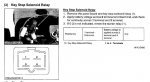
The key switch sends the start signal. The relay acts like an electrical helper that carries the control signal. The solenoid then sends battery power to the starter motor. If the solenoid does not close, the starter never receives full power.
A single click often points to the solenoid trying to work but not fully engaging. No click at all can mean the key switch, relay, fuse, or safety circuit is not sending the signal forward.
Simple ways to isolate the fault
- Listen carefully when turning the key to start.
- Check whether the relay clicks.
- Inspect fuses related to starting and ignition.
- Test for power at the solenoid small terminal when the key is turned.
If power reaches the solenoid but the starter does not engage, the solenoid or starter motor may be bad. If no power reaches the solenoid, the problem is upstream in the relay, switch, or safety circuit.
A useful clue is heat. A failing solenoid can work cold, then fail after the tractor warms up. That is because worn contacts expand and lose connection. Many owners replace batteries before finding this problem, but the symptom is actually in the start relay path.
When the key switch is the problem
The key switch can wear internally after years of use. It may send power to accessories but fail on the start position. If turning the key feels loose, gritty, or inconsistent, the switch deserves attention.
Testing the switch with a meter is the cleanest approach. You want to confirm that the start terminal receives power when the key is fully turned. If it does not, the switch may be failing even though the tractor still has dash power.
If it cranks but will not start, move to fuel and glow plug checks
Once the engine cranks normally, the starter side is probably fine. At that point, the Kubota B3200 no crank no start complaint is really a no-start problem, and fuel delivery becomes the main focus.
Check the fuel shutoff and fuel supply
Diesel engines need clean fuel, steady flow, and no air in the system. Start by confirming the fuel shutoff valve is open and there is enough fuel in the tank. A low tank can pull air into the pickup under slope or vibration, which causes confusing intermittent failures.
Inspect the fuel filter for clogging or water contamination. If the filter has not been changed in a long time, replace it before chasing deeper problems. A partially blocked filter can still allow enough fuel for idle but not enough for starting.
Air leaks are another hidden cause. Loose clamps, cracked fuel lines, or a bad filter seal can let air in without leaking fuel out. That is why the tractor may crank fine but refuse to fire until the system is bled properly.
Cold weather and glow plugs
In cooler temperatures, glow plugs matter a lot. If the glow plug circuit fails, the engine may crank but not ignite well, especially below 50°F / 10°C. The tractor may seem like it is “almost starting” but never catches.
Check whether the glow plug indicator behaves normally and whether the plugs receive power. A weak battery can also reduce glow plug performance, so the same battery issue can create both no-crank and no-start symptoms depending on conditions.
One overlooked detail is cranking speed. Diesel engines need a good spin to build compression heat. If the engine cranks slowly, it may never reach the temperature needed to fire, even if fuel is present.
Injector and fuel shutoff concerns
If the tractor has fuel to the injection pump but still will not start, the fuel shutoff solenoid or injection system may be the problem. This is less common than battery or filter trouble, but it becomes more likely if the engine has sat for a long time or old fuel is in the tank.
Old diesel can form varnish and deposits. Even after a few months of storage, water and contamination can clog small passages. That is why fuel quality matters more than many owners expect.
Look for mechanical resistance if the engine will not turn
Sometimes the starter is not the real issue. If the engine does not crank because it physically cannot turn, you may be dealing with mechanical resistance. This is less common, but it is serious.
Credit: orangetractortalks.com
Signs of a mechanical issue
- The starter clicks, but the engine barely moves
- The crankshaft turns by hand with unusual stiffness
- You hear a clunk or grind instead of smooth rotation
- The starter gets hot very quickly
Possible causes include a seized accessory, hydro lock from fuel or coolant intrusion, or internal engine damage. If the tractor stopped suddenly while running and now will not crank, do not keep forcing the starter. That can damage the starter, cables, or flywheel ring gear.
Try turning the engine manually if you are comfortable and the machine is safe to work on. If it will not turn by hand, stop there and investigate the cause before continuing. This is one situation where forcing the start circuit can turn a repairable issue into a major repair.
A practical diagnosis order that saves time
Use a simple order so you do not replace parts at random. Start from the easiest checks and move outward only when the previous step passes.
- Confirm the symptom: no crank or crank but no start.
- Check battery voltage and cable condition.
- Verify safety switches and lever positions.
- Listen for relay and solenoid clicks.
- Test starter power at the solenoid.
- If it cranks, check fuel, glow plugs, and filter.
- Inspect for mechanical binding only if needed.
This order matters because battery and cable problems cause a huge share of no-crank complaints. A tractor can look powered up and still not have enough current to spin the starter. In winter, a battery that was barely acceptable in summer may fail completely under load.
Another useful insight: a bad ground can imitate a bad starter. The starter itself may be fine, but the return path for current is weak. That is why cleaning one cable end is not enough. Always inspect both positive and negative sides.
Common mistakes to avoid
Many owners jump straight to replacing the starter. That is understandable, but it is often the wrong first move. A starter will not solve a weak battery, poor ground, or a safety switch that blocks the control circuit.
Another mistake is assuming dash lights prove the battery is good. Lights take very little power compared with the starter motor. A battery can run the dashboard easily and still fail the moment the starter tries to draw several hundred amps.
Do not ignore the fuel side just because the engine worked recently. Diesel tractors can develop air leaks, clogged filters, or winter starting trouble after only a short period of sitting. Old fuel is a common reason for “it cranks but will not fire.”
Finally, avoid bypassing safety switches for normal use. Short-term testing is fine if you understand what you are doing, but the switches must be restored before operation. Safety should never be treated as optional on a tractor.
When to call for professional help
Call a qualified diesel mechanic if the engine will not turn by hand, if you suspect internal engine damage, or if the starter circuit tests are unclear and you do not have a meter. Professional help also makes sense if the problem is deep in the injection system or if the tractor has a recurring electrical fault you cannot isolate.
If you have fuel on the ground, damaged wiring, blown fuses that keep returning, or a starter that gets extremely hot, stop troubleshooting and get help. Those are signs the issue may be bigger than a simple maintenance fix.
For most owners, though, the solution is usually found in the first few checks: battery, cables, safety switches, relay, or fuel filter. Working in that order keeps the repair simple and lowers the chance of replacing parts that were never the real problem.
If you are dealing with a Kubota B3200 no crank no start issue today, begin with battery voltage and cable cleanup before anything else. From there, move through the safety circuit and starter controls, then fuel and glow plugs if the engine cranks but will not fire. That approach solves most cases without guesswork.
Credit: orangetractortalks.com
After the main fault is fixed, run the machine briefly under light load and recheck the related belt, wiring, fuel, fluid, and safety-switch areas before returning it to normal work.
FAQs
Why does my Kubota B3200 click but not crank?
A single click usually means the starter solenoid is trying to engage, but the battery may be weak, the cables may have high resistance, or the solenoid contacts may be worn. Start by checking battery voltage under load and cleaning both battery terminals and ground connections.
Can a bad seat switch stop the tractor from starting?
Yes. A faulty seat switch can block the starter circuit and create a no-crank condition. If the tractor starts only when you shift your weight or sit a certain way, the seat switch or its connector is a strong suspect.
What voltage should the battery show on a Kubota B3200?
A fully charged 12-volt battery should read about 12.6 volts at rest. If it falls below about 12.4 volts, charge and retest it. If voltage drops sharply during cranking, the battery may be weak even if it still powers the dash.
Why does my tractor crank in warm weather but not in cold weather?
Cold weather reduces battery output and makes diesel fuel harder to ignite. Weak glow plugs, thick engine oil, or a tired battery can cause a no-start only when temperatures drop. A battery that seems fine in summer may fail in winter.
Should I replace the starter first on a no-crank problem?
Not usually. It is better to test the battery, cables, safety switches, relay, and solenoid first. Many no-crank problems are caused by poor connections or control-circuit faults, not a bad starter motor.