
Grasshoppers can strip young plants fast, especially in hot, dry weather. If you want to know how to get rid of grasshoppers in garden spaces without using harsh chemicals, the good news is that you have several safe options.
The best control method is not one single spray or trick. It is a mix of early action, simple barriers, smarter watering, and targeted natural treatments. That approach works better because grasshoppers are easier to stop when they are still young and small.
Below, you’ll see what actually works, what wastes time, and how to protect vegetables, flowers, and young seedlings with practical steps you can use right away.
Start with the grasshopper life cycle
To control grasshoppers well, you need to know when they are weakest. Adult grasshoppers are strong jumpers and can fly short distances, so they are harder to manage once they are active in large numbers. Nymphs, which are young grasshoppers, cannot fly yet. That makes them easier to catch, block, or treat.
Most grasshopper problems begin in dry areas with weeds, bare soil, and long grass around the garden edge. Eggs often hatch in late spring or early summer, and the young insects move into nearby plants quickly. If you wait until leaves are full of holes, the problem is already well established.
This is why timing matters. One useful non-obvious point is that garden damage often starts at the edges first. Grasshoppers move in from nearby weeds, fence lines, ditches, and unmowed areas before spreading inward.
How to spot an early infestation
Look for uneven chewing on leaves, stripped seedlings, and insects jumping when you walk through the garden. You may also notice small black or green nymphs on low plants in the morning. They often rest in weeds or thick mulch during the hottest part of the day.
If you see damage on several plants at once, don’t wait for the population to explode. A small infestation can become a serious one in just a few warm weeks.
Reduce the conditions that attract them
The first step in how to get rid of grasshoppers in garden areas is to make the space less inviting. Grasshoppers prefer open, dry, weedy places with easy access to food. They are less likely to stay where plants are healthy, protected, and harder to reach.
Weed control is one of the simplest and most overlooked tools. Weeds feed young grasshoppers and give them shelter. Mow grass around the garden, trim fence lines, and remove tall weeds near paths, compost piles, and sheds. This can lower pressure before any treatment starts.
Watering also helps more than many gardeners realize. Dry plants are more likely to be chewed, and dry soil often means more surrounding habitat for grasshoppers. Deep watering in the morning can make plants stronger and reduce stress. Strong plants recover better from chewing damage.
Simple habitat changes that help
- Remove weeds around the garden edge at least once a week.
- Keep grass trimmed short near vegetable beds.
- Clear plant debris where young grasshoppers can hide.
- Use mulch carefully so it does not create thick hiding spots near stems.
- Water early in the day so plants stay less stressed during heat.
One detail many gardeners miss: thick, messy borders are often the real source of the problem, not the vegetable bed itself. If you only treat the crops but ignore the surrounding area, grasshoppers usually come back.
Use barriers before the damage spreads
Physical barriers are one of the safest and most reliable natural methods. They do not kill grasshoppers, but they keep them off the plants you care about. For young vegetables and seedlings, that protection can be the difference between a healthy crop and a bare stem.
Row covers are especially useful. These lightweight fabric covers let in light and water while blocking insects. Make sure the edges are sealed well, because grasshoppers can slip under loose fabric. If the plants need pollination, remove the cover when flowers open or use it only during the early growth stage.
Fine mesh netting also works well on raised beds and container gardens. In small gardens, even simple screening around vulnerable crops can reduce feeding. For tall plants, you may need to support the cover with hoops so the fabric does not rest directly on the leaves.
Best plants to protect first
Start with anything tender. Beans, lettuce, basil, young peppers, and newly transplanted seedlings are often damaged first. Mature woody herbs and tougher leaves usually suffer less, so they are lower priority.
If you only have enough material for part of the garden, use it on the most vulnerable crops. That gives you the biggest return for the least effort.
Natural treatments that actually help
Some natural controls can reduce feeding when used correctly. They work best on young grasshoppers and smaller outbreaks. They are not instant fixes, but they can lower the pressure enough to protect plants while the population drops.
Neem-based sprays are a common option. Neem can reduce feeding and interfere with insect growth when applied as directed. It works better when grasshoppers are small and actively feeding. Spray leaves in the evening to reduce the chance of leaf burn and to give the product time to dry.
Kaolin clay is another helpful tool. It forms a thin white film on leaves that makes plants less attractive and harder to feed on. This barrier does not poison the insects. Instead, it changes the leaf surface and can discourage repeated damage. It is especially useful on fruit trees, peppers, and larger garden plants.
Insecticidal soap is less effective on grasshoppers than on soft-bodied pests like aphids, but it can help if nymphs are exposed and small. It usually works best as part of a larger plan, not as the only tool.
If you want a good safety reference for insecticide use and garden pest control, the university extension grasshopper guide is a practical source with plant-safe advice.
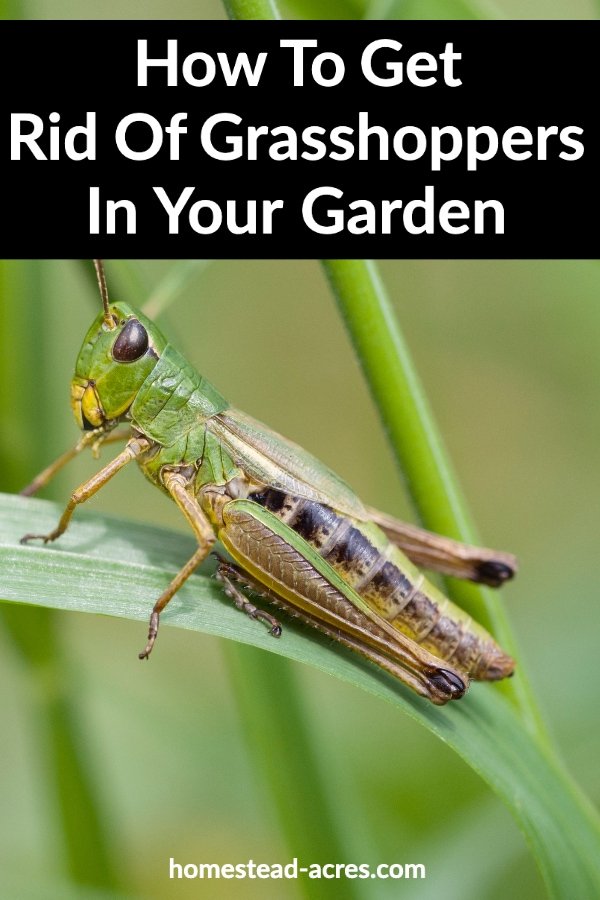
Credit: homestead-acres.com
What natural sprays can and cannot do
Natural sprays are most useful when the problem is still limited. They are less effective against large flying adults in open areas. That is one of the most common mistakes gardeners make: they expect a spray to solve a habitat problem.
If grasshoppers keep coming from nearby weeds or fields, you need barriers and habitat cleanup too. The spray helps, but it does not stop new insects from arriving.
Use targeted control methods at the right time
Timing is one of the biggest factors in success. The best window is usually when grasshoppers are still small nymphs and before they have spread widely. At this stage, they gather in groups and feed near where they hatched.
Hand removal can work in small gardens. In the early morning, when insects move more slowly, you can knock them into a bucket of soapy water. This is not pleasant, but for a tiny infestation, it can make a real difference. It also gives you a better sense of where the problem is strongest.
Another useful tactic is to focus on hotspots. Grasshoppers often gather in sunny, dry sections of the yard, especially near borders and weeds. Treating just those areas can save time and reduce the amount of product you need to use.
Signs that you are acting too late
If you see many adults flying up each time you walk through the garden, the population is already well established. At that point, focus on protecting high-value plants, limiting breeding areas, and preventing new damage rather than trying to wipe out every insect.
This is a key insight: complete elimination is rarely realistic in home gardens. Better control means fewer plants damaged, not zero grasshoppers ever again.
Encourage natural predators and balance
Nature can help more than many gardeners expect. Birds, spiders, robber flies, and some beneficial insects eat young grasshoppers or reduce their survival. You will not “solve” a large outbreak with predators alone, but you can support a healthier garden that is less prone to sudden pest spikes.
Birds are especially useful in open gardens. A birdbath, small shrubs for cover, and a diverse landscape can attract them. Avoid broad-spectrum insecticides that kill helpful insects along with pests. When you remove all insect life, you often remove the helpers too.
Healthy garden diversity also matters. Mixed plantings can make it harder for grasshoppers to move from one easy food source to another. A garden with strong borders, varied plant height, and fewer weedy patches is less attractive than a flat, uniform area.
Credit: squarefootgardening.org
Do companion plants solve the problem?
Companion planting can help a little, but it is not a magic fix. Some strongly scented herbs may reduce feeding in small areas, yet they will not stop a heavy infestation. Use them as support, not as the main defense.
Think of companion plants as a small part of a bigger system. They may help mask the crop, but barriers and cleanup still do the heavy lifting.
Use a simple action plan for the next 7 days
If the damage is already starting, a short plan works better than random fixes. The goal is to reduce feeding fast, protect the best plants, and remove the conditions that are feeding the infestation.
- Inspect the garden early in the morning and mark the worst feeding areas.
- Mow or weed the borders, fence lines, and nearby tall grass.
- Protect seedlings and tender crops with row covers or netting.
- Apply a natural treatment such as neem or kaolin clay where needed.
- Check plants every 2 to 3 days for new damage or hidden nymphs.
- Remove grasshoppers by hand in small patches if the numbers are low.
This kind of routine works because it combines fast action with prevention. It also keeps you from overusing sprays, which is better for your plants and for helpful insects.
Another helpful point: grasshopper pressure often rises after hot, dry weather and drops after heavy rain or cooler periods. Watch the weather. If you know a dry stretch is coming, protect young plants before the damage begins.
Common mistakes that make the problem worse
Many gardeners treat grasshoppers only after the plants are badly damaged. By then, the insects have already moved in and spread out. Early action is always easier than late cleanup.
Another mistake is spraying the plants but leaving weeds and tall grass untouched. That is like closing the front door while leaving the back gate open. The insects simply move back in from the edges.
Some people also use strong products too often. That can hurt beneficial insects and still fail to control the grasshoppers. For most home gardens, a safer mixed approach is more effective than repeated heavy spraying.
Finally, don’t assume all leaf damage is from the same pest. Grasshoppers leave irregular holes and chew from the edges inward, but other insects can cause similar-looking damage. Check the plant closely before choosing a treatment.
When professional help makes sense
If you have a very large infestation, repeated plant loss, or an outbreak that spreads from nearby fields or unmanaged land, a local extension office or pest professional can help identify the best next step. This is especially useful if the problem returns every year.
Call for help sooner if you are unsure whether the insects are grasshoppers or something else. Correct identification saves time, money, and plant stress. If you are using any treatment around edible crops, always follow the label directions carefully and avoid over-application.
For most home gardens, though, you can make real progress with cleanup, barriers, and targeted natural control. The key is consistency, not perfection.
Final takeaways for safer grasshopper control
The most effective way to handle how to get rid of grasshoppers in garden areas is to combine prevention with targeted action. Clean up weeds, protect tender plants, and treat early while the insects are still small.
Do not rely on one method alone. A row cover, a little neem or kaolin, and a cleaner garden edge will usually beat one heavy spray every time. If you stay ahead of the first wave, you can protect most plants without harsh chemicals.
Grasshopper control works best when you think like the pest. Cut off food, remove shelter, and block access to the plants they like most. That approach is simple, safe, and strong enough for a home garden.
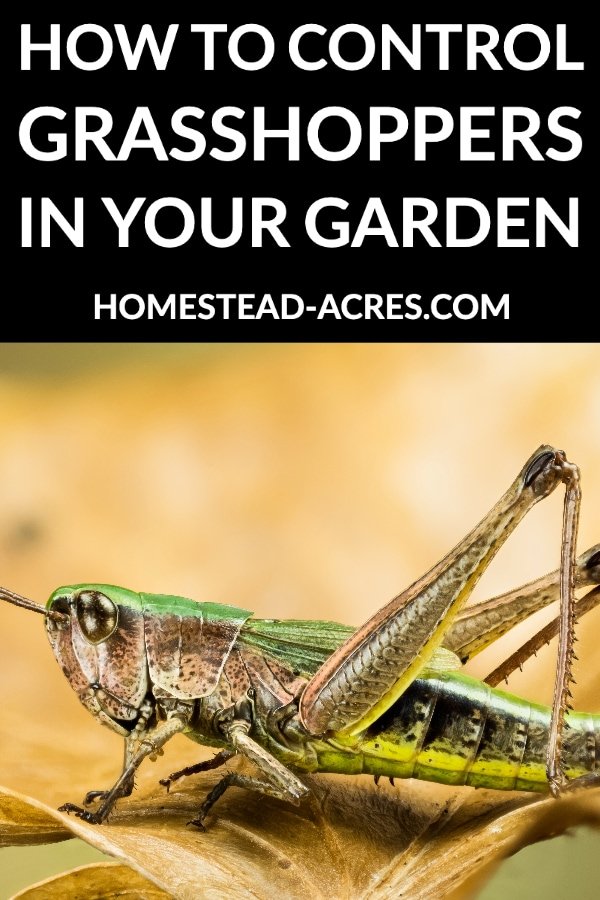
Credit: homestead-acres.com
FAQs
1. What is the fastest natural way to stop grasshoppers from eating my plants?
The fastest safe option is to protect tender plants with row covers or mesh, then remove weeds and tall grass around the garden edges. If you also treat hotspots with neem or kaolin clay, you can slow feeding quickly while you work on the source of the problem.
2. Do coffee grounds, garlic, or chili spray really work on grasshoppers?
They may help a little in light cases, but they are usually not strong enough for a real infestation. Grasshoppers are tough feeders. Physical barriers and targeted garden cleanup are usually more effective than homemade sprays alone.
3. Will grasshoppers go away on their own?
Sometimes the numbers drop after weather changes, but you should not wait for that. If conditions stay hot and dry, grasshoppers can keep feeding for weeks. Taking action early gives you much better control than hoping they disappear.
4. Are grasshoppers dangerous to pets or children?
Grasshoppers are not dangerous in the way stinging insects are, but the products used to control them can be a concern. Keep children and pets away from treated plants until the product is dry, and always follow label directions exactly.
5. What plants do grasshoppers usually damage first?
They often target soft, tender plants first, such as lettuce, beans, peppers, basil, and young seedlings. New transplants are especially vulnerable because their leaves are easy to chew and the plants have less strength to recover.