
Yes, will diluted vinegar kill plants in the garden—but usually only when the spray hits the leaves, stems, or very young seedlings directly. Even then, the damage is often uneven, and a weak mix may only burn some tissue instead of killing the whole plant.
That is why vinegar looks simple but behaves in a tricky way. It can work as a fast weed burn-down on small weeds, yet it can also injure flowers, vegetables, and lawn grass if you spray carelessly or when wind moves the mist.
If you want to use vinegar safely, the key is to understand concentration, plant type, weather, and where the spray lands. A few details make the difference between a clean weed kill and a ruined garden bed.
How diluted vinegar affects garden plants
Vinegar is mainly acetic acid mixed with water. In garden use, the acid damages the outer layer of plant tissue, pulls water out of cells, and causes leaf burn. That is why treated leaves often curl, brown, or look wilted within a few hours.
But vinegar is not a selective herbicide. It does not “know” the difference between a weed and a tomato plant. Any green tissue it touches can be injured, especially tender growth. Young plants, soft annual weeds, and seedlings are the most vulnerable.
The strength matters a lot. Household vinegar is usually around 5% acetic acid. Garden-strength vinegar can be 10% to 20% or more, which is much harsher. A higher concentration can burn faster, but it also raises the risk of killing nearby plants or irritating skin and eyes.
What “diluted” really means in practice
Many people assume diluted vinegar is harmless. That is not true. Even a weak spray can damage leaves if enough of it lands on the plant. The result depends on how much you spray, how often you spray, and whether the plant is already stressed by heat or drought.
Another thing beginners miss: vinegar works mostly on contact. It may burn visible parts of a weed, but it usually does not travel deep enough to kill strong root systems. That means some weeds die back, then grow again from the roots.
Which plants are most likely to get hurt
Some plants are much more sensitive than others. Seedlings, lettuce, beans, herbs with soft leaves, and ornamentals with thin foliage can show damage quickly. Broadleaf weeds also burn easily, but only if you hit them directly.
Established perennials are tougher. A dandelion, dock, or bindweed patch may look damaged after vinegar, yet the roots can survive. Woody plants, mature shrubs, and thick-stemmed ornamentals often need a stronger or repeated hit before visible damage shows up.
When vinegar can kill plants and when it only burns them
Whether diluted vinegar kills plants in the garden depends on how much tissue it contacts and how young the plant is. If the spray covers the entire top growth of a small seedling, the plant may die. If it only touches a few leaves, the plant may recover.
For most garden weeds, vinegar gives you top burn first. That means the leaves dry out fast, but the root may stay alive. This is why gardeners often see the same weed come back after a week or two.
The practical rule is simple: vinegar is better at killing tiny annual weeds than deep-rooted or established plants. It is also much less reliable in cool weather, on dusty leaves, or when the plant has waxy foliage that repels spray.
Why weather changes the result
Hot, sunny weather makes vinegar work faster because the acid and heat both stress the plant. That sounds useful, but it also means nearby desirable plants are at higher risk. A small drift can cause leaf scorch on flowers or vegetables close to the target area.
Rain after spraying can reduce the effect if it washes the acid off too soon. Wind is another problem because it spreads fine droplets farther than you expect. On a breezy day, vinegar can damage plants several feet away from the target weed.
Why some weeds seem to survive
Many weeds have growth points near or below the soil surface. Vinegar does not move well through the plant the way a systemic herbicide does. So the leaves may be damaged, but the living crown or root survives.
That is also why repeated use can be frustrating. You may feel like you are winning because the top growth keeps turning brown. Then new growth appears from the same place. Vinegar can weaken weeds, but it is rarely a one-spray solution for tough perennials.
| Situation | Likely result | Risk to nearby plants |
|---|---|---|
| Small seedling hit directly | Often killed | Low to moderate if spray stays on target |
| Established broadleaf weed | Leaf burn, possible regrowth | Moderate |
| Woody or deep-rooted weed | Usually only surface damage | Moderate to high if overspray occurs |
| Soft garden plant or seedling | May die from direct contact | High |
How to use vinegar without harming your garden beds
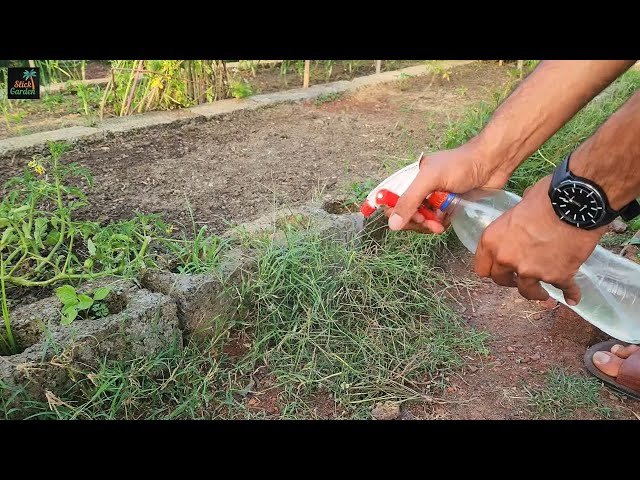
If your goal is weed control, the safest approach is precision. Do not spray broadly and hope for the best. Target only the weed leaves, keep the nozzle low, and protect nearby plants with cardboard or your hand-held shield.
Spraying early in the day can help you see what you are hitting, but avoid windy conditions. It is also smart to use a small spray bottle for a few weeds instead of a pump sprayer that creates more drift. More mist usually means more accidental damage.
Wear gloves and eye protection. Even household vinegar can sting skin and eyes, and stronger garden vinegar can be much more irritating. If you use any vinegar stronger than 5%, treat it like a real chemical, not a kitchen ingredient.
Credit: thegardencrafter.com
Simple application steps
- Identify the weed and check that no desirable plant is touching it.
- Choose a calm, dry day with little or no wind.
- Use the smallest spray bottle or applicator that can do the job.
- Spray only the weed leaves until they are lightly coated, not dripping.
- Watch the area for 24 to 48 hours and remove dead growth if needed.
Do not spray before rain, and do not assume one treatment will solve the problem. For many weeds, the real benefit is repeated top burn that slowly weakens the plant. That works better on small, shallow-rooted weeds than on large ones.
Best places to use vinegar, and places to avoid
Vinegar makes the most sense on cracks in sidewalks, gravel paths, and areas far from valuable plants. It can also help with very young weeds in non-crop spaces. These are places where a little burn-down is acceptable and root kill is less important.
Skip vinegar near vegetable transplants, flower borders, herb beds, and lawns unless you are applying with extreme care. Grass is especially easy to damage because the spray can settle across a wider surface than you planned.
If you want more guidance on garden-safe weed control and plant sensitivity, a university extension source is a better reference than social media advice. For general weed management basics, see the university extension lawn and garden weed guide.
Common mistakes people make with vinegar in the garden
The biggest mistake is using vinegar like a selective weed killer. It is not selective. It can damage almost any green plant it touches, which is why careless spraying often causes more problems than the weeds themselves.
Another mistake is assuming stronger is always better. Higher acetic acid may increase leaf damage, but it also raises the risk of skin burns, plant injury, and damage to nearby shrubs or vegetables. More strength does not fix poor targeting.
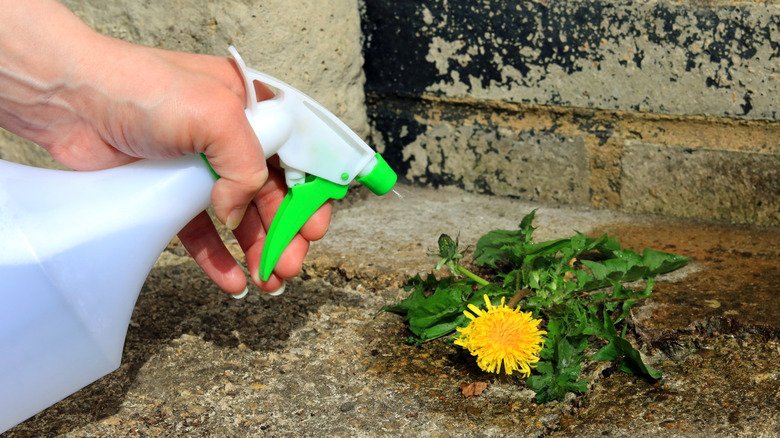
People also underestimate regrowth. A weed that looks dead today may still have a living root system. If you only see brown leaves and stop there, the weed can return. Pulling the plant after it is weakened is often more effective than waiting for vinegar alone to finish the job.
Credit: thegardencrafter.com
Less obvious mistakes that cause trouble
One overlooked issue is spraying on dusty leaves. Dust can block the acid from reaching the tissue evenly, so the result is patchy. Another is treating stressed plants near the target area. Heat-stressed tomatoes or newly planted flowers may collapse after even a tiny amount of overspray.
Using vinegar in soil is also misunderstood. Vinegar is mainly a contact burn tool, not a soil sterilizer. It may lower the pH very briefly on the surface, but it does not provide lasting weed prevention in most garden beds.
What not to expect from vinegar
Do not expect vinegar to kill roots underground, solve large infestations, or replace long-term weed control. It is a spot treatment. That is useful, but only if you use it for the right job.
Also, do not expect perfect results on mature weeds with thick leaves or waxy coatings. These plants often shrug off a light spray and recover quickly.
Better ways to control weeds without risking valuable plants
If the weed is close to flowers, vegetables, or shrubs, physical removal is usually safer than vinegar. Hand-pulling after watering works well because moist soil releases roots more easily. A stirrup hoe or weeding knife can also cut weeds cleanly without spraying anything.
Mulch helps prevent new weeds by blocking light. A 2 to 3 inch layer of organic mulch can reduce weed germination and keep the soil surface cooler. That is a longer-term solution than vinegar, and it does not risk leaf burn.
For cracks and gravel areas, boiling water, flame weeding tools, or repeated mechanical removal may be better options. Each method has trade-offs, but they avoid the overspray problem that makes vinegar risky near garden plants.
How to choose the right method
If the weed is isolated and far from desirable plants, vinegar can be a quick fix. If the weed is inside a bed or crowded next to vegetables, hand removal is the safer choice. If weeds keep coming back, improve the site with mulch, edging, or denser planting instead of relying on repeated sprays.
A simple way to think about it: use vinegar for small, exposed weeds in non-crop spaces. Use physical removal or prevention for anything growing near plants you care about.
Will diluted vinegar kill plants in the garden if you use it carefully?
Yes, will diluted vinegar kill plants in the garden if it hits them directly and the plant is sensitive enough. But careful use does not make it safe for every situation. It simply lowers the chance of unwanted damage.
The best approach is to treat vinegar as a contact burn tool, not a general garden solution. It can help with tiny weeds, but it should not be your first choice around seedlings, ornamentals, or vegetable beds unless you can spray with very tight control.
If your goal is to protect the garden while still removing weeds, precision matters more than strength. The right method is the one that kills the weed without opening a new problem in the rest of the bed.
:strip_icc():format(webp)/handful-of-dandelions-a9eb42c8-4922493ebb794c0f866edb66cd3425ab.jpg)
Credit: bhg.com
FAQs
1. Does diluted vinegar kill weeds permanently?
No, usually not. Diluted vinegar often burns the top growth, but many weeds regrow from the roots or crown. It works best on very small annual weeds.
2. Can diluted vinegar kill vegetables in the garden?
Yes. If the spray lands on vegetables, it can burn or kill leaves, stems, and young seedlings. Even a small amount of overspray can cause visible damage.
3. Is household vinegar strong enough to kill plants?
Household vinegar at about 5% acetic acid can damage and sometimes kill small, tender plants if sprayed directly. It is weaker than garden vinegar, but it is still not harmless.
4. How long does it take for vinegar to damage plants?
Damage can appear within a few hours on hot days. Leaves may look wet, then wilt, brown, or curl by the next day.
5. What is the safest way to use vinegar around plants?
Use a small sprayer, aim only at the weed, avoid windy days, and protect nearby plants with a barrier. If the weed is close to valuable plants, hand-pulling is usually safer.