
Steering trouble on a Cub Cadet mini rider usually starts small: a loose wheel, a worn bushing, or a linkage that no longer tracks straight. The good news is that most Cub Cadet mini rider steering problems can be traced with a few simple checks before you ever think about major repairs.
If the steering feels sloppy, stiff, jerky, or the mower pulls to one side, the cause is often mechanical and easy to spot. You will learn how to find the most likely failure points, what each symptom means, and which fixes are worth trying first.
This guide keeps things practical. You will see the common causes, a clear troubleshooting path, repair tips, and the mistakes that make steering problems worse. If you want straight answers without guesswork, start here.
For wider troubleshooting context, compare this guide with Cub Cadet Super LT 1554 problems, Cub Cadet electric power steering problems.
What usually causes steering trouble on a mini rider
Most steering complaints on a Cub Cadet mini rider come from wear in the front-end parts, not from the steering wheel itself. These machines use a compact steering system, so even a small amount of play in one part can make the mower feel unstable.
The most common issue is worn steering linkage. That includes tie rods, drag links, bushings, and pivot points. When these parts loosen, the front wheels stop following the steering input cleanly, and you feel delayed response or extra movement in the wheel.
Another common cause is damaged front wheel components. Loose wheel bearings, bent spindles, or uneven tire pressure can all imitate steering failure. Many owners chase the wrong problem because the mower still turns, just not smoothly.
A quick way to narrow it down is to watch the front end while someone turns the wheel slowly. If the wheel turns but the front tires lag behind, the issue is usually in the linkage. If one side binds or hops, the problem is often in the spindle, wheel, or axle area.
Common symptoms and what they usually mean
| Symptom | Most likely cause | What you may notice |
|---|---|---|
| Loose steering wheel | Worn linkage or steering shaft play | Wheel turns too far before the tires respond |
| Hard steering | Tight spindle, low tire pressure, rust, or binding joint | More effort needed to turn, especially at low speed |
| Mower pulls left or right | Uneven tire pressure, misaligned front end, worn parts | Steering wheel must be held off-center to drive straight |
| Clicking or popping while turning | Loose fastener, worn joint, or damaged wheel part | Noisy steering under load |
| Jerky steering | Binding pivot, dirty linkage, bent part | Wheel does not move smoothly through the turn |
One non-obvious point: steering problems often get worse after mowing wet grass or washing the machine. Water pushes dirt into joints, then corrosion starts inside places you cannot see. That is why a mower can feel fine one week and sloppy the next.
How to diagnose the problem without tearing the mower apart
Start with the simplest checks first. A lot of Cub Cadet mini rider steering problems can be identified in less than 15 minutes with no tools, or just a tire gauge and a flashlight.
First, check both front tires. Unequal pressure changes steering feel fast. Even a 3 to 5 PSI difference can make a light mower pull to one side. Also look for one tire that is more worn than the other, since that can create a false alignment problem.
Next, test the steering wheel free play. With the engine off and the parking brake set, gently turn the wheel left and right. If the wheel moves a long way before the front tires react, the system has excessive slack. That usually points to worn linkage or loose mounting points.
Then inspect the front end while moving the wheel. Look for joints that move late, jump, or twist oddly. A healthy linkage moves in a smooth chain. If one joint stays still while the next one moves, the worn part is usually easy to identify.
Tools that help with diagnosis
- Tire pressure gauge
- Flashlight or work light
- Jack and jack stands or safe wheel support
- Socket set and wrench set
- Gloves and safety glasses
If you raise the front end, make sure the mower is stable before reaching under it. For safe lifting and general lawn equipment precautions, the official CPSC lawn and garden safety guidance is a useful reference.
One detail many owners miss: steering play can hide a damaged wheel bearing. With the front wheel off the ground, grab the tire at the top and bottom and wiggle it. Side-to-side movement often means the issue is in the wheel end, not the steering wheel.
Fixes that solve the most common steering issues
Once you know where the play or binding is coming from, start with the easiest repairs first. That saves time and helps you avoid replacing parts that are still good.
Credit: amazon.com
1. Set the front tire pressure correctly
Uneven pressure is the simplest fix and one of the most ignored. Inflate both front tires to the same level recommended in the owner’s manual. If you do not have the exact spec handy, matching the tires evenly is the first goal.
If the mower still pulls after pressure is equal, move to the next check. Tire pressure can create a pulling problem, but it usually does not cause heavy free play or clunking by itself.
2. Tighten loose fasteners
Look at steering arms, front axle hardware, wheel bolts, and any visible linkage connections. A loose bolt can create a steering feel that sounds more serious than it is. Tighten only what is clearly loose, and do not over-tighten small pivot hardware if a joint needs to move freely.
After tightening, test the steering again. If the slop is reduced but not gone, a worn part is probably still in the system.
3. Clean and lubricate moving joints
Dirt and dried grass can make a small steering issue feel much worse. Clean the linkage areas, then apply lubricant where the manual allows it. Do not spray grease on belts, pulleys, or brake surfaces.
This is one of those maintenance steps that gives a big return. A dry joint may work when the mower is lifted, then bind under load on the ground because the steering angle changes.
4. Replace worn tie rods, bushings, or ends
If a joint has visible play, replacement is usually the real fix. A worn tie rod end or bushing will not tighten up for long, even if you adjust the hardware. Once the hole or ball joint is worn, the slack comes back.
Replace parts in pairs when they wear together. That helps keep the steering response balanced side to side. It also reduces the chance that a new part is doing all the work while an old one keeps the system loose.
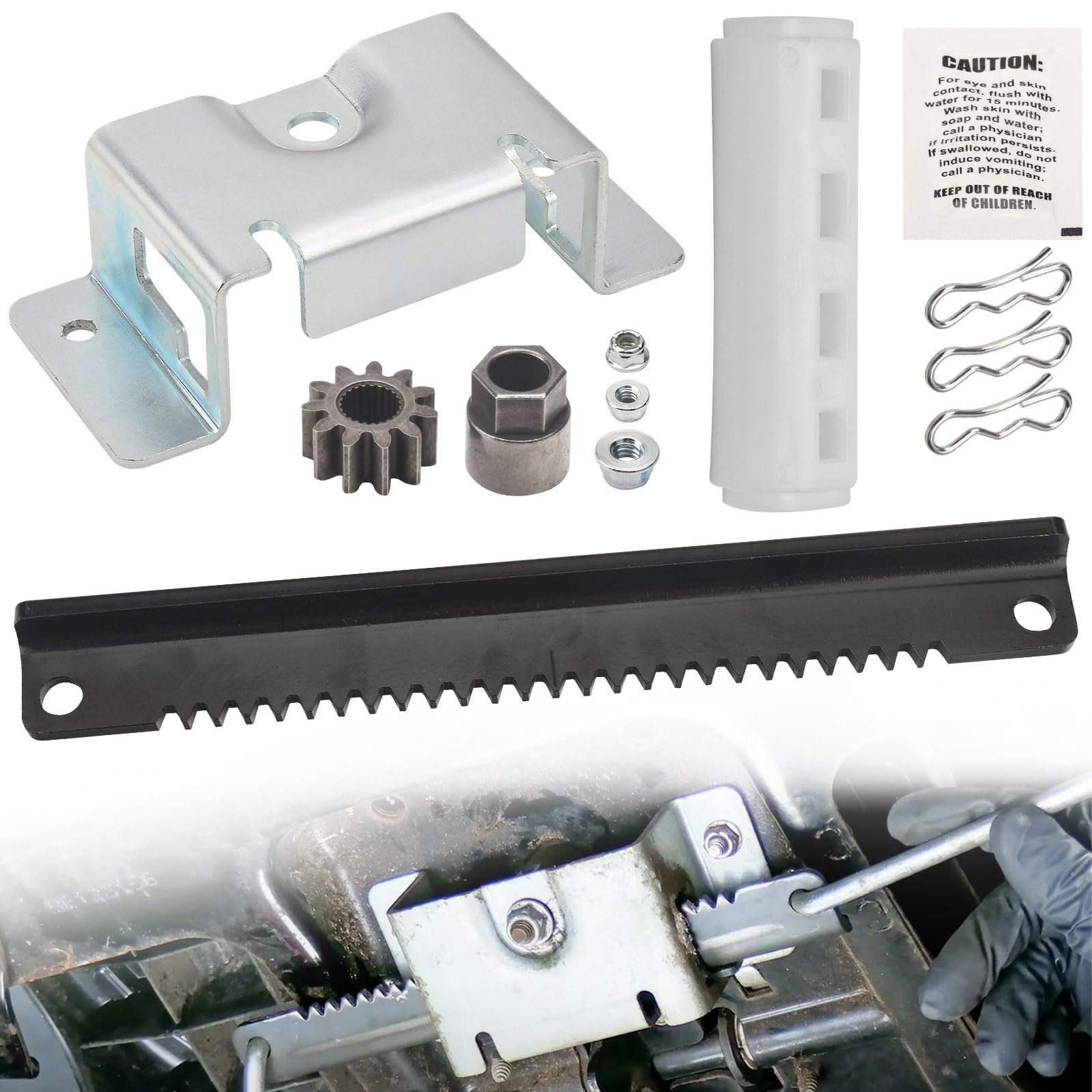
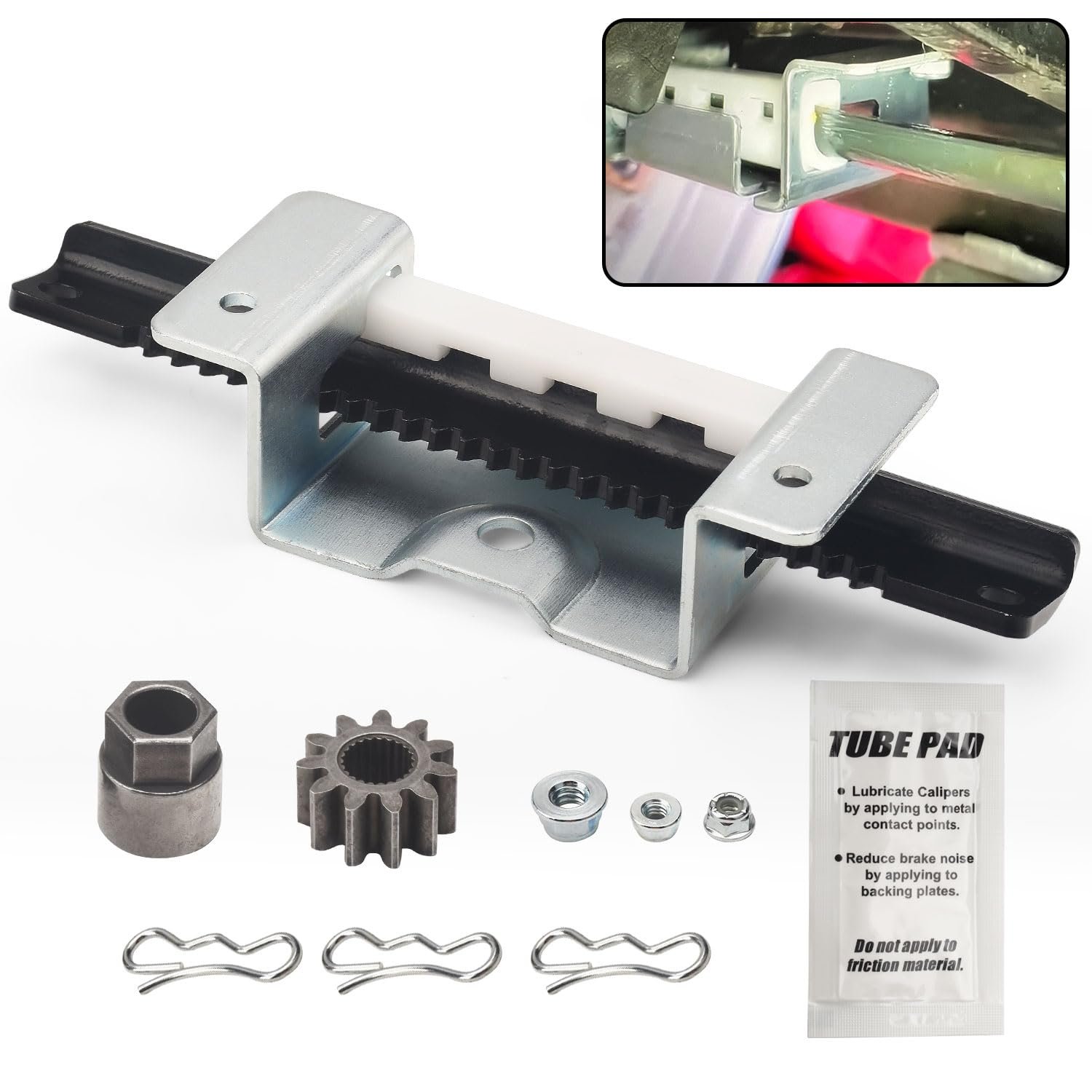
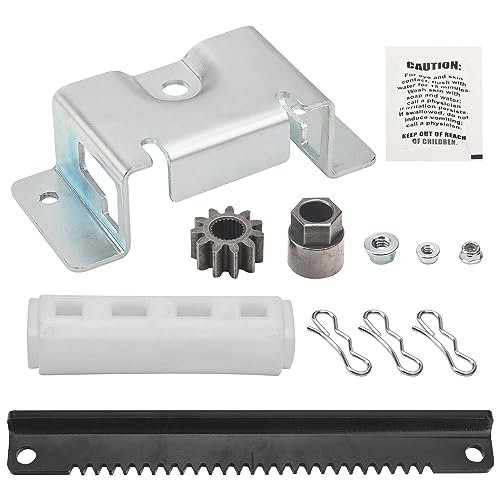
5. Check the steering shaft and gears
If the steering wheel itself feels loose or skips before the front wheels move, the shaft, gear, or sector area may be worn. This is less common than tie rod wear, but it does happen on machines with a lot of use.
Look for stripped teeth, cracked mounting points, or excessive wobble in the shaft. If the gear teeth are damaged, replacing only the external linkage will not solve the problem.
When the front wheels or axle are the real problem
Some steering complaints are not steering problems at all. The front wheel assembly can create the same symptoms, especially on rough lawns or after hitting a curb, root, or rock.
Bent spindles are a common hidden issue. If one wheel leans differently from the other or does not track straight when lifted, the spindle may be bent. Even a slight bend can make the mower turn unevenly or drag in one direction.
Wheel bearings matter too. A bearing that has started to fail can feel like stiff steering because the wheel does not rotate freely. You may hear a grinding sound, feel roughness when spinning the wheel by hand, or notice extra side movement.
The front axle can also shift after impact. When that happens, the mower may still drive, but the steering wheel no longer centers properly. If the issue started right after a hard bump, inspect the axle, brackets, and mounting points carefully.
How to tell wheel trouble from steering trouble
- Wheel spins rough by hand: suspect bearing or wheel damage.
- Wheel leans or wobbles: suspect bent spindle or loose mounting.
- Wheel turns fine in the air but drags on the ground: suspect axle alignment or binding under load.
- Steering wheel has play but tires look straight: suspect linkage or steering gear wear.
One useful trick is to compare both sides. If one front wheel feels smooth and the other feels gritty or tight, you have already narrowed the fault to one corner of the mower. That saves a lot of guesswork.
What not to do when fixing steering problems
It is easy to make a small steering issue worse with the wrong repair. The biggest mistake is tightening every nut you see without checking whether a part is supposed to pivot. Some joints need movement, not more force.
Another common mistake is replacing one part and stopping too early. If a worn tie rod caused extra strain on the steering gear, the new part may help, but the old wear may still be present elsewhere. That is why a full front-end inspection matters.
Do not ignore tire size either. Mismatched tires can change how the mower tracks, even if the steering parts are good. If one tire is significantly more worn, the mower may drift and feel “out of alignment” when the real issue is simple wear.
Also avoid driving with obvious play for too long. Loose steering puts extra stress on the rest of the front end. A problem that starts as a nuisance can turn into a bent linkage or damaged gear if the mower keeps hitting the same shock loads.
Credit: amazon.com
Common mistakes to avoid
- Skipping tire pressure checks
- Replacing parts without finding the worn point
- Using too much lubricant on belt areas
- Ignoring a bent wheel or spindle
- Forcing a stiff joint instead of cleaning or replacing it
How to keep the steering smooth after the repair
Good maintenance prevents most repeat steering issues. A mini rider works in dirt, grass, moisture, and vibration, so the front end needs periodic attention even if the mower still feels fine.
Inspect the steering linkage at the start of mowing season and again partway through heavy use. Look for torn boots, loosened fasteners, dry joints, and wheel wear. A five-minute check can catch a problem before it becomes a repair job.
Keep the front tires matched and inflated evenly. That one habit improves steering feel more than many owners expect. Also clean grass buildup around the front axle, because packed debris can trap moisture and shorten the life of moving parts.
If you store the mower outside or in a damp space, corrosion becomes a bigger risk. A dry storage spot helps protect the steering parts, wheel bearings, and fasteners from the kind of slow wear that shows up months later.
For mower owners who want to check factory maintenance details, the official Cub Cadet support page is the best place to find model-specific manuals and service guidance.
When the repair is no longer a DIY job
Some steering problems are simple enough to handle at home, but not all of them are worth guessing on. If the steering shaft is damaged inside the frame, the gear teeth are stripped, or the front axle is bent hard enough to affect tracking, professional help may save time and prevent more damage.
Get help if the mower becomes hard to control, the wheels lock up, or the steering only works in part of the turning range. Those are signs of a deeper mechanical issue. If a repair requires pressing bearings, aligning frame parts, or disassembling the steering gear assembly, that is usually beyond a basic driveway fix.
A good rule: if the problem is still there after tire pressure, fasteners, linkage, and wheel checks, the fault is probably in a part that needs replacement rather than adjustment. At that point, the most efficient next step is to identify the exact model parts diagram and compare each component carefully.
Final take on Cub Cadet mini rider steering problems
Most Cub Cadet mini rider steering problems come down to wear, looseness, or binding in the front end. The fastest path is to check tire pressure, inspect the linkage, look for wheel or spindle wear, and test for play with the mower safely lifted.
Do not assume the steering wheel is the real problem. On compact riders, a small issue in a tie rod, bushing, bearing, or axle can change the whole steering feel. The earlier you catch it, the easier and cheaper the fix usually is.
If you follow a simple diagnostic order and avoid replacing parts blindly, you can solve most steering complaints without wasting time. And once the front end is tight again, the mower feels more stable, tracks better, and is much easier to control.
Credit: amazon.com
After the main fault is fixed, run the machine briefly under light load and recheck the related belt, wiring, fuel, fluid, and safety-switch areas before returning it to normal work.
FAQs
Why does my Cub Cadet mini rider steering wheel feel loose?
A loose steering wheel usually means there is play in the steering linkage, steering shaft, or gear area. Start by checking tie rods, fasteners, and front wheel components before assuming the steering wheel itself is worn.
Why does my mower pull to one side even after I turn the wheel straight?
Unequal tire pressure is the first thing to check. If both front tires match and the mower still pulls, inspect for worn linkage, bent spindle parts, or a front wheel that is not rolling freely.
Can a bad tire make steering problems seem worse?
Yes. A low, damaged, or unevenly worn tire can change how the mower tracks and make the steering feel off. In some cases, the tire issue is the main cause of the complaint.
What is the most common repair for steering trouble on a mini rider?
Worn tie rods, loose joints, and dry pivot points are among the most common fixes. These parts wear faster than many owners expect because they handle constant vibration and turning forces.
How do I know if the steering gear is bad instead of the linkage?
If the steering wheel moves a lot before the front wheels react, and the visible linkage does not show enough wear to explain it, the steering gear or shaft may be worn. If the steering wheel skips, catches, or feels rough, that is another strong clue.