
If you own a John Deere 2038R, you already know why so many people like it. It is compact, strong, and useful for mowing, loader work, landscaping, and light farm tasks. But like any machine, it can have issues. Some are small and easy to fix. Others need a little more care before they turn into bigger repairs.
This guide on john deere 2038r problems explains the most common trouble spots, why they happen, and what you can do about them. The goal is simple: help you save time, avoid guesswork, and keep your tractor working smoothly.
You do not need to be a mechanic to understand most of these fixes. In many cases, the real problem is not a broken part. It is fuel quality, dirty filters, low fluid, loose connections, or simple maintenance that got delayed. Those small details matter more than many owners expect.
What usually goes wrong first on a 2038R
The 2038R is a dependable tractor, but the first complaints often follow a pattern. Owners report hard starting, weak hydraulic response, dashboard warnings, PTO trouble, or cooling problems. These issues may look serious at first, but many come from the same root causes: poor maintenance, worn filters, air in the fuel system, or electrical faults.
One important thing many beginners miss is that a tractor can act “broken” when it is only reacting to a small restriction. For example, a dirty fuel filter can make the engine feel weak, but the engine itself may be fine. The same is true for hydraulic systems. Slow loader movement does not always mean the pump is failing. Sometimes the fluid is low or old.
Another thing people often overlook is that modern compact tractors are more sensitive than older machines. A small battery issue, weak ground connection, or bad sensor can cause a warning light or poor starting even when the tractor still seems mechanically solid.
| Problem area | Common symptom | Most likely cause | Easy first check |
|---|---|---|---|
| Starting | Cranks slowly or not at all | Battery, terminals, relay, fuel issue | Check battery charge and cable connections |
| Engine power | Feels weak under load | Fuel filter, air filter, clogged intake | Inspect filters and clean intake areas |
| Hydraulics | Loader moves slowly | Low fluid, dirty fluid, air in system | Check hydraulic level and condition |
| PTO | PTO does not engage or slips | Safety switch, fuse, control issue | Check switches and operator controls |
| Cooling | Runs hot in work | Dirty radiator, low coolant, blocked airflow | Clean screens and inspect coolant level |
Starting problems and why they happen
Hard starting is one of the most common john deere 2038r problems. The tractor may crank slowly, start and stall, or not start at all. In many cases, the issue is electrical. Diesel engines need strong battery power to spin fast enough and build heat for ignition.
Common causes
- Weak or old battery
- Corroded battery terminals
- Loose ground cable
- Bad starter relay or solenoid
- Fuel filter restriction
- Air in the fuel line
- Glow plug or cold-start issue
A weak battery may still light the dashboard, so do not trust that as proof of good battery health. The battery can have enough power for lights but not enough for starting under load. That is a common mistake.
If the tractor cranks but does not fire, check fuel delivery next. A partially clogged filter or a small air leak in the fuel system can stop proper fuel flow. Diesel tractors are sensitive to clean fuel. Even a small restriction can create a big starting problem.
Easy fixes to try
- Charge the battery fully and test it if possible.
- Clean battery posts and tighten both cables.
- Check the ground cable where it connects to the frame or engine.
- Replace the fuel filter if it is overdue.
- Bleed air from the fuel system after filter changes or fuel replacement.
- Use the correct cold-start procedure in low temperatures.
If you want to learn more about battery care and testing basics, the John Deere parts and service information page is a useful place to start for official support and maintenance details.
Loss of power under load
Another common complaint is that the tractor starts fine but feels weak when mowing, hauling, or working with a loader. This can happen gradually, so owners sometimes do not notice it right away. Then one day the tractor feels slower than normal and struggles with jobs it used to handle easily.
In many cases, the cause is not inside the engine. Air and fuel flow problems are the first things to check. A dirty air filter limits breathing. A clogged fuel filter limits fuel delivery. Either one can reduce power.
One detail beginners often miss is that poor fuel quality can act like a mechanical failure. Water, old diesel, or contaminated fuel can make the engine run rough, lose power, or smoke more than usual. This is especially common if fuel sits too long in storage.
What to inspect
- Air filter condition
- Fuel filter condition
- Fuel tank contamination
- Fuel cap vent
- Exhaust smoke color
- Throttle response under load
Black smoke often points to too much fuel or not enough air. White smoke can mean incomplete combustion, cold fuel, or water in the system. Blue smoke may suggest oil burning. These clues help narrow down the cause faster.
Easy fixes
- Replace a dirty air filter.
- Replace the fuel filter if there is any doubt about its age.
- Drain bad fuel if water or contamination is found.
- Check the fuel cap vent so the tank can breathe.
- Make sure the throttle linkage moves freely.
If power loss only happens at high load, do not ignore it. That can be an early warning that fuel restriction or cooling restriction is building up. Fixing it early usually costs less.
Hydraulic trouble, slow loader movement, and weak lift power
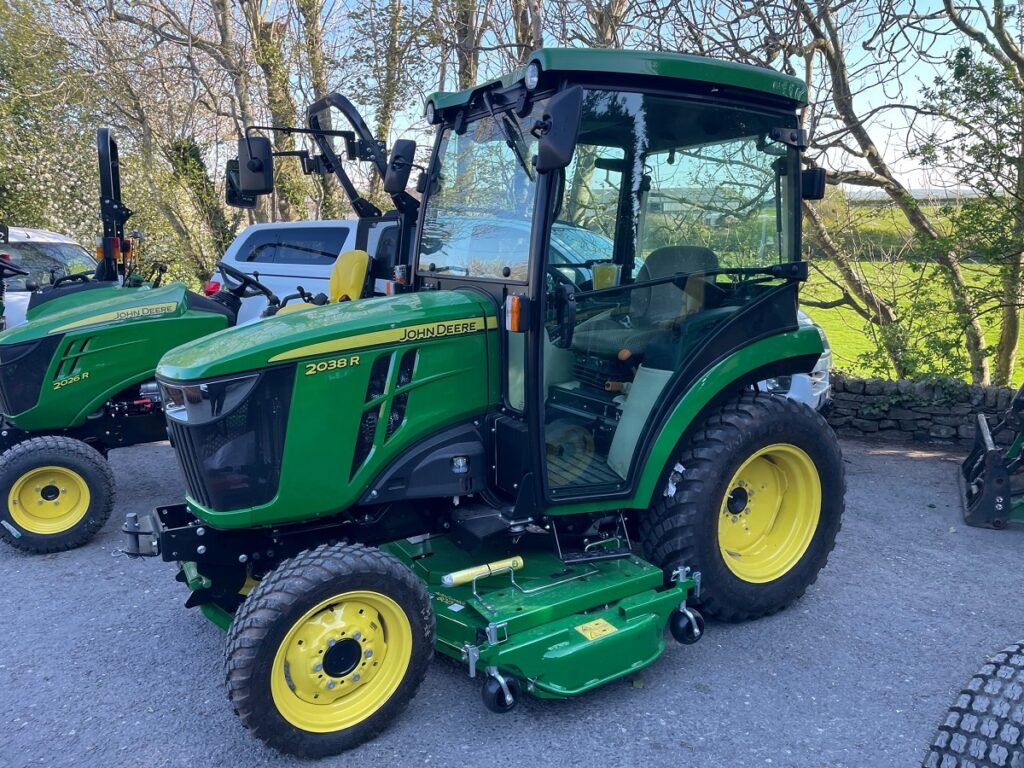
The hydraulic system on the 2038R is one of its most useful features, so when it gets slow or weak, the tractor feels much less capable. Loader arms may move sluggishly. The three-point hitch may lift slowly. Steering may feel heavier than normal. These are signs the system needs attention.
The first thing to check is hydraulic fluid level. Low fluid causes weak operation and may let air enter the system. Dirty fluid can also create slow response, noisy operation, or poor lift performance. A blocked filter can produce similar symptoms.
Credit: backyardcorner.com
Common causes
- Low hydraulic fluid
- Old or dirty hydraulic oil
- Clogged hydraulic filter
- Air in the hydraulic system
- Loose couplers or leaking fittings
- Valve or pump wear in older machines
Here is a useful rule: if the hydraulics are weak all the time, think fluid or filter first. If the problem appears only after the tractor warms up, heat-related fluid thinning or internal wear may be part of the story.
Another non-obvious point is that attachments can hide the real issue. A loader or implement with sticky pins, bad couplers, or restricted hoses can make the tractor seem weak even when the tractor hydraulic system is acceptable.
Easy fixes
- Check hydraulic fluid level on level ground.
- Inspect fluid color and smell. Burnt or dark fluid is a warning sign.
- Replace the hydraulic filter if maintenance is overdue.
- Look for leaks around fittings, hoses, and couplers.
- Cycle the hydraulics to remove trapped air after service.
If a hydraulic problem returns soon after service, do not keep adding fluid without checking for leaks. Repeated low fluid usually means there is a leak or another source of fluid loss.
PTO problems and why the implement will not run
PTO issues can be confusing because the tractor may run fine, yet the attachment does nothing. On the 2038R, this can involve a PTO that will not engage, cuts out, or seems to slip under load. The problem may be electrical, mechanical, or safety-switch related.
Many owners first assume the PTO itself is damaged. In reality, the control circuit is often the main issue. Safety switches, fuses, operator seat sensors, or engagement switches can stop PTO operation even if the system is not physically broken.
Common causes
- Faulty PTO switch
- Blown fuse
- Seat or safety switch problem
- Loose wiring connection
- Clutch or engagement issue
- Mechanical binding in the implement
A good habit is to separate tractor problems from implement problems. Remove the attachment and test the PTO if the process and safety rules allow it. If the PTO works without the implement, the issue may be in the attachment, shaft, or driveline rather than the tractor.
Easy fixes
- Check the fuse related to the PTO circuit.
- Inspect the PTO switch and surrounding wiring.
- Make sure the seat safety system is working correctly.
- Look for bent or binding attachment components.
- Verify the PTO engagement process from the operator manual.
Do not force the PTO on and off repeatedly if it fails. That can turn a small electrical problem into a more expensive repair.
Overheating, especially during mowing or summer work
Heat problems often show up when the tractor is working hard. The 2038R may run normal for a while, then start getting hotter during mowing, loader work, or slow field work. Heat is one of the fastest ways to damage an engine, so this problem should be taken seriously.
In most cases, overheating is caused by poor airflow or low coolant. Dust, grass, and chaff build up fast on compact tractors. If the radiator screen, grille, or cooling fins get packed with debris, heat cannot escape properly.
Common causes
- Dirty radiator screen
- Blocked cooling fins
- Low coolant
- Faulty thermostat
- Loose or damaged fan belt
- Heavy debris around the engine bay
One mistake owners make is cleaning only the visible grille. The real blockage is often deeper, between the screen and radiator. You may need to remove the screen and clean both sides carefully.
Another thing to watch is mowing in dry, dusty conditions. Fine dust can pack into the fins more quickly than grass clippings. That means the tractor can overheat even when it looks clean from a distance.
Easy fixes
- Clean the radiator screen often.
- Use low-pressure air or water to clean the cooling fins.
- Check coolant level when the engine is cool.
- Inspect the belt for wear or looseness.
- Watch for coolant leaks under the tractor.
If the tractor still overheats after a full cleaning and coolant check, the thermostat or water pump may need inspection. Do not keep working it hot. Repeated overheating can create much larger engine damage.
Electrical warnings, gauges, and sensor issues
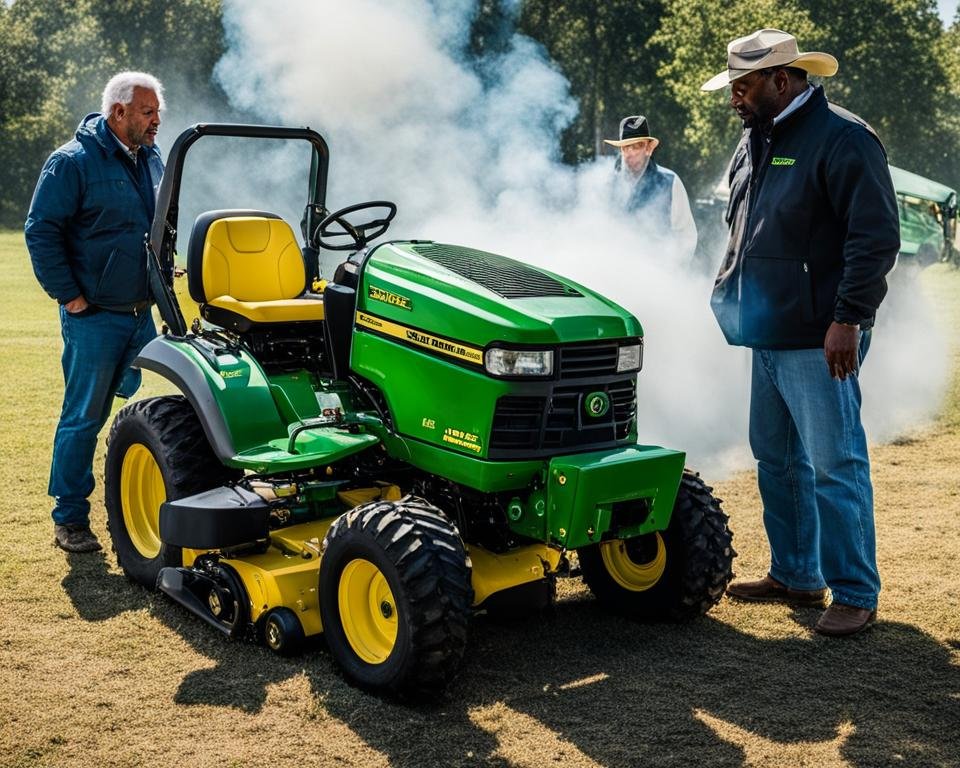
Modern compact tractors rely on sensors and electrical controls more than older models. That is useful for safety and performance, but it also means a small electrical fault can create a warning light or odd behavior. Sometimes the tractor is still usable, but the message is trying to tell you something important.
Common electrical symptoms include flickering lights, dead gauges, warning icons, intermittent starting, or sensor errors. These issues often come from loose connectors, dirty grounds, weak battery voltage, or damaged wiring near moving parts.
Credit: mrmotorproblems.com
Common causes
- Loose battery terminals
- Weak battery voltage
- Corroded connectors
- Damaged wiring harness
- Faulty sensor
- Blown fuse
Many electrical issues are intermittent. That makes them frustrating. The tractor may work fine in the morning, then show a warning later in the day after vibration, heat, or moisture affects a connection.
Easy fixes
- Check all visible fuses.
- Inspect battery terminals and grounds.
- Look for rubbed or pinched wires.
- Dry and clean connectors if moisture is present.
- Test the battery and charging system if warning lights keep returning.
If a warning light comes and goes, do not assume it is harmless. Intermittent electrical problems often get worse over time because vibration keeps loosening the same weak point.
Transmission and drive feel problems
Some owners notice hesitation, poor response, or strange drive behavior. The tractor may not move as smoothly as expected, especially if the fluid is old or the system has not been serviced on time. While the 2038R is generally dependable, drive problems should be checked early because they affect both safety and productivity.
Common signs include delayed movement, rough operation, strange noises, or difficulty maintaining steady speed. These issues may relate to hydraulic fluid quality, filter condition, linkage adjustment, or control system faults.
What to check first
- Transmission fluid level and condition
- Filter service history
- Control pedal movement
- Any leaks around the transmission case
- Unusual noises during movement
Many owners wait too long to service the fluids because the tractor still moves. But a system can be wearing quietly even before obvious failure appears. Fresh fluid and filters often improve feel more than expected.
Easy fixes
- Inspect fluid level on flat ground.
- Replace fluid and filters at the recommended interval.
- Check for leaking seals or fittings.
- Make sure pedals and linkages move freely.
- Stop using the tractor if the drive feels unsafe or jerky.
If the drive problem gets worse when the tractor is warm, that can point to fluid breakdown or internal wear. That is not a time to guess. It is a time to inspect.
How to prevent most 2038R problems
The easiest way to deal with john deere 2038r problems is to stop them before they start. Most issues come from the same few habits: dirty filters, missed service, old fuel, and ignoring small warning signs.
Good maintenance is not complicated. It is mostly about consistency. A tractor that gets regular attention usually gives clear warning before a major failure. A tractor that is neglected often fails in more than one place at the same time.
Smart habits that save repairs
- Check fluids before heavy work
- Keep the radiator and screen clean
- Replace filters on time
- Use clean diesel from a trusted source
- Keep battery terminals clean and tight
- Store the tractor in a dry place when possible
- Inspect hoses, belts, and wires during routine service
One of the best habits is to listen to the tractor when something changes. A new sound, longer cranking time, slower hydraulic movement, or extra smoke is often the first clue. Do not wait until the tractor stops working completely.
Another smart step is to keep a short service log. Write down filter changes, fluid changes, battery issues, and warning lights. This helps you spot patterns and makes troubleshooting much easier later.
When to call a technician
Many fixes are easy, but not every problem should be handled at home. If the tractor has repeated warning lights, severe overheating, major hydraulic failure, fuel contamination, or a PTO issue that does not respond to basic checks, professional help is the safer choice.
Call a technician if you notice any of these signs:
- Engine shuts down repeatedly
- Smoke becomes heavy or unusual
- Hydraulics fail completely
- Electrical problems return after basic repairs
- There is metal in fluids
- The tractor makes loud knocking or grinding noises
That last point is important. Loud mechanical noise is not something to “see if it goes away.” Stop the tractor and inspect it. Continuing to run it can turn a repair into a rebuild.
Credit: mrmotorproblems.com
Final thoughts
Most john deere 2038r problems are not mysterious. They usually come down to simple causes: weak battery power, dirty filters, low fluids, clogged cooling parts, loose wiring, or worn components. The good news is that many of these issues are easy to catch early if you pay attention.
The biggest advantage you have is not special tools. It is observation. When the tractor starts acting differently, check the basics first. That simple habit solves a large share of problems before they become expensive.
If you keep the 2038R clean, serviced, and inspected on schedule, it should remain a strong and useful tractor for a long time. Small maintenance today is much cheaper than major repair later.
FAQs
1. What are the most common john deere 2038r problems?
The most common issues are hard starting, weak hydraulic performance, PTO problems, overheating, and electrical warnings. Many of these come from low battery power, dirty filters, low fluid, or poor maintenance.
2. Why does my John Deere 2038R have trouble starting?
Start with the battery, terminals, and ground cable. If those are fine, check the fuel filter and fuel system for air or contamination. Cold weather can also make starting harder.
3. Why is my 2038R loader moving slowly?
Slow loader movement often means low hydraulic fluid, dirty fluid, a clogged filter, or air in the system. In some cases, a hose or coupler issue can also reduce performance.
4. What should I do if my 2038R overheats?
Stop work and let the tractor cool down. Then clean the radiator screen, check coolant level, and inspect the cooling fins for dirt or debris. If the problem keeps coming back, have the thermostat or cooling system checked.
5. When should I call a dealer or mechanic?
Call a professional if the tractor has repeated warning lights, complete hydraulic failure, serious smoke, metal in the oil, or loud grinding or knocking noises. These signs can point to bigger damage that needs expert inspection.