
If your mower starts hard, stalls at idle, or surges on and off, the issue may be tied to Kohler 7000 Series smart choke engine problems. The smart choke system is simple in concept, but when one part is dirty, loose, or worn, the whole starting process can get weird fast.
The good news is that many of these problems have clear causes and simple fixes. A dirty air filter, weak battery, bad fuel, or a sticky choke plate can create the same symptoms, so the trick is knowing what to check first and what to leave for later.
This guide breaks down the most common failure points, how to diagnose them, and which repairs usually solve the problem without guesswork. You will also see a few less obvious issues that many owners miss, especially on mowers that sit for weeks between uses.
For wider troubleshooting context, compare this guide with Kohler 7000 Series Smart Choke Problems: Causes, Fixes, and Troubleshooting Tips, Kohler 7000 Series Smart Choke problems, Kohler hydraulic lifter problems.
How the Smart Choke System Works
The smart choke is designed to make starting easier. Instead of a manual choke lever, the engine uses a temperature-sensitive choke system that adjusts itself during starting and warm-up. On a cold engine, it closes the choke to enrich the fuel mixture. After the engine warms up, it opens again.
That sounds simple, but it depends on several pieces working together. The engine needs strong cranking speed, clean airflow, good fuel delivery, and a choke mechanism that moves freely. If any one of those is off, the engine may start only with extra throttle, run rough, or fail to stay running at all.
One thing many owners miss is that the smart choke is not the only reason a mower acts like a choke problem. A weak battery can lower cranking speed enough to make the choke seem faulty. Old fuel can also cause the same hard-start behavior, even when the choke itself is fine.
Why this system can be confusing
With a manual choke, you can see exactly what the lever is doing. With a smart choke, the movement is automatic, so failures look less obvious. That is why people often replace the wrong part first.
The best approach is to test the basics in order: fuel, air, spark, cranking speed, and then the choke parts. This saves time and helps avoid unnecessary repairs.
Most Common Kohler 7000 Series Smart Choke Engine Problems
The most common symptom is hard starting, especially when the engine is cold. Another frequent complaint is that the engine starts, then dies after a few seconds. Surging, rough idle, black smoke, and fuel smell can also show up when the mixture is too rich.
Some problems are caused by the engine not getting enough air. Others happen when the choke stays closed too long or does not close enough during cold starts. In many cases, the real issue is not a single broken part but a combination of small issues that build up.
Here are the patterns that show up most often:
- Engine cranks but will not start without repeated tries
- Engine starts only with a jump pack or fresh battery
- Engine runs for 5 to 30 seconds, then stalls
- Engine surges up and down at idle
- Black smoke appears during startup
- Strong fuel smell comes from the exhaust or air intake
- Choke plate seems stuck, slow, or inconsistent
Cold weather can make these symptoms worse. Fuel vaporizes less easily in lower temperatures, so a choke issue that seems minor in summer may become very obvious in spring or fall.
What usually causes the symptom first
If the engine is hard to start but runs well once started, the problem is often linked to choke action, battery strength, or stale fuel. If it starts and then dies, look harder at the fuel system and air restriction. If it surges, the carburetor may be running lean, or the air filter may be partially blocked.
That order matters. Many people assume the choke failed because the engine is hard to start, but the choke may be reacting correctly to another issue. Diagnosing the cause before replacing parts can save both time and money.
What Actually Causes These Problems
Most Kohler 7000 Series smart choke engine problems come from a few repeat causes. Some are mechanical. Some are maintenance-related. A few are electrical or fuel-related, even though they feel like choke failure at first.
1. Dirty or restricted air filter
A clogged air filter changes the air-fuel mix. Too little air can make the engine run rich, which leads to black smoke, rough starting, and occasional stalling. A filter that looks only slightly dirty can still hurt performance if it is packed with dust, grass, or oil residue.
This is one of the easiest things to check, and one of the most overlooked. If the engine is choking, hunting, or smelling strongly of fuel, the air filter should be near the top of the list.
2. Stale fuel or water in the fuel
Fuel that sits too long begins to break down. In small engines, even 30 days of poor storage can create starting trouble. Ethanol-blended fuel also absorbs moisture, which can lead to rough running or hard starting.
Water in the fuel may cause the engine to run for a few seconds and then quit. If the mower has been stored in a damp shed or left with old gas in the tank, this becomes a strong suspect.
3. Weak battery or poor cranking speed
Smart choke systems depend on proper cranking behavior. If the starter turns the engine slowly, the choke may not operate as intended during startup. A weak battery with 12.0 volts or less at rest is a common warning sign, especially if the mower has sat for several weeks.
One non-obvious point: a battery can show enough voltage on a basic meter and still fail under load. That is why slow cranking, not just voltage, matters. If the starter sounds sluggish, the choke system may be blamed unfairly.
4. Sticky choke linkage or plate
Dirt, corrosion, and varnish can cause the choke plate or linkage to move sluggishly. If the linkage does not fully open or close, the air-fuel mix becomes wrong during startup or warm-up.
This is especially common after long storage or use in dusty conditions. A small amount of buildup can create a big problem because the choke has to move smoothly and consistently every time.
5. Carburetor contamination
Even when the choke itself works, a dirty carburetor can make the engine act broken. Small jets or passages can clog with varnish from old fuel. When that happens, the engine may need full choke to start, then die when the choke opens.
That is a classic clue. If the engine runs only while the choke is partly on, the carburetor is likely not delivering fuel correctly.
6. Ignition or spark plug issues
A worn spark plug, incorrect gap, or weak ignition can create symptoms that look like a fuel problem. The engine may start poorly, misfire, or hesitate under load.
Replacing a plug is not a cure-all, but it is a smart early check because spark plugs are cheap, wear with time, and can cause misleading symptoms.
How to Troubleshoot in the Right Order
Start with the simplest checks first. Most starting complaints can be narrowed down in less than 15 minutes if you follow a basic sequence. That order helps you avoid tearing into the carburetor before checking easier fixes.
- Check the fuel — Make sure the tank has fresh fuel. If the gas is older than 30 days, drain and replace it.
- Inspect the air filter — Remove it and look for dirt, oil, or blockage. Replace it if it is dirty or damaged.
- Test the battery — If the starter turns slowly, charge the battery fully and try again.
- Look at the spark plug — Remove it, inspect the tip, and replace it if it is fouled or worn.
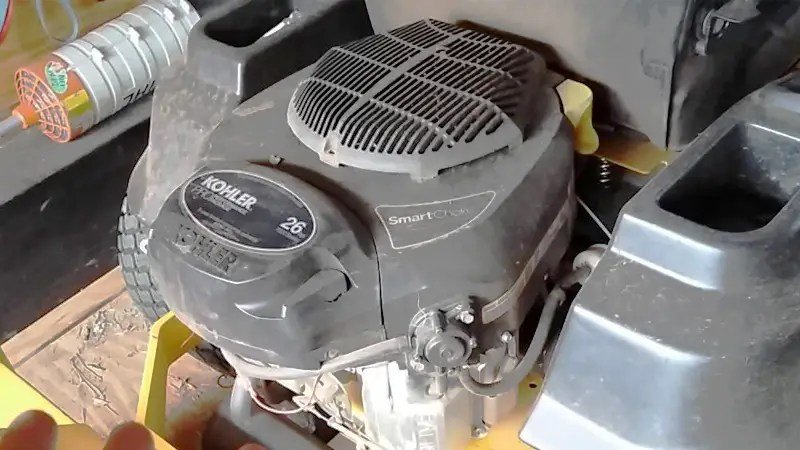
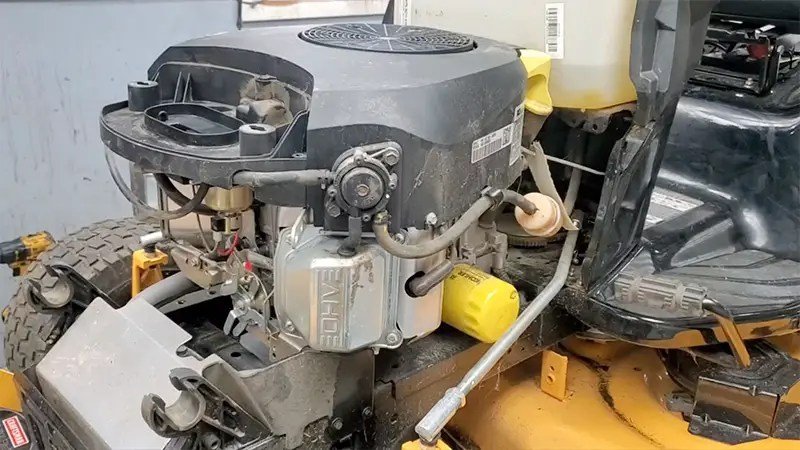
- Watch the choke movement — During cold start, confirm the choke closes and then opens as the engine warms.
- Check for linkage binding — Move the choke parts by hand when the engine is off and cool.
- Inspect the carburetor — If the problem still remains, the carburetor likely needs cleaning or service.
A simple clue can save a lot of time: if the mower starts better with a shot of fresh fuel but still dies without it, fuel delivery is likely the main problem. If it only runs with the choke partially closed, the carburetor is probably restricted.
Credit: lawnmowerswiki.com
Quick symptom guide
| Symptom | Most likely cause | First check |
|---|---|---|
| Hard start when cold | Weak battery, stale fuel, choke not closing | Battery and fuel age |
| Starts then dies | Carburetor restriction, fuel issue | Fuel quality and filter |
| Surging at idle | Lean fuel mixture, airflow issue | Air filter and carburetor |
| Black smoke | Too much fuel, choke staying closed | Choke linkage and air filter |
| No start with slow crank | Battery or starter problem | Battery load and cable connections |
Fixes That Usually Solve the Problem
Once you know the likely cause, the fix is usually straightforward. The key is to address the root issue, not just the visible symptom. For example, replacing the spark plug will not help much if old fuel is the real problem.
Replace old fuel and clean the tank if needed
Drain fuel that smells stale, looks cloudy, or has been sitting for more than a month or two. Refill with fresh gasoline from a clean container. If water or debris is visible, clean the tank before refilling.
If the mower has a fuel filter, replace it when changing old fuel. A clogged filter can undo the rest of the work quickly.
Clean or replace the air filter
This is one of the fastest repairs and often delivers immediate improvement. If the filter is paper and visibly dirty, replace it. If it is foam, clean it only if the manufacturer allows it, then dry it fully before reinstalling.
A filter that is too dirty can make the engine run rich. A missing filter is also bad because dirt can reach the carburetor and cylinder.
Check battery health and charging system
Charge the battery fully and retest. Clean the terminals and make sure the cable connections are tight. If the battery is older than 3 to 5 years, it may not hold a proper load even after charging.
Slow cranking is not a small issue. Smart choke starting depends on fast, steady rotation, so a weak battery can create a chain reaction of false symptoms.
Free up the choke linkage
With the engine off and cool, inspect the choke linkage for dirt or binding. Use a light cleaning method if it is sticky. Do not force parts that should move smoothly.
If the linkage keeps sticking after cleaning, worn parts may need replacement. Bent rods, weak springs, or corrosion can prevent proper choke movement.
Clean the carburetor when fuel-related symptoms continue
If the engine starts only with choke or dies as soon as the choke opens, the carburetor may need cleaning. Small passages inside the carburetor can clog even when the outside looks clean.
Carburetor cleaner can help in mild cases, but heavy varnish usually needs a deeper cleaning or a rebuild. If you are not comfortable taking the carburetor apart, a repair shop can do this quickly.
Replace the spark plug if it is worn or fouled
A new spark plug can fix misfire, hard starts, and weak running when the old plug has carbon buildup or worn electrodes. Use the correct plug type and gap recommended by the engine maker.
This is a low-cost repair, but it only helps if the plug was actually part of the problem. If the plug turns black again soon after replacement, the engine is probably running too rich or has another issue upstream.
Problems People Often Misdiagnose
One of the biggest mistakes is blaming the smart choke before checking fuel quality. Old fuel creates more trouble than many owners expect, and it can mimic choke failure very closely. Another common mistake is replacing the carburetor before checking the battery.
Here are a few misleading situations:
- The engine starts with starting fluid. That can point to fuel delivery, but it does not prove the choke is bad.
- The engine runs after a jump start. The problem may be low cranking speed, not the choke itself.
- The engine smokes black on startup. This often means the mixture is too rich, which may come from a stuck choke or blocked air filter.
- The engine surges only at idle. That can be a carburetor or air issue, not necessarily a choke fault.
Another non-obvious point: temperature changes can hide the real problem. A mower may start fine on a warm afternoon and fail on a cool morning because the choke system and fuel vaporization behave differently.
Credit: lawnmowerswiki.com
Preventing Future Smart Choke Troubles
Good maintenance prevents most repeat failures. The easiest habit is to use fresh fuel and avoid leaving old gas in the tank for long periods. A fuel stabilizer can help if the mower will sit unused, but it is not a cure for months-old fuel that is already degraded.
Keep the air filter clean, inspect the spark plug each season, and store the mower in a dry place. If the mower will not be used for 30 days or more, prepare it properly before storage instead of waiting for the next spring start.
For safety and service basics, the official mower safety guidance from the U.S. Consumer Product Safety Commission is a useful reference, especially when you are working near blades, belts, and hot engine parts.
One more tip that many owners miss: do not ignore small changes in starting behavior. A mower that needs one extra pull today may become a no-start problem next month. Catching it early often means a simple fix instead of a bigger repair.
When to Stop Troubleshooting and Get Help
If the engine has spark, fresh fuel, a clean air filter, and strong cranking speed but still will not run correctly, the problem may be deeper than basic maintenance. Internal carburetor damage, governor issues, or ignition problems may need professional service.
You should also get help if fuel is leaking, the engine backfires repeatedly, or the starter system sounds abnormal. These signs can point to a mechanical fault that is not safe to keep testing blindly.
In general, stop and call a professional if you have already checked the basics and the mower still shows the same problem after 2 or 3 test cycles. That is usually the point where deeper diagnosis becomes more efficient than more parts swapping.
Credit: lawnmowerly.com
Final Takeaway
Most Kohler 7000 Series smart choke engine problems are caused by simple issues like stale fuel, a dirty air filter, weak battery power, or a sticky choke linkage. The smart choke often gets blamed first, but the real cause is usually something upstream.
If you work in the right order, you can solve many starting and running problems without major repair costs. Start with fuel, air, battery, and spark, then move to the choke and carburetor only if the basics check out.
After the main fault is fixed, run the machine briefly under light load and recheck the related belt, wiring, fuel, fluid, and safety-switch areas before returning it to normal work.
FAQs
Why does my Kohler 7000 Series engine start and then die?
The most common causes are old fuel, a dirty carburetor, or a choke system that is not opening correctly after startup. A clogged air filter can also contribute. Start by checking fuel age and air supply before replacing parts.
Can a weak battery cause smart choke problems?
Yes. A weak battery can slow cranking speed and make the engine act like the choke is failing. Smart choke systems depend on proper startup speed, so battery health matters more than many owners expect.
What does black smoke mean on startup?
Black smoke usually means the engine is running too rich, which means too much fuel or too little air. A stuck choke, dirty air filter, or carburetor issue is often behind it.
How often should I replace the spark plug?
Many owners replace the spark plug once per season or every 100 hours of use, but the exact interval depends on the engine and maintenance schedule. If the plug is fouled, cracked, or badly worn, replace it sooner.
When should I clean the carburetor?
Clean the carburetor when the engine only runs with choke, dies when the choke opens, or surges badly after fresh fuel and a clean filter do not help. Those are strong signs of internal fuel passage blockage.