
If you are asking should i kill ants in my garden, the short answer is: not always. Many ants are harmless, and some even help your soil. But a few situations call for action, especially when ants protect pests, damage roots, or take over young plants.
The right choice depends on what the ants are doing, where they are nesting, and whether your plants are actually being harmed. A small ant trail on the path is one thing. A large nest under seedlings or a swarm around aphids is something else.
Here is how to tell the difference, when ants are useful, when they become a problem, and how to deal with them without turning your garden into a toxic zone.
When ants help your garden
Most garden ants are not villains. In many cases, they are part of a healthy outdoor ecosystem. They help break down dead insects, move soil, and create small air channels that can improve drainage in compact ground.
Some ants also eat other pests. They may feed on fly larvae, small caterpillars, or insect eggs. In a balanced garden, this can reduce the number of harmful bugs without any sprays at all. That is one reason many gardeners choose to leave low-level ant activity alone.
Ants can also improve soil structure in small patches. As they tunnel, they move particles around and bring organic matter below the surface. This is usually a minor benefit, but it is still real. In raised beds and loose soil, their digging may even help water soak in a little faster.
Still, this does not mean every ant colony is welcome. The key is to look at the effect, not the insect itself. If the ants are active but plants look healthy, you may not need to do anything.
Signs ants are doing more good than harm
- Plants are growing normally and leaves look healthy.
- There are no visible aphids, scale insects, or sticky residue on stems.
- The ants stay in one area and do not spread into pots or seed trays.
- Soil is loose, not collapsing around roots.
When ants become a problem
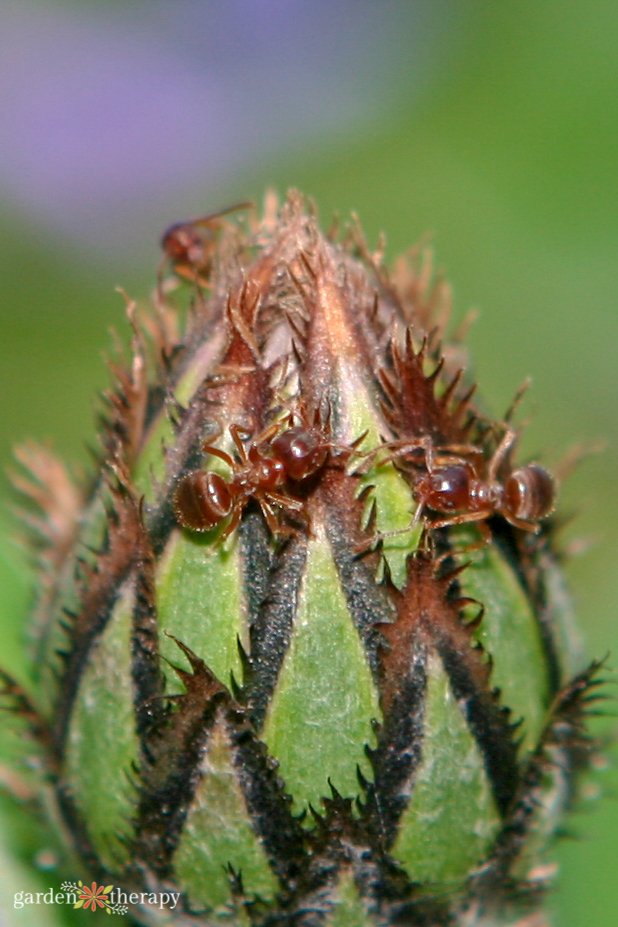
Ants usually need attention when they are protecting pests, building nests in the wrong place, or damaging young plants. The most common issue is not the ants themselves, but their relationship with aphids. Ants “farm” aphids because aphids produce a sweet liquid called honeydew. In return, ants guard them from predators.
That matters because aphids suck sap from tender growth. If ants are protecting them, aphid numbers can rise fast. You may notice curled leaves, sticky stems, or black sooty mold on nearby surfaces. In this case, managing the ants can help break the cycle.
Another problem is nesting in containers, raised beds, or near new seedlings. A large nest can dry out soil faster, disturb roots, and make watering less effective. On lawns, ants often create soil mounds that are mostly cosmetic, but in a vegetable bed they can become a nuisance.
Some species bite or sting, which is a separate concern. If children or pets use the garden often, or if you see aggressive ants around pathways, you may want to control them for safety and comfort.
Common situations that justify action
- Ants are protecting aphids on beans, roses, fruit trees, or herbs.
- Nests are under seedling trays or close to small roots.
- Ant hills are blocking watering or making weeding hard.
- Ants enter the house from the garden and become a repeat indoor issue.
- The ants are biting, stinging, or creating a hazard near walkways.
How to decide whether to treat them
The best answer to should i kill ants in my garden comes from a quick diagnosis. Do not start with poison. Start by checking what the ants are actually doing. That saves time, protects helpful insects, and avoids unnecessary damage to soil life.
First, look at the plants near the ants. If leaves are healthy and there are no sap-sucking pests, you may not need to intervene. Second, check the nest location. A colony in a flower border is less urgent than one under a row of lettuce seedlings. Third, think about scale. Ten ants on a path is not the same as a thick trail into multiple beds.
A simple rule works well: if the ants are present but the plants are fine, observe them. If the ants are linked to visible plant stress, treat the cause, not just the ants. That may mean removing aphids, changing watering habits, or disrupting the nest only where needed.
| Situation | Likely action | Why |
|---|---|---|
| Small trail on garden edge | Leave it | Usually low impact |
| Ants with aphids on new growth | Treat aphids and deter ants | Breaks the pest cycle |
| Nest in seedling bed | Move or disrupt colony | Protects young roots |
| Biting ants near paths | Control or relocate if possible | Safety and comfort |
| Large mound with dying plants | Investigate further | May indicate root stress or dry soil |
Credit: gardentherapy.ca
Safer ways to manage ants without harming the garden
If you decide the ants need to go, start with the least aggressive method. That approach protects pollinators, soil organisms, and nearby plants. It also lowers the chance that the ants simply move to another bed and return later.
1. Remove the food source
If ants are following aphids, scale, or mealybugs, deal with those pests first. A strong spray of water can knock aphids off tender stems. You can also prune heavily infested tips if the plant can handle it. Once the honeydew supply drops, ant activity often falls too.
2. Disrupt their trail
Ants use scent trails. If you break that trail, they lose their easy path. Wash down paved edges, pot rims, and bed borders. For containers, moving the pot a few feet may also confuse the colony enough to reduce activity.
3. Flood or disturb small nests
For a small nest in loose soil, repeated soaking can sometimes encourage ants to move. This works best for minor infestations, not huge colonies. Be careful not to overwater plants that dislike wet roots.
4. Use physical barriers
If ants are climbing into pots or raised beds, barrier methods can help. Sticky bands on supports, tight-fitting pot feet, and clean bed edges make access harder. This is especially useful for containers and young plants.
5. Use targeted baits only when needed
Baits can be effective because worker ants carry the food back to the colony. However, they should be placed carefully and used only when the problem is real. Keep baits away from children, pets, and pollinator areas. Follow the product label exactly. If you want broader safety guidance on pesticide use, the EPA’s safe pest control guidance is a good reference.
Do not spray broad insecticide over the whole garden unless the infestation is severe. That can harm beneficial insects and create a bigger ecological problem than the ants did.
What not to do
A common mistake is treating every ant sighting like an emergency. That leads to overuse of chemicals and unnecessary stress on the garden. Another mistake is killing ants on the surface while ignoring aphids, which means the ants often come right back.
Avoid pouring harsh household chemicals into the soil. Vinegar, bleach, gasoline, and strong cleaners can burn roots, damage soil microbes, and contaminate nearby areas. These products are not garden solutions.
Also avoid crushing or disturbing a colony again and again without a plan. If the nest is large, the ants may scatter and rebuild elsewhere. That is why diagnosis matters before treatment.
One less obvious issue: ants can appear suddenly after dry weather. They often move closer to irrigation lines, mulch, or shaded beds where moisture is easier to find. If you only attack the ants, but ignore the dry, attractive conditions, the problem may repeat.
Credit: gardentherapy.ca
How to prevent ants from coming back
Prevention is usually easier than full eradication. The goal is not to sterilize the garden. The goal is to make it less attractive to problem colonies while keeping the rest of the space healthy.
Keep aphids under control, because ants love their honeydew. Check the undersides of leaves every few days on roses, beans, and fruiting plants. Water deeply but not too often, so the top layer is less inviting for nesting. Remove old fruit, fallen petals, and sticky plant debris quickly.
Mulch is useful, but thick, damp mulch right against stems can create shelter for ants and other pests. Leave a small gap around the base of plants. In pots, check drainage holes, saucers, and pot feet. Ants often choose containers because they are dry, warm, and protected.
Rotate your inspection spots. Many gardeners only look at visible leaves and miss the soil line. That is where nests, trails, and aphid colonies often start. A 2-minute walk-through every few days is often enough to catch trouble early.
Best prevention habits
- Inspect new growth for aphids once a week.
- Clean up fallen fruit and plant debris quickly.
- Keep mulch slightly away from stems and crowns.
- Water evenly so some zones do not stay too dry.
- Watch containers, raised beds, and sunny path edges.
When killing ants is the right choice
There are times when the answer is yes. If ants are harming seedlings, supporting a pest outbreak, or creating a recurring safety issue, control makes sense. The key is to do it with purpose, not panic.
Use the lightest method that solves the problem. If one bed is affected, target that area. If aphids are the main issue, treat the aphids. If a colony is nesting in a container, move or clean the container instead of treating the whole garden.
In most gardens, a small number of ants is normal and even useful. But a garden that is full of ants, aphids, sticky stems, and disturbed roots needs intervention. That is the point where “leave them alone” stops being the smart choice.
So, if you are still asking should i kill ants in my garden, use this final test: are they helping, are they neutral, or are they clearly causing damage? If they are only passing through, leave them. If they are feeding a pest problem or hurting plants, act early and act specifically.
Credit: getbusygardening.com
FAQs
Do ants directly damage plants?
Most ants do not eat healthy plant tissue. The bigger problem is usually indirect damage, such as protecting aphids or nesting near roots and seedlings.
Why do ants keep coming back to my garden?
They return to food, moisture, and shelter. Aphids, sticky plant sap, dry soil patches, and protected mulch areas can all attract them again.
Are ants in vegetable gardens bad?
Not always. Small ant activity is often harmless. It becomes a problem when ants protect pests, disturb seedlings, or create nests in growing beds.
What is the safest way to reduce ants without chemicals?
Remove aphids, wash away trails, soak small nests if needed, and keep the garden clean. Physical changes often work better than broad spraying.
Should I kill ants in potted plants?
Sometimes yes, especially if they are nesting in the pot and stressing the plant. Check drainage, move the pot if needed, and treat only that container first.