
Grass creeping into beds is frustrating, but how to keep grass out of garden comes down to a few simple habits and barriers that stop it at the edge. If you ignore the problem, grass spreads by roots, runners, and seeds, then slips into mulch and between plants fast.
The good news is that you do not need a full landscape overhaul. A clean edge, the right mulch depth, and a few smart maintenance steps can reduce grass invasion a lot, even in a busy yard. The methods below work best when used together, not one at a time.
You will also see which fixes work for new beds, which ones help in already established gardens, and which mistakes make the problem worse. Some methods are instant. Others build long-term protection and save you work later.
Start with the edge, because that is where grass gets in
The border between lawn and garden is the main battle line. Most grass problems start when roots creep sideways or when mowing throws seeds into beds. A weak edge gives grass an easy path.
A strong edge creates a physical break. That break can be a metal strip, plastic edging, stone, brick, or even a deep trench. The key is depth and consistency. A shallow edge often fails because grass rhizomes and stolons can travel under it.
Choose an edging style that matches your yard
If you want the lowest-maintenance option, metal edging usually holds its shape best. It sits cleanly between lawn and bed and creates a thin barrier that looks neat. Stone or brick edging works well too, but only if it is installed tightly with few gaps.
For a fast and cheaper fix, a trench edge can work surprisingly well. A 4 to 6 inch deep trench gives grass roots a harder time crossing into the bed. You do need to refresh it every few weeks during the growing season, because soil and mulch gradually fill it in.
Keep the edge visible and clean
An edge stops working when grass and mulch bury it. Once the border disappears, lawn grass can creep right over it before you notice. Trim the edge every few weeks with a half-moon edger, flat shovel, or string trimmer set carefully.
One detail many gardeners miss: edging works best before grass becomes thick. If grass has already formed runners in the bed, cut and remove them first, then install or refresh the border. Otherwise, the runners may just grow around the new edge.
Use mulch the right way, not just more of it
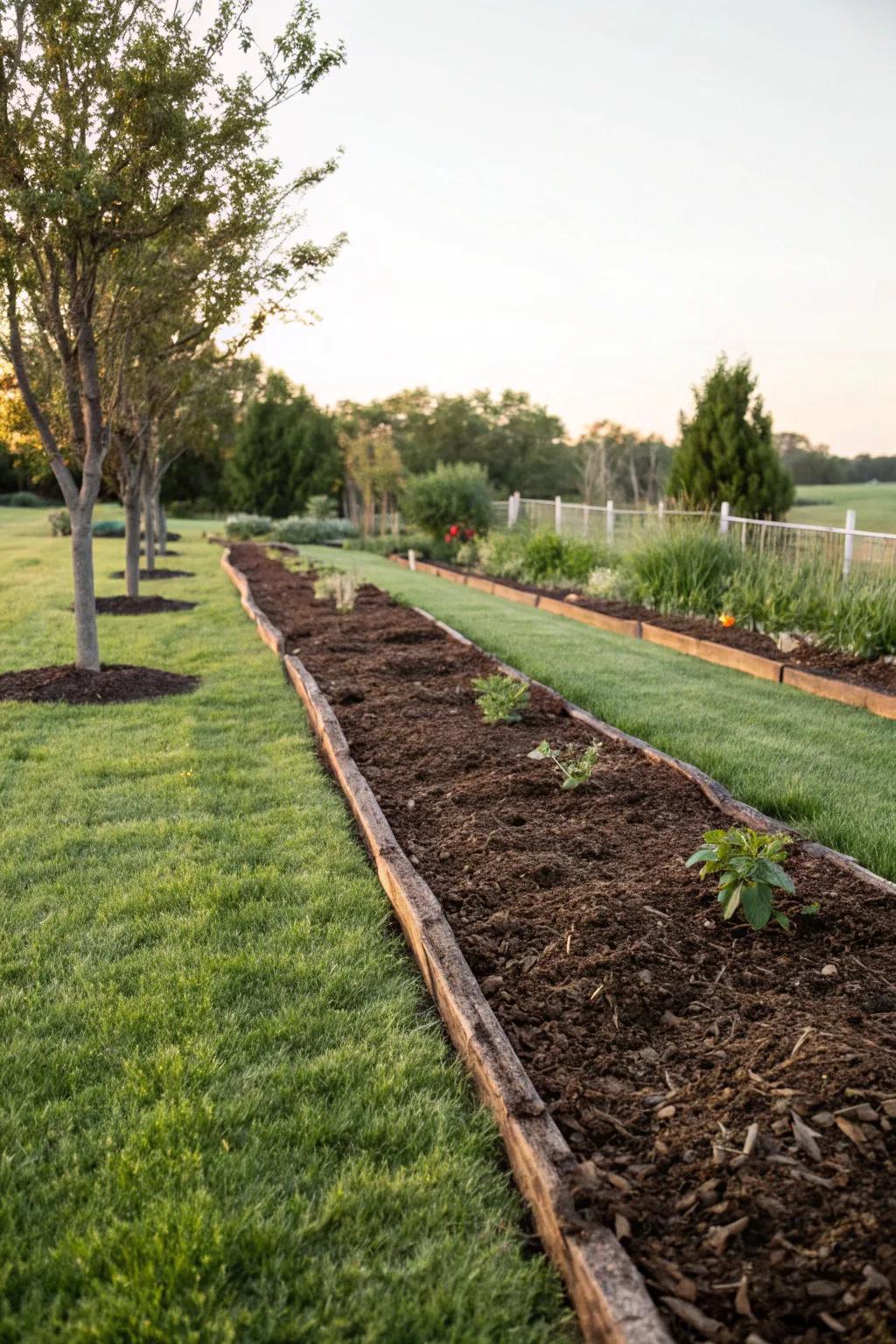
Mulch is one of the simplest answers for how to keep grass out of garden, but only when it is used correctly. A thin layer lets grass push through. A thick, well-kept layer blocks light and makes it harder for seeds to sprout.
For most beds, 2 to 4 inches of mulch is the sweet spot. Less than 2 inches often allows weeds and grass to germinate. More than 4 inches can hold too much moisture near stems and may cause rot around some plants.
Pick a mulch that matches the job
Shredded bark, wood chips, and pine fines all help suppress grass, but they behave a little differently. Fine mulch packs tighter and blocks light well. Coarser mulch lasts longer and resists blowing away better in open areas.
If grass keeps invading from the lawn side, add a narrow strip of heavier mulch or even stone along the border. That edge zone takes the most abuse from mowing, rain splash, and seed spread. A stronger barrier there reduces repeat cleanup.
Don’t let mulch become a hiding place for grass
Grass can root right through thin spots in mulch, especially near the edge. Pull visible blades before adding more mulch. If you just cover live grass with a fresh layer, it may die back for a while but often returns from surviving stems or creeping roots.
Fresh mulch also settles. Check it after a hard rain or a few weeks of heat. If you can see soil through it, top it off before grass takes advantage of the gap.
Remove grass before it spreads, and remove the roots too
When grass is already inside the bed, simple pulling is not always enough. Many lawn grasses spread with runners or underground roots, so the top leaves can break off while the plant survives below.
For a small patch, dig out the whole clump with a hand trowel or narrow spade. Go deeper than you think you need. A few inches of missed root can bring the grass back quickly, especially after rain or watering.
Know the difference between seedlings and runners
Young grass seedlings are easier to pull because they have short roots. Creeping grass is tougher. It sends out horizontal stems called stolons above ground or rhizomes below ground. Those stems can re-root at the nodes, which is why grass seems to “come back” after you remove the visible part.
Here is the useful rule: if the grass comes out in one loose tuft, you may have a seedling or clump. If it seems to spread across the soil like threads, you are dealing with runners. Runners need a deeper dig and careful follow-up.
Use the right tools for clean removal
A sharp hand weeder, hori hori knife, or small spade makes the job easier. Water the bed lightly first so the soil loosens, but do not soak it. Wet soil that is too soft can let roots snap and slide away.
After digging, refill the hole with fresh soil or compost and press it lightly. That keeps the area from settling into a low pocket where seeds can collect later.
Block sunlight with cardboard or landscape fabric when you need a stronger barrier
Sometimes mulch and edging are not enough, especially in new beds or in areas where grass keeps returning from underneath. In those cases, a light-blocking layer can give you a real reset.
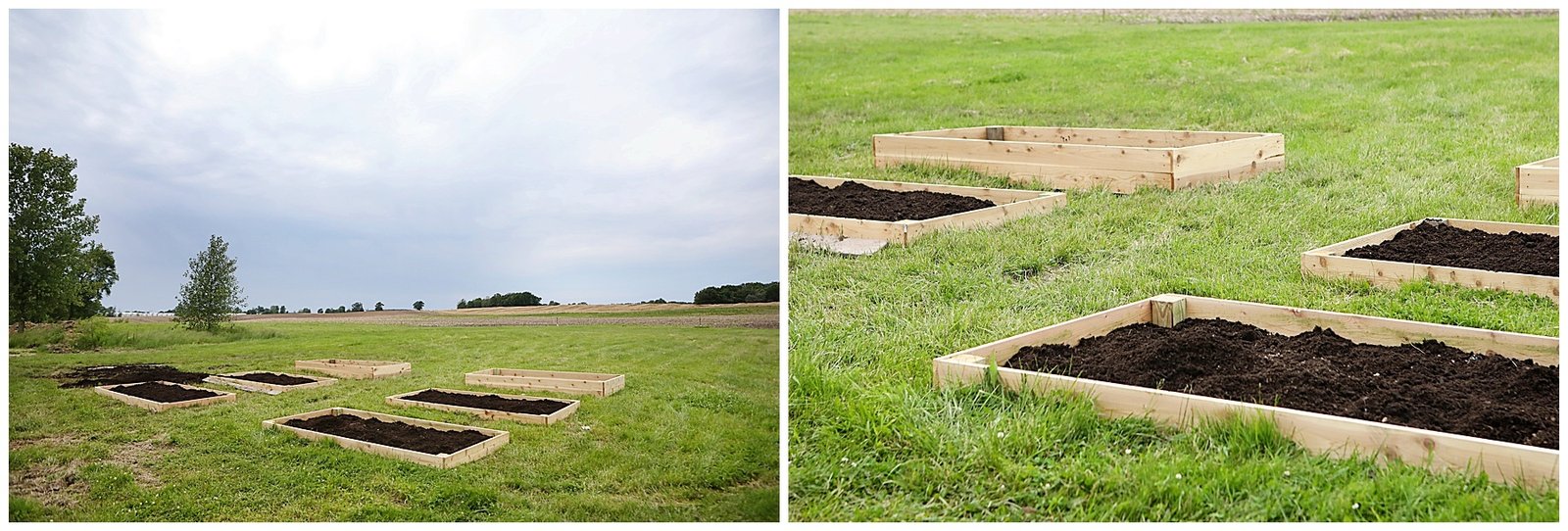
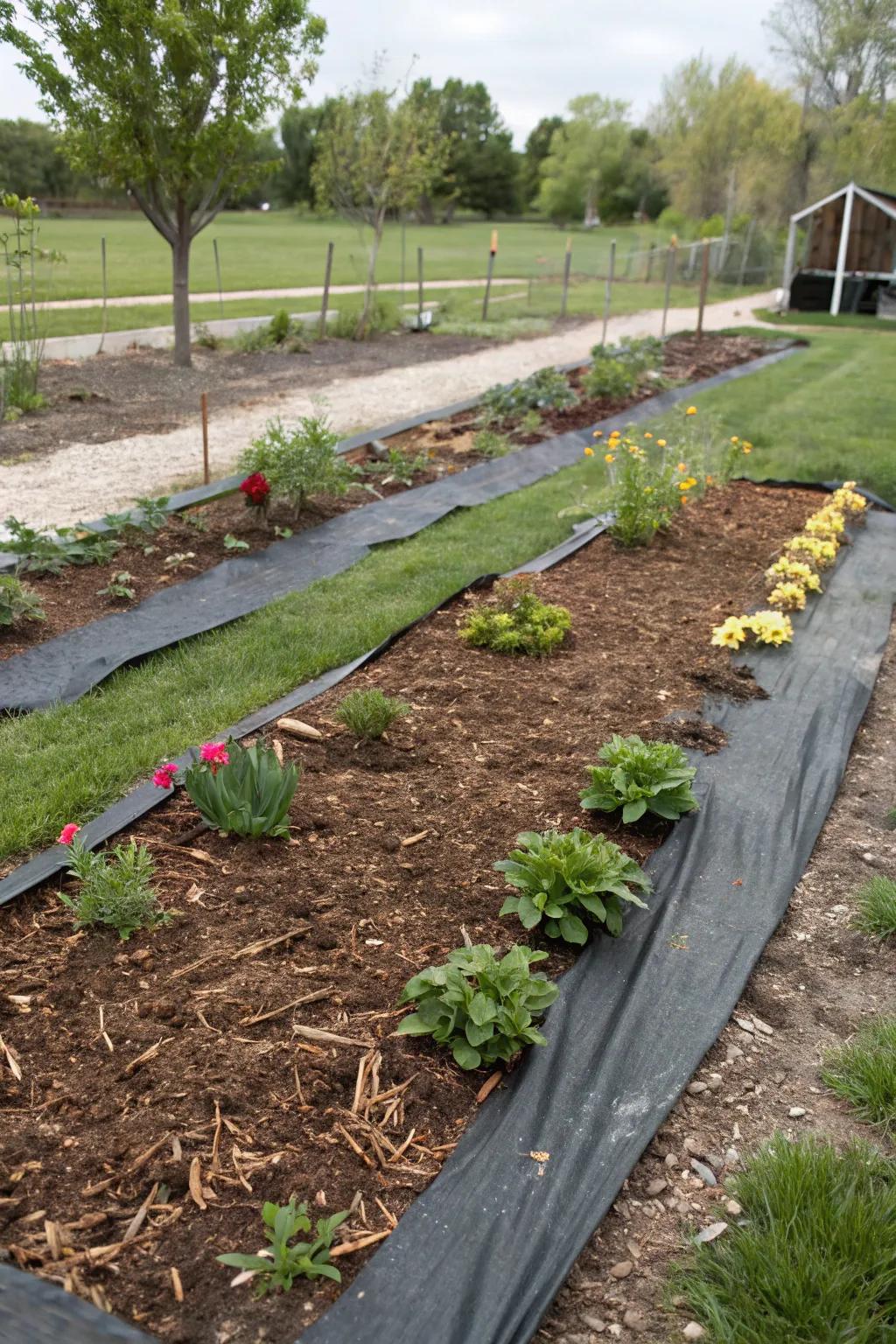
Cardboard is a practical short-term option. It smothers existing grass by blocking light while still breaking down over time. Landscape fabric lasts longer, but it is not perfect. Grass can grow through seams, edges, and openings if the fabric is poorly installed.
Credit: sugarmaplefarmhouse.com
When cardboard works best
Cardboard is a smart choice when you are building a new bed over lawn. Lay overlapping sheets with no gaps, wet them down, and cover them with 3 to 4 inches of mulch. The grass underneath weakens as it loses light.
This method works best for seasonal beds, shrub borders, and areas where you want a clean start. It is less useful in a bed that already has many established plants, because you would need to cut and fit pieces carefully around each one.
When to use landscape fabric
Landscape fabric can help under gravel paths, large shrub beds, or decorative areas that get little digging. It is less helpful in active vegetable or flower gardens because soil and organic matter eventually collect on top, and grass seeds can root there.
One non-obvious problem: fabric often fails at the edges first. Even a small opening gives grass a way in. If you use it, overlap the seams, anchor it well, and cover it completely. Exposed fabric breaks down faster under sunlight and looks messy.
| Barrier type | Best use | Main advantage | Main drawback |
|---|---|---|---|
| Cardboard | New garden beds | Easy to install and smothers grass well | Breaks down over time |
| Landscape fabric | Low-disturbance beds or paths | Longer-lasting physical barrier | Grass can enter through seams and edges |
| Mulch alone | Established beds | Simple and flexible | Needs regular refreshment |
Change how you mow and water the lawn near the garden
Some grass problems are created by yard care, not just by the grass itself. If mowing throws clippings and seeds into the bed, or if watering encourages roots to spread toward moist soil, you are helping the problem along.
Keep the mower deck away from the garden edge when possible. Trimming too close can fling seeds and bits of grass into mulch. Also, avoid overwatering the lawn right beside beds. Grass roots often move toward repeated moisture, especially if the garden soil is richer and easier to grow in.
Make the lawn edge less aggressive
Raise mowing height to keep turf healthier. Taller grass shades its own soil better, which can reduce bare spots that produce more seeds. Bare spots often become the source of more grass invasion into beds.
After mowing, check the border for fresh clippings and seed heads. Cleaning them up takes a few minutes, but it stops a lot of spread over a season. This is one of the easiest habits to keep up once you make it routine.
Why watering patterns matter more than most people think
Grass often expands toward frequent shallow watering. If the lawn gets light watering every day, roots stay near the surface and move sideways more easily. Deeper, less frequent watering encourages stronger roots in place rather than aggressive spreading.
For the garden bed itself, water the plants directly instead of soaking the border zone. Drip lines or soaker hoses are better than broad spray near the edge. Less extra moisture at the border means less encouragement for grass to invade.
Use spot treatments carefully when physical removal is not enough
Sometimes a stubborn patch keeps returning even after digging and edging. In that case, spot treatment may help. The goal is to target the grass without harming the plants you want to keep.
For many gardeners, hand removal is still the safest first choice. But if a large runner patch keeps showing up in an unused part of a bed, a targeted method can save time. Always read and follow the label on any product you use, and avoid spraying on windy days.
For general pesticide and herbicide safety, the EPA guidance on safe pest control is a useful place to check basic handling, storage, and application tips.
Credit: garden.eco
What to avoid in mixed plant beds
Do not use a broad herbicide near flowers, shrubs, or vegetables unless the label clearly allows it there. Drift from even a small spray can damage nearby leaves. Also, do not assume a product that kills weeds will only affect grass.
A better approach for many beds is to cut the grass at the base, cover the spot with cardboard or a solid object for a short time, then remove the dead material and refill the area. This is slower, but it protects the plants around it.
Watch for regrowth after treatment
Grass often reappears after a surface kill because the roots were not fully affected. Check treated areas after 1 to 2 weeks. If green tips return, remove the whole patch before it spreads farther.
That follow-up matters more than the treatment itself. Many gardeners do the first step well and skip the second, then wonder why the same clump keeps coming back.
Keep the soil healthy so grass has a harder time taking over
Healthy garden soil helps your chosen plants grow stronger, and strong plants shade and crowd out unwanted grass. Thin, bare soil is the easiest place for grass seed to land and sprout.
Add compost regularly to improve soil structure. Better soil holds moisture more evenly and supports denser plant growth. That matters because a full bed has less open space for grass to sneak into.
Fill gaps before grass does
Open soil around perennials is a common weak point. If you see bare patches, add ground covers, annuals, or mulch instead of leaving them exposed. A bed with gaps is basically an invitation for grass seeds.
Spacing also matters. Plants that are too far apart leave sunlight hitting the soil all day. Plants that are too crowded can suffer, so aim for steady coverage rather than random open spots.
Prune and divide when needed
Overgrown plants can create edge problems by bending outward and exposing soil underneath. Pruning them back keeps the bed fuller and easier to defend. Dividing crowded perennials can also improve airflow while making room for mulch and fresh soil.
The point is not to make the bed dense for no reason. It is to make sure the garden has enough cover that grass cannot find easy light and space.
Do a quick maintenance routine before grass becomes a big problem
The best defense is a short routine you repeat through the season. If you wait until grass has spread widely, removal takes much longer and may disturb plant roots you wanted to protect.
A 10-minute check once a week during the growing season is often enough. Look for fresh runners, thin spots in mulch, broken edging, and clumps growing through plant bases. Small fixes stay small when you catch them early.
A simple seasonal rhythm
In early spring, refresh mulch and inspect the edge. In summer, trim runners and clean up mowing debris. In fall, clear seed heads and repair any edging that shifted during the season.
If you live in a warm area with long growing seasons, check more often. Grass spreads faster when temperatures stay mild and moisture is regular. A short routine is easier than a major cleanup later.
Common mistakes that make grass come back
One common mistake is mowing too close to the bed and leaving the edge weak. Another is adding only a thin dusting of mulch, which looks tidy but does not block much light. A third is pulling grass tops without removing the roots.
People also often forget that borders fail at the corners. Grass likes seams, bends, and small gaps. If your bed has a corner or curve, inspect it more often than the straight runs.
What actually works best for most gardens
If you want the shortest path to success, combine three methods: a clean edge, 2 to 4 inches of mulch, and quick removal of new grass patches. That combination handles most garden beds without turning maintenance into a full-time job.
For a new bed, cardboard under mulch is often the strongest reset. For an established bed, edging plus regular digging is usually more practical. If a patch keeps returning in the same spot, look at the cause near the border rather than just treating the symptom.
The main lesson is simple: grass outcompetes open soil, weak edges, and thin mulch. Remove those opportunities, and your garden stays much easier to manage. That is the real answer to how to keep grass out of garden.
Credit: garden.eco
FAQs
How often should I refresh mulch to keep grass out?
Check mulch at least once per season, and top it off whenever it drops below about 2 inches. In busy borders, you may need to refresh it two times a year. Thin mulch lets grass seed reach soil more easily.
Is cardboard better than landscape fabric?
Cardboard is usually better for starting a new bed because it smothers existing grass well and breaks down naturally. Landscape fabric can last longer in low-disturbance areas, but it often fails at seams and edges. For active planting beds, cardboard plus mulch is often simpler.
Can I just pull grass when I see it?
Yes, if you catch it early and remove the roots. Small seedlings are easy to pull, but creeping grass often returns if any runner is left behind. For larger patches, dig out the whole root system.
Will thicker mulch always stop grass?
Not always. Thick mulch helps a lot, but grass can still push through if the bed has open edges or live runners underneath. A good edge and regular cleanup make mulch much more effective.
What is the fastest way to stop grass from spreading into a new bed?
The fastest method is to install a clean edge, lay cardboard over the soil or lawn area, and cover it with 3 to 4 inches of mulch. That blocks light and creates a barrier right away. For long-term control, keep checking the border and remove new grass early.