
Knowing when to mow after overseeding can make the difference between a thin lawn and a thick one. Mow too soon, and you can pull up new seedlings before they root. Wait too long, and the young grass can grow unevenly and compete with itself for light and air.
The right timing depends on grass type, weather, and how fast the new seed germinates. The good news is that the rule is simple: wait until the new grass is tall enough and rooted well enough to handle a mower blade without damage.
Below, you’ll learn the safest mowing timing, how to test if your lawn is ready, what height to cut, and the mistakes that most people make after overseeding.
Wait for the new grass to reach the right height
The best answer to when to mow after overseeding is this: mow when the new grass reaches about 3 to 4 inches tall and has been growing long enough to anchor into the soil. For many lawns, that means waiting about 2 to 4 weeks after germination, but the exact timing changes with seed type and temperature.
Young grass is fragile. Its roots are short at first, and the blade can be yanked out if the mower wheels sink or if the cutting blade catches the plant. A better sign than the calendar is height plus rooting strength.
A simple rule works well: if you can tug a seedling gently and it resists, it is closer to mowing time. If it slides out easily, wait a few more days. That one test is more useful than guessing by date alone.
Why height matters more than the number of days
Seed mixes germinate at different speeds. Ryegrass may sprout in 5 to 10 days, while Kentucky bluegrass can take 14 to 30 days. Fescue often falls somewhere in the middle. Because of that range, mowing by day count alone can lead to either cutting too early or waiting too long.
Grass also grows at different speeds depending on sun, irrigation, and soil temperature. Warm soil speeds up germination, but cool nights can slow root development. So two lawns seeded on the same day may be ready at very different times.
Do this quick readiness check
Before the first mow, check three things:
- Height: new grass should be about 3 to 4 inches tall.
- Root grip: a light tug should not pull seedlings out easily.
- Surface firmness: the soil should not feel soft and muddy underfoot.
If the lawn still feels spongey or seedlings come up with a small pull, wait. One extra week is much better than losing a large part of your new grass.
Set the mower the right way before the first cut
The first mow after overseeding is not the time for a short, tight cut. New grass does better when the mower is set high. A higher setting reduces stress and helps the blades keep enough leaf surface for strong growth.
For most lawns, the best starting point is to remove only the top one-third of the grass blade. If the new grass is 3 inches tall, cut it back to about 2 inches. If it is 4 inches tall, leave it around 2.5 to 3 inches depending on the grass type.
This matters because leaves feed the plant. Cutting too much at once weakens the young grass and slows root growth. It can also leave open soil that invites weeds.
Use a sharp blade and a light mower
A dull blade tears tender grass instead of slicing it cleanly. That leaves brown tips and more stress on the plant. A sharp blade makes a clean cut and helps the lawn recover faster.
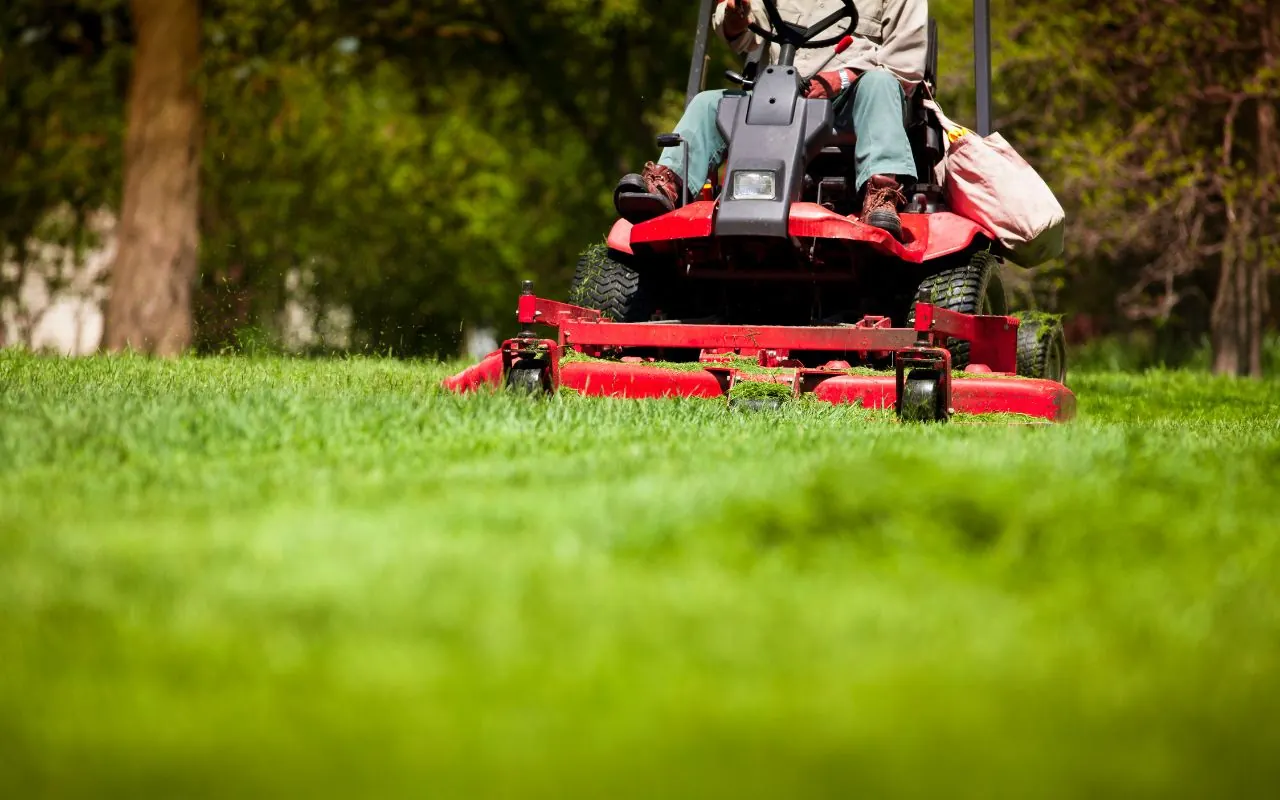
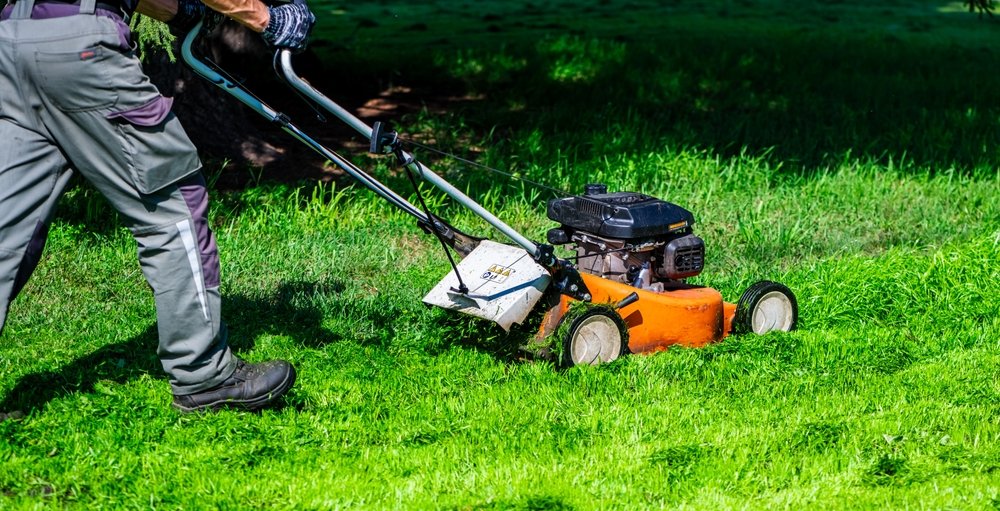
If possible, use a lighter mower on the first pass. Heavy equipment can press down soft soil and disturb shallow roots. For small areas, a walk-behind mower is usually safer than a heavy riding mower on freshly seeded sections.
Also, keep the mower deck clean. Wet clumps of grass can stick under the deck and create uneven cutting. That is one of the easiest ways to scalp seedlings without meaning to.
Check your grass type before choosing the cut height
Different lawns like different mowing heights. Cool-season grasses, such as fescue and bluegrass, usually tolerate slightly taller mowing. Warm-season grasses, such as Bermuda or zoysia, may be cut lower once established, but not right after overseeding.
If you overseeded a warm-season lawn for winter color, treat the new seedlings gently. The first cut should still be conservative. Early stress can delay thickening, which is the whole reason for overseeding in the first place.
| Grass situation | Typical first mow height | What to watch for |
|---|---|---|
| Perennial ryegrass overseed | 3 to 3.5 inches | Fast sprouting, but roots still need time |
| Fine fescue or tall fescue | 3 to 4 inches | Good early height, but avoid heavy cutting |
| Kentucky bluegrass | 3.5 to 4 inches | Slower germination, so patience matters |
| Warm-season lawn overseeded for color | 3 to 4 inches | Protect shallow roots and avoid scalp cuts |
Avoid the mistakes that damage new seedlings
Most first-mow problems come from a few common errors. The biggest one is mowing too early because the lawn “looks ready.” New grass can look full on top while still being weak below the surface.
Another mistake is cutting too short. That can shock the lawn and expose soil. Thin soil cover means more weed seeds can sprout, and the overseeding effort starts working against you.
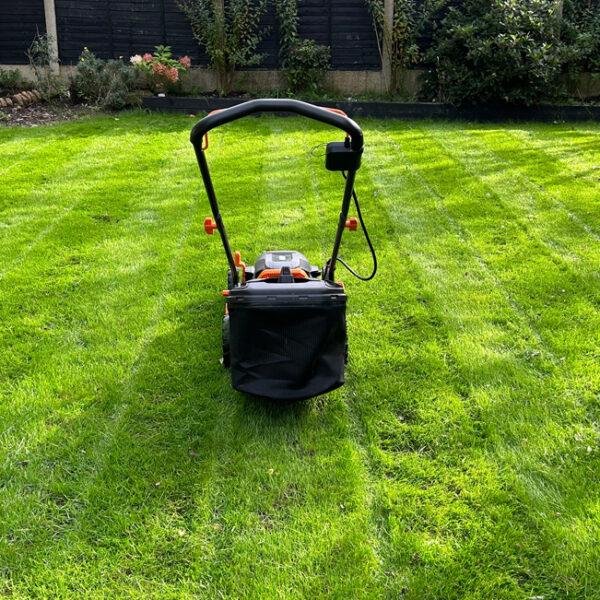
Watering habits matter too. If the lawn is wet when you mow, the wheels can sink and drag seedlings loose. Wet blades also clump together, which makes the cut uneven.
Credit: relentlessgardener.co.uk
Do not mow when the soil is soggy
Even if the grass is tall enough, soft ground is a problem. Mowing on soggy soil can create ruts and compact the root zone. That reduces oxygen in the soil and slows root growth.
If you recently watered or got rain, wait until the surface firms up. The lawn should feel damp, not squishy. This is one of the simplest ways to protect a new overseed.
Do not bag every clipping unless you must
Light clippings can help return nutrients to the lawn, but only if they are short and evenly spread. If the clippings are thick enough to mat down, remove them. A thick mat can block light from reaching the new grass.
On the first mow, many homeowners choose to bag the clippings just once for a cleaner cut. That is fine if the lawn is producing longer clippings than normal. After that, you can return to your usual mowing practice.
Do not rush fertilizer right after mowing
Some people think the first mow is the signal to feed heavily. That is not always smart. If the new grass is already stressed from cutting, a strong fertilizer push can make growth soft and uneven.
A balanced feeding plan works better than a fast one. For more general lawn timing and care guidance, the university extension lawn care guide is a useful reference for homeowners who want science-based advice.
Use a simple mowing plan for the first month
After the first mow, the lawn still needs careful handling. The next few cuts matter almost as much as the first one. A steady, gentle routine helps the new grass thicken without stress.
During the first month after overseeding, mow often enough to avoid removing too much at once. That usually means mowing whenever the grass reaches about 4 to 4.5 inches, then cutting it back by only one-third.
This is where many lawns improve the most. Frequent light mowing encourages the grass to grow sideways and fill in bare spaces. That is how a thin lawn becomes denser.
Credit: mijaliscolandscaping.com
Watch how fast the lawn recovers after each mow
If the grass looks flat, pale, or bent over for more than a day or two after mowing, the cut may have been too aggressive. Healthy seedlings should stand back up quickly. If they do not, raise the mower deck a bit higher on the next pass.
Fast recovery is a better sign than a perfect-looking cut. The goal is not a golf-course finish. The goal is strong roots and thicker turf.
Keep foot traffic low while the seedlings are young
Fresh overseeding and heavy foot traffic do not mix. Walking on the lawn every day can crush seedlings before they mature. Try to stay off the area as much as possible for the first few weeks.
If you need to cross the lawn, use the same path each time. That limits damage to one narrow strip instead of spreading stress across the whole yard.
Why mowing at the right time makes the lawn thicker
Mowing is not just about keeping the lawn neat. It also shapes how the grass grows. When you mow correctly after overseeding, the grass is encouraged to branch and fill in gaps, which creates a thicker lawn over time.
Cutting too early can undo that benefit. A seedling that gets pulled out or badly cut has to restart, and that slows the thickening process. A lawn with more surviving seedlings will always fill in better than one that was stressed at the start.
There is also a practical weed-control benefit. Thick grass shades the soil, and shaded soil gives weed seeds fewer chances to sprout. That is one reason a careful first mow pays off later.
Think in terms of root strength, not just top growth
Many homeowners focus on how tall the lawn looks. But the underground part matters more. A grass plant with a weak root system may look fine for a week, then collapse in heat or dry weather.
When you wait for strong roots before mowing, you help the lawn survive the next stress event. That can be a dry spell, a hot afternoon, or even a few days of heavy use.
Understand one non-obvious benefit of a taller first cut
A slightly taller first cut keeps more leaf surface on the plant. That means the grass can keep making food through photosynthesis while it recovers. Beginners often think shorter is cleaner, but in young grass, shorter usually means weaker.
That extra leaf area also helps the soil stay cooler. Cooler soil holds moisture better, and that helps roots keep growing in the critical early stage.
How to decide if your lawn is ready today
If you want a fast answer, use this simple decision process. It works better than guessing from the calendar alone.
- Check the grass height. If it is under 3 inches, wait.
- Gently tug a few seedlings. If they pull out easily, wait.
- Walk across the area. If the soil feels soft or muddy, wait.
- If all three checks look good, mow high and use a sharp blade.
This approach is useful because it combines visual signs and physical signs. A lawn that passes all four checks is usually ready for a safe first cut. If it fails even one of them, waiting a few more days is often the smarter choice.
Remember that a first mow does not need to be perfect. It just needs to be gentle. Small mistakes are easy to fix later; damaged seedlings are not.
Keep the first month simple and consistent
The best results come from patience, not aggressive mowing. If you are wondering when to mow after overseeding, the safest answer is: mow only after the new grass is tall enough, rooted enough, and dry enough to handle the cut. For many lawns, that is around 2 to 4 weeks after germination, but the lawn itself should make the final call.
Use a high mower setting, a sharp blade, and light passes. Avoid soggy soil, avoid scalping, and avoid cutting more than one-third of the blade. Those three habits do more for lawn thickness than any fancy lawn trick.
If you give the seedlings a calm first month, they will usually reward you with better coverage, stronger roots, and a thicker lawn by the end of the season.
Credit: classygrass.pro
FAQs
How soon can I mow after overseeding?
Most lawns can be mowed 2 to 4 weeks after overseeding, but only if the new grass is about 3 to 4 inches tall and rooted well enough to stay in the soil when lightly tugged.
What height should new grass be before mowing?
New grass is usually ready when it reaches 3 to 4 inches. The first mow should remove only the top third of the blade, not the full height.
Should I mow before or after watering?
Mow when the lawn is dry on top. Wet grass bends, clumps, and tears more easily. Also, soggy soil can let mower wheels pull up new seedlings.
Can I use a riding mower after overseeding?
You can, but only if the soil is firm and the mower is not too heavy for the area. For smaller or softer lawns, a walk-behind mower is usually safer for the first few cuts.
What if the grass is growing unevenly after overseeding?
That is normal. New seed often germinates at different speeds. Wait until the tallest new grass is ready, then mow high so the shorter seedlings are not stressed.