
If your mower will not start, the fix is often simple. Learning how to start a Craftsman lawn mower the right way can save time, reduce damage, and keep you from pulling the cord forever.
Most starting problems come from a few basic things: old fuel, a loose safety handle, a dirty air filter, or a fuel valve left off. A Craftsman mower is usually easy to start once you know the correct sequence and what to check first.
This guide walks you through the full starting process for gas-powered Craftsman mowers, plus the most common mistakes, quick troubleshooting steps, and when to stop and get help. The steps are beginner-friendly, but detailed enough to solve the problems most people run into.
Check the mower before you try to start it
Before pulling the starter rope or turning a key, take 30 to 60 seconds to inspect the mower. This small habit prevents a lot of frustration. It also helps you avoid starting with a simple setup problem that would have been easy to fix.
First, make sure the mower is on level ground. Then check that the blade area is clear of sticks, thick grass, or anything jammed underneath. If the mower is a walk-behind model, keep your hands away from the blade housing at all times.
Next, look at the fuel, oil, and safety controls. Many Craftsman mowers will not start unless the operator presence control is held correctly. That means the handle or safety bar must be pressed as the engine starts. If you skip that step, the engine may crank but not fire.
What to verify first
- Fuel: Use fresh gasoline if the mower is gas-powered.
- Oil: Check the oil level before startup, especially on a cold engine.
- Blade control: Make sure the safety handle or bail lever is engaged.
- Fuel shutoff: If your model has a fuel valve, confirm it is open.
- Spark plug wire: Make sure it is connected firmly.
One detail beginners often miss is stale fuel. Gasoline can start to break down in as little as 30 days, and older fuel can make a mower hard to start or cause rough running. If the mower sat all winter, old fuel is one of the first things to suspect.
How to start a Craftsman lawn mower step by step
Once the mower is checked, starting it is straightforward. The exact process can vary a little by model, but most Craftsman gas mowers follow the same pattern. If your mower has a primer bulb, choke lever, or electric start, the order below will still help.
1. Set the mower in a safe position
Move the mower onto a flat, open area with no loose debris. Keep children, pets, and bystanders away. If the mower is a push model, stand firmly behind it with both feet stable.
2. Check the fuel and oil
Make sure there is enough fuel in the tank. Fresh fuel should smell clean, not sour or varnish-like. Then check the oil dipstick if your model uses one. Low oil can prevent startup on some engines or cause engine wear if ignored.
3. Open the fuel valve, if your mower has one
Some Craftsman mowers have a fuel shutoff valve near the tank or carburetor. Turn it to the open position. If your mower does not have a valve, skip this step.
4. Set the throttle or choke
If your mower has a choke lever, move it to the choke or start position. This gives the engine a richer fuel mixture for cold starts. If the engine is already warm, you may only need a partial choke or no choke at all.
5. Press the primer bulb, if equipped
Many Craftsman mowers have a primer bulb near the carburetor. Press it slowly 2 to 3 times, unless your model manual says otherwise. Too many presses can flood the engine, which makes starting harder instead of easier.
6. Hold the safety control
Grip the handle and hold the safety bar or operator presence control against the handle. This step is required on many mowers. Without it, the ignition system may stay disabled.
7. Start the engine
If your mower has a recoil starter, pull the starter rope smoothly and firmly. Do not yank it with short, fast pulls. A strong, full pull usually works better. If your mower has electric start, turn the key or press the start button while holding the safety control.
8. Let the engine warm up
After the engine starts, let it run for 30 to 60 seconds. Then slowly move the choke back to the run position. If you move it too fast, the engine may stall. If you leave the choke on too long, the engine can run rough and use extra fuel.
For model-specific startup and safety details, the official owner’s manual is the best reference. It lists the exact control layout for your mower and explains the startup sequence for that model.
Starting different Craftsman mower types
Not every Craftsman mower starts the same way. A push mower, self-propelled mower, riding mower, and electric start model each have small differences. Knowing those differences helps you avoid forcing the wrong process.
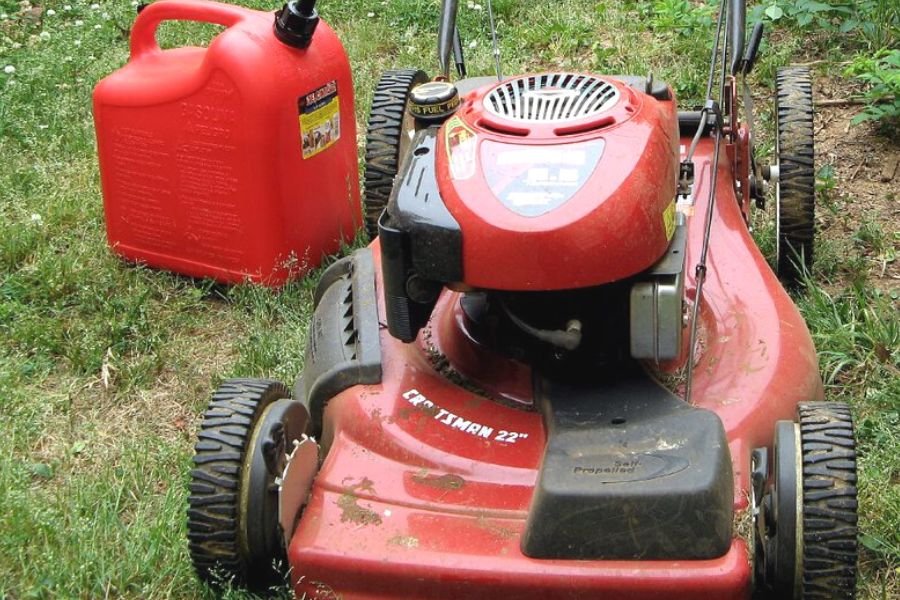
| Type | What you do first | Common startup issue |
|---|---|---|
| Push mower | Hold the safety bar and pull the cord | Loose safety bar or stale fuel |
| Self-propelled mower | Hold the safety control, then start the engine | Drive control confusion before engine starts |
| Electric start mower | Insert the key or press the start button | Weak battery or bad connection |
| Riding mower | Set parking brake, sit in the seat, and turn the key | Seat switch, brake switch, or battery problem |
Credit: mowing.expert
Push and self-propelled mowers
These are usually the easiest to start once the basics are right. The starter rope and safety bar are the main points to check. If the rope pulls smoothly but the engine does not catch after several tries, stop and inspect the fuel system instead of pulling harder and harder.
Electric start mowers
Electric start models are convenient, but they depend on battery health. A battery can have enough power to light a display or make a click, yet still not crank the engine. If the mower has been stored for months, charge the battery fully before assuming there is a bigger problem.
Riding mowers
Riding mowers often require several safety conditions at once: the parking brake must be set, the seat switch must detect a seated operator, and the blade engagement lever should be off. If one switch fails, the engine may not start even when everything else looks normal.
Common reasons a Craftsman mower will not start
Most starting failures are not serious mechanical damage. In many cases, the problem is fuel, airflow, or a safety interlock. That is good news, because these are often fixable without special tools.
Old fuel
This is the most common cause. Fuel that has sat too long can clog the carburetor or prevent smooth ignition. If the mower ran fine last season but will not start now, old fuel is the first thing to suspect. Drain stale fuel and refill with fresh gasoline if needed.
Dirty air filter
A clogged air filter restricts airflow and makes the engine harder to start. On a small mower engine, even a partially blocked filter can cause trouble. If the filter looks dark, packed with dust, or oily, replace it. Foam filters may sometimes be cleaned, but paper filters are usually replaced.
Faulty spark plug
A worn or fouled spark plug can stop the engine from firing. If the mower has been hard to start for a while, the plug may be weak rather than dead. Check for heavy carbon buildup, corrosion, or a cracked insulator. A new spark plug is inexpensive and often solves the problem.
Carburetor buildup
Small engines are sensitive to varnish and deposits inside the carburetor. If the mower starts only with starter fluid or runs for a few seconds and dies, the carburetor may be dirty. This is one of the non-obvious issues beginners miss because the fuel tank may look full and clean while the carburetor is clogged internally.
Safety switch not engaged
Craftsman mowers use safety switches to prevent accidents. If the handle is not squeezed correctly, the seat switch is not pressed, or the blade control is in the wrong position, the engine may not start. This is easy to overlook when you are focused on the engine itself.
Troubleshooting when the mower still will not start
If the mower does not start after the normal steps, work through the simplest checks first. This saves time and helps you identify the real cause. Do not jump straight to major repairs when the issue may be a basic setup problem.
- Check for fuel flow. Make sure the tank has fresh fuel and the shutoff valve is open, if present.
- Confirm the safety controls. Hold the bail bar, set the brake, or sit in the seat, depending on the mower type.
- Inspect the air filter. Replace it if it is dirty or soaked with oil.
- Look at the spark plug. Remove it and check for damage, wear, or heavy buildup.
- Try starting with less choke. If you smell gas, the engine may be flooded.
- Check the battery. For electric start models, make sure the battery is charged and connected tightly.
Here is a simple way to diagnose the problem. If the engine does not crank at all, think safety switch, battery, or starter issue. If it cranks but never fires, think spark plug, fuel, or carburetor. If it starts and dies after a few seconds, fuel delivery or choke settings are the most likely causes.
One useful clue is smell. Strong fuel smell often means flooding. No fuel smell at all usually points to fuel delivery problems. A sharp clicking sound on electric start models often points to a weak battery or a loose cable connection.
When to stop and get help
If you smell gasoline near a hot engine, see fuel leaking, or notice damaged wiring, stop immediately. Do not keep pulling the cord or pressing the starter button. Also stop if the blade or crankshaft seems jammed, because forcing the mower can cause more damage.
If the mower needs carburetor cleaning, wire testing, or starter repair and you are not comfortable doing that work, a small engine repair shop can handle it. That is often cheaper than replacing parts one by one without knowing the cause.
How to make the next start easier
A mower that starts easily is usually one that was stored and maintained well. A few habits can prevent most startup problems. These habits matter more than people think because small engines are less forgiving than car engines.
Credit: lawnandmowers.com
Use fresh fuel
Buy only the amount of fuel you expect to use soon. If fuel sits for weeks or months, it can degrade and cause carburetor trouble. If your mower will be stored for the season, use a fuel stabilizer if recommended by the manufacturer.
Run the mower dry before storage
Some owners prefer to run the engine until it uses most of the fuel before storing the mower. That can reduce varnish buildup in the fuel system. Follow your model’s manual for the best storage method, because fuel system design can vary.
Replace wear items on time
Air filters, spark plugs, and blades do not last forever. Replacing them on a routine schedule keeps the engine easier to start and helps it run better. A dull blade also makes the engine work harder, which can make mowing feel rough even after startup.
Keep the underside clean
Grass buildup under the deck can strain the engine and make the mower seem weak. Clean the underside after use, but only when the mower is off and cool. Never reach under the deck unless the spark plug wire is disconnected and the engine cannot start accidentally.
For lawn equipment care and safety basics, the U.S. Consumer Product Safety Commission offers helpful mower safety guidance through its public safety resources at mower safety guidance. It is a good reference for safe handling around blades and startup hazards.
Simple mistakes beginners should avoid
Many starting problems come from small mistakes, not bad parts. The good news is that these are easy to fix once you know what to watch for. A few careful habits can save you from repeated pulling, flooded engines, and unnecessary repairs.
- Using old gas: Fuel older than a month or two can cause hard starting.
- Over-priming: Pressing the primer too many times can flood the engine.
- Skipping the safety control: The mower may not start unless the operator presence bar is held correctly.
- Ignoring the air filter: A dirty filter can block the airflow needed for ignition.
- Pulling the rope too weakly: A short pull may not create enough spin for starting.
Another mistake is trying to start the mower again and again without checking the basics. After several failed pulls, the engine can become flooded. If that happens, stop, wait a few minutes, and try again with less choke or no primer.
It also helps to remember that a mower that started last week can still fail today if the fuel has gone stale or a switch has been bumped. Do not assume the same settings will work every time, especially after storage.
How to start a Craftsman lawn mower the right way every time
The best way to master how to start a Craftsman lawn mower is to follow the same calm routine every time: check fuel, confirm the safety controls, set the choke correctly, and start with one clean pull or one steady key turn. That routine solves most startup issues before they become bigger problems.
If the mower still will not start, do not force it. Start with the most likely cause: stale fuel, a bad safety switch, a dirty air filter, or a weak spark plug. Those four issues explain most no-start complaints on small gas mowers and are usually easier to fix than people expect.
With fresh fuel, a clean filter, and the correct startup steps, a Craftsman mower should start reliably. If it does not, use the troubleshooting steps above and work methodically. That approach is faster, safer, and far less frustrating than guessing.
Credit: lawnandmowers.com
FAQ
1. Why does my Craftsman lawn mower start and then die?
The most common reason is fuel delivery trouble. Old fuel, a dirty carburetor, or a clogged air filter can let the engine fire briefly and then stall. Try fresh fuel and check the air filter first.
2. How many times should I press the primer bulb?
Most Craftsman mowers only need 2 to 3 presses, but some models differ. Too many presses can flood the engine and make starting harder. If your mower has a manual, follow that model’s instructions.
3. Can I start a Craftsman mower without using the choke?
Sometimes yes, especially if the engine is warm. For a cold engine, the choke usually helps it start faster. If the mower is flooded, turning the choke off may help it recover.
4. What should I do if the starter rope pulls too hard?
Stop and check for a jammed blade, stuck engine, or internal issue. Do not force the rope repeatedly. If the rope is very stiff, disconnect the spark plug wire before inspecting the mower.
5. How do I know if the battery is the problem on an electric start mower?
If the key turns or button clicks but the engine does not crank strongly, the battery may be weak. Check the battery charge, cable connections, and terminals for corrosion. A fully charged battery should usually crank the engine with more confidence than a weak one.