
Rabbits can strip young plants fast, and once they find your garden, they often come back every night. If you want how to keep rabbits out of garden spaces without hurting them, the good news is that several simple methods work very well when used together.
The best approach is not one magic fix. It is a mix of fencing, plant choices, scent barriers, garden cleanup, and a few smart habits that make your yard less attractive. The right setup can protect tender lettuce, beans, flowers, and seedlings while still keeping the solution humane.
Below are 15 effective ways to stop rabbit damage, plus practical tips for using them the right way. You will also learn which methods work best for small gardens, raised beds, and larger yards.
Start with the strongest physical barriers
If rabbits already treat your garden like a buffet, fences and covers usually give the fastest relief. Rabbits are small, but they are persistent. They can squeeze through gaps as small as 2 inches, and they often chew through weak netting if the material is thin or loose.
The goal is to create barriers that rabbits cannot slip under, push through, or hop over. A fence works best when it is low enough to stop digging at the base and tall enough to discourage jumping. For most gardens, a 24 to 30 inch fence is the minimum, but 36 inches gives better protection in open areas.
1. Install rabbit-proof fencing
Use 1-inch or smaller wire mesh for the fence, not plastic garden netting. Chicken wire can work, but welded wire is stronger and lasts longer. The bottom should be buried 6 inches deep or bent outward in an L-shape so rabbits cannot dig under it.
Make sure the fence has no loose corners or gaps near gates. A fence that is 2 inches off the ground is basically an open door for rabbits. If your yard gets regular pressure from rabbits, reinforce the gate area first because that is often the weak spot.
2. Use row covers for vulnerable crops
Floating row covers and garden fabric are excellent for short plants such as greens, herbs, and seedlings. They block access without using chemicals or sprays. Just secure the edges with soil, pins, or rocks so rabbits cannot lift them.
This method works especially well during early spring when plants are tender. One mistake many gardeners make is removing covers too early. Rabbits often target new growth first, so keep the cover on until the plant is strong enough to survive some nibbling.
3. Protect individual plants with wire cages
For vegetables or flowers that grow in small clusters, a simple wire cage can be enough. Wrap the cage around the plant with a few inches of clearance on all sides. Use sturdy wire mesh with openings no larger than 1 inch.
This is a smart choice for tomatoes, peppers, young shrubs, and expensive ornamentals. It is also useful when only a few plants are getting attacked and you do not want to fence the entire garden. Keep the cage tall enough that the plant will not grow into the wire too quickly.
Make the garden less appealing to rabbits
Rabbits are not random in what they choose. They prefer soft, tender, easy-to-eat plants and areas where they feel safe. If your garden is full of dense cover, tall weeds, and easy food, rabbits will keep returning.
Changing the garden environment can reduce visits even before you add other controls. This is one reason the best answer to how to keep rabbits out of garden beds is usually a layered plan, not just one product.
4. Remove hiding spots near the garden
Rabbits like to stay close to cover. Tall grass, brush piles, stacked pots, boards, and thick shrubs near the garden give them safe places to hide. If you clear these areas, the yard becomes less comfortable for them.
Trim low branches and keep the ground around beds open. A clean edge around the garden makes rabbits feel exposed, which often reduces nighttime feeding. This is a simple step, but it can make every other method work better.
5. Harvest ripe crops quickly
Rabbits are drawn to the smell and softness of ripe produce. Overripe lettuce, fallen beans, and low fruit can become an invitation. Pick crops as soon as they are ready and remove damaged plant parts from the ground.
This matters more than many gardeners realize. A garden with a few forgotten plants can keep rabbits interested even if most of the bed is protected. Clean harvest habits reduce both food and scent signals.
6. Choose rabbit-resistant plants
Some plants are much less attractive to rabbits because of their smell, texture, or taste. Strong-scented herbs and many tough ornamentals are often ignored. Examples include lavender, rosemary, sage, daffodils, marigolds, and salvia.
That does not mean rabbits will never touch them, especially when food is scarce. But using resistant plants along borders can help create a living buffer around more vulnerable crops. It is a smart long-term strategy for mixed gardens.
Use scent and taste deterrents the right way
Deterrent sprays can help, but they work best as support tools, not as your only defense. Rabbits have strong noses, so scent changes can sometimes make them avoid a spot. Still, rain, irrigation, and new growth can wash away the effect quickly.
The best deterrents are safe for plants, safe for pets when used correctly, and applied consistently. They also work better when paired with fencing or habitat cleanup. Without that backup, rabbits often adapt and keep feeding.
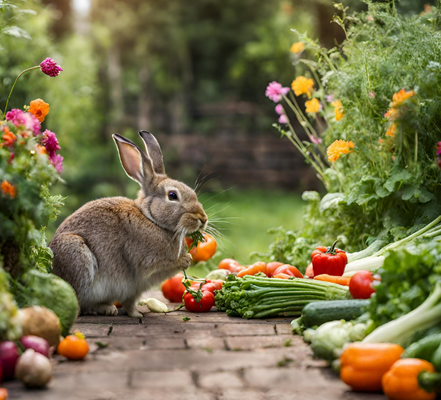
Credit: naturesmace.com
7. Apply humane rabbit repellents
Use a repellent made for rabbits and follow the label closely. Most work by creating a smell or taste rabbits dislike. Reapply after rain and after heavy watering because the protection fades fast.
Test the product on a small area first to make sure it does not harm delicate leaves. Do not spray edible leaves right before harvest unless the label clearly says it is safe. For best results, start repellent use before damage begins, not after rabbits have already learned the garden is food.
8. Try strong natural scents near entry points
Some gardeners use strong odors like garlic, onion, or soap near borders. These methods are less reliable than fencing, but they can help in low-pressure areas. Place them near known entry points, not randomly across the whole garden.
Be careful not to rely on scent alone. Rabbits can get used to many odors if food is easy to reach. Think of scent barriers as a second line of defense, not the main wall.
9. Rotate deterrents so rabbits do not adapt
Rabbits can become less bothered if they smell the same repellent every week. Switching products or combining methods can keep them cautious. For example, use a spray on one border and fencing on another.
Non-obvious insight: a deterrent often seems to “stop working” when the real problem is that rabbits have already learned there is no hard barrier. When food is easy and the risk is low, they will push through mild discomfort. That is why the strongest results come from mixing deterrents with physical protection.
Time your planting and watering more carefully
Garden habits can either attract rabbits or make your plants safer. Tender seedlings are especially vulnerable in the first few weeks. If rabbits find soft new growth at the same time each evening, they quickly build a feeding pattern.
Small changes in timing can reduce that pattern. You do not need perfect control. You just need to make the garden less predictable and less rewarding.
10. Water in the morning instead of at night
Wet ground and fresh moisture can make a garden more active for nighttime visitors. Morning watering gives plants time to dry before dark and reduces the cool, damp conditions rabbits may enjoy. It also helps avoid creating a fresh scent trail right before dusk.
This is a subtle change, but it supports the other methods. Gardens that stay cleaner and drier at night are often less attractive to wildlife in general. That includes rabbits and other small feeders.
11. Protect seedlings during the first month
The first 3 to 5 weeks after planting are often the most dangerous. Young plants have soft stems and juicy leaves, which rabbits prefer. Use row covers, cages, or small fencing during this stage, then keep protection in place until growth becomes tougher.
Many gardeners wait until they see damage before acting. By then, rabbits already know the garden is a food source. Early protection is much easier than trying to break an established feeding pattern.
12. Plant more rabbit-prone crops away from edges
Rabbits usually start near the edge of a bed because it is easier to reach. Keep their favorite foods, like lettuce, beans, and young peas, farther from openings, paths, and lawn edges. Put tougher or less appealing plants at the outer border.
This simple layout change can buy you time. Rabbits may still reach the bed, but they are less likely to get a quick meal before they feel exposed. If you use raised beds, this works even better because the sides add another barrier.
Use motion and smart yard management
Some control methods do not stop rabbits physically, but they make the area feel unsafe. That can be enough to push them elsewhere, especially when combined with fencing and cleanup. The key is to use these tools consistently, not just once.
Motion-based methods are most useful in larger gardens or places with light to moderate rabbit pressure. In heavy infestations, they work better as a support tool than a main defense.
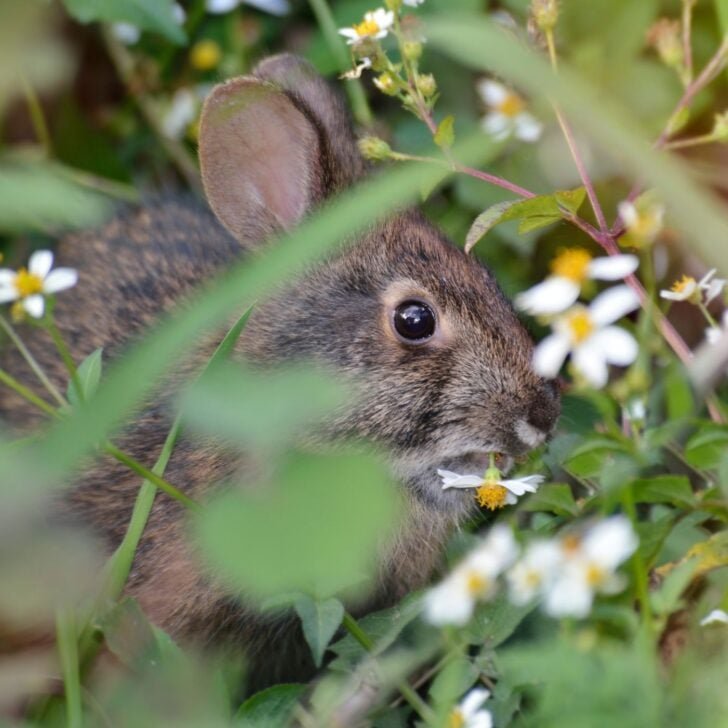
Credit: montanahappy.com
13. Install motion-activated sprinklers or lights
Sudden movement can startle rabbits and interrupt feeding. Motion-activated sprinklers are especially effective because rabbits dislike unexpected water bursts. Lights can help too, although some rabbits ignore them after a while.
Place them near entry paths or the side of the garden where damage starts. Change the location every so often if rabbits get used to them. This method works best when rabbits have several alternatives elsewhere in the yard.
14. Keep the lawn and garden border trimmed
Short grass around the garden reduces cover and makes rabbits feel exposed. It also makes it easier to spot tracks, droppings, and entry points. A clean border gives you a better chance to catch a problem early.
Non-obvious insight: many rabbit problems grow worse because the yard edge becomes a protected travel lane. When grass and weeds are tall at the border, rabbits can move in and out without ever feeling threatened. Trimming that lane often cuts repeat visits more than expected.
15. Track damage patterns and block the real entry points
Instead of guessing, watch where the rabbits are entering. Look for clipped stems, round droppings, flattened grass, and small trails along fences or shrubs. Once you find the pattern, block that path directly.
Sometimes only one opening is responsible for most of the damage. Sealing a single gap under a fence or around a shed can solve a big share of the problem. This is one of the most practical ways to make your control efforts smarter and less wasteful.
How to combine the methods for lasting results
The strongest rabbit control plan usually uses three layers: one physical barrier, one garden habit change, and one deterrent or motion tool. That combination is far more effective than relying on sprays alone. It also keeps the solution humane, since the goal is exclusion rather than harm.
If you want the fastest improvement, start with the areas rabbits hit most. Then upgrade the weakest point in your setup. For many gardeners, that means the fence line, the garden border, or the seedlings that rabbits seem to love most.
The USDA Cooperative Extension has practical advice on wildlife-aware garden management, including plant protection and habitat reduction, through its university extension network: university extension wildlife and garden guidance.
Here is a simple way to prioritize your work:
| Garden situation | Best first step | Follow-up step |
|---|---|---|
| Small vegetable bed | Row cover or wire cage | Repellent and clean border |
| Raised bed garden | Mesh fencing around the bed | Protect seedlings during early growth |
| Large yard garden | Perimeter fencing | Motion sprinklers and habitat cleanup |
| Repeated nighttime damage | Block entry points and trim cover | Rotate deterrents and watch patterns |
If you only have time for one upgrade, choose fencing. If you can do two, add cleanup. If you want the best long-term result, combine fencing with plant choices and a repellent schedule.
In other words, the answer to how to keep rabbits out of garden spaces is not about force. It is about removing access, removing shelter, and making the area less rewarding until rabbits move on.
Common mistakes that make rabbit problems worse
One of the biggest mistakes is using weak plastic mesh and assuming it will hold. Rabbits chew, squeeze, and push, so flimsy barriers fail fast. Another common mistake is putting a fence up but leaving gaps at the bottom or around gates.
Many gardeners also spray repellents once and expect them to last for weeks. Rain, irrigation, and new growth reduce the effect much faster than people expect. That is why repeat application matters.
A third mistake is leaving dense cover near the beds. Even a good fence becomes less helpful when rabbits feel safe enough to wait nearby. If the garden edge is protected, rabbits often lose interest much faster.
Finally, do not assume one damaged area means one rabbit. Many times, several rabbits are using the same route. If the damage keeps returning, look for a pattern instead of treating each bite mark as a separate problem.
:max_bytes(150000):strip_icc():format(webp)/keeping-rabbits-away-from-the-garden-2656311-01-89b30b0c48bf4cc88121b8461c274b47.jpg)
Credit: thespruce.com
When humane control is enough and when to get help
Most rabbit problems can be handled with the methods above. If the damage is light to moderate, a mix of fencing, cleanup, and deterrents usually works well within a few weeks. Stronger pressure may take more time, but it is still manageable.
If rabbits are destroying large sections despite a proper fence, or if they are nesting close to structures, it may be time to talk to local wildlife or extension professionals. They can help you identify entry points, nesting areas, and rules for your area. Avoid traps or harmful methods unless they are legal and advised by local authorities.
Humane control is about pushing rabbits away, not hurting them. That approach is safer for pets, children, and the rest of your garden ecosystem.
FAQs
How tall should a rabbit fence be?
A rabbit fence should usually be 24 to 30 inches tall at minimum, with 36 inches giving better protection in open gardens. The bottom should be buried about 6 inches or bent outward to stop digging. Use mesh with openings no larger than 1 inch.
Do coffee grounds keep rabbits away?
Coffee grounds may add a strong smell, but they are not a reliable rabbit control method. Some gardeners notice short-term results, but rabbits usually adapt if food is easy to reach. They work better as a minor support, not a primary solution.
What plants do rabbits usually avoid?
Rabbits often avoid plants with strong scent, rough leaves, or bitter taste. Lavender, rosemary, sage, daffodils, marigolds, and salvia are common examples. Even so, hungry rabbits may still nibble them if other food is scarce.
Are motion sprinklers safe for rabbits?
Yes, motion-activated sprinklers are a humane way to scare rabbits without injury. They use a sudden burst of water to interrupt feeding and make the area feel unsafe. They work best as part of a larger plan that includes fencing and cleanup.
What is the fastest way to stop rabbit damage right now?
The fastest fix is to protect the most damaged plants with wire mesh, row covers, or cages, then block the main entry point. After that, remove nearby cover and use a repellent to discourage return visits. This combination usually gives the quickest visible improvement.