
Nut grass is stubborn, fast, and very good at hiding underground. If you want to know how to get rid of nut grass in garden beds without wasting time, the key is to attack the roots, not just the leaves.
Many gardeners pull the top growth and think the problem is solved. It is not. Nut grass, also called nutsedge, grows from small underground tubers that can survive for months and even years, so one missed piece can restart the whole patch.
The good news is that you can control it with a mix of digging, smothering, better watering habits, and, when needed, selective herbicides. The best method depends on how big the problem is, how long it has been growing, and what plants are nearby.
Start by identifying nut grass correctly
Before you treat anything, make sure it is really nut grass. Many weeds look similar at first glance, and using the wrong method can make the problem worse. Nut grass is not a true grass. It is a sedge, which means it has a different stem structure and different growth habits.
The fastest clue is the stem shape. Nut grass usually has a triangular stem instead of a round one. If you roll the stem between your fingers, it feels sharp on the edges. The leaves also grow in sets of three from the base, which is a classic sedge trait.
You may also notice that it grows faster than the lawn or garden plants around it. In warm weather, a small patch can spread quickly, especially if the soil stays moist. The plants often look shiny, upright, and tougher than the surrounding weeds.
Common signs you are dealing with nut grass
- Bright green leaves that stand above nearby plants
- Small yellow-green seed heads in late summer
- Triangular stems
- Clusters coming from one underground point
- Hard little tubers or “nuts” in the soil
One non-obvious clue is where it grows. Nut grass often shows up in soggy areas, compacted soil, or spots that get too much irrigation. If a weed patch keeps returning in the same wet area, that is a strong sign you are not dealing with ordinary broadleaf weeds.
Correct identification matters because many garden weed killers are not effective on sedges. Some may burn the leaves for a few days, but the plant comes back stronger from the underground tubers.
Why nut grass keeps coming back
Nut grass is hard to remove because it stores energy underground. Each plant can form tubers, often called nuts, and those tubers can produce new shoots. Pulling the top growth alone usually leaves the real problem behind.
This weed also spreads in more than one way. It can move through tubers, rhizomes, and sometimes seed. Even if one plant looks dead, nearby tubers may still be alive and ready to sprout after rain or watering.
Another reason it returns is that many gardens accidentally create the perfect conditions for it. Overwatering, poor drainage, bare soil, and frequent shallow cultivation all help nut grass spread. The weed loves disturbed soil because it can move into open space faster than desirable plants.
| What helps nut grass spread | Why it matters |
|---|---|
| Frequent shallow watering | Keeps the topsoil moist, which helps new shoots emerge |
| Compacted soil | Reduces competition from healthy roots but suits sedges |
| Pulling without digging deep | Leaves tubers behind, so the plant regrows |
| Over-mulched wet areas | Can trap moisture and favor sedges |
One mistake many gardeners miss is using the same tool across the whole yard. Nut grass patches often need a different approach than broadleaf weeds or grassy lawn weeds. If you treat every weed the same way, control becomes slow and frustrating.
How to get rid of nut grass in garden beds the practical way
The most reliable approach is a layered one. Start with removal, then reduce regrowth, then prevent new spread. If the patch is small, hand removal may be enough. If it is established, you will likely need repeated treatment over several weeks or months.
1. Dig out the plant and tubers
For small patches, dig deeply and carefully. Use a hand fork, trowel, or weeding tool to lift the soil around the plant. The goal is to remove the entire root system, including the small nut-like tubers. If you snap them off, they can remain in the soil and regrow.
Work when the soil is slightly moist, not soaked. Wet soil makes the tubers harder to see, while very dry soil breaks them apart. After lifting the plant, sift through the soil by hand if the patch is small enough.
Do not compost the removed plants unless your compost pile gets hot enough to destroy viable tubers. For home compost, the safer choice is to bag and dispose of them according to local yard waste rules.
2. Remove new shoots quickly
Nut grass spreads by energy stored underground, but each new shoot still needs sunlight to keep growing. If you cut or pull it early and often, you slowly weaken the plant. This works best when done every 7 to 10 days during active growth.
Stay consistent. Missing one round gives the plant time to rebuild strength. This is one of the biggest reasons gardeners think control “didn’t work.” They stopped too soon.
3. Use mulch the right way
A 2- to 3-inch layer of mulch can help suppress new growth in garden beds, but it is not a cure by itself. Nut grass can push through thin mulch, especially if the soil below stays damp. Use coarse mulch, and keep it evenly spread.
Avoid piling mulch against plant stems or making it too thick in wet spots. Excess moisture under heavy mulch can help sedges survive. In other words, mulch helps most when the bed also drains well.
4. Smother small patches
For areas with no desirable plants, you can use cardboard, overlapping newspaper, or black landscape fabric to block light. Smothering works best on isolated patches that you can leave covered for several months. The longer you block light, the weaker the tubers become.
This method is slow, but it is useful where digging would damage roots of nearby plants. It also avoids disturbing the soil, which can sometimes wake dormant tubers.
5. Treat with a selective herbicide if needed
In some garden situations, a selective herbicide labeled for nutsedge is the fastest route. Products with active ingredients such as halosulfuron or sulfentrazone are commonly used against nutsedge in certain lawns and landscape areas. Always read the label carefully, because not every product is safe around every plant.
If you choose this route, follow the label exactly for timing, dilution, and reapplication. The label is the law, and it also protects your garden plants. For general weed control safety and home-use guidance, the EPA safe pesticide use guidance is a useful reference.
One useful detail many people miss: herbicides work best on young, actively growing nut grass. Mature patches with large tubers often need follow-up applications. A single spray rarely solves a long-standing infestation.
Methods that work best depending on the size of the problem
There is no single best method for every garden. A tiny patch between vegetables needs a different plan than nut grass spread through a flower bed or along a fence line. Matching the method to the size of the problem saves time and reduces damage to your plants.

Credit: ortho.com
For a small patch
Dig out the clump, remove all visible tubers, and check the area every week. If a new shoot appears, remove it immediately. Add mulch after the soil is cleared so new seedlings have less chance to establish.
For a moderate infestation
Combine repeated removal with smothering in open spaces. If the patch is in a bed with perennials, use careful digging around plant roots and spot-treat only where needed. This is usually where patience matters most.
For a large or recurring infestation
A selective herbicide may be the most practical option, especially if you have already tried manual removal. In a large area, the underground tubers are often too widespread to remove by hand. Follow-up treatments are usually needed because nut grass regrows in waves.
One non-obvious insight is that large infestations often look smaller than they really are. What you see above ground may be only a fraction of the underground spread. That is why a “one-and-done” approach usually fails.
Fix the garden conditions that favor nut grass
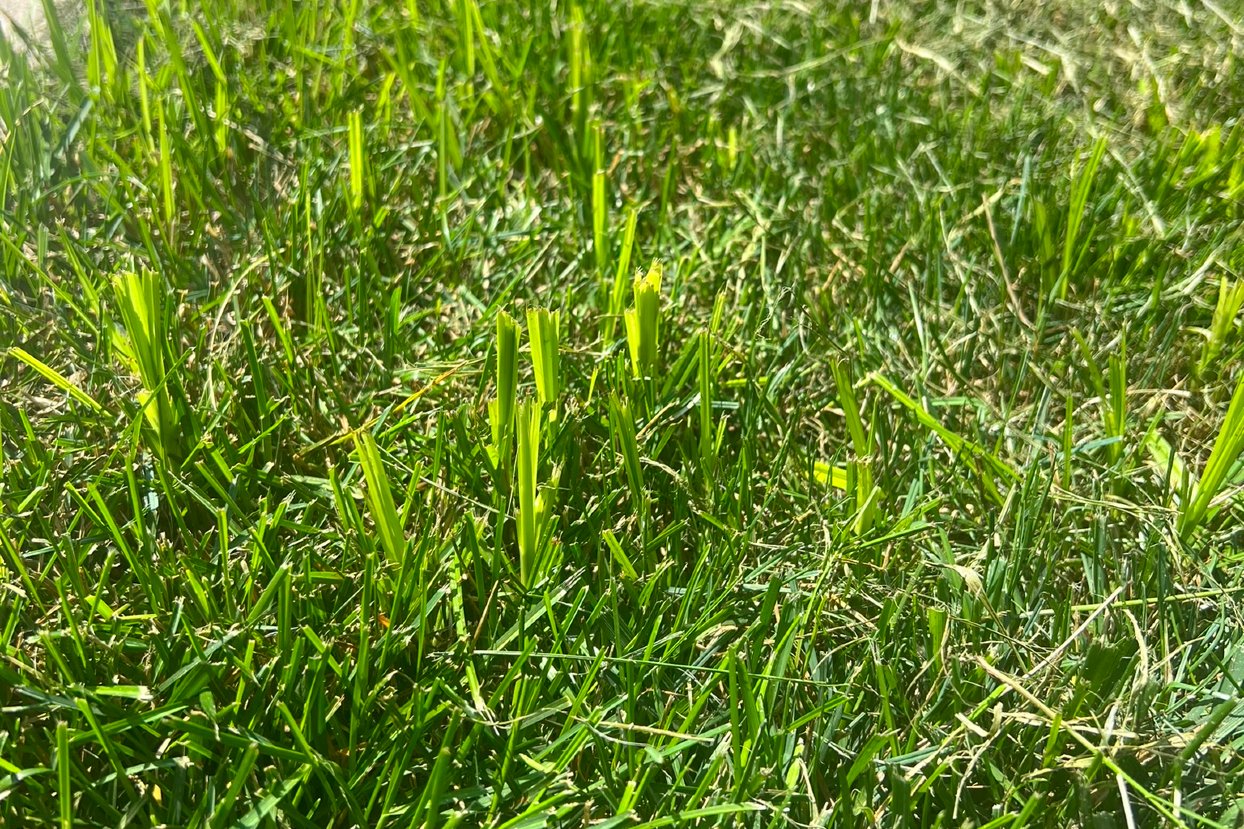
If you do not change the conditions that helped nut grass appear, it may return even after good cleanup. Healthy soil and proper watering make your plants stronger and make the weed less comfortable.
Credit: yardandgarden.extension.iastate.edu
Improve drainage
Nut grass likes moist soil. If water pools after rain or irrigation, the weed gains an advantage. Improve drainage by loosening compacted soil, adding organic matter where appropriate, and avoiding overwatering. In some gardens, raised beds are the easiest long-term fix.
Water less often, but more deeply
Frequent shallow watering encourages weeds near the surface. Deeper, less frequent watering helps the roots of your desired plants grow stronger while making life harder for sedges. For many beds, watering early in the morning also helps reduce extra moisture loss and surface wetness.
Avoid unnecessary soil disturbance
Every time you till or dig widely, you may bring hidden tubers closer to the surface. That can trigger more sprouts. Use hand tools for targeted removal instead of turning over large sections of bed unless you truly need to.
Healthy ground cover also helps. When desired plants fill space well, nut grass has fewer open areas to invade. Bare soil is an open invitation.
Common mistakes that make nut grass harder to control
Many control failures come from simple mistakes, not from the weed being impossible. If you avoid the errors below, your chances of success improve a lot.
- Pulling only the top growth and leaving tubers in the soil
- Using too much water after treatment
- Stopping too early after one clean-looking pass
- Composting infested material before the tubers are dead
- Using the wrong herbicide for sedges instead of nutsedge
- Working the soil too much and spreading tubers around
Another mistake is expecting immediate results. Nut grass control often takes 4 to 8 weeks for visible improvement, and longer in old infestations. That timeline can feel slow, but it is normal.
If the weed is near valuable ornamentals, test any control method on a small area first. Some products can harm sensitive plants, and even careful spraying can drift in windy conditions.
A simple plan you can follow over the next month
If you want a clear starting point, use this practical sequence. It works well for most home gardens and does not require fancy tools.
- Identify the weed and confirm it has sedge traits.
- Dig out small clumps with a hand tool.
- Remove every new shoot as soon as it appears.
- Add 2 to 3 inches of mulch in clean bed areas.
- Fix wet spots and cut back on shallow watering.
- Spot-treat recurring patches with a product labeled for nutsedge, if needed.
- Check the area weekly for at least 1 to 2 months.
This plan works because it attacks the weed from several angles. You are removing current growth, reducing stored energy, and making the garden less friendly to future outbreaks. That combination is much stronger than any single treatment alone.
For many gardeners, the biggest change is not the product they buy. It is the habit of watching the same problem area every week. Early action saves a lot of effort later.
When to call for professional help
If nut grass is covering a large lawn, invading high-value beds, or returning every season despite repeated control efforts, it may be time to get help from a local lawn or landscape professional. This is especially smart if the infestation is mixed with drainage problems or compacted soil.
Call a professional sooner if you are unsure about herbicide safety near edible plants, pets, or sensitive ornamentals. A pro can identify the weed correctly and choose a treatment plan that fits your site.
Also get help if the area has severe drainage failure. Sometimes the weed is only a symptom. Fixing the water problem may matter more than any herbicide.

Credit: reddit.com
How to keep nut grass from returning
Long-term prevention is mostly about consistency. Keep beds covered, avoid excess moisture, and remove stray shoots before they spread. Check new mulch, compost, and imported soil carefully, since tubers can travel in contaminated material.
Be careful after digging or replanting. Disturbed soil is a common place for dormant tubers to wake up. A quick weekly walk through the garden is one of the easiest and most effective habits you can build.
If you stay alert for the first small shoots, you can stop a new patch before it becomes a season-long problem. That is the real secret to controlling nut grass: act early, act often, and do not let the underground part win.
Once you understand how to get rid of nut grass in garden spaces, the weed becomes much less intimidating. It may not disappear overnight, but with digging, smothering, better watering, and careful follow-up, you can bring it under control and keep it from taking over again.
FAQs
1. Can nut grass be removed completely?
Yes, but complete removal usually takes repeated effort. Small patches can sometimes be eliminated by digging out every tuber, while larger infestations often need several weeks or months of follow-up control.
2. Does vinegar kill nut grass?
Household vinegar may burn the leaves, but it usually does not kill the underground tubers. The plant often regrows, so vinegar is not a reliable long-term solution for nut grass.
3. Is it safe to pull nut grass by hand?
Yes, hand pulling is safe if you remove the full root system and tubers. The main risk is leaving pieces behind, which can lead to regrowth. Gloves and a hand fork make the job easier.
4. What time of year is best to treat nut grass?
Late spring through summer is often best because nut grass is actively growing. Treatments tend to work better when the plant is not dormant and is moving energy into new growth.
5. Why does nut grass grow back after spraying?
It grows back because the tubers underground survive the spray. Many treatments only damage the top growth, so repeat applications or another control method is usually needed to weaken the plant fully.