
If your mower will not start, the problem is usually simple: fuel, safety switches, or a small starting mistake. Learning how to start a toro lawn mower takes only a few minutes once you know the right sequence.
Most Toro mowers are designed to be easy for beginners, but they still have safety features that can stop the engine from starting. The good news is that you do not need special tools for most startup checks. You just need to follow the right steps, use fresh fuel, and avoid a few common errors.
This guide walks you through gas push mowers, self-propelled models, and battery-powered Toro mowers in simple steps. You will also see what to check when the mower does not start, what mistakes beginners make, and how to shut it down safely.
Before you pull the starter cord
The fastest way to start a Toro mower is to prepare it first. Many “won’t start” problems happen before the cord is ever pulled. A mower with old fuel, a loose spark plug wire, or an empty battery may look fine but still fail.
Start with a quick visual check. Make sure the mower is on level ground, the blade area is clear, and the handle is locked into position. Then look at the fuel level or battery charge, depending on your model.
Know which Toro mower you have
Toro makes different mower types, and the starting steps are not exactly the same. A gas push mower uses a primer, choke, or recoil starter. A battery mower uses a key or push-button system. A self-propelled mower still starts like a push mower, but the drive system adds one more control to check.
If you are unsure, check the model label on the deck or near the rear handle. The owner’s manual is the best match for your exact machine. Toro’s official support page can help you find manuals and product guidance.
Basic things to check first
- Fuel: Use fresh gasoline for gas mowers. Old fuel is one of the top reasons a mower starts badly.
- Oil: Some Toro engines have low-oil protection and may not start if oil is too low.
- Battery: Battery models need enough charge to engage the motor.
- Safety bar: Many Toro mowers require the blade-control bar to be held against the handle.
- Cutting height: If the blade is set too low in thick grass, the engine can strain on startup.
One detail beginners often miss: a mower can have fuel in the tank and still fail if the fuel is stale. Gasoline can start losing quality in about 30 days, especially if it contains ethanol. That tiny issue can stop an otherwise healthy mower from starting.
How to start a Toro gas lawn mower
Gas Toro mowers usually start with a simple sequence. The exact controls may vary by model, but the core process is the same. If you follow the order below, you avoid most startup problems.
- Check the oil and fuel. Make sure the tank has fresh gasoline and the oil level is within the safe range.
- Open the fuel valve, if your model has one. Some Toro mowers use a fuel shutoff lever.
- Prime the engine. Press the primer bulb 3 times for many cold-start models. Some engines may need a different number, so check the label if needed.
- Set the choke. Move the choke to the “start” or “full” position if your mower has one. Some newer models use automatic choke and do not need this step.
- Hold the blade-control bar. Squeeze the safety bar against the handle and keep holding it.
- Pull the starter cord. Pull it smoothly and firmly. Do not yank it hard in short jerks.
- Adjust after it starts. Once the engine runs, move the choke to “run” or let the automatic choke settle.
If the engine starts and then dies, the choke may still be on too long, or the fuel may be old. If it only sputters, give it one or two more smooth pulls. Avoid pulling the cord more than 5 to 6 times in a row without pausing to check your setup.
What the primer bulb does
The primer bulb sends a small amount of fuel into the carburetor to help cold starts. That is why pressing it too many times can flood the engine. Flooding means there is too much fuel for ignition, so the mower may smell strongly of gas and still refuse to start.
Most beginners press the primer too much because they think more fuel means a better start. In reality, 3 presses are often enough for many Toro mowers. If your model starts hard only after many primer pushes, that is usually not a fix. It is a sign something else needs attention.
If the cord is hard to pull
A very hard pull can mean the blade is jammed with grass, the engine is flooded, or the recoil starter is damaged. Stop pulling if the cord feels stuck. Check under the deck only after the mower is off and the spark plug wire is disconnected.
If the mower was tipped incorrectly, oil may also have entered the air filter or spark plug area. That can make starting difficult for a few minutes or longer. Let the mower sit level for a while, then try again.
How to start a Toro self-propelled mower
A self-propelled Toro mower starts much like a regular gas mower, but the drive control adds another step. Beginners sometimes confuse the drive lever with the blade-control bar, which can cause awkward starting or sudden movement.
Before starting, make sure the drive control is not engaged. You want the mower ready to start, not ready to move forward. Keep both feet stable and stand firmly behind the handle.
- Place the mower on flat ground. Avoid slopes for startup.
- Check the drive lever. Keep it released until the engine is running.
- Prime and choke the engine. Use the same cold-start steps as a standard Toro gas mower.
- Hold the blade-control bar. This is the safety bar needed to start most models.
- Pull the starter cord. Use a steady motion.
- Engage self-propel only after the engine is stable. Pull the drive lever only when you are ready to mow.
A useful habit is to start the mower at the edge of a flat driveway or sidewalk, not deep in thick grass. That reduces the load on the engine during the first few seconds. A mower that starts fine on concrete may stall if it is forced to ignite while already buried in wet grass.
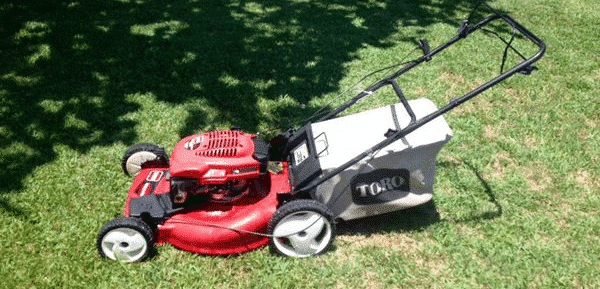
Credit: mowersboy.com
How to start a Toro battery mower
Battery-powered Toro mowers are usually simpler to start, but they can still fail if the battery is weak or not seated properly. The process is clean and quiet, yet it depends on electrical contact and charge level.
- Insert the charged battery. Push it fully into place until it clicks.
- Check the battery charge. If the charge indicator shows low power, recharge first.
- Insert the safety key, if your model uses one. Without it, the mower will not activate.
- Hold the blade-control bar. This keeps the mower from starting by accident.
- Press the start button or lever. Some Toro models use a button near the handle.
Battery mowers often fail for a simple reason: the battery is not fully locked in. Even a small gap can break the circuit. Another common issue is cold battery performance. In cooler temperatures, battery output can drop enough to make starting slow or weak.
If the motor clicks but does not spin, remove the battery and reinsert it. Also check the battery terminals for dirt or moisture. Do not use metal tools to clean connections while the battery is installed.
Common mistakes that stop a Toro mower from starting
Most startup problems come from a short list of mistakes. If you can rule these out quickly, you save a lot of time and frustration.
| Common mistake | What happens | Better fix |
|---|---|---|
| Old fuel | Engine cranks, sputters, or will not fire | Drain and replace with fresh fuel |
| Too much primer | Engine floods and smells like gas | Wait a few minutes and try fewer primer presses |
| Blade-control bar not held | Starter cord pulls, but engine does not engage | Squeeze the safety bar fully against the handle |
| Weak battery | Motor clicks or starts slowly | Recharge or replace the battery |
| Dirty air filter | Engine starts rough or dies soon after starting | Clean or replace the filter |
One less obvious problem is mowing height. If grass is very tall, the engine may start but stall as soon as the blade loads up. Cutting in stages helps. Set the deck higher first, then lower it on a second pass.
Another common issue is a spark plug wire that looks connected but is not fully seated. A loose wire can prevent ignition while still looking normal. A quick press on the boot may solve the issue in seconds.
How to diagnose the problem fast
Use a simple order of checks. Start with the easiest item and move to the next only if the first one looks fine. That keeps you from wasting time on deeper repairs before checking the basics.
- Listen for engine sound. No sound often means a safety or electrical issue.
- Smell for fuel. Strong gas smell can point to flooding.
- Check the battery or spark plug wire. Make sure the power source is secure.
- Look at the air filter. A clogged filter reduces airflow.
- Inspect the blade area. Grass buildup can create drag.
If the mower has not been used for a long time, old fuel and carburetor buildup become more likely. For maintenance and safe handling of gasoline-powered equipment, EPA guidance on small engine fuel and emissions is a helpful reference for homeowners.
How to shut down and store the mower safely
Starting a mower the right way matters, but stopping it the right way also matters. Safe shutdown protects the engine and makes the next start easier. It also reduces the chance of spills, hot-surface injuries, or accidental blade movement.
Release the blade-control bar and wait for the blade to stop completely. On battery models, remove the key and battery after use. On gas models, turn off the engine and close the fuel shutoff valve if your mower has one.
Before storage, let the mower cool for at least 15 to 20 minutes. Then clean off grass clippings from the deck, wheels, and underside. Wet grass left on the mower can trap moisture and cause rust.
Store gas in a safe container, away from heat and open flame. If you do not plan to use the mower for more than a few weeks, stabilize the fuel or drain it if your model and manual recommend that approach. The exact recommendation depends on the engine design, so the owner’s manual should guide that choice.
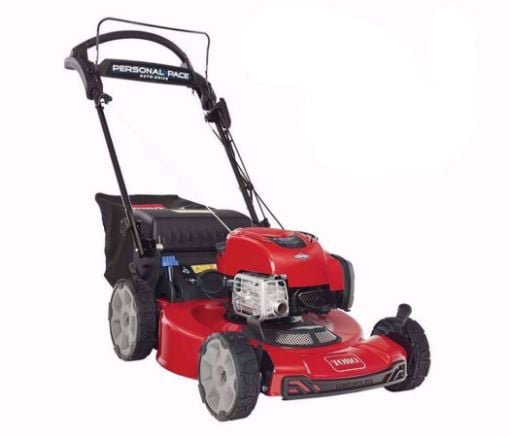
Credit: powerequipmentwarehouse.com
When starting problems need a closer look
If your Toro mower still will not start after basic checks, the problem may be deeper than routine setup. That does not always mean an expensive repair. Sometimes the air filter, spark plug, fuel line, or carburetor just needs service.
Here are signs that point to a more serious issue:
- The mower has fresh fuel, but still will not fire.
- The starter cord moves normally, but the engine never catches.
- The mower starts only with repeated flooding and long delays.
- The battery is charged, but nothing happens when you press start.
- The engine starts and dies every time after a few seconds.
If the mower was stored for a full season with fuel left inside, carburetor cleaning may be needed. If the blade is stuck or the recoil starter feels damaged, stop testing it repeatedly. Repeated pulls can make the damage worse.
Call a qualified repair shop if you smell strong fuel leaks, see damaged wiring, or hear grinding sounds when starting. Safety should come first. A problem that seems small can become dangerous if fuel or moving parts are involved.
Simple habits that make the next start easier
The easiest way to avoid start-up trouble is to keep the mower ready between uses. A few small habits can prevent most frustrating mornings. These habits matter more than people think.
- Use fresh fuel: Buy only what you will use in a short time.
- Clean the deck: Grass buildup affects airflow and blade movement.
- Charge batteries fully: Do not store lithium batteries empty.
- Check the air filter: A clean filter supports easier starting.
- Inspect the spark plug once a season: A worn plug can make starts slower.
Two things beginners often overlook are storage and temperature. A mower kept in a damp shed can develop rust or electrical issues faster. A battery mower left in extreme cold may not start well even when it worked perfectly last week.
Another practical tip: start the mower at least once every few weeks during the mowing season. Short, regular use helps you catch problems early, before stale fuel or battery drain becomes a bigger issue.

Credit: contractorssupplyllc.com
How to start a Toro lawn mower with confidence
Now you know the basic pattern for how to start a toro lawn mower: check the fuel or battery, hold the safety bar, use the correct primer or button, and start with a steady motion. That simple order solves most startup problems on Toro push, self-propelled, and battery models.
If the mower still struggles, do not keep yanking the cord over and over. Stop, check the common causes, and move through the fixes in a calm order. Fresh fuel, a secure battery, and the right safety lever position solve far more problems than most beginners expect.
Once you learn the startup sequence for your exact model, the mower becomes much easier to use. A few minutes of preparation before each cut can save you a long troubleshooting session later.
Frequently asked questions
1. Why will my Toro mower not start even with fuel in it?
Old fuel, a loose spark plug wire, a weak battery, or a blocked air filter can stop the engine. If the mower has been stored for more than 30 days with fuel inside, stale fuel is a very common cause.
2. How many times should I prime a Toro mower?
Many Toro gas mowers need about 3 primer presses for a cold start. Too many presses can flood the engine and make starting harder, not easier.
3. Do all Toro mowers have a choke?
No. Some older gas models use a manual choke, while many newer models use an automatic choke. Battery mowers do not use a choke at all.
4. What should I do if the starter cord is stuck?
Stop pulling right away. Check for grass buildup under the deck, a flooded engine, or a damaged recoil starter. If the cord still will not move normally, the mower may need service.
5. How do I know if my battery Toro mower has enough charge?
Most battery Toro mowers show battery status with an indicator light or display. If the light is low, or the motor clicks without starting, recharge the battery fully before trying again.