
If you own a Cub Cadet 7275, you already know it is a strong compact tractor with real work ability. It can mow, haul, dig, and handle many farm or property jobs. But like any older machine, it can also develop problems over time. Some are small and easy to fix. Others need careful checking before they become expensive repairs.
This guide explains the most common cub cadet 7275 problems, why they happen, and how to fix them in a simple way. You will learn what to check first, which parts fail most often, and when a repair is worth doing yourself. The goal is to help you save time, avoid guesswork, and keep the tractor running better for longer.
Many tractor issues start with basic things like dirty filters, weak batteries, bad wiring, low fluid, or worn connectors. That means the real fix is often simpler than people expect. The key is to diagnose the problem in the right order instead of replacing parts at random.
What usually goes wrong on a Cub Cadet 7275
The Cub Cadet 7275 is built with a diesel engine, hydrostatic drive, and electrical systems that support starting, lifting, and PTO operation. Because it does many jobs, one small fault can create several symptoms. For example, a weak battery can look like an engine problem, and a clogged fuel filter can feel like a transmission issue.
The most common complaints usually fall into a few groups:
- Hard starting or no-start conditions
- Engine power loss or rough running
- Hydrostatic drive issues
- Front loader or hydraulic problems
- Electrical faults
- PTO or safety switch trouble
One thing many owners miss is that the 7275 often gives warning signs before a full failure. Slow cranking, delayed hydraulic response, or a small fuel leak may seem minor, but they often point to a larger issue. Fixing these early can prevent downtime in the middle of a job.
Quick view of common symptoms and likely causes
| Symptom | Likely cause | First thing to check |
|---|---|---|
| Hard starting | Battery, glow plugs, fuel issue | Battery voltage and fuel filter |
| Loss of power | Air filter, fuel restriction, injector issue | Air cleaner and fuel flow |
| Weak hydraulics | Low fluid, worn pump, clogged filter | Hydraulic fluid level |
| Tractor will not move | Transmission issue, linkage, low fluid | Hydrostatic linkage and fluid |
| Engine dies unexpectedly | Fuel shutoff, safety switch, wiring fault | Electrical connections |
Starting problems and no-start issues
Starting trouble is one of the most common cub cadet 7275 problems. The tractor may crank slowly, crank normally but not start, or act like the battery is dead even when it is not. In many cases, the cause is simple, but the symptoms can be confusing.
Common causes
- Weak or old battery
- Loose or corroded battery terminals
- Bad starter relay or starter motor
- Fuel filter clogging
- Air in the fuel system
- Glow plug problems in cold weather
- Safety switch failure
Diesel engines need good cranking speed and clean fuel. If the battery is weak, the engine may not spin fast enough for proper starting. If fuel delivery is poor, the engine may crank forever without catching. Cold weather makes both problems worse.
How to fix it
- Check battery voltage with a meter. A fully charged 12-volt battery should read close to 12.6 volts when the tractor is off.
- Inspect terminals for rust, dirt, or loose clamps. Clean them and tighten them well.
- Test if the starter turns strongly. If it is slow, the battery or starter may be weak.
- Replace the fuel filter if it is dirty or old.
- Look for air leaks in fuel lines and primer areas.
- Check glow plugs and the glow plug circuit if starting is hard in cold weather.
Non-obvious insight: many owners replace the battery first, but a bad ground cable can create the same slow-crank symptom. Always check the ground connection where it meets the frame or engine block. A clean, tight ground can solve a problem that looked like a dead battery.
Engine runs rough or loses power
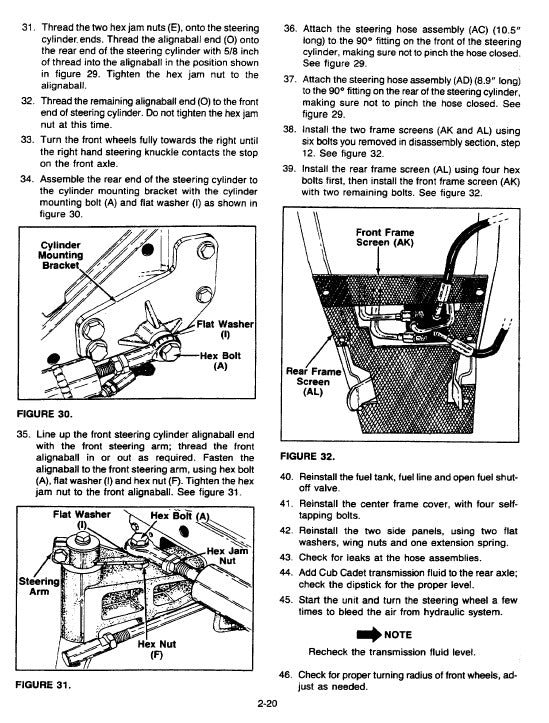
If your tractor starts but does not run well, the engine may sputter, smoke more than usual, or feel weak under load. This often points to fuel or air delivery problems. Sometimes the issue is not inside the engine at all. It may be something simple like a dirty filter or restricted intake.
Credit: manualskart.com
Common causes
- Dirty air filter
- Clogged fuel filter
- Water or dirt in diesel fuel
- Injector wear
- Restricted exhaust
- Dirty cooling fins or overheating
Many people ignore air filtration on older tractors. That is a mistake. A dirty air filter limits oxygen and makes diesel engines feel lazy. It can also increase smoke and fuel use. Likewise, old fuel can break down and leave deposits in the fuel system.
How to fix it
- Remove and inspect the air filter. Replace it if it is dirty or damaged.
- Drain old fuel if it looks cloudy, dark, or contaminated.
- Replace the fuel filter and bleed the fuel system if needed.
- Check the exhaust for blockage.
- Make sure the engine cooling system is clean so the tractor does not lose power from overheating.
Non-obvious insight: if the tractor loses power only after 20 to 30 minutes of work, heat may be the real cause. A fuel cap that does not vent properly can create a vacuum in the tank. That slowly starves the engine and makes it feel weak. Loosen the cap briefly as a test when the problem appears.
Hydrostatic transmission problems
The hydrostatic drive is one of the most important systems on the Cub Cadet 7275. When it fails, the tractor may not move, may move slowly, or may lose strength on hills. The problem is often blamed on the transmission right away, but fluid condition and linkage issues are common causes too.
Signs of hydrostatic trouble
- Tractor moves slowly or not at all
- Jerky forward or reverse motion
- Drive fades after warming up
- Whining or growling noise
- Movement only works in one direction
These symptoms can come from low hydraulic fluid, a clogged filter, air in the system, worn drive linkage, or internal wear in the hydro unit. If the tractor is older and has worked hard for years, seal wear and internal pump wear become more likely.
How to fix it
- Check hydraulic fluid level first.
- Inspect the hydraulic filter and replace it if overdue.
- Look for leaks around hoses, seals, and fittings.
- Check the forward and reverse linkage for free movement and correct adjustment.
- Bleed air from the system if fluid was changed recently.
- If the unit still fades or slips, internal hydrostatic wear may need professional service.
A very useful habit is to compare behavior cold versus hot. A transmission that works when cold but weakens as it heats up often has worn internal parts or fluid breakdown. That pattern helps narrow the cause before you spend money on major repairs.
Fluid matters more than many owners think
Old or wrong hydraulic fluid can create noise, poor response, and extra wear. The 7275 depends on clean fluid for both drive and hydraulic functions. Dirty fluid can also shorten seal life. If you do not know when the fluid was last changed, it is smart to inspect it before assuming the transmission is failing.
Hydraulic lift and loader problems
If the front loader, three-point hitch, or other hydraulic functions work slowly, weakly, or not at all, the problem may be in the pump, valve, filter, or fluid supply. These issues are common on machines that have spent many years lifting heavy loads.
Common causes
- Low hydraulic fluid
- Clogged hydraulic filter
- Worn hydraulic pump
- Leaking hoses or fittings
- Sticky control valves
- Air trapped in the hydraulic system
One mistake beginners make is thinking any slow hydraulic movement means the pump is bad. That is not always true. A clogged filter can make the system act weak, and a small leak can let in air and reduce performance. Pump replacement should be a later step, not the first one.
How to fix it
- Check fluid level and top up with the correct hydraulic fluid if needed.
- Replace a dirty or overdue filter.
- Inspect hoses for wet spots, cracks, or soft areas.
- Cycle the hydraulics slowly to remove trapped air after service.
- Test each function separately to see if one valve or cylinder is the main problem.
Non-obvious insight: a weak loader that lifts slowly only at idle can still be normal on some tractors. What matters is how it behaves at the rated working speed. If the system improves a lot at higher engine speed, fluid flow may be fine and the issue may be load demand or a worn control valve.
Electrical problems and charging system faults
Electrical issues on older tractors often look random. The engine may not crank, the lights may flicker, or the tractor may shut off without warning. The root cause is often poor connections, aging wiring, or charging system weakness.
Credit: backyardcorner.com
Common causes
- Loose battery cables
- Bad grounds
- Blown fuse
- Worn ignition switch
- Faulty alternator or charging circuit
- Broken wire near a moving part
Dust, vibration, and moisture slowly damage connectors. On a machine like the Cub Cadet 7275, a small wire problem can interrupt starting, lighting, or safety circuits. That is why electrical diagnosis should be done carefully, one circuit at a time.
How to fix it
- Inspect all battery cable ends and clean them.
- Check the main grounds for rust or looseness.
- Look for blown fuses and replace them only after finding the reason they failed.
- Test battery charging voltage while the engine runs.
- Wiggle harnesses gently while the system is on to find intermittent faults.
If the battery keeps going flat, do not assume the battery is bad right away. A charging system that does not reach proper voltage can drain a good battery over time. A simple voltage test can tell you more than guesswork.
PTO and safety switch issues
Sometimes the tractor starts fine but the PTO will not engage, or the engine dies when you try to operate it. In many cases, the problem is not the PTO itself. It is a safety switch, seat switch, brake switch, or connection issue.
Common causes
- Faulty seat switch
- Bad brake or PTO switch
- Loose connector under the seat or dash
- Corroded switch terminals
- Damaged PTO clutch wiring
Safety systems are there for a reason, but they can become annoying when they fail. Because the machine uses interlocks, one bad switch can stop the PTO or even prevent starting. That is why checking switch continuity is often faster than replacing expensive parts.
How to fix it
- Check the seat position and seat switch first.
- Inspect wiring near the PTO clutch and control switches.
- Clean corrosion from terminals.
- Test switches with a meter if the tractor has repeated failures.
- Replace damaged switches with the correct part number.
For more background on safe tractor operation and system care, the Penn State Extension has useful tractor maintenance and safety information.
Cooling system problems and overheating
Overheating can shorten engine life quickly. If the tractor runs hot, loses power, or pushes coolant out of the overflow, the cooling system needs attention. On a work tractor, dust and debris are often the biggest enemies.
Common causes
- Dirty radiator fins
- Low coolant level
- Weak radiator cap
- Loose fan belt
- Blocked airflow around the engine
- Thermostat failure
Do not overlook simple airflow problems. Grass, dust, and chaff can pack into the radiator screen and reduce cooling fast. If the tractor works hard in warm weather, even a partial blockage can cause temperature rise.
How to fix it
- Clean the radiator screen and fins carefully.
- Check coolant level when the engine is cool.
- Inspect belts for wear and correct tension.
- Replace a weak radiator cap if pressure is not holding.
- Test the thermostat if overheating continues.
Fuel system leaks and contamination
Fuel problems are not just about starting. Leaks, dirty fuel, and air intrusion can also cause rough running, stalling, and hard restarting. Diesel systems do not like contamination. Even a small amount of water can create poor performance.
Credit: manualskart.com
Common causes
- Loose hose clamps
- Cracked fuel lines
- Bad fuel filter seals
- Dirty tank or water in fuel
- Faulty shutoff solenoid
The best fix is to work from the tank toward the engine. Start at the fuel source and move forward. That helps you find the exact place where flow is restricted or air is entering the line.
How to fix it
- Inspect the tank, lines, and filter housing for wet spots.
- Replace old rubber lines before they crack.
- Drain contaminated fuel and refill with clean diesel.
- Check the fuel cap and tank vent.
- Make sure the shutoff system opens fully.
A lot of owners only replace the visible fuel filter and stop there. That can help, but if the tank has water or rust inside, the new filter will clog again quickly. If you keep seeing the same issue, look deeper into fuel quality and tank condition.
Wear-and-tear problems that show up with age
Some cub cadet 7275 problems are not sudden failures. They are slow wear issues that build over years. These usually include bushings, seals, bearings, linkages, belts, and hydraulic hoses. The tractor may still work, but it becomes less smooth and less dependable.
Common age-related wear points
- Hydraulic hose cracking
- Loose steering components
- Worn belt pulleys
- Engine oil leaks
- Seals around hydraulic cylinders
- Excess play in control linkages
These parts often fail slowly, so owners get used to the change. That is risky. A slight oil leak can become a low-fluid problem. A loose linkage can affect shifting or drive response. Small wear issues should be fixed before they cause larger damage.
How to diagnose Cub Cadet 7275 problems in the right order
Good diagnosis saves money. Instead of guessing, use a simple order of checks. This approach works for most tractor problems and helps avoid unnecessary part replacement.
- Start with the basics. Check fuel, battery, fluids, fuses, and visible leaks.
- Look for pattern clues. Does the issue happen cold, hot, under load, or only in one direction?
- Inspect cables and connectors. Many failures come from poor contact, not broken parts.
- Test one system at a time. Do not mix engine, fuel, and hydraulic diagnosis together.
- Confirm before replacing. Replace parts only after you know they are bad.
FAQs
1. What are the most common Cub Cadet 7275 problems?
The most common Cub Cadet 7275 problems include hard starting, hydrostatic drive weakness, hydraulic lift issues, PTO or safety switch faults, overheating, fuel leaks, and age-related electrical problems.
2. Why will my Cub Cadet 7275 not start?
A no-start problem is usually linked to weak battery power, bad grounds, old fuel, clogged filters, safety switch faults, or starter circuit problems. Check battery voltage, cables, fuel flow, and safety switches first.
3. What causes weak hydrostatic drive on a Cub Cadet 7275?
Weak hydrostatic drive can come from low fluid, old or contaminated fluid, clogged filters, linkage problems, air in the system, or internal wear. Service fluid and filters before assuming the hydrostatic unit has failed.
4. Why is my Cub Cadet 7275 PTO not engaging?
PTO trouble can come from a bad safety switch, weak electrical connection, worn PTO clutch, low voltage, or linkage problems. Check switches, wiring, and voltage before replacing the clutch.
5. How should I diagnose Cub Cadet 7275 problems?
Start with battery, fuel, filters, fluid levels, wiring, safety switches, belts, and visible leaks. Work from simple checks to deeper mechanical repairs so you avoid replacing good parts.