
If you want to learn how to drive a zero turn mower, the main idea is simple: one hand controls the left wheel, the other controls the right wheel. That is why these mowers turn so fast and trim around obstacles so well.
The hard part is not the controls. It is learning smooth movement, safe speed, and how the mower reacts when both levers move at once. A zero turn mower can save a lot of time, but only if you start with the right habits.
This guide walks you through the controls, the first drive, turning, mowing patterns, slopes, and common mistakes. By the end, you will know how to handle a zero turn mower with more control and less stress.
Know the controls before you move
Before you start the engine, sit in the seat and study the controls. Most zero turn mowers use two steering levers, sometimes called lap bars. Pushing both forward moves the mower ahead. Pulling both back moves it in reverse. Moving one more than the other makes the mower turn.
Also look for the parking brake, throttle, blade engagement switch or PTO lever, and ignition key. Some models use a safety seat switch, so the engine may shut off if you leave the seat. This is normal and helps prevent accidents.
Many beginners make one big mistake here: they think the levers work like a car steering wheel. They do not. A zero turn mower steers by changing wheel speed, so small hand movements matter. If you move a lever too fast, the mower will lurch or pivot harder than expected.
| Control | What it does | Beginner tip |
|---|---|---|
| Left lever | Controls the left drive wheel | Use slow, smooth pushes |
| Right lever | Controls the right drive wheel | Keep it level with the left lever for straight travel |
| Parking brake | Locks the mower in place | Set it before starting and when stopping |
| PTO or blade switch | Starts the blades | Engage only when you are ready to mow |
| Throttle | Controls engine speed | Use full or near-full throttle for mowing, if the manual says so |
Check the mower and the yard first
Do a quick walkaround before driving. Clear sticks, wire, toys, and rocks from the yard. A small object can become dangerous fast when a blade hits it at high speed.
Look at the tires, fuel level, and deck area. If grass is packed under the deck, clean it before mowing. Wet buildup can affect cutting and cause uneven discharge.
Wear the right gear
Use closed-toe shoes with good grip. Long pants are a smart choice. Hearing protection helps on louder mowers, and eye protection is a good idea if the yard has dust or debris.
Never mow barefoot, in sandals, or in loose clothing that can catch on moving parts. If you have long hair, tie it back before starting.
Start the mower the right way
Starting a zero turn mower is usually easy, but the order matters. Set the parking brake, make sure the blades are off, and keep the levers in the neutral or outward lock position if your machine has that feature. Sit down fully so the seat safety switch stays engaged.
Turn the key or press the starter, then let the engine warm up for a moment. Do not move into mowing with a cold engine at full load right away. A short warm-up helps the machine run smoother and gives you time to check that everything sounds normal.
- Park on flat ground and set the brake.
- Make sure the blade switch is off.
- Sit in the seat and keep both levers in the proper start position.
- Start the engine.
- Let it run for 30 to 60 seconds.
- Release the brake only when you are ready to move.
One non-obvious point: many beginners start mowing with the throttle too low. That can make the cut rough and leave clumps behind because the blade tip speed is not high enough. Most mowers cut best at a higher engine speed, as explained in the owner’s manual.
If you are unsure about the controls on your exact machine, the mower safety guidance from the CPSC is a useful safety reference before you begin.
How to move forward, stop, and reverse
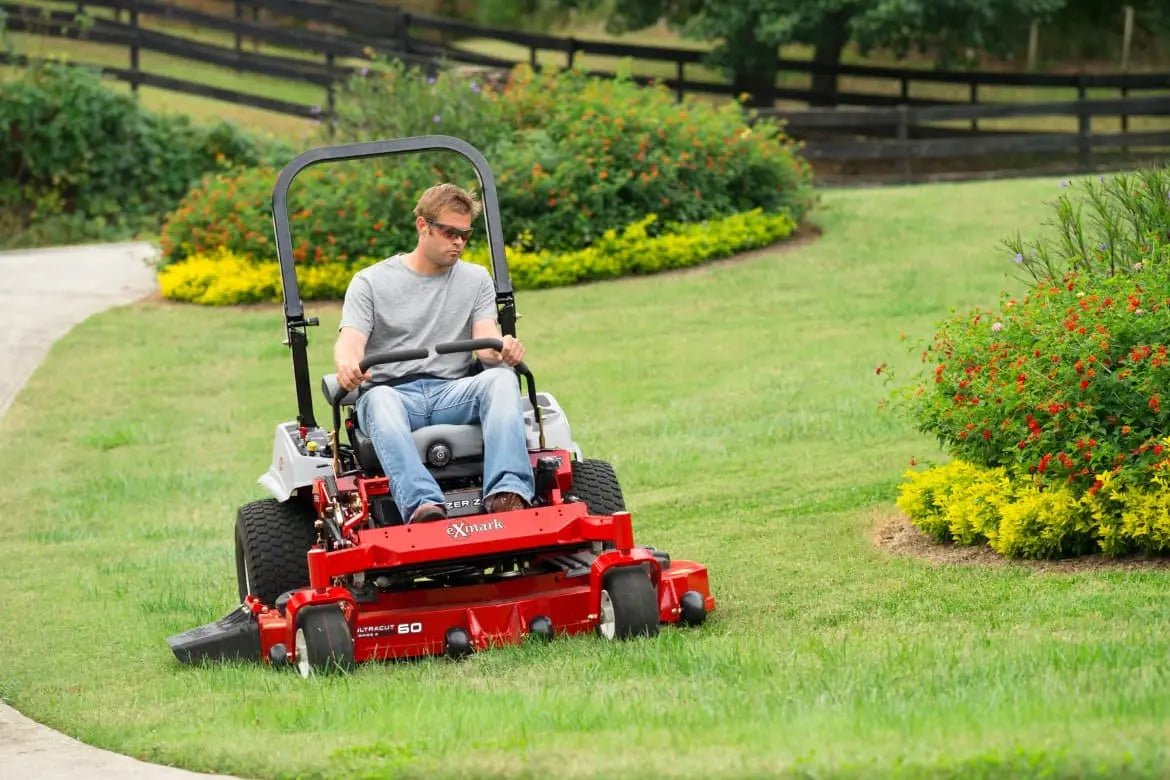
This is the core of how to drive a zero turn mower. The good news is that the first movement is simple. Push both levers forward at the same speed to move straight ahead. Pull them back together to slow down or reverse. Always make small changes first, not sudden ones.
When you want to stop, bring both levers back to neutral slowly. Some mowers stop sharply if you snap the levers back. That can throw you forward slightly and make the ride feel unstable.
Credit: swioutletstore.com
Driving forward in a straight line
To go straight, keep both hands at the same height and push both levers forward evenly. If the mower drifts left, the left lever may be moving a little more than the right. If it drifts right, the opposite is true. Tiny corrections are normal.
Try to look ahead, not down at the front of the mower. Your body tends to follow your eyes. If you stare at the front edge, you may overcorrect and create a weaving path.
Backing up safely
Reverse only when you need to. Look behind you before you pull the levers back. Back slowly and keep the area clear. Zero turn mowers are easier to steer in reverse than many riders expect, so the mower can change direction quickly if one lever moves farther back than the other.
Never reverse blindly near trees, walls, holes, or children. A backup camera is not common on most mowers, so your eyes are the safety tool.
Stopping without a jerk
Ease both levers back to neutral at the same time. Do not slam them back unless you need an emergency stop. Smooth stopping helps protect the transmission and makes you more confident.
After stopping, set the brake if you plan to leave the seat or pause for a while.
Turn without tearing up the grass
Zero turn mowers are known for tight turning, but a hard spin can leave marks on the lawn. If you turn one wheel much faster than the other, the mower can pivot almost in place. That is useful around trees and posts, but it can scuff soft turf.
The best beginner move is a wide, gentle turn. Push one lever a little farther than the other instead of making a sharp one-wheel spin. This gives you control and reduces lawn damage, especially on damp grass.
How to make a smooth turn
To turn right, push the left lever slightly farther forward than the right lever. To turn left, do the opposite. The mower will arc instead of snapping into a pivot. This is the easiest way to build skill without leaving wheel marks everywhere.
If you need a very tight turn near an obstacle, slow down first. Then make the turn with a light touch. Fast turning is where many beginners lose control, especially on slopes or near edges.
Why zero turns can damage turf
A zero turn mower can spin its rear wheels in opposite directions. That is the source of its tight turning power. But that same action can scrape grass, especially when the lawn is wet or the tires are heavy.
Here is the practical rule: if the ground feels soft, avoid full pivots. If the grass is dry and firm, the mower is less likely to leave marks. This one habit saves a lot of lawn repair later.
Mow in a pattern that saves time and improves cuts
Once you can drive smoothly, focus on mowing pattern. A smart pattern reduces missed strips and makes the lawn look more even. Most beginners get better results by mowing the perimeter first, then filling the middle with parallel passes.
Start around the outside edge of the yard. That gives you room to turn later. After that, mow in straight lines and overlap each pass by a few inches. On most mowers, an overlap of 3 to 5 inches is enough to avoid thin strips of uncut grass.
Best beginner pattern
- Mow the edges and around obstacles first.
- Pick a straight line as your first pass.
- Use a landmark in the distance to keep your line straight.
- Overlap each pass by 3 to 5 inches.
- Turn gently at the end of each row.
Many beginners forget to adjust for discharge direction. Most side-discharge decks throw clippings to one side, so plan your passes to keep clippings away from finished areas. If you do not, you may cover areas you already mowed with wet grass clumps.
Also pay attention to mowing speed. Faster is not always better. On thick grass, moving too fast can leave uneven cuts, especially if the mower bogs down. A steady pace usually looks cleaner than a rushed one.
Handle hills, edges, and tight spaces carefully
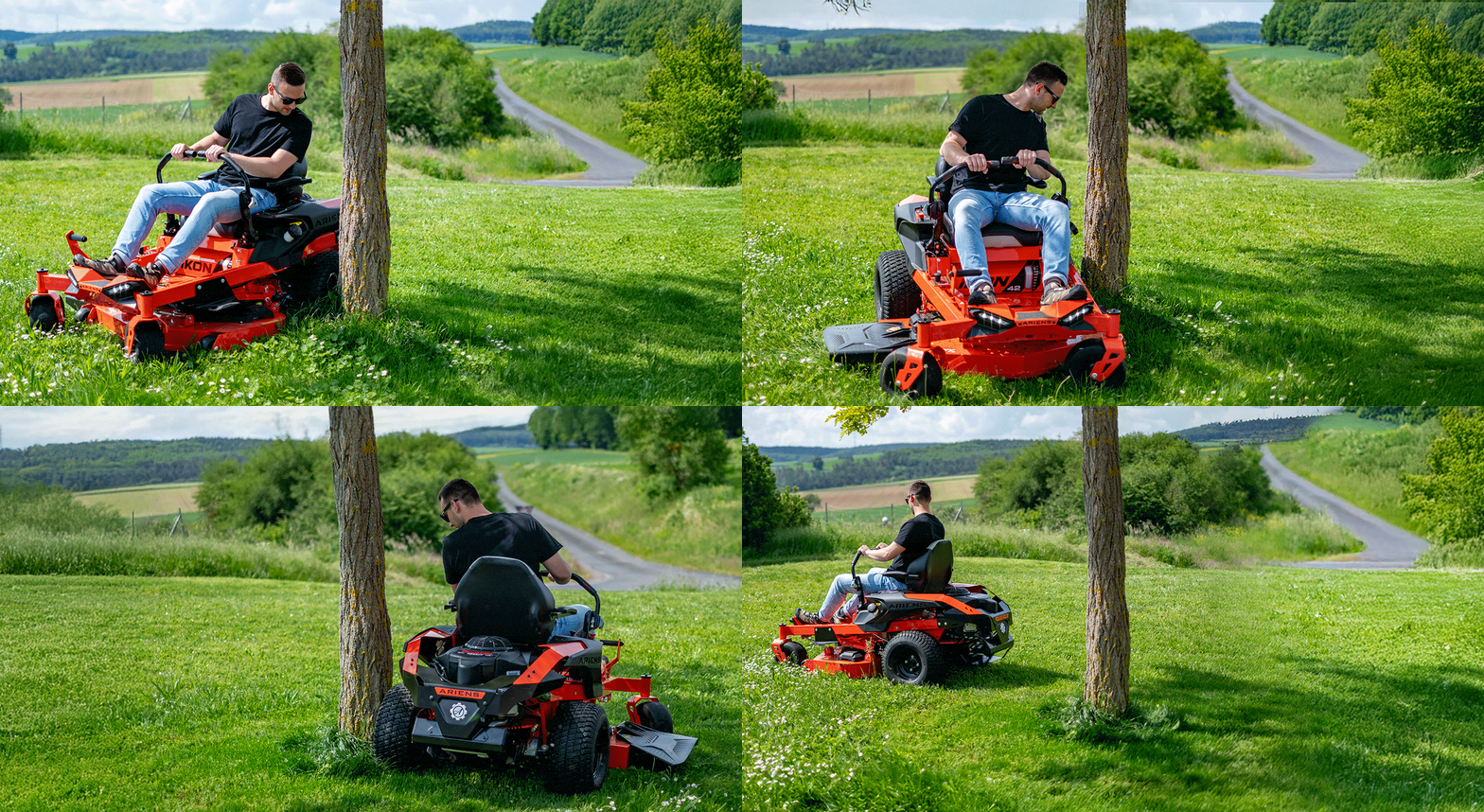
Zero turn mowers are excellent on flat and gently rolling lawns, but they are not ideal for every slope. Use extra caution on hills because quick steering changes can reduce traction. If a slope feels unsafe, do not force the mower across it.
Work up and down gentle slopes rather than across them when possible. Keep movements slow and steady. If the mower starts to slide, stop and back out carefully only if it is safe to do so.
Credit: ariens.eu
Edges and obstacles
Near trees, fences, flower beds, and posts, slow down before you turn. The mower can swing its rear end tighter than many people expect. That means the back corner can hit objects even when the front looks clear.
When mowing near a ditch, curb, or drop-off, keep extra distance from the edge. The front wheels may look stable while the rear wheels are much closer to danger. This is one of the most overlooked risks for beginners.
Wet grass and hidden problems
Wet grass reduces traction and makes zero turn steering less predictable. It also increases the chance of clumping and slipping. If the lawn is soggy, wait if you can. Dry grass is easier to cut and easier to control.
Hidden holes and uneven ground are another issue. Because a zero turn mower can turn so tightly, a front wheel can drop unexpectedly into a low spot during a turn. Scan the yard before mowing, especially after storms or during the first spring cut.
Common beginner mistakes to avoid
Most new operators do not struggle because the mower is hard to use. They struggle because they move too fast, steer too sharply, or skip basic checks. The good news is that these mistakes are easy to fix once you know them.
- Driving too fast at first: Speed makes every control input less precise.
- Making full pivots on soft ground: This tears turf and can leave tire marks.
- Forgetting the throttle setting: Low engine speed can lead to poor cutting.
- Turning before slowing down: Quick turns are harder to control.
- Ignoring the discharge side: Clippings can pile up on finished grass.
- Back-up without checking behind: This is one of the most dangerous habits.
Another thing beginners miss is seat position. If you sit too far forward or lean oddly, the levers feel awkward. Keep your back settled in the seat and your hands relaxed. A stable body position helps you steer more accurately.
It also helps to practice on an open flat area before mowing around trees or landscaping. Five minutes of practice can prevent a lot of mistakes later.
Use this quick practice plan before you mow the whole yard
If you are still nervous, do a short practice session in an open space. This is the fastest way to build muscle memory without risking flower beds or fence posts. Keep the mower unloaded, blades off, and focus only on steering.
- Drive forward in a straight line for 20 to 30 feet.
- Practice stopping smoothly.
- Reverse slowly for a short distance.
- Make a wide right turn, then a wide left turn.
- Practice a gentle pivot only after you feel stable.
Spend a few minutes repeating these moves. Most people notice a big improvement after just 10 to 15 minutes. The controls start to feel less strange, and your hands begin to make smoother motions.
If your mower feels unstable, check tire pressure, seat position, and lever adjustment. Small setup issues can make steering feel much harder than it should.
What to do after mowing
When you finish, shut off the blades first, bring the levers to neutral, and park on a flat surface. Set the brake and turn off the engine. Wait until all moving parts stop before you get off the seat.
Brush grass off the deck and around the controls after the mower cools. A clean mower lasts longer and is easier to start next time. If the deck is packed with wet grass, clean it sooner rather than later so it does not harden in place.
Check for loose debris, damage, or fresh oil leaks. If the mower vibrated more than normal or pulled to one side, that is a clue something may need attention before the next use.
Keep in mind that the owner’s manual is the best source for your exact model’s settings and safety steps. Different brands use slightly different controls, and that matters when you are learning.
Learning how to drive a zero turn mower gets much easier once you focus on smooth hands, slow practice, and good mowing patterns. Start simple, turn gently, and build speed only after the mower feels natural. That is the safest path to clean cuts and better control.

Credit: powerproequipment.com
FAQs
1. How long does it take to learn how to drive a zero turn mower?
Most beginners feel comfortable after one or two mowing sessions. Basic movement can make sense in 10 to 15 minutes, but smooth turning and clean rows usually take longer. Flat lawns are easier to learn on than hilly yards.
2. Can you drive a zero turn mower like a regular lawn tractor?
No. A zero turn mower uses two steering levers instead of a steering wheel. The movement feels very different at first. Once you learn it, the mower turns tighter and often faster than a lawn tractor.
3. Should the levers be pushed all the way forward when mowing?
Not always. Many mowers cut best with the engine at the recommended mowing speed, but your forward travel speed should stay controlled. If the grass is thick or uneven, slower movement usually gives a cleaner cut.
4. Is it safe to mow hills with a zero turn mower?
Only on gentle slopes and only if your mower manual says it is allowed. Zero turn mowers can lose traction more easily on hills than some other mowers. If a slope feels steep, slippery, or unstable, avoid it.
5. What is the biggest mistake beginners make?
The most common mistake is moving too fast too early. That leads to jerky steering, poor turns, and uneven cuts. Slow practice on open ground is the best way to build confidence and control.