
If your mower will not fire up, the fix is often simple. Learning how to start a 0 turn mower the right way saves time, stress, and a lot of unnecessary parts swapping.
Most starting problems come from a small set of causes: the seat switch is not engaged, the parking brake is not set, the blades are still on, or the fuel system is not ready. A zero turn mower has more safety checks than a push mower, so one missed step can stop the engine from cranking or starting.
This guide walks you through the exact startup order, the usual mistakes, and what to check when the mower still will not start. You will also see a quick troubleshooting table, simple safety tips, and the best way to handle cold starts, battery issues, and flooded engines.
Start with the controls that must be set first
Before you turn the key, a zero turn mower needs to “see” that it is safe to start. That is why the seat switch, control levers, blade engagement, and parking brake matter so much. If any one of these is out of position, the engine may not crank at all.
Zero turn mowers use interlock systems to prevent accidents. These systems are useful, but they also confuse many new users because the mower may seem broken when it is only blocked by a safety step. On many models, the engine will not start unless the motion levers are in neutral or locked outward, the blade switch is off, and someone is sitting in the seat.
It also helps to check the fuel level and battery condition before you try. A weak battery can still turn lights or click the starter, yet fail under load. That is one reason a mower may sound “almost” ready but never fully crank.
Before you turn the key, check these basics
- Set the parking brake.
- Move both drive levers to the neutral or outward locked position.
- Make sure the blade engagement switch is off.
- Sit fully in the seat.
- Confirm there is enough fresh fuel in the tank.
- Check that the battery terminals are tight and clean.
These steps sound basic, but they solve a large share of starting issues. A mower that is “dead” is often just waiting for the right safety signal.
How to start a 0 turn mower step by step
The actual startup process is usually simple once the controls are in the correct positions. The order matters because many zero turn mowers will not crank unless the safety circuit is satisfied first. If you follow the same sequence each time, starting becomes fast and predictable.
- Take a quick look around the mower. Clear away sticks, cords, toys, and loose debris. Check that the cutting deck is free of heavy buildup.
- Sit in the seat. Most mowers require weight on the seat for the safety switch to allow starting.
- Set the parking brake. This keeps the mower stable and often unlocks the starter circuit.
- Move the drive levers outward or into neutral lock. On many models, the levers must be fully separated before starting.
- Turn off the blade engagement switch. The blades should never be engaged during startup.
- Set the throttle/choke correctly. Cold engines often need choke. Warm engines usually do not.
- Turn the ignition key or press the start button. Hold it only as long as needed for the engine to catch.
- Release the choke gradually. After the engine starts, move the choke off as the engine smooths out.
- Let the engine warm briefly. A short 30 to 60 second warm-up helps in cool weather.
If your mower has a carbureted engine, the choke helps enrich the fuel mix for a cold start. If it has fuel injection or a more advanced starting system, the choke step may be different or not needed at all. That is why the owner’s manual matters for your specific model, especially on newer machines.
For official startup and safety guidance, check the official mower safety guidance from the U.S. Consumer Product Safety Commission.
What to do when the engine starts but dies right away
If the engine fires for a second and shuts off, the safety switch may be losing contact, or the choke may be set wrong. Another common cause is stale fuel. Gas that has sat for 30 days or more can lose quality, especially in warm storage.
Also check the seat position. Shifting your weight can briefly trigger the switch and then cut the engine. This is easy to miss, especially if you lean over the side while starting.
Common reasons a zero turn mower will not start
When a mower refuses to start, the problem usually comes from one of a few places: safety switches, battery power, fuel supply, or ignition. The fastest way to fix it is to identify which system is blocking the start. Guessing wastes time.
The table below helps you match the symptom to the likely cause.
| Symptom | Likely cause | What to check first |
|---|---|---|
| No crank, no sound | Safety switch or dead battery | Seat switch, brake position, battery voltage |
| Clicking sound only | Weak battery or bad cable connection | Battery terminals, corrosion, cable tightness |
| Cranks but will not fire | Fuel, choke, or spark issue | Fresh fuel, choke position, spark plug condition |
| Starts then stalls | Fuel restriction or safety switch problem | Fuel cap vent, filter, seat switch |
| Slow cranking | Battery too weak | Battery charge, age, and terminal corrosion |
One detail many people miss: a battery can show enough voltage to light a meter but still fail to deliver the current needed to spin the starter. In practical terms, that means a mower can seem “powered” and still not start. A load test is more useful than a quick glance.
Another overlooked issue is a dirty ground connection. Even when the battery is fine, corrosion on the negative cable or frame ground can block the starter from getting enough current. Cleaning that one point can save a lot of unnecessary replacement work.

Credit: cubcadet.com
Battery problems are more common than people think
Zero turn mowers work hard, and batteries often sit between uses. A battery that is not charged regularly may struggle after only a few weeks of inactivity. Cold weather makes this worse because battery output drops when temperatures fall.
If the starter clicks once or clicks rapidly, the battery is one of the first things to inspect. Check both terminals, then check the charge level with a multimeter if you have one. A fully charged 12-volt battery should usually read around 12.6 volts or a little higher when resting.
Fuel issues usually create crank-but-no-start problems
If the engine turns over but never catches, fuel may not be reaching the combustion chamber. Old fuel, a clogged fuel filter, or a stuck carburetor float can all block startup. This is especially common after winter storage.
Fresh fuel helps more than many owners expect. If the mower sat for more than a month, drain the old gas if needed and refill with fresh fuel from a clean container. Small engines are much more sensitive to fuel quality than car engines.
How to handle cold starts, warm starts, and flooded engines
Starting a zero turn mower is not exactly the same in every season. Cold engines need more help with fuel enrichment, while warm engines usually start with less throttle and no choke. If you use the wrong setting, the mower may crank longer than necessary or fail to start cleanly.
For a cold start, use the choke only as long as needed. Too much choke after the engine fires can make the engine run rough or die. For a warm restart, skipping the choke often works better because the engine already has heat in the cylinder.
If you smell strong fuel and the engine will not start, the engine may be flooded. That means too much fuel entered the cylinder. In that case, turn off the choke, open the throttle slightly, and crank for a short period to clear the excess fuel. Do not keep cranking for long stretches, because that can drain the battery.
Simple starting settings by situation
- Cold morning: Use choke, low throttle if the manual allows it, then reduce choke after it starts.
- Warm engine restart: Usually no choke needed.
- After sitting all winter: Check fuel quality, battery charge, and air filter before repeated start attempts.
- Flooded engine: Choke off, throttle slightly open, short crank cycles.
Do not overthink the warm-up. Most modern mower engines need only a short idle before mowing. A long idle period is not better and can actually waste time. The real goal is to get stable running before you load the engine with the blades.
Startup mistakes that cause most failures
Many starting problems are not mechanical failures at all. They are small setup mistakes that are easy to repeat because the mower gives no clear warning. If you know the common errors, you can avoid half the frustration.
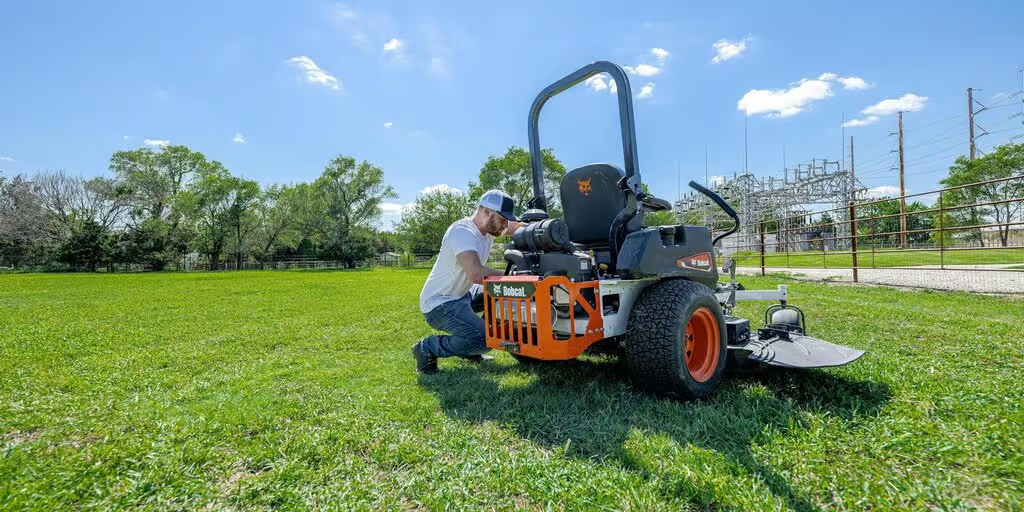
One big mistake is trying to start the mower with the blades engaged. Another is sitting too lightly on the seat, which can fail the switch. A third is forgetting that the motion levers must be locked outward or in neutral on many models before the starter will work.
People also forget about the fuel shutoff, if their mower has one. If the valve is closed, the engine may crank but never get fuel. On some mowers, the problem is as simple as a loose cap or a blocked tank vent, which prevents proper fuel flow.
Credit: bobcatofindy.com
Common mistakes worth avoiding
- Starting with the blade switch on.
- Skipping the parking brake.
- Standing up too soon after the engine starts.
- Using old fuel from a storage can.
- Ignoring loose battery cables.
- Cranking for too long without pausing.
Long cranking sessions do not fix the problem. They usually make it worse by draining the battery and heating the starter. Short attempts, followed by a quick check, are much smarter.
How to troubleshoot when it still will not start
If the mower still refuses to start after the basic checks, work from the easiest fix to the more involved ones. That order matters because most failures come from simple causes. You can often solve the issue without tools.
1. Recheck the safety switches
Seat switch, brake switch, and PTO switch problems are common. Make sure the seat is fully occupied and the brake is firmly set. If the machine has a blade engagement switch, confirm it is off.
2. Check the battery and cables
Look for corrosion, loose clamps, or a battery older than 3 to 5 years. Even if the battery is not dead, poor contact can block startup. Clean the terminals and tighten them securely.
3. Inspect the fuel supply
Use fresh fuel, confirm the fuel valve is open, and check the fuel filter if your mower has one. If the mower has been stored for a long time, stale fuel is a very likely cause.
4. Look at the air filter and spark plug
A clogged air filter can choke airflow and make starting difficult. A worn spark plug may spark weakly or not at all. These are simple maintenance items, and replacing them on schedule prevents a lot of starting trouble.
5. Consider the starter or solenoid
If you hear a click but the engine does not turn, the solenoid or starter may be failing. If the battery and cables are good, but the engine still does nothing, this is a deeper electrical issue.
When in doubt, stop before you force the system. Repeated failed starts can flood the engine, damage the starter, or drain the battery enough to create a second problem on top of the first.
When to call a technician instead of pushing further
Some problems are simple enough to handle in the driveway. Others need a trained technician, especially when the engine cranks but will not fire after basic checks. If you have already confirmed battery health, fresh fuel, correct control settings, and working safety switches, deeper engine diagnostics may be needed.
Call a professional if you suspect a bad starter motor, failed ignition coil, damaged wiring harness, or carburetor issue that requires removal and cleaning. You should also get help if the mower makes grinding sounds, smells like burned wiring, or repeatedly blows a fuse. Those are not problems to keep testing blindly.
Safety matters here too. If you need to work near the blades, battery terminals, or electrical system, disconnect power first and follow the owner’s manual. A zero turn mower is heavy equipment, and a rushed repair can cause injury.
A simple starting routine that works every time
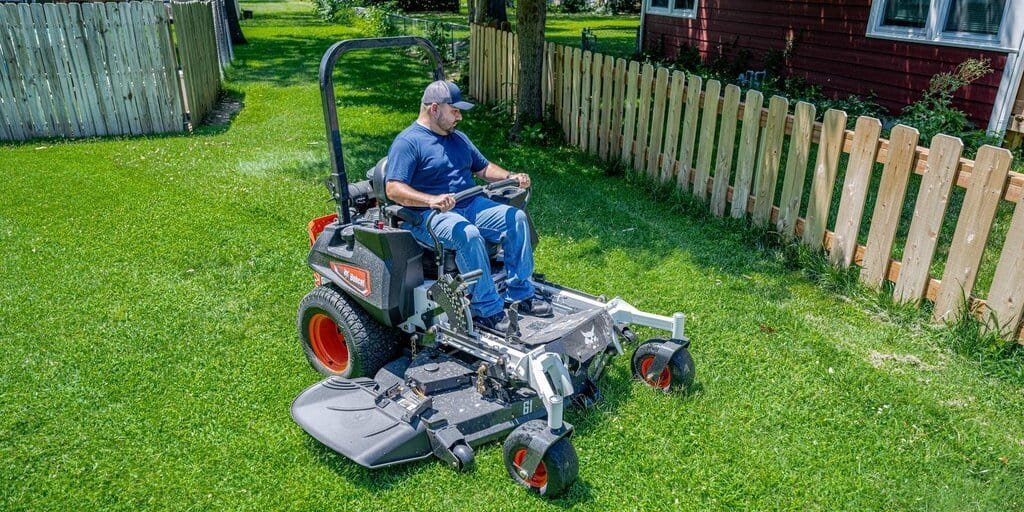
The easiest way to remember how to start a 0 turn mower is to use the same routine every time. Sit down, set the brake, move the levers to neutral or outward, turn the blade switch off, apply choke only if needed, then start the engine. That order solves most startup issues before they begin.
Most people who struggle with starting are missing one small step, not facing a major failure. The good news is that zero turn mower startup becomes very predictable once you understand the safety interlocks and fuel basics. With fresh fuel, a charged battery, and the correct control positions, the mower should start quickly and run smoothly.
If it still does not start, begin with the simplest checks and work forward. That approach saves time, protects the machine, and helps you spot the real cause instead of guessing.
Credit: bobcatofhuntsville.com
FAQs
Why does my zero turn mower click but not start?
A clicking sound usually points to a weak battery, loose battery connection, or bad ground cable. Start by checking the terminal clamps and battery charge. If the battery is old or weak, it may click but not have enough power to crank the engine.
Do I need choke every time I start a zero turn mower?
No. Use choke mainly for cold starts. A warm engine usually starts better without it. Too much choke can flood the engine or make it stall after starting.
Can old gas keep a zero turn mower from starting?
Yes. Fuel that has sat too long can lose volatility and form deposits. If the mower has been idle for more than 30 days, stale fuel is one of the first things to suspect. Fresh fuel often solves the problem fast.
Why will my mower start only when I am sitting in the seat?
That is normal on many models. The seat switch is part of the safety system. It prevents the mower from starting unless weight is on the seat, which helps reduce accidental movement.
What should I do if the mower cranks but will not fire after several tries?
Stop cranking and check fuel, choke position, and the air filter. Too many attempts can flood the engine and drain the battery. If the basic checks do not help, the issue may be ignition or carburetor-related.