
If your mower starts leaving ragged grass, uneven stripes, or needs extra passes, the blades may be past their best. Knowing when are lawn mower blades worn out helps you protect your grass, your mower, and your safety.
A dull blade does more than cut poorly. It can tear grass, stress the lawn, use more fuel, and put more strain on the engine. In some cases, a damaged blade can also become a safety problem.
Here is how to spot worn blades, tell the difference between dull and damaged edges, and decide when sharpening is enough versus when replacement makes more sense.
What worn lawn mower blades look like in real use
The easiest clue is the cut quality. A sharp blade makes a clean slice. A worn blade tears the grass blade, which leaves brown tips and a rough look within a day or two. If your lawn looks fuzzy after mowing, the blade is often the reason.
Another common sign is that the mower needs more effort to finish the job. You may find yourself slowing down, making overlap passes, or lowering the deck more than usual just to get a decent cut. That is often a clue that the blade edge is no longer doing its job well.
Watch the lawn after mowing. Clean cuts usually heal faster, while torn grass tips dry out and turn light brown. On cool-season grass, that damage can be easier to spot, especially in bright sunlight.
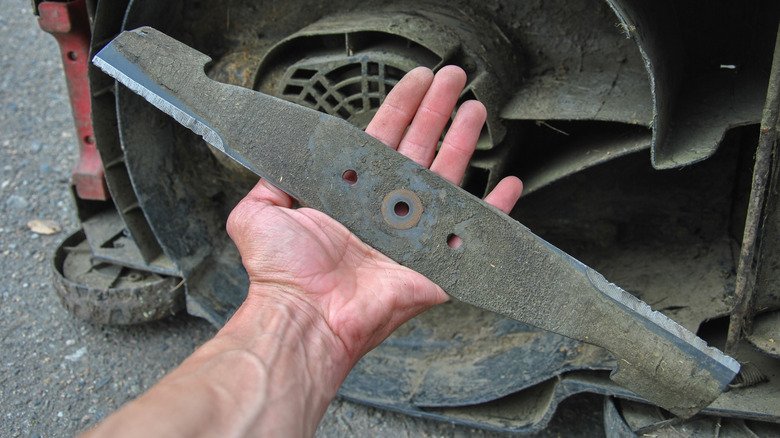
Common visual signs on the blade itself
- Rounded cutting edge instead of a crisp angle
- Nicks or chips from rocks, roots, or sticks
- Rust pitting along the cutting edge
- Thin, bent, or twisted metal near the tip
- Uneven wear where one side is more damaged than the other
A blade can look “okay” from a distance and still be worn out. The cutting edge only needs small damage to stop slicing cleanly. Even a few nicks can make the mower pull and shred grass instead of cutting it.
Cut quality clues most owners miss
Many people think a mower problem means engine trouble. Often, the blade is the first thing to check. If the mower runs normally but the lawn looks worse after each pass, the blade is usually the weak link.
Uneven clumps of grass can also point to blade wear, especially if the grass is not overly wet. A blunt blade does not move clippings as efficiently, so they can fall in piles instead of spreading evenly.
How to tell if the blade is dull, damaged, or simply dirty
Not every bad cut means the blade is worn out. Sometimes the blade is only dirty. Caked grass under the deck can block airflow and make a sharp blade act dull. A quick cleaning may solve the problem.
Dull blades usually have a smooth, rounded edge. Damaged blades have chips, bends, cracks, or missing pieces. If the edge is intact but not sharp, sharpening may be enough. If the shape is compromised, replacement is the safer choice.
A good rule is simple: if you can improve the edge with sharpening, do that. If the blade has structural damage, replace it. A blade that is cracked or bent should not go back on the mower, even if it still “sort of works.”
| Condition | What it looks like | Best action |
|---|---|---|
| Dull blade | Rounded edge, clean body, no major damage | Sharpen |
| Dirty blade | Grass buildup, edge hard to inspect | Clean, then inspect again |
| Damaged blade | Nicks, bends, cracks, missing metal | Replace |
| Worn-out blade | Thin edge, poor cut quality, repeated sharpening already done | Replace |
A simple test you can do at home
After disconnecting the spark plug wire or removing the battery, examine the blade edge under bright light. A sharp edge reflects very little light. A worn or rounded edge often shines because it is no longer thin.
You can also lightly touch the edge from the back side only, never along the cutting edge. If the edge feels rounded rather than crisp, the blade likely needs sharpening or replacement. Use gloves and handle the blade carefully, because even a dull blade can still cut skin.
When are lawn mower blades worn out enough to replace?
The answer is not a fixed number of hours for every mower. Blade life depends on mowing frequency, soil conditions, hidden debris, grass type, and whether the deck hits rocks or roots. A mower used on a sandy, debris-prone yard will wear blades faster than one used on clean turf.
A blade is usually worn out when sharpening no longer restores a clean edge for long, or when the blade has lost too much metal from repeated sharpening. Most blades can be sharpened several times, but not forever. Once the cutting edge becomes too thin or the blade becomes unbalanced, replacement is the better choice.
As a practical guide, many homeowners inspect blades every 20 to 25 hours of mowing and sharpen or replace them as needed. In heavy-use yards, that can mean checking them monthly during peak growing season.

Credit: mowrator.com
Signs the blade has reached the end of useful life
- You sharpen it, but the grass still tears quickly.
- The blade is visibly thinner than it used to be.
- There are deep nicks that remove too much metal to fix safely.
- The blade has been bent at some point, even if straightened later.
- It vibrates more after installation, which can signal imbalance.
One non-obvious sign is repeated clogging. When blade shape and lift are worn down, grass may not circulate well under the deck. That can happen even if the engine is strong and the mower is otherwise in good shape.
Why “just one more sharpening” is not always smart
Every sharpening removes a little steel. After several sharpenings, the blade gets narrower and weaker. That increases the chance of bending or breaking when it hits a hidden object.
A blade that is too thin can also become harder to balance. An unbalanced blade may cause vibration, which is hard on spindles, bearings, and the mower deck. That extra vibration is a wear problem that often costs more than a new blade.
Safety risks of using worn mower blades
Worn blades are not only about lawn quality. They can also create safety risks. A damaged blade is more likely to vibrate, throw debris poorly, or fail under stress. That is why blade inspection matters before every mowing season and after any impact.
Most mower safety problems start with ignored maintenance. A blade that is bent, cracked, or badly chipped should be removed right away. The official mower safety guidance from the U.S. Consumer Product Safety Commission explains basic precautions for safe use and maintenance.
The biggest risk is not just poor cutting. It is the chance of the blade failing or causing the mower to behave unpredictably. That can lead to loss of control, flying debris, or expensive repair damage.
What worn blades can do to the mower
- Increase vibration and wear out spindle bearings faster
- Reduce cutting efficiency so the engine works harder
- Cause clogging under the deck
- Raise fuel use because the mower needs more passes
- Damage the lawn by shredding rather than slicing
There is also a hidden safety issue many owners miss: a blade that is badly unbalanced can make the mower feel “off” in your hands. That vibration is often your first warning before a bigger mechanical problem shows up.
When the blade should not be used at all
Do not use the blade if you see cracks, severe bends, or missing chunks of metal. Do not try to hammer a bent blade back into shape and keep mowing. That is a temporary-looking fix with real failure risk.
If the mower hit a solid object, inspect the blade even if it still spins. Impact damage can start small and spread over time. If you are unsure, replace the blade rather than guessing.
How to inspect and maintain blades the right way
Good blade care is simple, but it has to be done safely. Start by shutting the mower off completely, disconnecting the spark plug wire on gas mowers, or removing the battery on battery-powered models. Never trust the switch alone.
Put the mower on a flat surface and use a block of wood to stop the blade from moving. Wear work gloves. If you need to tip the mower, follow the owner’s manual so fuel or oil does not spill into the wrong place.
Inspection steps that work for most homeowners
- Clean grass and dirt from the underside of the deck.
- Rotate the blade slowly and look for chips, bends, and cracks.
- Check both cutting edges if it is a mulching or dual-edge blade.
- Compare the blade shape with a new one if you have a spare.
- Check balance after sharpening before reinstalling.
Cleaning first matters more than most people think. A dirty blade can hide damage, and built-up grass can make even a decent blade cut badly. Cleaning also helps you spot rust and wear near the mounting hole, which is another area that can weaken over time.
Sharpening versus replacing
Sharpening works when the blade is still structurally sound. Use a file, bench grinder, or sharpening tool, but remove only enough metal to restore a clean edge. Do not overheat the blade, because excess heat can weaken the steel.
Replace the blade when the edge is too damaged to restore, the blade is no longer balanced, or the metal has been sharpened down too far. Many owners wait too long here. A fresh blade often costs less than the time, effort, and deck wear caused by a poor one.
How to store blades so they last longer
Store spare blades in a dry place to reduce rust. A thin coat of oil can help if you are storing them for several months. Keep them away from moisture, fertilizer, and bare concrete floors, which can speed up corrosion.
If you mow often in wet grass, inspect blades more often. Moisture and dirt together are rough on steel. Even one season of regular wet mowing can dull a blade faster than a dry, clean yard over several seasons.
Replacement tips that save time and prevent mistakes
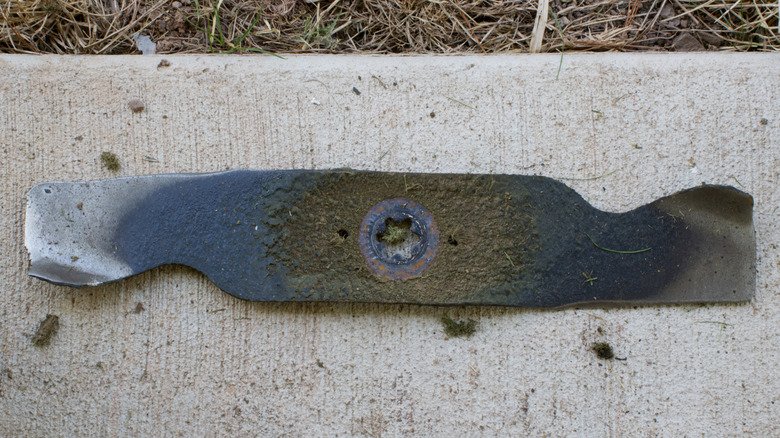
The best replacement blade is the one that matches your mower exactly. Match the length, center hole shape, lift style, and mounting pattern. A blade that is close but not correct can vibrate, cut poorly, or fail to fit at all.
Check your mower model number before buying anything. Many blades look similar, but small differences matter. Two blades can be the same length and still have different center holes or lift profiles.
Credit: slashgear.com
What to check before you buy a replacement blade
- Blade length in inches or centimeters
- Center hole size and shape
- Cutting style such as standard, mulching, or high-lift
- Deck size and mower model compatibility
- Rotation direction if your mower design requires it
Blade style matters more than many buyers realize. A high-lift blade can improve bagging and airflow, while a mulching blade recuts clippings for a finer finish. Using the wrong style can make the mower feel underperforming even if the blade is brand new.
Installation tips that prevent vibration
Tighten the blade to the manufacturer’s torque specification if available. Overtightening can damage the bolt or spindle. Undertightening can let the blade move, which is dangerous and can ruin the mounting area.
After installation, run the mower and listen for unusual vibration or metal noise. If the mower shakes more than before, stop and recheck the blade balance, orientation, and mounting hardware. A small installation error can create a bigger problem fast.
Common buyer mistakes
- Buying by blade length only
- Ignoring the center hole shape
- Choosing the wrong lift style for the mowing task
- Reinstalling a blade with worn mounting hardware
- Skipping balance checks after sharpening
One useful habit is to keep the old blade until the new one is installed and tested. That gives you a direct comparison and makes it easier to confirm the replacement is correct.
How often to check blades during the season
For most home lawns, check the blades at the start of the season and again every 20 to 25 mowing hours. If your yard has sticks, sand, tree roots, or hidden debris, check them more often. A fast visual check takes minutes and can prevent a bad cut all month.
If you mow weekly for 6 months, that can add up quickly. A blade that seems fine in spring may already be dull by midsummer. This is why many experienced owners sharpen once or twice per season, then replace when wear becomes obvious.
Frequency also depends on lawn conditions. Wet grass, rocky soil, and frequent contact with twigs will shorten blade life. Dry, clean turf is much easier on the cutting edge.
Here is the short answer many people want: when are lawn mower blades worn out? Usually when they can no longer make a clean cut after sharpening, when they have visible structural damage, or when they have lost too much metal from repeated maintenance.
Credit: housedigest.com
Final take on blade condition and lawn health
Worn mower blades are easy to ignore, but they affect everything from grass health to machine wear. If your lawn looks torn, uneven, or dull after mowing, the blade should be one of the first things you inspect. In many cases, fixing the blade solves the problem faster than adjusting the mower settings.
The safest habit is simple: clean, inspect, sharpen, and replace when the metal is too damaged or too thin to trust. That keeps the mower cutting cleanly and helps you avoid vibration, extra wear, and avoidable safety risk.
For most homeowners, the best rule is this: sharpen for dullness, replace for damage, and never keep using a blade that no longer cuts with confidence.
FAQs
1. How do I know if my lawn mower blade is dull or worn out?
A dull blade usually has a rounded edge but no major damage. A worn-out blade often has deep nicks, bends, cracks, or a thin edge that no longer sharpens well. If the grass looks torn after mowing, the blade is often the cause.
2. Can I keep using a mower blade after sharpening it several times?
Yes, but only if the blade still has enough metal and stays balanced. After repeated sharpenings, the blade can become too thin and weak. At that point, replacement is safer and usually performs better.
3. What happens if I mow with a bent blade?
A bent blade can cause vibration, poor cutting, and extra wear on the spindle and bearings. It can also become unsafe if the bend leads to cracking or imbalance. A bent blade should be replaced, not straightened and reused.
4. How often should lawn mower blades be inspected?
Check blades at the start of the season and then every 20 to 25 hours of mowing. If your lawn has debris, rocks, or roots, inspect them more often. A quick check after hitting an object is also smart.
5. Is it better to sharpen or replace mower blades?
Sharpen if the blade is only dull and the shape is still sound. Replace it if there are cracks, bends, missing metal, or too much wear from past sharpening. A good blade should cut cleanly without causing vibration.