
The answer to what kind of oil does a lawn mower take depends on the engine, the season, and the temperature where you mow. Most walk-behind mowers use either SAE 30, 10W-30, or 5W-30, but the right choice is not always the same for every machine.
Using the wrong oil can make starting harder, increase wear, and shorten engine life. The good news is that choosing the right oil is usually simple once you know how to read the temperature chart, check your manual, and match the oil to your mower type.
This guide breaks it down in plain English. You will learn which oils are most common, how weather changes the choice, what happens if you use the wrong one, and how to pick the best oil for push mowers, riding mowers, and small engines.
Start with the mower type and the engine manual
The first step is not the oil bottle. It is the mower itself. A lawn mower engine can be a small 4-stroke engine, a riding mower engine, or, in some older machines, a 2-stroke engine that mixes oil and fuel. Each type has different needs.
Most modern push mowers and riding mowers use 4-stroke oil. That means the oil goes into the crankcase, not into the gas tank. Many common brands recommend SAE 30 for warm weather, while multigrade oils like 10W-30 or 5W-30 work better in cooler conditions. The exact recommendation can vary by engine maker, so the owner’s manual should always come first.
If you do not have the manual, look for the oil fill cap, engine label, or the manufacturer’s support page. A few minutes of checking can save you from using an oil that is too thick in cold weather or too thin in hot weather.
For official guidance, Briggs & Stratton provides a helpful official owner’s manual and support page with model-specific information and maintenance details.
The most common oil types for lawn mowers
If you want a quick answer, most lawn mowers take one of three oils: SAE 30, 10W-30, or 5W-30. These are the oils most homeowners see at the store, and each one has a different strength.
| Oil type | Best use | Main strength | Common caution |
|---|---|---|---|
| SAE 30 | Warm weather mowing | Stable viscosity in heat | Can flow poorly in cold starts |
| 10W-30 | Mixed temperatures | Better cold start than SAE 30 | May use more oil in hot weather on some engines |
| 5W-30 | Cooler weather or wider temperature range | Excellent cold flow | Some engines prefer a different grade in high heat |
SAE 30
SAE 30 is one of the most common oils for small gas mowers. It works well when temperatures are consistently above about 40°F to 50°F. In hot weather, it keeps a steady film on engine parts.
The downside is cold flow. On a chilly morning, SAE 30 can move slowly through the engine. That can make starting harder and reduce lubrication during the first few seconds after startup.
10W-30
10W-30 is a multigrade oil, which means it behaves like a thinner oil when cold and like a thicker oil when hot. That makes it a practical choice for many homeowners who mow in spring, summer, and fall.
One thing beginners miss is that 10W-30 is not always the best choice for every engine in very hot weather. Some small engines can burn more of it under heavy heat and load, especially if the mower is older or runs long stretches.
5W-30
5W-30 flows even better in cold weather than 10W-30. If you start mowing early in the season or live in a cooler climate, this oil can help the engine start more easily.
It is a smart choice when morning temperatures are low, but again, the engine maker’s recommendation matters. A newer mower may specifically call for synthetic 5W-30, while another engine may prefer SAE 30 in summer.
How temperature changes the oil choice
Temperature is one of the biggest factors in choosing mower oil, and many people overlook it. Oil thickness changes with heat and cold. Thicker oil protects well in heat, but it moves slowly when cold. Thinner oil flows fast when cold, but it may not protect as well in very high heat if the engine was not designed for it.
A simple rule helps in most cases. If you mow in hot weather, SAE 30 is often a safe bet for many small engines. If you mow across several seasons or start the mower in cooler weather, 10W-30 or 5W-30 is often better.
Here is the part many people do not know: a lawn mower engine does not need the same oil behavior as a car engine. Small air-cooled engines run hotter than many people expect, and they are more sensitive to using the wrong oil grade in extreme temperatures.
If your area regularly hits over 90°F, check the manual carefully before choosing a thinner oil. If your spring mornings are near freezing, a cold-flow oil can make a noticeable difference in starting and early lubrication.
Credit: chorbie.com
Conventional oil, synthetic oil, and when each makes sense
Another common question is whether to use conventional or synthetic oil. Both can work, but they are not identical. Conventional oil is the standard petroleum-based option. Synthetic oil is engineered for more stable performance across temperature swings.
Synthetic oil usually flows better in cold weather and resists breakdown better in heat. That can be useful if you store your mower in a cold garage, mow in very hot weather, or want longer-lasting performance. It can also help older engines run a little smoother if they have more wear.
Most homeowners do not need synthetic oil for a basic push mower that runs for 30 to 60 minutes at a time. But for a rider, a commercial-use machine, or a mower used in a wide temperature range, synthetic oil can be a smart upgrade.
One non-obvious insight: synthetic does not mean you can ignore the viscosity rating. A synthetic 10W-30 is still 10W-30. It is the base oil quality that changes, not the label on the front.
When to choose synthetic
- You mow in very hot or very cold weather.
- Your mower sits unused for long periods.
- You want easier cold starts.
- Your manual allows synthetic oil.
When conventional oil is enough
- You use a standard walk-behind mower in normal weather.
- You change oil on schedule.
- Your engine was designed for basic small-engine oil.
- You mow only during a narrow warm-season window.
What different mower types usually need
Not every mower uses oil the same way. The engine design matters more than the body style. A push mower, self-propelled mower, riding mower, and zero-turn can all have different engine requirements even if they look similar from the outside.
Walk-behind gas mowers
Most walk-behind gas mowers use 4-stroke engine oil. SAE 30 is common for warm weather, while 10W-30 and 5W-30 are often used for cooler or mixed conditions. Oil capacity is usually small, often around 15 to 20 ounces, though this varies by engine size.
Because the crankcase is small, overfilling is a real problem. Too much oil can cause smoke, fouled spark plugs, or even crankcase pressure issues. A dipstick reading should always stay within the marked safe zone.
Riding mowers and zero-turns
Riding mowers often use larger engines and may specify a different oil grade than push mowers. Many still use SAE 30 or 10W-30, but some engines call for 5W-30 synthetic, especially in cooler climates or for year-round use.
These engines can also hold more oil, often around 1.5 to 2.5 quarts, depending on the model. That extra capacity means oil condition matters for a longer period, but it also means draining and refilling carefully is important.
2-stroke mowers
Older 2-stroke mowers are less common now. They do not have a separate oil reservoir like a 4-stroke mower. Instead, oil is mixed with gasoline in a specific ratio, such as 50:1 or 40:1, depending on the engine.
This is where many people make a costly mistake. Never pour regular 4-stroke mower oil into the crankcase of a 2-stroke engine, because it may not be designed that way. If your mower is 2-stroke, the ratio on the label or manual matters more than the oil brand.
How to choose the right oil step by step
The best choice becomes easy when you use a simple process. You do not need to guess, and you do not need to buy the most expensive bottle on the shelf.
- Check the manual or engine label. Look for the recommended viscosity, such as SAE 30, 10W-30, or 5W-30.
- Think about your weather. Warm climate points toward SAE 30. Cooler starts and mixed seasons point toward 10W-30 or 5W-30.
- Confirm the engine type. Make sure it is a 4-stroke mower before adding oil to the crankcase.
- Choose conventional or synthetic if allowed. Synthetic is useful for wide temperature swings and easier starts.
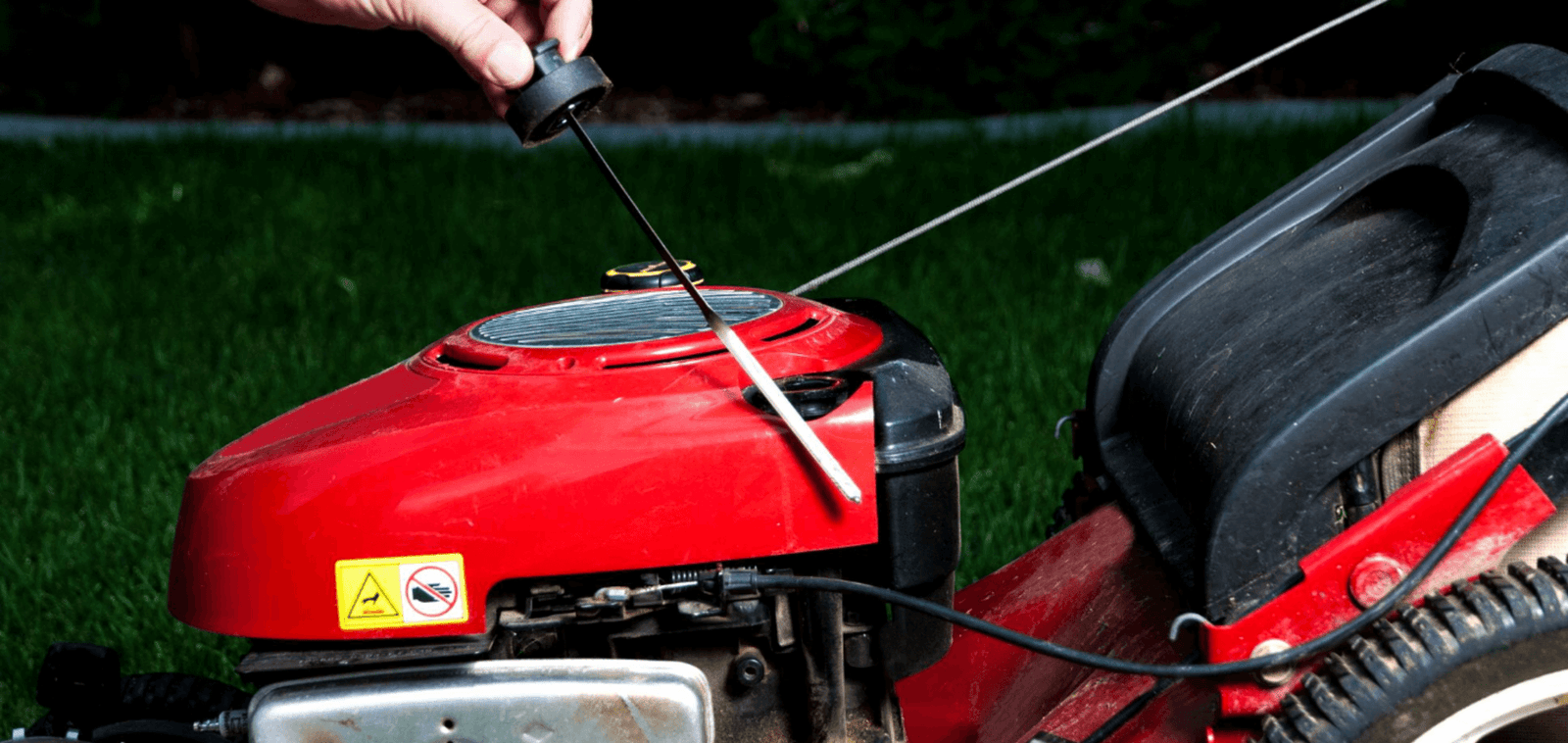
- Match the oil quantity. Fill slowly and stop at the correct dipstick level.
A practical example helps. If you have a push mower, mow in late spring, and your daytime temperature stays near 80°F, SAE 30 is often a good fit. If your mower starts in 45°F mornings and runs into summer heat, 10W-30 gives you more flexibility.
Another useful detail: oil changes matter just as much as oil choice. Fresh SAE 30 is better than old, dirty oil in the “perfect” grade. For many residential mowers, changing oil once per mowing season is a common maintenance rhythm, though heavy use may need more frequent service.

Credit: goldeagle.com
Common mistakes people make with mower oil
Most mower oil problems come from a small set of errors. The good news is that they are easy to avoid once you know what to look for.
- Using car oil without checking the label. Some car oils contain friction modifiers or additives that are not ideal for small engines.
- Overfilling the crankcase. Even a little extra oil can cause smoking and rough running.
- Using the wrong grade for the weather. Thick oil in cold weather can make starting harder.
- Confusing 2-stroke and 4-stroke engines. They are not serviced the same way.
- Ignoring old oil. Dirty oil loses protective ability, even if it is the right type.
One mistake that surprises many owners is mixing different oil types without checking compatibility. A small top-off with the same viscosity is usually not a big issue, but random mixing across different grades and base oils is not a good habit. Keep the oil type consistent whenever possible.
If your mower starts smoking after an oil change, the most likely cause is overfilling, not engine damage. Check the dipstick, drain excess oil if needed, and run the mower briefly to see if the smoke clears.
How to tell if your mower oil is wrong
Wrong oil does not always cause a dramatic failure. Sometimes the signs are subtle. Other times, they show up quickly.
Watch for hard starting, unusual smoke, rough idle, louder engine noise, or oil leaking from the air filter area. These symptoms often point to a problem with oil level, oil grade, or both.
If the engine cranks slowly in cool weather, the oil may be too thick. If it burns oil faster than normal in hot conditions, the oil may be too thin for that engine or operating range. A dirty air filter can also worsen these symptoms, so it helps to check both systems.
For mower safety and maintenance basics, the U.S. Consumer Product Safety Commission offers helpful mower safety guidance that covers safe operation and common hazards.
Simple oil tips that help your mower last longer
Good oil choice is only part of the picture. The way you use and store the mower also affects engine life. A few small habits can make a big difference over time.
- Check oil before each mowing season, or before the first use after storage.
- Warm the engine for a minute before draining oil, so it flows out more completely.
- Use a clean funnel to avoid dirt entering the crankcase.
- Wipe the dipstick before each reading for a more accurate level.
- Store oil in a sealed container away from heat and moisture.
Do not skip the oil change because the mower “still runs fine.” Small engines often keep running with old oil until wear has already built up. By then, the damage is quiet and slow, which makes it easy to ignore.
If you live in a region with big temperature swings, keep two oil options on hand, such as SAE 30 and 10W-30. That gives you a better match for early spring starts and summer use without last-minute guessing.
Final answer: what oil should you buy?
If you are still asking what kind of oil does a lawn mower take, the safest short answer is this: most 4-stroke lawn mowers use SAE 30 for warm weather, and 10W-30 or 5W-30 for cooler or mixed temperatures. Synthetic versions are often a good option if your manual allows them.
The right oil is the one that matches your engine, your weather, and your mower type. That is why the manual matters so much. Once you know the recommended viscosity and confirm whether your mower is 2-stroke or 4-stroke, the choice becomes straightforward.
Choose the correct grade, keep the oil clean, and do not overfill. Those three habits do more for mower life than any fancy additive or brand name ever will.

Credit: hunker.com
Frequently asked questions
Can I use 10W-30 instead of SAE 30 in my lawn mower?
Often yes, but only if the manual allows it. 10W-30 is commonly used in cooler or mixed weather because it flows better when cold. In very hot weather, some engines still prefer SAE 30.
Can I use car engine oil in a lawn mower?
Sometimes, but not always. Many small engines are better served by oils made for lawn and garden equipment. Check the label for the right viscosity and make sure the oil matches your engine type.
What oil should I use in a riding mower?
Most riding mowers use 4-stroke oil such as SAE 30, 10W-30, or 5W-30. The exact choice depends on the engine and the climate. A riding mower’s oil capacity is usually larger than a push mower’s, so check the dipstick carefully.
How often should I change lawn mower oil?
For many residential mowers, once per mowing season is common, especially if you use the mower regularly. Heavy use, dusty conditions, or older engines may need more frequent changes.
What happens if I put too much oil in my lawn mower?
Overfilling can cause smoke, hard starting, oil leaks, and fouled spark plugs. If you suspect overfill, turn off the mower, let it cool, and remove the extra oil until the level is within the marked range.