
If your mower will not start, keeps dying, or loses power in the middle of a cut, the problem is often electrical. That can feel frustrating, but many of these issues are simple. In many cases, you do not need a full repair shop visit. You just need a calm check of the battery, wiring, switch, fuse, or safety parts.
This guide explains simplicity mower electrical problems in a clear way. You will learn the most common causes, the easy fixes, and the mistakes that make the problem worse. The goal is to help you find the fault faster and avoid replacing good parts by accident.
Some electrical problems look serious but are actually small. A loose connector, dirty terminal, weak battery, or bad seat switch can stop the mower completely. If you follow the steps below in order, you can save time, money, and a lot of guesswork.
How to approach mower electrical trouble the smart way
Before you replace anything, start with the simple checks. Most electrical problems on a Simplicity mower come from one of a few places: power supply, safety switches, wiring, or charging system. That means the best repair is often the most basic one.
Begin with the battery. Then check the fuse, the key switch, the seat switch, the PTO switch, and the wiring connections. If the mower is an electric start model, one weak link in that chain can stop everything. If it is a riding mower, the problem may also involve the brake switch or reverse safety system.
One important detail beginners often miss is this: a part can test “fine” when it is cold but fail under vibration or heat. That is why electrical problems can seem random. The mower starts once, then fails later. Or it works in the shed, but not in the yard. Loose connections are often behind this kind of behavior.
Common signs the issue is electrical
- The engine will not crank at all.
- You hear a click, but the starter does not turn.
- The mower starts, then dies suddenly.
- The PTO will not engage.
- Lights or dashboard indicators do not work.
- The battery keeps going dead after charging.
- The mower starts only after moving a wire or switch.
The most common causes of Simplicity mower electrical problems
Most owners assume the starter motor is the problem first. Sometimes it is. But in many cases, the real issue is upstream. A battery can be weak, a cable can be corroded, or a safety switch can block power from reaching the starter.
| Problem area | Common symptom | Simple first check |
|---|---|---|
| Battery | No crank, slow crank, weak clicks | Test voltage and clean terminals |
| Battery cables | Intermittent start, power loss | Check tightness and corrosion |
| Fuse | No power to ignition or accessories | Inspect and replace if blown |
| Safety switches | Engine will not start or PTO will not engage | Check seat, brake, and PTO switches |
| Starter solenoid | Clicking but no crank | Listen for click and test for power |
| Charging system | Battery keeps dying | Check battery while engine runs |
| Wiring harness | Random failures, flickering power | Look for rubbed or broken wires |
1. Weak or dead battery
A weak battery is one of the top causes of simplicity mower electrical problems. If the battery voltage is low, the starter may click, turn slowly, or do nothing at all. Even if the mower has run before, a battery can lose strength over time.
Check for corrosion on the terminals, loose cable ends, or a swollen battery case. Clean the posts with a wire brush and tighten the connections. If you have a multimeter, a healthy 12-volt battery should usually read around 12.6 volts when fully charged and at rest. Anything much lower can cause trouble.
Easy fix
Charge the battery fully and test it again. If it will not hold a charge, replace it. A battery that is several years old may seem “okay” but still fail under load.
Non-obvious tip: A battery can show a decent voltage and still be too weak to start the mower. Voltage alone does not tell the full story. The battery must also supply enough cranking power.
2. Dirty or loose battery connections
Corrosion and loose cables create resistance. That means power cannot flow well. The mower may act dead, or it may work only when the cable moves a certain way. This is a very common reason for strange start problems.
Look closely at both the positive and negative terminals. White, green, or blue buildup is a bad sign. Also check the ground cable where it attaches to the frame or engine block. A poor ground connection can cause many symptoms that look like a failing starter.
Easy fix
Disconnect the battery first. Clean the terminals and cable ends. Reconnect them tightly. If the cable ends are damaged or frayed, replace the cable instead of forcing it back into service.
3. Blown fuse
A blown fuse can stop the ignition circuit, starter circuit, or other electrical parts. If the mower has no power at all, the fuse is a good place to look early. But do not just replace it and move on. A fuse usually blows for a reason.
If the new fuse blows again right away, there may be a short circuit, pinched wire, or damaged switch. Replacing the fuse repeatedly without finding the cause is a common beginner mistake.
Easy fix
Remove the fuse and inspect it. If the metal strip is broken, replace it with one of the same rating. If the problem comes back, trace the wiring for damage before continuing.
4. Faulty seat switch
Many riding mowers use a seat safety switch. If the switch does not sense that someone is sitting on the seat, the mower may refuse to start or may shut off when you get up. This is a safety feature, not a defect.
The seat switch can fail because of dirt, wear, a broken connector, or a loose mounting position. Sometimes the seat itself does not press the switch fully.
Easy fix
Check that the seat moves the switch properly. Make sure the connector is tight and clean. If the switch is damaged, replace it with the correct part. Do not bypass safety switches permanently. That can create serious risk.
5. Brake or PTO switch failure
The brake switch helps prove the mower is in a safe starting position. The PTO switch controls the blade engagement system. If either switch fails, the mower may not start or the blades may not engage.
These switches are often overlooked because the engine may still crank. The mower then starts but behaves strangely when you try to use the blades. That can look like a bigger problem than it is.
Easy fix
Check that the switch is fully clicked into position. Inspect the connector for dirt or looseness. If the switch feels sloppy, sticks, or tests badly, replace it.
6. Bad starter solenoid
The solenoid acts like an electric gate. It sends battery power to the starter when you turn the key. A bad solenoid often causes a click with no crank. Sometimes you hear nothing at all.
Do not assume the starter is dead just because the mower will not crank. If power reaches the solenoid but does not leave it, the solenoid may be the real fault.
Easy fix
Check for battery power at the solenoid input. Then check the output when the key is turned to start. If the input is good and the output is missing, replace the solenoid.
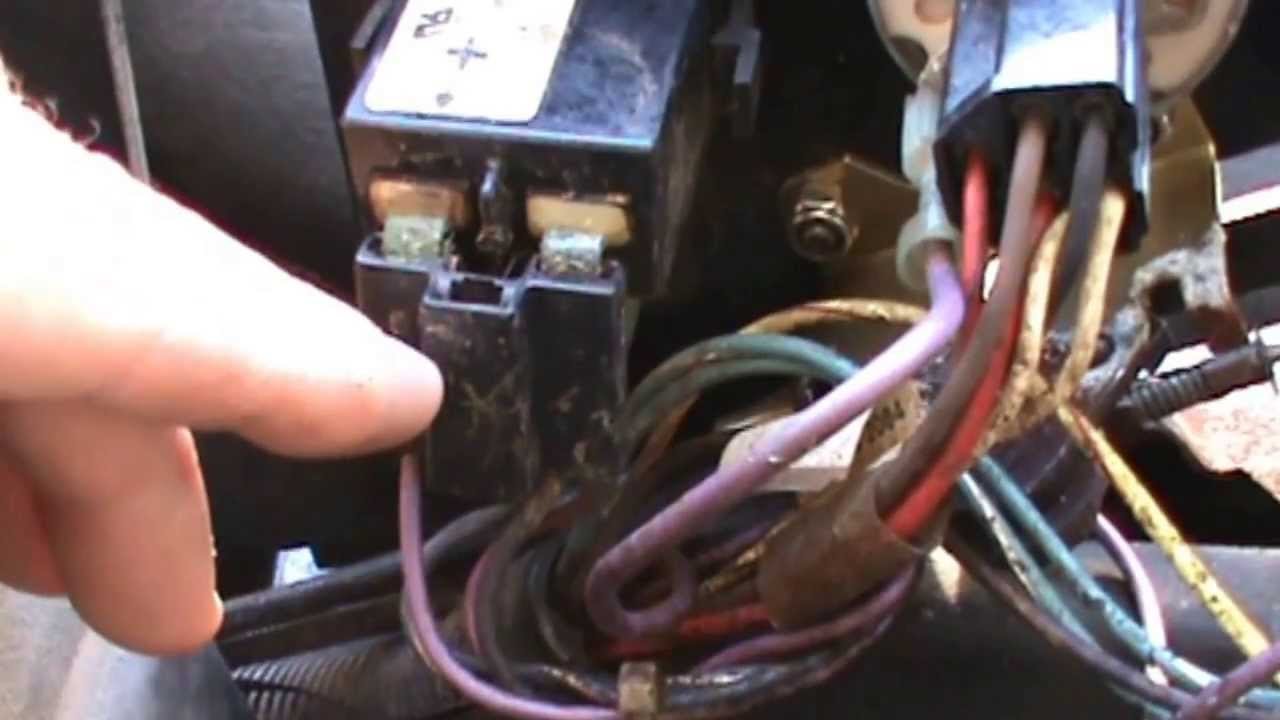
7. Damaged wiring or loose harness connections
Wiring problems are harder to see, but they are common. A wire can rub against metal, crack from age, or pull loose from a connector. Vibration from mowing can make a weak connection fail only sometimes.
Look for broken insulation, melted spots, pinched wires, or connectors that feel loose. Follow the harness along the frame, under the seat, and near moving parts. Pay close attention to places where the wire bends or rubs.
Easy fix
Repair damaged wires with proper connectors or replacement sections. Use electrical tape only as a temporary cover, not a real repair. A loose connector should be cleaned and tightened or replaced.
Non-obvious tip: Some wiring faults only appear when the mower vibrates. Gently wiggle the harness while checking for power loss. If the machine cuts in and out, you may have found the problem area.
8. Charging system failure
If the battery keeps dying after a short time, the charging system may not be working. On a riding mower, the alternator or stator helps recharge the battery while the engine runs. If that system fails, the battery slowly goes flat no matter how often you charge it.
A common mistake is replacing the battery again and again without checking the charging output. That wastes money and does not solve the real cause.
Easy fix
Start the mower and test battery voltage while the engine runs. In many cases, the voltage should rise above the resting battery level. If it does not, the charging system, regulator, or related wiring may need attention.
For detailed mower battery care and charging guidance, you can also check this helpful resource from Oregon.
Easy fixes you can try before replacing parts
Many electrical problems can be solved with simple service steps. Start with the lowest-cost fixes first. That approach prevents unnecessary part swaps and helps you learn what the mower is doing.
- Disconnect the battery before working. This protects you from accidental shorts.
- Clean all terminals. Remove dirt and corrosion from battery posts and cable ends.
- Check every fuse. Replace only fuses with the correct rating.
- Inspect the seat and brake switches. Make sure they move and connect properly.
- Test the battery under load. A resting battery reading is not enough.
- Look for loose grounds. A bad ground can create many strange symptoms.
- Trace the harness. Follow the wiring for damage, rubbing, or pinched spots.
Credit: outsidegr.com

Credit: insidetheyard.com
What to do if the mower clicks but will not start
A click usually means the starter circuit is trying to work, but power is not reaching the starter correctly. Begin with the battery and cable ends. Then check the solenoid and the ground cable. A weak battery is still possible, even when the lights come on.
If the battery is strong, the next likely cause is a bad solenoid or poor cable connection. This is one of the clearest examples of why simple testing matters more than guessing.
What to do if the mower dies while running
If the mower starts fine and then dies, the problem may be heat, vibration, or fuel system interruption. But electrical causes are still possible. Check the ignition switch, safety switch, and wiring harness. A loose connector can open the circuit for a moment and shut the engine off.
Also check the charging system. If the battery is already weak, the mower may run for a while and then stop when voltage drops too low.
What to do if the PTO will not engage
The PTO system depends on switch input, wiring, and sometimes the battery. If the battery is weak, the PTO clutch may not have enough power. If the seat switch or PTO switch is faulty, the clutch may never receive the signal.
Check the switch position, then inspect the connector, fuse, and wiring. A clutch that clicks weakly or not at all can point to a power supply issue rather than a failed clutch.
Common mistakes that make the problem harder
Electrical diagnosis becomes much easier when you avoid a few traps. Many mower owners replace expensive parts too soon. Others skip basic checks and miss the real fault.
- Replacing the starter before checking the battery.
- Ignoring corrosion on ground connections.
- Using the wrong fuse size.
- Bypassing safety switches instead of testing them.
- Testing only with the ignition off and not under load.
- Forgetting that vibration can make a loose wire fail only sometimes.
Another mistake is checking just one side of the circuit. Power problems need both supply and return paths. In simple terms, electricity must go out and come back. A bad ground can stop the system just as easily as a dead battery.
How to prevent electrical trouble in the future
Prevention is easier than repair. A few minutes of care each month can save you from many simplicity mower electrical problems. Keep the battery charged, clean, and secure. Make sure cables do not rub against sharp metal. Check connectors after rough mowing or service work.
Store the mower in a dry place if you can. Moisture speeds up corrosion, and corrosion is one of the biggest enemies of good electrical contact. If the mower will sit unused for a long time, maintain the battery with a proper charger rather than letting it slowly discharge.
Also inspect the harness after blade work or belt work. It is easy to pinch a wire during maintenance. That kind of small mistake can create a new problem that looks unrelated later.
When to stop DIY repair and get help
Some jobs are fine for a home owner. Others are better left to a technician. If you have already cleaned connections, tested the battery, checked the fuse, and inspected the switches but the problem still returns, deeper diagnosis may be needed.
Get help if you see melted wiring, repeated fuse failure, smoke, burning smell, or a charging system that gives strange voltage readings. Those signs can point to a larger fault. At that stage, more testing tools and experience save time.
It is also wise to stop if you are not comfortable working around electrical parts. A careful repair is better than a rushed one.

Credit: mowersweb.com
Final thoughts
Most Simplicity mower electrical issues are not mysterious. They usually come from a weak battery, dirty terminals, a failed switch, a blown fuse, a bad ground, or damaged wiring. If you work through the system in a steady order, you can often find the cause without replacing many parts.
The key is to start simple, test under load, and watch for loose or corroded connections. Small problems often create big symptoms. Once you understand that, electrical repair becomes much less stressful and much more practical.
FAQs
1. Why does my Simplicity mower click but not start?
A click usually means the starter circuit is getting part of the signal, but not enough power to crank the engine. The most common causes are a weak battery, loose battery cables, a bad ground, or a faulty solenoid.
2. Can a bad safety switch stop the mower from starting?
Yes. A seat switch, brake switch, or PTO switch can block the start circuit if it fails or does not fully engage. These switches are part of the safety system, so even a small fault can prevent starting.
3. Why does my battery keep dying after I charge it?
The battery may be old, damaged, or not receiving enough charge from the mower’s charging system. Loose connections, a bad regulator, or a stator problem can also cause the battery to go dead again.
4. Should I replace the starter if the mower will not crank?
Not right away. Check the battery, terminals, fuse, switches, and solenoid first. Many starting problems are caused by simple electrical issues, not a bad starter motor.
5. What is the easiest first step for electrical troubleshooting?
Start with the battery and its connections. Clean the terminals, tighten the cables, and check the battery voltage. This solves many mower problems and gives you a strong base for the next tests.