
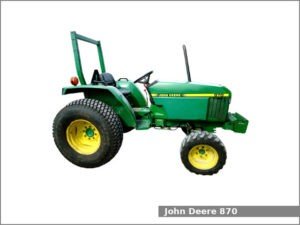
If you own a John Deere 870, you already know why so many small farm and property owners like it. It is compact, dependable, and strong for its size. But like any older tractor, it can develop problems after years of hard work. Some issues are small and easy to fix. Others can slow your work and cost real money if you ignore them.
This guide explains the most common john deere 870 problems in simple words. You will learn what causes them, what the warning signs look like, and how to fix them before they turn into bigger repairs. I will also point out a few things many new owners miss, especially on older compact tractors.
If you want to keep your tractor running well, the best approach is simple: catch problems early, use the right fluids, and pay attention to small changes in sound, power, and starting behavior.
This guide also covers common search issues such as a John Deere 870 hard to start, a tractor that will not crank, questions about fuel pressure on the 870, key switch problems, clutch trouble, and fuel or temperature gauge faults.
What usually goes wrong on a John Deere 870
The John Deere 870 is a 3-cylinder compact diesel tractor, and that design is part of its strength. It is simple compared with newer machines, which means many repairs are straightforward. But age, poor maintenance, dirty fuel, worn seals, and weak batteries often create the same repeating issues.
Most john deere 870 problems fall into a few groups:
- Starting trouble
- Loss of engine power
- Hydraulic or loader issues
- Transmission or clutch wear
- Electrical faults
- Cooling system problems
The good news is that many of these issues give clear warning signs. If you know what to watch for, you can often fix the tractor before it fails in the field.
John Deere 870 hard to start, slow crank, or will not crank
One of the most common complaints is that the tractor cranks slowly, starts hard, or will not start at all. If your John Deere 870 will not crank, start with the battery, cables, ground, starter, neutral safety switch, and key switch. If it cranks but will not fire, look closer at glow plugs, air in the fuel system, fuel flow, and dirty filters.
Main causes of starting trouble
- Weak or old battery
- Corroded battery cables
- Bad starter motor or starter solenoid
- Faulty key switch or neutral safety switch
- Faulty glow plugs or glow plug wiring
- Fuel filter clogging
- Air leaks in fuel lines
- Old diesel fuel
A small but important point many owners miss: a diesel engine may crank normally and still fail to start if the fuel system has air in it. That is why bleeding the system matters after filter changes or fuel line work. If the tractor only starts with starting fluid, do not keep relying on ether; find the fuel, glow plug, compression, or timing issue that is making cold starts difficult.
What to do
- Check battery voltage and clean the terminals.
- Inspect the cables for corrosion and loose ends.
- Turn the key and listen for a click; no click can point to the key switch, safety switch, wiring, or solenoid.
- Test glow plugs and the relay if cold starts are poor.
- Replace the fuel filter if it looks dirty or old.
- Bleed the fuel system if the tractor ran out of fuel or had filter work done.
- Make sure the tank vent is not blocked.
If the engine cranks slowly even with a good battery, the starter or cables may have too much resistance. On older tractors, cable condition is often more important than battery size.
Loss of power under load
Another frequent issue is poor pulling power. The tractor may start fine, but it feels weak when mowing, tilling, or lifting. This problem often points to fuel delivery, air intake, or engine wear.
Common causes
- Clogged fuel filter
- Dirty air filter
- Restricted exhaust
- Weak injection pump performance
- Worn injectors
- Low engine compression
If the engine smokes black while losing power, it may be getting too much fuel or not enough air. If it smokes white, fuel may be reaching the cylinders but not burning correctly. Blue smoke usually points to oil burning inside the engine.
Best fixes
Start with the simple items first. Replace the fuel and air filters. Check for fuel flow from the tank. Look at the exhaust stack for blockage. If those steps do not help, the injection system may need professional testing.
A useful habit is to watch power changes over time. When a tractor slowly gets weaker, owners often blame age. In many cases, the real cause is a filter that has been partly blocked for months.
Engine overheating
Overheating can damage the John Deere 870 quickly, so it should never be ignored. A tractor that runs hot may lose coolant, push fluid out of the overflow, or smell like hot metal and coolant after short use.
Why it happens
- Low coolant level
- Dirty radiator fins
- Damaged water pump
- Broken fan belt
- Thermostat stuck closed
- Radiator cap failure
- Internal engine blockage from rust or scale
One thing many owners overlook is airflow. Even if the coolant level is full, grass, chaff, dust, and mud can block the radiator and reduce cooling fast. This is common if the tractor works in fields, hay, or dusty areas.
How to fix it
- Let the tractor cool before opening the radiator cap.
- Check coolant level and look for leaks around hoses, clamps, and the water pump.
- Clean the radiator fins gently with air or water.
- Inspect the belt for cracking or looseness.
- Test the thermostat if the tractor still runs hot.
If overheating continues after basic maintenance, the cooling system may need a deeper inspection for internal blockage or pump wear.
Hydraulic system weak or slow
The hydraulic system on the 870 is important for loader work, implements, and steering performance. When hydraulics get weak, the tractor feels less useful right away. Attachments may lift slowly, drift down, or stop halfway.

Credit: john-deere-tractor-starting-problems.pages.dev
What usually causes hydraulic trouble
- Low hydraulic fluid
- Dirty or incorrect hydraulic oil
- Clogged hydraulic filter
- Air in the hydraulic system
- Worn hydraulic pump
- Leaking seals or hoses
- Internal valve wear
A helpful detail: hydraulics can act weak even when the fluid level looks okay. If the oil is old, foamy, or contaminated with water, performance drops. The tractor may also make a whining sound when the pump is struggling.
Fix steps to try first
- Check the hydraulic fluid level with the tractor on level ground.
- Inspect for leaks under the tractor and around hoses.
- Replace the hydraulic filter if service time is unknown.
- Use the correct oil type recommended for the tractor.
- Bleed air from the system if the tractor recently had repairs.
Do not ignore foamy fluid. Foam often means air is entering the system, and that can damage the pump over time.
Transmission and clutch concerns
Some John Deere 870 owners notice hard shifting, gear grinding, or trouble getting the tractor into gear. Others feel slipping or weak engagement under load. These symptoms can point to clutch wear, linkage problems, or transmission oil issues.
Common warning signs
- Gears grind when shifting
- Clutch pedal feels strange or too loose
- Tractor creeps even when the clutch is pushed down
- Clutch slips under load
- Transmission is noisy in certain gears
The clutch pedal and linkage should move smoothly. If the pedal travel is wrong, the clutch may not fully disengage. That alone can cause gear grinding even if the clutch parts are not fully worn out yet.
What to check
First, inspect the clutch adjustment and pedal free play. Then check the transmission fluid level and condition. Dirty or low oil can make shifting harder and may increase wear. If the tractor still grinds or slips, internal clutch or transmission parts may need repair.
One non-obvious issue is operator habit. Resting a foot on the clutch pedal, even lightly, can shorten clutch life over time. This is easy to do without noticing.
Electrical, key switch, fuel gauge, and temperature gauge problems
Older tractors often have electrical faults that come and go. The John Deere 870 is no different. A weak charging system, bad ground, corroded connection, or worn key switch can cause hard starting, dim lights, dead batteries, or gauges that act wrong.
Typical symptoms
- Battery keeps going dead
- Headlights are dim
- Starter clicks but does not turn
- Gauges behave oddly, including fuel gauge or temperature gauge readings that are wrong
- Nothing happens when the key is turned
- Fuses blow often
On older machines, the problem is often not one big failure. It is usually several small issues: corrosion, loose connectors, aging wiring, and weak grounds. These create voltage loss and make the tractor seem unreliable.
How to troubleshoot
- Clean battery terminals and ground points.
- Check alternator output with a multimeter.
- Inspect the fuse panel and replace damaged fuses.
- Look for cracked wires or rubbed insulation.
- Test switches if lights or gauges stop working.
If the battery dies often, do not assume the battery is the only problem. A charging fault or parasitic drain may be the real cause. For John Deere 870 key switch problems, check whether power reaches the switch, leaves the start terminal, and reaches the solenoid when the key is turned.
If the fuel gauge or temp gauge is not working, inspect the sender wire, ground, fuse, and connector before replacing the gauge. A gauge that jumps, stays half full, or reads hot when the engine is cold often points to wiring resistance, a poor ground, or a bad sending unit.
Fuel system issues and fuel pressure on the John Deere 870
The fuel system has a big effect on how the tractor starts, idles, and pulls. Dirty fuel, water in diesel, air leaks, restricted filters, or weak fuel delivery can cause rough operation and hard starts. If you are checking fuel pressure on a John Deere 870, first confirm steady fuel flow from the tank through the filter before blaming the injection pump.
Credit: tractor-specs.net
Signs of fuel system trouble
- Engine sputters or hunts at idle
- Power fades after running for a while
- Tractor starts, then dies
- White smoke after starting
- Fuel smell around lines or filters
- Starts only with starting fluid or dies after running briefly
- Weak fuel flow at the filter or injection pump inlet
Water in fuel is especially common when the tractor sits outside or fuel is stored for long periods. Diesel fuel can also grow contamination over time, especially in humid conditions.
What helps
Drain any water separator if fitted. Replace old fuel filters. Use clean fuel from a trusted source. Inspect hoses for cracks and clamps for looseness. If the tractor runs for a short time and then dies, the tank vent or fuel cap may be blocked, which creates a vacuum and restricts flow.
For a quick fuel delivery check, open the supply side safely and verify that fuel flows steadily. A weak dribble can mean a blocked tank outlet, plugged filter, collapsed hose, or air leak. If flow is good but the engine still will not start, move on to bleeding, injector condition, glow plug operation, and compression checks.
You can learn more about diesel fuel storage and handling from a trusted source like the U.S. Department of Energy.
Excessive smoke from the exhaust
Smoke color tells you a lot. On a diesel tractor, smoke is often the fastest clue to the engine problem.
| Smoke color | What it may mean | Common cause |
|---|---|---|
| Black | Too much fuel or not enough air | Dirty air filter, fuel issue, injector problem |
| White | Unburned fuel or cold combustion | Glow plug issue, low compression, injector trouble |
| Blue | Oil burning | Worn rings, valve seals, engine wear |
Do not treat smoke as a small cosmetic issue. Smoke often means the engine is running inefficiently or wearing faster than normal.
Leaks from engine, hydraulic, or transmission areas
Leaks are common on older equipment, but that does not mean they are harmless. A small drip today can become a major repair later. On the John Deere 870, leaks often appear around seals, hoses, drain plugs, filter housings, and gaskets.
How to handle leaks correctly
- Clean the area first so you can find the real source.
- Check whether the fluid is engine oil, hydraulic oil, coolant, or fuel.
- Look at seal edges and hose ends for wet spots.
- Do not just tighten everything harder. Some parts can be damaged by over-tightening.
One common mistake is fixing the drip, but not checking the lost fluid level. If the tractor has already been running low, a seal replacement alone will not solve the damage that may have started inside.
Steering and front-end wear
Many owners first notice steering issues as looseness, wandering, or extra play in the wheel. Sometimes the front axle or steering linkages are worn. In other cases, the hydraulic steering system is low on fluid or leaking.
Things to inspect
- Tie rod ends
- Ball joints
- Steering cylinder seals
- Front axle pivot points
- Tire pressure and uneven wear
Uneven front tire pressure can make the tractor feel worse than it really is. Before assuming a major steering fault, check the tires and linkage wear carefully.
How to prevent common John Deere 870 problems
Prevention is cheaper than repair, especially with an older tractor. The best maintenance routine does not need to be fancy. It just needs to be consistent.
- Change engine oil and filters on schedule.
- Keep the air filter and radiator clean.
- Use clean diesel fuel and replace fuel filters regularly.
- Inspect hydraulic fluid condition, not just level.
- Watch battery cables, grounds, and terminals for corrosion.
- Grease fittings before heavy work.
- Fix small leaks early.
Another useful habit is to start the tractor and listen before each job. New noises, slower cranking, or a change in exhaust smoke are early warning signs. Catching them early can save you from downtime in the middle of a busy season.
When to call a mechanic
Many john deere 870 problems can be handled by an owner with basic tools. But some repairs need special testing or experience. If the tractor has low compression, major hydraulic failure, injection pump trouble, or repeated overheating, professional help may be the smarter choice.
Call a mechanic if you notice:
- Knocking from the engine
- Repeated overheating after basic checks
- Major hydraulic loss with no visible leak
- Severe clutch slip or gear damage
- Electrical problems that return after cleaning and testing
Waiting too long often makes the repair more expensive. If the tractor is important to your work, speed matters.
Final thoughts
The John Deere 870 is a solid compact tractor, but age brings wear. The most common issues are usually not mysterious. Starting trouble, weak power, overheating, hydraulic loss, electrical faults, and clutch wear all have clear causes if you know where to look.
For most owners, the smartest move is to start with the simple checks: fuel, air, fluids, battery, cables, and clean cooling parts. Many problems are solved there. When they are not, the remaining issues are easier to diagnose because the basics have already been ruled out.
If you stay ahead of maintenance and treat small symptoms early, your tractor can keep working reliably for a long time.
FAQs
1. What are the most common John Deere 870 problems?
The most common problems are hard starting, weak power, overheating, hydraulic trouble, electrical faults, and clutch wear. Many of these come from age, dirty fluids, or poor maintenance.
2. Why does my John Deere 870 crank but not start?
This usually happens because of weak batteries, bad glow plugs, clogged fuel filters, air in the fuel system, or old diesel fuel. Start with the battery and fuel supply first.
3. Why does my John Deere 870 overheat?
Common causes include low coolant, a dirty radiator, a bad belt, a stuck thermostat, or a weak water pump. Dust and debris around the radiator are also very common.
4. Can low hydraulic fluid cause steering or loader problems?
Yes. Low or dirty hydraulic fluid can make the loader slow, weak, or jerky. It can also affect steering if the system depends on the same hydraulic supply.
5. Is the John Deere 870 still a good tractor today?
Yes, if it has been maintained well. It is simple, durable, and easy to service. The key is to watch for age-related wear and fix small issues before they grow.
6. Why is my John Deere 870 hard to start even with starting fluid?
If the tractor needs starting fluid often, check glow plugs, fuel flow, air in the fuel system, injector condition, and compression. Starting fluid should not be a regular fix because it can hide the real problem and can be hard on a diesel engine.
7. Why are my John Deere 870 fuel and temperature gauges not working?
Fuel and temperature gauge problems usually come from a bad sender, broken wire, poor ground, fuse issue, or worn gauge. Test the sender circuit and ground before replacing the gauge itself.