
If you are asking why is my lawn mower smoking, the answer is usually simple: oil, fuel, or overheating is getting where it should not. Sometimes the smoke is harmless and goes away fast. Other times it points to a problem that can damage the engine if you keep mowing.
The color of the smoke matters. White smoke, blue smoke, and black smoke usually mean different things, and each one has its own fix. A few quick checks can save you from expensive repairs and help you decide whether you can solve it yourself or need a mechanic.
Quick smoke color checks before you keep mowing
| Smoke pattern | Most likely cause | What to check first |
|---|---|---|
| White smoke on startup | Oil in the cylinder, a tipped mower, or overfilled oil | Let it burn off briefly, then check oil level and recent mower position. |
| Blue smoke while running | Burning oil from overfill, worn rings, or crankcase pressure | Check dipstick level, oil smell, and whether smoke continues after warmup. |
| Black smoke | Too much fuel or not enough air | Inspect the air filter, choke position, carburetor, and old fuel. |
| Smoke after shutting off | Hot oil or fuel residue near the muffler | Stop mowing and check for leaks, spills, clogged grass, or overheating. |
Below, you will learn the most common causes of lawn mower smoke, how to tell one problem from another, and the safest way to fix it. You will also see the signs that mean the mower should stop running right away.
What the smoke color is trying to tell you
Smoke is a clue, not just a symptom. On a gas mower, the color usually tells you what is burning inside the engine. The most common colors are white or light gray, blue, and black.
White or gray smoke often means oil is burning off. Blue smoke usually means the engine is burning too much oil. Black smoke usually means too much fuel is entering the engine. A mower that smokes for only 30 to 60 seconds after a small spill may be fine. A mower that keeps smoking for several minutes needs attention.
One detail many owners miss is that a mower can smoke after tipping, even if nothing is broken. Oil moves into the cylinder or air filter area, then burns off when the engine starts. That kind of smoke should fade quickly. If it does not, the real cause is probably still there.
| Smoke color | Most likely cause | What it usually means |
|---|---|---|
| White or light gray | Oil in the engine or muffler | Often temporary, but can also mean overfilled oil or a damaged seal |
| Blue | Burning oil | Too much oil, worn rings, bad tilt angle, or air filter problems |
| Black | Too much fuel | Rich fuel mixture, dirty air filter, choke issue, or carburetor trouble |
Why is my lawn mower smoking? The most common causes
1. The oil level is too high
This is one of the most common reasons a mower smokes after storage or after a recent oil change. If the crankcase has too much oil, the moving parts can splash it into places where it burns. That often creates blue or white smoke.
The fix is simple. Check the dipstick on level ground, and compare the reading with the mark on the stick. If it is above the full line, drain the extra oil until it reaches the correct level. Many small engines only need about 16 to 20 ounces of oil, so even a small overfill matters.
A common mistake is checking oil while the mower is leaning. That gives a false reading. Another mistake is filling to the top of the neck instead of the full mark. Small engines do not need that much oil.
2. Oil was spilled onto the engine or muffler
If you tipped the mower on its side, changed oil, or added oil too fast, some of it may have landed on the muffler, cylinder, or engine housing. When the mower starts, that oil burns off and makes white smoke or blue smoke for a short time.
This is usually not serious if the smoke fades in a few minutes. Wipe off visible oil, let the mower cool, and restart it on level ground. If the smoke keeps coming after 5 to 10 minutes, look for another cause.
Always drain fuel first if you must tip the mower. Tipping the wrong way can send oil or fuel into the carburetor, which makes smoking more likely at the next start.
3. The air filter is dirty or soaked with oil
A clogged air filter can make the engine run too rich, which leads to black smoke. If the filter is soaked with oil, the engine may also smoke blue or white. This is common after an overfill or after the mower is stored on its side.
Remove the filter and inspect it. A foam filter can sometimes be washed, dried, and lightly oiled again. A paper filter should usually be replaced if it is dirty. If the mower runs better with the filter removed for a short test, the filter is likely the issue.
Do not keep mowing with no filter. That test should be brief. Dirt entering the engine can cause much bigger damage than smoke.
4. The choke is stuck on
The choke helps a cold engine start by restricting air. If it stays on too long, the engine gets too much fuel and not enough air. The result is often black smoke, rough running, and a strong gas smell.
Check the choke lever or cable. Make sure it moves fully to the run position after startup. On some mowers, a sticky cable or weak spring keeps the choke partly closed without you noticing.
One subtle sign is that the mower may smoke more only after starting, then run a little better when warm. That often points to a choke problem, not internal engine damage.
5. The carburetor is dirty or out of adjustment
The carburetor controls the air-fuel mix. If it is dirty, clogged, or adjusted wrong, the engine can run rich and smoke black. Fuel can also leak internally and flood the engine.
Symptoms often include hard starting, uneven idle, fuel smell, and black exhaust. Cleaning the carburetor bowl and jets often solves the problem on small engines. If the carburetor is badly worn, replacement is usually faster than repeated cleaning.
For basic mower safety and small-engine handling, the CPSC’s lawn mower safety guidance is a useful reference before you start working on the machine.
6. The engine was tipped the wrong way
Many gas mowers smoke after being stored or repaired on the wrong side. Oil can travel into the cylinder, air filter housing, or muffler. That creates white or blue smoke at startup.
Usually the smoke fades after the oil burns off. If the mower keeps smoking, the oil may have reached the spark plug, air filter, or combustion chamber in a larger amount. In that case, clean the affected parts and check the oil level before starting again.
This is one of the easier causes to fix, but it is also one of the easiest to repeat. Always check your mower manual for the correct tilt direction before maintenance.
7. Worn engine parts are letting oil pass through
If your mower is older and keeps smoking blue even after you correct oil level, filter, and choke issues, the engine may be worn. Bad piston rings, worn valve seals, or cylinder wear can let oil enter the combustion chamber.
This type of problem often shows up as steady smoke, low power, harder starting, and higher oil use. A mower that burns more than a small amount of oil between changes may be reaching the end of its service life.
At this stage, a repair may be possible, but it may not be the best choice for a very old mower. If compression is low, replacement parts can cost more than the machine is worth.
How to diagnose the problem step by step
Start with the easiest checks first. Most smoking mowers do not need a full rebuild. In many cases, the problem is oil level, spilled oil, or a dirty air filter. A calm, simple inspection usually finds the cause fast.
- Shut off the mower and let it cool. Never inspect a hot muffler or spark plug area with bare hands.
- Look at the smoke color. White, blue, and black smoke point to different causes.
- Check the oil level on level ground. If it is above full, drain the extra oil.
- Inspect the air filter. Replace or clean it if it is dirty, wet, or oily.
- Check the choke position. Make sure it returns fully to run.
- Look for oil on the engine or muffler. Wipe it off before restarting.
- Restart and watch for 1 to 3 minutes. If smoke fades quickly, the issue was likely temporary.
Here is a useful rule: if the smoke stops in under 5 minutes and the mower runs normally, the problem was probably spillover or a temporary rich start. If the smoke continues, especially under load, there is likely an active mechanical issue.
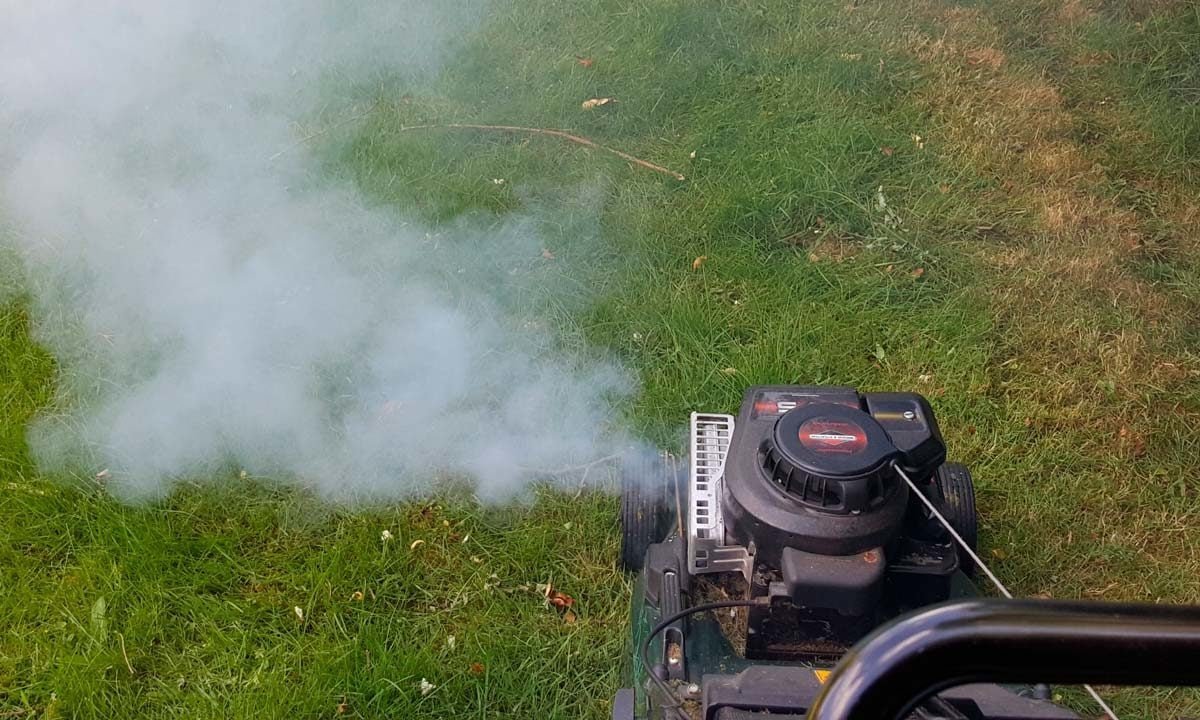
Credit: rd.com
How to fix each cause without making things worse
Correct an overfilled oil crankcase
Drain oil slowly until the level reaches the proper mark. Use the exact oil type listed in the mower manual, usually SAE 30 or 10W-30 for many small engines, depending on temperature. Do not guess the amount by memory.
After adjusting the oil, run the mower for a short time and watch the exhaust. If the smoke stops or drops sharply, you found the problem. If the engine still smokes blue after 10 minutes, overfill was not the only issue.
Clean or replace the air filter
Remove the air filter cover and inspect the element. If it is paper and dirty, replace it. If it is foam and only dusty, clean it with warm water and mild soap, then dry it fully before reinstalling.
If the filter smells like oil or is soaked, replace it. An oily filter can block airflow and keep the engine running rich. That can create smoke even when the oil level is correct.
Reset the choke and inspect the cable
Make sure the choke plate opens fully after the engine starts. If the lever feels sticky, move it several times and check the cable path for bending or binding. A weak or stuck cable can keep the mower smoking black even when everything else looks normal.
If the choke linkage does not move smoothly, clean the area around it. Light dirt and grass buildup can be enough to cause trouble on many walk-behind mowers.
Clean the carburetor
If the mower still smokes after the simple checks, remove and clean the carburetor bowl. Look for dirt, gum, or varnish inside. Old fuel can leave deposits that block jets and upset the air-fuel ratio.
If the mower sat with fuel in it for months, the carburetor may need a full clean or replacement. This is especially true if the smoke comes with rough idling or a strong fuel smell.
When working near fuel, keep the engine off, avoid sparks, and move outdoors. Gasoline vapors are more dangerous than many owners realize.
Check whether the problem is engine wear
If you have already fixed the oil, filter, and fuel issues, but the mower still smokes blue, the engine may be worn internally. Signs include repeated oil burning, loss of power on thick grass, and smoke that gets worse as the engine heats up.
At that point, a compression test can help. Low compression often means worn rings or valves. For an older mower, the best answer may be a repair quote instead of more trial and error.
When the smoke is normal and when it is a warning sign
Not every puff of smoke means trouble. A small amount of white smoke after maintenance, tipping, or a brief oil spill can be normal. Even a choke-rich startup can produce a short burst of black smoke before the engine stabilizes.
The warning signs are more serious when smoke is heavy, continuous, or paired with bad running. Stop the mower if it smokes and also loses power, knocks, runs roughly, or smells strongly of burning oil. Those signs usually mean the engine is under stress.
Another clue is timing. Smoke that appears only at startup and clears fast is often minor. Smoke that starts after 10 to 15 minutes of mowing can point to overheating, low compression, or a fuel system problem that gets worse as the engine warms.
Do not ignore thick smoke that continues after you have corrected the oil level and filter. That is how small problems turn into damaged cylinders, fouled spark plugs, and hard starting later.
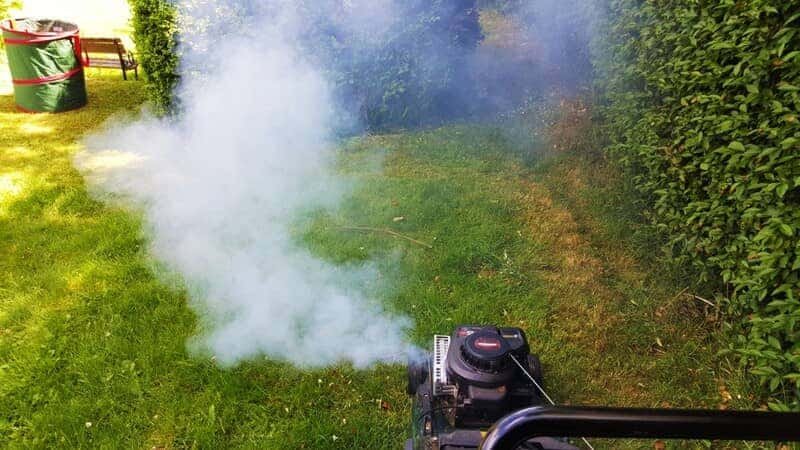
Credit: lawn.com.au
How to prevent smoking in the future
Good maintenance prevents most smoke problems. Change the oil at the interval listed in the manual, usually once per season or after a set number of hours. Keep the air filter clean, and use fresh fuel rather than gasoline that has sat too long.
Store the mower on level ground when possible. If you must tip it, use the correct side shown in the manual. That small habit prevents oil from entering the wrong parts of the engine.
Do not overfill the tank, and do not guess at oil amounts. Small engines are less forgiving than car engines. Even 2 to 4 extra ounces can make a difference on some models.
It also helps to run the mower dry or add fuel stabilizer before long storage. Old fuel creates carburetor problems, and carburetor problems often lead to black smoke on the next season’s first start.
When to stop and call a repair pro
Call a professional if the mower smokes heavily after you have checked oil, filter, choke, and carburetor basics. Also call for help if the mower will not stay running, makes knocking sounds, or burns oil every time you mow.
If you see metal flakes in the oil, smell burning electrical parts, or notice a damaged muffler or cracked engine housing, stop using it. Those are not quick fixes. They can become safety problems fast.
For many homeowners, the line is simple: if the fix requires disassembling the engine, testing compression, or replacing internal seals, the repair shop is usually the smarter choice.

Credit: bestlawnmowerforhills.wikidot.com
Fast answers for the most common smoke patterns
If your mower smokes white after tipping, clean it up, check the oil, and let it run on level ground. If it smokes blue all the time, suspect oil level, oil burning, or worn internal parts. If it smokes black at startup, check the choke, air filter, and carburetor.
The good news is that most smoking mower problems are simple. In many cases, the fix takes less than 20 minutes and only basic tools. The key is to diagnose the color correctly and avoid making the same mistake twice.
So if you are still wondering why is my lawn mower smoking, start with the simplest explanation first: oil where it should not be, fuel mixture too rich, or an engine that was tipped the wrong way. Those are the 80% cases, and they are usually the easiest to fix.
FAQs
Why does my lawn mower smoke only when I start it?
A brief puff of smoke at startup usually means oil or fuel is burning off for a moment. It can happen after tipping the mower, overfilling the oil, or using too much choke. If the smoke disappears within a few minutes, it is often not serious.
Is blue smoke from a lawn mower bad?
Blue smoke usually means the engine is burning oil. That can happen from overfilled oil, a tilted mower, a dirty air filter, or worn engine parts. If it keeps happening after basic checks, the mower may need repair.
Why is my lawn mower smoking black and running rough?
Black smoke means the engine is getting too much fuel or not enough air. A stuck choke, dirty air filter, or carburetor issue is the most common cause. Rough running often happens at the same time because the fuel mix is too rich.
Can I keep using a mower that smokes a little?
If the smoke is light, short, and clearly linked to startup or a small spill, you may be able to keep using it after a quick fix. If smoke is heavy, constant, or paired with power loss, stop using it until you find the cause.
How do I stop my lawn mower from smoking again?
Check oil level before each season, keep the air filter clean, use fresh fuel, and store the mower on level ground. Also follow the manual for the correct tilt direction during maintenance. Small habits prevent most smoke problems.