
Zetor tractors are known for strong engines, simple design, and long service life. Many owners like them because they are easier to repair than some modern machines. But like any tractor, they can still have problems. Small faults can grow into bigger repairs if you ignore the early signs.
If you are dealing with Zetor tractor problems, the good news is that many of them are common and easy to understand. A tractor that will not start, loses power, leaks oil, overheats, or shifts badly often has a few clear causes. Once you know what to look for, you can save time, money, and stress.
This guide explains the most common issues, why they happen, and the easiest fixes. It is written for owners, operators, and beginners who want simple answers. You will also learn a few practical checks that many people miss until the tractor is already in the shop.
What usually goes wrong first on a Zetor tractor
Most Zetor issues begin with basic systems: fuel, air, battery, cooling, hydraulics, or transmission. That is helpful because you do not always need to guess. In many cases, the problem is not a failed engine. It is a clogged filter, weak battery, dirty terminals, low fluid, or worn linkage.
One useful habit is to notice when the fault happens. For example, does the tractor struggle only when cold, only under load, or only after warming up? That detail can point you toward the right system very fast. Another good clue is whether the problem is steady or random. Random faults are often electrical or connection related.
Below is a quick look at the most common trouble areas and the symptoms they create.
| Problem area | Common symptoms | Usual cause |
|---|---|---|
| Starting system | No crank, slow crank, clicking sound | Battery, starter, cables, solenoid |
| Fuel system | Hard starting, rough idle, loss of power | Dirty fuel, clogged filters, air in fuel line |
| Cooling system | Overheating, coolant loss, steam | Low coolant, blocked radiator, bad water pump |
| Hydraulics | Weak lifting, slow response, noisy pump | Low oil, worn pump, dirty filter |
| Transmission | Hard shifting, slipping, grinding | Clutch wear, low fluid, linkage problems |
Starting problems and no-crank issues
One of the most common Zetor tractor problems is trouble starting the engine. The tractor may not crank at all, or it may crank slowly and fail to fire up. This is often blamed on the starter, but the battery and cables should be checked first.
Common causes
- Weak or old battery
- Corroded battery terminals
- Loose ground cable
- Faulty ignition switch
- Bad starter motor or solenoid
- Fuel not reaching the injectors
In older tractors, corrosion on the ground cable is a common hidden problem. The battery may look fine, but if the ground path is weak, the starter will not get enough current. This is one of those small issues that many beginners miss.
Easy fixes
- Check the battery voltage with a meter. A weak battery often shows under 12.4 volts when fully charged.
- Clean both battery terminals and tighten them well.
- Inspect the ground cable where it connects to the frame or engine.
- Listen for a click when you turn the key. A click with no crank can mean a bad solenoid or poor current flow.
- If the engine cranks but does not start, move to the fuel system checks.
If the tractor is used only seasonally, battery drain is a major issue. A battery can lose strength even when the tractor is parked. Keeping it charged during storage can prevent many start-up problems in spring.
Fuel system faults that cause hard starting and power loss
Fuel problems are another major reason for poor performance. A Zetor engine that starts rough, stalls, smokes, or lacks pulling power may be dealing with bad fuel delivery. Dirty diesel is more common than many owners think, especially if fuel is stored for a long time.
Common causes
- Clogged fuel filter
- Water in fuel tank
- Dirty injector nozzles
- Air leak in fuel line
- Blocked fuel tank vent
- Weak lift pump
Air in the fuel line is a classic problem. The tractor may start, run for a short time, and then die. After sitting, it starts again. That pattern often points to a small leak on the suction side of the fuel system. The leak may not drip fuel out, but it can still let air in.
Easy fixes
- Replace the fuel filter if it looks dirty or if service history is unknown.
- Drain any water from the fuel system if your setup allows it.
- Inspect hoses for cracks, loose clamps, or wet joints.
- Make sure the fuel tank cap vent is open and not blocked.
- Bleed the fuel system after filter replacement or line repair.
Non-obvious insight: many fuel issues feel like engine trouble, but the real cause is often poor maintenance timing. If the tractor works better after sitting, then worse under heavy load, do not rush to blame the injectors. Check the filter and fuel lines first.
Engine smoking, rough idle, and low power
Diesel smoke can tell you a lot. Black smoke often means too much fuel or not enough air. White smoke may mean unburned fuel, cold fuel combustion, or coolant entering the chamber. Blue smoke usually points to oil burning inside the engine.
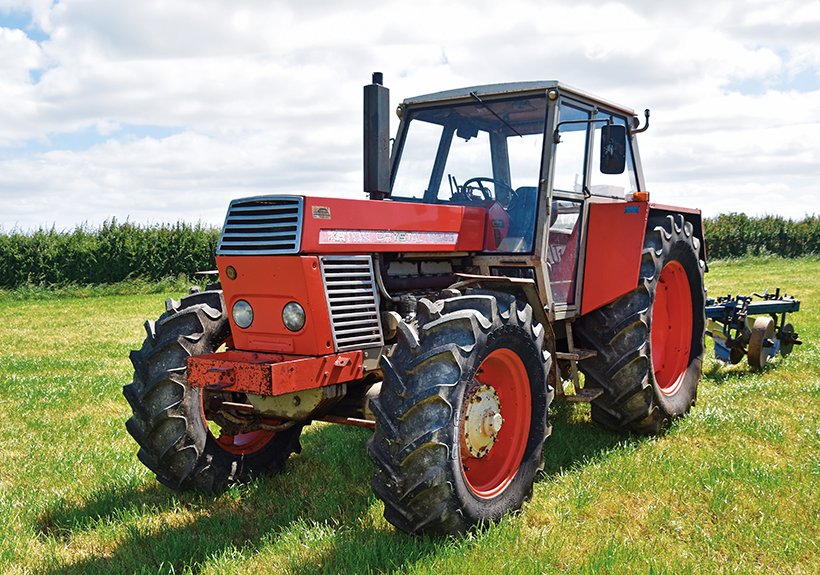
Credit: tractorandmachinery.co.uk
What the smoke can mean
- Black smoke: dirty air filter, overloaded engine, poor injector spray, restricted exhaust
- White smoke: cold starting issue, injector fault, low compression, coolant leak
- Blue smoke: worn piston rings, valve seals, excessive oil consumption
If the tractor has low power but no smoke change, the issue may be outside the engine itself. A slipping clutch, dragging brake, or hydraulic load can make the tractor feel weak even when the engine is healthy.
Easy fixes
- Replace or clean the air filter.
- Check for crushed exhaust piping or blocked intake parts.
- Confirm that the engine reaches normal operating temperature.
- Test for injector problems if smoke stays heavy after basic service.
- Watch for oil use between service intervals.
One mistake many owners make is using more throttle to solve low power. If the tractor is restricted by air, fuel, or mechanical wear, extra throttle only hides the real fault and can make the problem worse.
Overheating and cooling system trouble
Overheating should never be ignored. It can damage the head gasket, warp parts, and lead to expensive repairs. On Zetor tractors, cooling trouble often comes from low coolant, radiator blockage, bad belt tension, or a worn water pump.
Common causes
- Low coolant level
- Dirty radiator fins
- Loose or slipping fan belt
- Thermostat stuck closed
- Water pump wear
- Coolant mix too weak or too old
Dust and crop fluff can block the radiator from the outside. At the same time, old coolant can lose its protection from the inside. That means the tractor can have both airflow and internal cooling problems at once.
Easy fixes
- Check coolant level only when the engine is cool.
- Clean the radiator gently with air or water from the correct direction.
- Inspect the fan belt for cracks and correct tension.
- Test the thermostat if overheating starts soon after startup.
- Flush and refill coolant at proper service intervals.
Non-obvious insight: if the tractor overheats mostly while working slowly in heavy dust, airflow through the radiator may be the real issue, not the engine load. This is common in field work and mowing. Cleaning the radiator often fixes what looks like a major mechanical fault.
Hydraulic problems and weak lifting
Zetor hydraulic systems are useful, but weak lift, slow movement, or noisy operation can happen over time. These problems are often blamed on the pump, yet low oil, dirty filters, or air in the system are more common first checks.
Common causes
- Low hydraulic oil
- Wrong oil type
- Clogged filter or strainer
- Worn hydraulic pump
- Leaking seals or hoses
- Air trapped in the system
Hydraulic oil condition matters more than many owners realize. Thick, dirty, or wrong-spec oil can make the system noisy and slow. It can also raise heat and wear pump parts faster.
Easy fixes
- Check oil level with the tractor on level ground.
- Use the correct hydraulic oil recommended for the model.
- Inspect hoses and fittings for leaks.
- Clean or replace the hydraulic filter.
- Bleed air if the system has been opened for repair.
Another clue is whether the hydraulics are weak only when hot. If lift works better when the oil is cold, then worn pump parts or internal leakage may be building with heat. That detail helps separate a simple oil issue from real wear.
Transmission and clutch issues
Transmission trouble can feel scary, but not every shifting problem means the gearbox is failing. In many cases, the clutch adjustment is wrong, the linkage is worn, or the oil level is low. Still, these problems should be checked early because damage can spread.
Common symptoms
- Hard gear shifting
- Grinding when changing gears
- Clutch slipping under load
- Tractor creeps with clutch pedal fully pressed
- Noisy transmission in certain gears
Common causes
- Incorrect clutch free play
- Worn clutch disc
- Low gearbox oil
- Damaged shift linkage
- Worn synchronizer parts, if equipped
Clutch free play is a small setting with a big effect. If the pedal is adjusted too tight, the clutch may not fully engage. If it is too loose, the clutch may not release properly. Both can create gear noise and shifting trouble.
Easy fixes
- Check clutch pedal free play against your model spec.
- Inspect linkage for bent or worn parts.
- Confirm gearbox oil is at the correct level.
- Listen for noise in different gears to narrow the fault.
- Get professional help if gears grind badly or slip under heavy load.
If shifting gets worse over time, do not force the lever. Forcing gears can turn a simple linkage problem into internal gearbox damage. That is one of the most expensive mistakes an operator can make.
Electrical faults, sensors, and warning lights
Older and newer Zetor tractors both can have electrical issues. On older models, it is often wires, switches, and connectors. On newer models, sensors and warning lights add another layer. Random stalling, dead gauges, or warning lamps can all come from weak connections.

Credit: zetor.com
Common causes
- Loose or corroded connectors
- Damaged wiring insulation
- Faulty alternator
- Bad fuse or relay
- Weak battery charging system
- Dirty sensor contacts
Electrical faults can be hard to trace because they come and go. Heat, vibration, and moisture often make the problem show up only sometimes. That is why a tractor may run fine in the yard but fail in the field.
Easy fixes
- Check all visible fuses first.
- Inspect battery cables and main grounds.
- Look for rubbed wires near sharp metal edges.
- Test alternator output if the battery keeps going flat.
- Clean sensor plugs and protect them from moisture.
Non-obvious insight: poor charging can look like a starter fault. If the tractor starts after a jump but fails again soon, the alternator or charging circuit may be the real problem. Many owners replace the battery first and still have the same issue.
Leaks, seals, and fluid loss
Oil leaks are common on older tractors, including many Zetor models. Some leaks are small and only messy. Others are serious and can lead to low oil levels, overheating, hydraulic failure, or clutch contamination.
Where leaks often appear
- Engine gaskets and seals
- Hydraulic lines and fittings
- Rear main seal area
- Gearbox housing
- Axle seals
- Coolant hoses and clamps
Not every wet spot means the seal itself is bad. Oil can travel across the housing and make the real source hard to see. Cleaning the area before checking again often gives a much better clue.
Easy fixes
- Clean the leak area before inspection.
- Check for loose bolts or fittings.
- Replace damaged hoses before they burst.
- Watch fluid levels over several days to see if the leak is active.
- Repair major seal leaks early to avoid secondary damage.
Some owners keep topping up fluid and ignore the leak. That can work for a short time, but it usually costs more later. A small leak can ruin a clutch, contaminate brakes, or starve a hydraulic system.
How to find the real cause faster
When several symptoms happen together, it is easy to chase the wrong problem. For example, a hard-starting tractor with white smoke may have a fuel issue, but it may also have low compression or poor cooling. The trick is to test in the right order.
A simple approach saves time:
- Start with the easiest checks: battery, fluids, filters, and visible leaks.
- Then look for one main symptom, not every symptom at once.
- Ask when the fault happens: cold, hot, idle, or under load.
- Repair the basic issue before changing expensive parts.
If you need a general service reference for diesel engine care, a useful authority resource is the AGCO Parts & Service website, which offers service-related information for agricultural equipment. Even if your exact model differs, the maintenance ideas are still helpful.
Simple maintenance habits that prevent many Zetor tractor problems
Prevention is much cheaper than repair. Many repeated faults come from skipped service, poor storage, or using the wrong fluids. A tractor that is cleaned, checked, and serviced on time usually gives far fewer surprises.

Credit: zetor.com
Good habits to keep
- Change filters on schedule
- Use clean fuel from a trusted source
- Check fluid levels before work
- Clean radiator screens and fins often
- Grease moving parts regularly
- Store the tractor dry when possible
Another smart habit is to write down small repairs. If the same fuse blows, the same hose leaks, or the same gear is hard to engage, the pattern can help you find the deeper cause. Repeated small failures often point to one bigger issue behind them.
When you should stop and call a mechanic
Many repairs are simple, but some signs mean you should stop working and get help. Continued use can turn a manageable repair into a major one.
- Engine knock or loud metal noise
- Severe overheating that returns quickly
- Transmission grinding in multiple gears
- Hydraulic failure with no lift at all
- Major oil, fuel, or coolant loss
- Repeated electrical burning smell
If you are not sure, pause and inspect first. Guessing is expensive. A short delay is much better than damaging an engine, gearbox, or hydraulic pump.
FAQ
1. Why is my Zetor tractor hard to start when cold?
Cold starting trouble often comes from a weak battery, air in the fuel system, worn glow plugs if fitted, or dirty fuel filters. Start with the battery and fuel checks before moving to bigger repairs.
2. What causes a Zetor tractor to lose power under load?
Loss of power is often caused by clogged air or fuel filters, dirty injectors, poor fuel flow, or a slipping clutch. If the engine sounds normal but the tractor still feels weak, check the clutch and drivetrain too.
3. Why does my Zetor tractor overheat during field work?
Overheating during heavy work usually points to a dirty radiator, low coolant, weak fan belt, or poor airflow from dust and crop debris. Cleaning the cooling system is often the first and best step.
4. How do I know if the hydraulic pump is bad?
A bad hydraulic pump often causes slow lifting, weak lifting power, and noise when operating the system. Before replacing the pump, check the oil level, filter, and hoses, because those are more common causes.
5. Are Zetor tractor problems expensive to fix?
Not always. Many common faults are cheap to fix, such as filters, cables, belts, or minor leaks. Costs rise when problems are ignored and damage spreads to the engine, gearbox, or hydraulic system.