
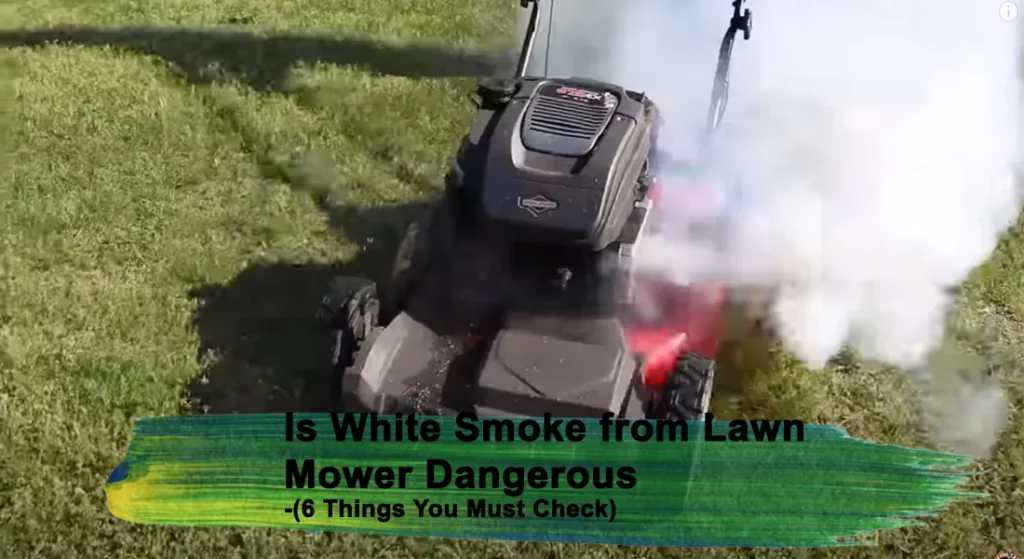
White smoke from a lawn mower is often a sign of a simple problem, but it should never be ignored. If you are asking is white smoke from lawn mower dangerous, the short answer is: sometimes yes, but usually the bigger risk is to the engine, not to you.
A light puff at startup can be normal on some mowers. Thick, steady smoke usually means oil, fuel, or moisture is getting into the engine where it should not be. The good news is that many causes are easy to check and fix before they turn into expensive damage.
Below, you will learn what white smoke really means, when it is harmless, when it is a warning sign, and what to do step by step. You will also see the most common mistakes people make after a mower starts smoking.
What white smoke usually means on a lawn mower
White smoke from a mower is usually caused by oil, fuel, or water vapor entering the combustion process. The engine burns these materials differently than normal gasoline, so the exhaust looks white or gray instead of clear. In many cases, the smoke appears right after startup and fades once the engine warms up.
Not all white smoke means the same thing. A small puff after tipping the mower on its side is often just oil that moved into the cylinder or air filter housing. But smoke that keeps coming out for more than a few minutes usually points to a real problem.
The key detail is how long the smoke lasts, how thick it is, and whether the mower is running rough. Those clues tell you whether you are dealing with a minor mistake or a mechanical issue.
Normal smoke versus warning smoke
A brief white puff at startup can happen after storage, after refueling, or after the mower was stored at the wrong angle. That is often not dangerous. It is usually just residue burning off.
Warning smoke is different. It is dense, keeps going, and may come with sputtering, hard starting, power loss, or strong fuel smell. That means the engine is not burning fuel correctly, and continued use can cause more damage.
| Smoke pattern | Most likely meaning | How urgent it is |
|---|---|---|
| Light puff for 10–30 seconds | Normal startup residue or small oil burn-off | Low |
| Thick smoke for several minutes | Oil in cylinder, overfilled crankcase, or bad gasket | Medium to high |
| Smoke with fuel smell | Flooded engine, carburetor issue, or fuel leak | High |
| Smoke after mowing on a slope | Oil has moved where it should not be | Usually medium |
Common causes of white smoke
The most common cause is simple: too much oil. This is the 80% case. If the oil level is above the full mark, the crankshaft can splash oil into the combustion chamber. That oil burns and creates white or bluish-white smoke.
Another very common cause is that the mower was tipped the wrong way during cleaning or maintenance. When a mower is tilted with the air filter side down, oil can run into the carburetor, air filter, or cylinder. The result is smoke on the next start, even if the mower was working fine before.
Cold weather or stored moisture can also create a short burst of white exhaust. In that case, the smoke is usually thin and disappears fast. If it keeps going, look deeper.
Oil overfill
Too much oil is one of the easiest problems to miss. Many people add oil a little at a time and forget to recheck the dipstick. Even a small overfill can cause smoking, especially on small 4-stroke mower engines.
This matters because extra oil does more than make smoke. It can foul the spark plug, reduce power, and make the engine hard to start. In severe cases, it can damage seals or lead to carbon buildup inside the engine.
Mower tipped the wrong way
Most push mowers and many riding mowers should be tilted only in the direction the manufacturer recommends. If they are tipped the wrong way, oil can move into the air intake or combustion chamber. This is a common mistake after blade cleaning or deck maintenance.
If smoke starts right after you stood the mower back up, this is a strong clue. Often the smoke will clear after a few minutes of running. If it does not, the mower may have pulled enough oil into the engine to foul the plug or air filter.
Oil leaking past worn parts
Worn piston rings, valve seals, or head gaskets can also cause white smoke. These parts help keep oil in the right place. When they wear out, oil slips into the combustion chamber and burns during engine operation.
This is more likely in older mowers or machines that have been run with dirty oil, poor maintenance, or overheating. If the smoke is steady and the mower uses oil fast, this is a likely path.
Fuel system problems
Sometimes what looks like white smoke is actually an overly rich fuel mixture. That means too much fuel and not enough air. A flooded carburetor, stuck choke, or dirty air filter can all cause this.
Fuel-related smoke often smells sharp or gassy. The engine may run rough, surge, or stall. If fuel is leaking externally, that is a fire risk and should be handled immediately.
Moisture or condensation
After long storage or a damp morning, a mower can release water vapor that looks like white smoke. This is usually harmless and disappears quickly. You may notice it more on the first few starts of the season.
However, water vapor should not be constant. If the exhaust keeps steaming after the engine is warm, the problem may be more serious, such as a head gasket issue or contamination inside the engine.
Is white smoke from lawn mower dangerous to you or the machine?
If you are wondering is white smoke from lawn mower dangerous, the most honest answer is that it can be, depending on the cause. The smoke itself is usually not an emergency for a short period, but the problem behind it may become one.
For you, the main risks are inhaling exhaust in a closed area, handling hot engine parts, and ignoring a fuel leak. For the mower, the risk is running low on oil, burning oil repeatedly, or damaging the spark plug, cylinder, or carburetor.
The danger is higher if the smoke is thick, the engine is surging, or you smell fuel. In those cases, keep the mower off until you diagnose the cause. A small fix now is much cheaper than an engine rebuild later.

Credit: lawnservicekansascity.com
When the smoke is not a major safety issue
A brief white puff after startup is usually not dangerous if the mower is outdoors and running normally. This is especially true after tip-over storage, a wet morning, or the first start after winter storage.
Even then, do not assume it is harmless if it keeps happening. Repeated smoke means something is still wrong, and repeated oil burning can shorten engine life fast.
When the smoke is a real warning
Smoke is more serious when you also notice loss of power, strong fuel odor, knocking sounds, or oil on the air filter. These signs point to a problem that should not be ignored. They often mean the engine is running in a way that can cause wear or fire risk.
If the mower is smoking heavily and leaking fuel, stop using it immediately. Move it away from buildings, let it cool, and inspect it carefully. Do not keep pulling the starter cord on a flooded or leaking engine.
For general outdoor power equipment safety, the U.S. Consumer Product Safety Commission has useful mower safety guidance on its official mower safety guidance.
What to do right away
The safest response is to stop the mower and inspect the basics before you run it again. Most smoke problems can be narrowed down in a few minutes. Start with the simplest checks first.
- Shut off the engine and let it cool. Do not touch the muffler or cylinder area right away. They can stay hot long after the engine stops.
- Check the oil level. Use the dipstick on level ground. If it is above the full mark, drain the extra oil to the correct level.
- Look at the air filter. If it is soaked with oil, replace it or clean it if the manual allows. A saturated filter can make the engine smoke and run poorly.
- Inspect for fuel leaks. Check around the tank, fuel line, carburetor, and primer bulb. Any wet gas smell needs attention before restarting.
- Check how the mower was tipped or stored. If it was laid on the wrong side, let it sit upright for at least 15–30 minutes before starting.
- Restart outdoors only. Stand clear of the exhaust and watch the smoke pattern. If it clears quickly, the issue may be minor. If it continues, stop again.
How to tell which cause applies
Use these simple clues to narrow it down. Thick white smoke with no fuel smell often points to oil. White smoke with a strong gas smell usually points to flooding, a stuck choke, or carburetor trouble.
If the air filter is oily, the mower was likely tipped wrong or overfilled. If the spark plug is wet, fuel may be flooding the cylinder. If the engine smokes only after warming up, worn internal parts become more likely.
A quick diagnostic pattern
- Smoke only at startup: usually leftover oil or moisture
- Smoke after mowing on a slope: often oil movement inside the engine
- Smoke plus rough idle: fuel mixture or ignition problem
- Smoke plus oil loss: possible worn seals, rings, or gasket
How to fix the most common problems
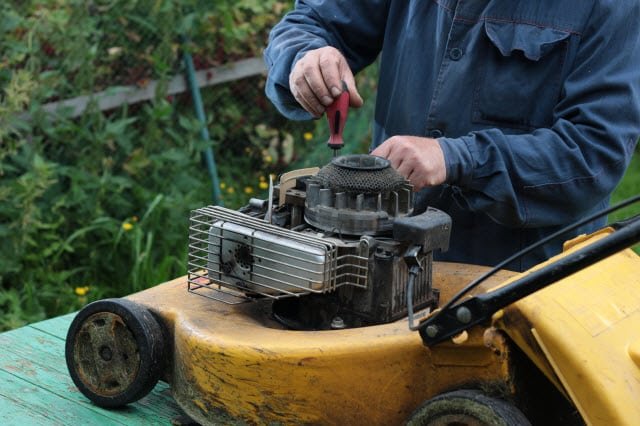
Start with the fixes that solve the largest number of cases. These are the fastest and least expensive. If they do not work, move to the deeper checks.
Credit: lawnchick.com
Fix an overfilled oil level
If the oil is above the full line, drain a small amount and recheck. Do not guess. A few ounces can make a difference on small mower engines, especially those with oil capacities around 15 to 20 ounces.
After correcting the level, run the mower for a few minutes outdoors. Smoke from overfill often fades once the extra oil is cleared from the combustion area. If it does not, the spark plug or air filter may also need service.
Replace or dry the air filter
A soaked air filter restricts airflow and can make the engine run rich. That often creates smoke and poor performance. Foam filters may be washable if the manual allows it, but paper filters usually need replacement once oil-soaked.
Do not use a mower with a badly clogged filter. Restricting air too much can make the engine run hotter and dirtier, which leads to more buildup over time.
Let a tipped mower sit before starting
If the mower was turned on its side, set it upright and wait. A short wait allows oil to drain back to the crankcase. Then start it outside and watch the exhaust for the first minute or two.
This simple step prevents a lot of unnecessary worry. Many people think the engine has failed when it only needs time to clear oil from the intake area.
Check the spark plug
A fouled spark plug can make a mower misfire and smoke. Remove it only when the engine is cool. If it is wet, oily, or heavily blackened, clean or replace it according to the mower manual.
One non-obvious point: a bad plug can make smoke look worse than it is because the engine burns fuel incompletely. That is why smoke and rough running often happen together.
Look for worn internal parts
If the mower still smokes after the easy fixes, internal wear may be the real cause. Worn rings, valve seals, or a head gasket usually need mechanical repair. These problems are more common in older machines or engines that have not had regular oil changes.
At this stage, the mower may still run, but each use can make the problem worse. If the engine burns oil every time, repair or replacement may be the most practical choice.
How to prevent white smoke in the future
Prevention is mostly about handling oil, fuel, and storage the right way. Many smoking problems start with small habits that are easy to fix.
Use the correct oil type and fill only to the marked level. Check the dipstick on level ground. Do not “top off” the oil just because it looks low at a glance. That is one of the most common causes of smoke after maintenance.
Store the mower upright and follow the manufacturer’s tip direction when cleaning. Keep the air filter clean and replace it when it becomes dirty or oil-soaked. Also, use fresh fuel and avoid letting old gas sit for months. Stale fuel can cause poor combustion and extra exhaust smoke.
One more thing many owners miss: after a long winter, a tiny amount of condensation in the muffler or cylinder can create a short white puff on the first start. That is normal once or twice. It should not become a repeated pattern.
Simple habits that reduce smoke problems
- Check oil before each mowing season and after long storage
- Clean the deck without tipping the mower the wrong way
- Replace the air filter on schedule
- Use fresh fuel and drain old fuel before storage if recommended
- Let the engine cool before refueling
When to stop and call a professional
Stop troubleshooting yourself if the smoke is thick, constant, or tied to knocking, overheating, or fuel leakage. These are signs of a deeper problem. If the mower starts losing oil quickly or refuses to stay running, professional help is the safer choice.
You should also get help if the engine smokes after every start even after checking oil level, air filter, spark plug, and fuel quality. That often points to worn internal parts or a carburetor problem that needs real diagnosis. For a newer mower, a warranty repair may be smarter than opening the engine yourself.
If you smell gasoline strongly, see wet fuel around the engine, or notice the mower smoking in an enclosed garage, shut it down and move away. Fuel vapor plus a hot engine is a bad combination.
Credit: lawnask.com
Final takeaway
So, is white smoke from lawn mower dangerous? A brief puff is usually not a big safety problem, but steady white smoke should be treated as a warning. In most cases, the issue is oil overfill, wrong tipping position, a dirty air filter, or a fuel mixture problem.
The smartest move is to stop the mower, check the oil level, inspect the air filter, and look for fuel leaks before using it again. If the smoke does not fade quickly, or if the engine runs rough, the mower needs more than a quick restart. Catching the cause early protects both your safety and the engine.
FAQs
1. Is a small puff of white smoke from a lawn mower normal?
Yes, a small puff at startup can be normal, especially after storage or after the mower was tipped for cleaning. It should fade quickly. If it keeps going, the mower likely has an oil, fuel, or airflow problem.
2. Can white smoke damage my lawn mower engine?
Yes, if it keeps happening. White smoke often means oil is being burned, which can foul the spark plug, build carbon inside the engine, and lower performance. A one-time puff is less concerning than repeated smoke.
3. Why does my mower smoke white after I tipped it over?
Oil probably moved into the air filter, carburetor, or cylinder. This is common when a mower is tipped the wrong way. Let it sit upright, correct the oil level if needed, and clean any oil-soaked parts before restarting.
4. What color smoke is the most serious on a mower?
Any smoke that is thick, constant, and paired with fuel smell, power loss, or overheating is a serious warning. Black smoke often points to too much fuel, while white or bluish-white smoke often points to oil burning. Both need attention if they do not clear quickly.
5. Should I keep running a mower that smokes white?
No, not if the smoke is steady or heavy. Stop the mower, check the oil, air filter, and fuel system, then test it again only if the problem looks minor. Running it while it smokes can make a small issue much worse.