
If you want the cleanest cut and the healthiest grass, when is the best time to mow the lawn matters more than most people think. The right timing can reduce stress on the grass, improve recovery, and make your lawn look sharper with less effort.
The short answer is this: mow when the grass is dry, the temperature is moderate, and the lawn is actively growing. But there is more to it than a simple clock time. Weather, grass type, season, and even your mowing schedule all change the result.
Below, you will learn the best mowing times for morning, afternoon, and evening, plus the common mistakes that leave lawns brown, torn, or uneven. You will also get practical tips for cutting height, frequency, and blade care so each mow does real work for your yard.
The best time of day for a healthier cut
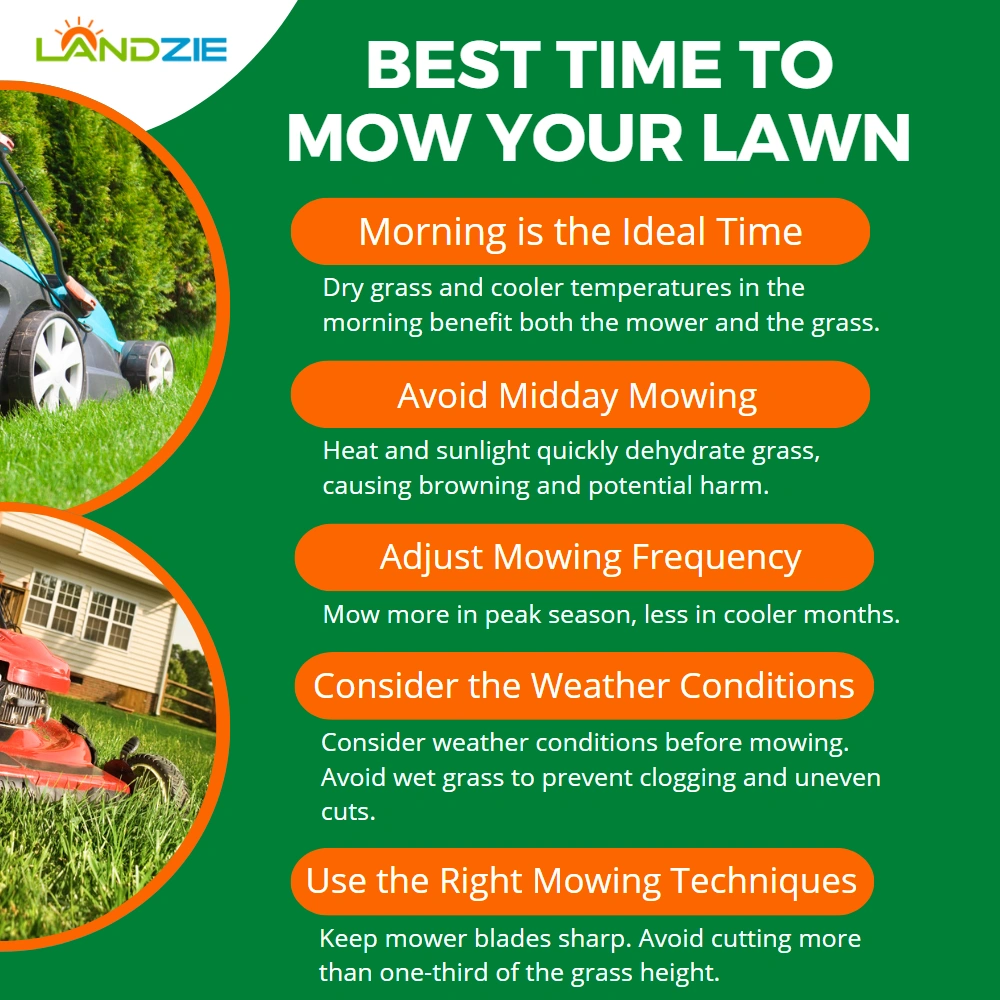
For most lawns, the best mowing window is mid-morning to early afternoon, after dew has dried and before the day becomes too hot. That usually means somewhere around 8:30 a.m. to 2:00 p.m., depending on your climate. Grass is dry enough for a clean cut, but the sun is not yet at its most stressful point.
Mowing wet grass is one of the fastest ways to get a rough finish. Wet blades bend instead of cutting cleanly, so the mower tears the grass. That leaves frayed tips, clumps on the lawn, and a higher chance of disease because moisture sits on the cut tissue.
Late afternoon can also work well, as long as you finish before dusk. Grass has time to recover a little before nightfall, and the worst heat has passed. The goal is to avoid mowing in peak heat or in heavy dew, because both conditions make the cut less healthy and less efficient.
| Time of day | Good or bad? | Why it matters |
|---|---|---|
| Early morning | Usually bad | Dew causes clumping and uneven cutting |
| Mid-morning | Best | Grass is dry and temperatures are still mild |
| Midday | Okay in mild weather | Can stress grass if heat is strong |
| Late afternoon | Good | Less heat, and grass has time to recover |
| Evening | Not ideal | Cut grass may stay damp overnight |
Why mid-morning often wins
Mid-morning gives you the best mix of dry grass and manageable heat. That matters because grass blades cut more cleanly when they are upright and dry. A clean cut heals faster, which helps the lawn stay green and even.
There is also a practical side. Many mowers perform better when the lawn is dry, especially if your yard has thick grass or slopes. Wet grass can stick under the deck, reduce airflow, and force you to make extra passes.
Why very early mowing is usually a mistake
Grass often holds moisture until late morning. If you mow too early, the blade can smash damp grass instead of trimming it. That creates a ragged look and can spread fungal problems, especially in shady yards or humid regions.
One non-obvious issue is traction. Wet grass can make the mower slip more, which is a bigger problem on hills. Even a small incline becomes harder to control when the tires lose grip.
Season changes the answer more than most people realize
The best mowing time is not the same in every season. Spring grass grows fast, summer grass gets stressed faster, and fall often gives you the best overall mowing conditions. If you only follow a clock time, you may still get poor results.
In spring, mowing once the lawn dries in the morning is usually ideal because growth is active and fast. In summer, early evening can be better if daytime heat is intense, but only if you can finish before night. In fall, the lawn is often less stressed, so the timing is more forgiving as long as the grass stays dry.
Cool-season grasses like Kentucky bluegrass, fescue, and ryegrass usually bounce back well in cooler weather. Warm-season grasses like Bermuda, zoysia, and St. Augustine can handle heat better, but even they should not be cut during peak afternoon stress. The grass type changes how much heat and sun it can tolerate after mowing.
Spring mowing: grow, but do not scalp
Spring is when many homeowners make their first big mistake: cutting too short after the lawn wakes up. A sudden low cut removes too much leaf surface at once. That slows growth and exposes the soil to more heat and weeds.
Instead, start at a higher setting and cut only what the lawn needs. A good rule is the one-third rule: never remove more than one-third of the grass blade in a single mow. If your grass is 3 inches tall, do not cut it below 2 inches in one pass.
Summer mowing: protect the roots
Summer mowing should focus on reducing stress, not chasing a perfect golf-course look. Taller grass shades the soil, slows evaporation, and protects the root zone from direct sun. That is one reason many lawns look better in heat when they are kept slightly higher.
A less obvious point: shorter grass often needs more mowing in summer because it grows unevenly and dries out faster. Cutting a little higher can reduce how often you need to mow, while also helping the lawn hold moisture.
Fall mowing: the easiest season to get it right
Fall is often the best season for mowing overall. Temperatures are milder, growth is steadier, and the risk of heat stress is lower. That gives you more flexibility on the exact hour, as long as the lawn is dry.
This is also the time to avoid letting the grass get too long before winter. Many lawns do well with a final cut that leaves them at a healthy height, not a buzz cut. The exact height depends on grass type, but the goal is the same: avoid matting and disease while keeping enough blade to support the plant.
Grass height matters as much as the clock
Even if you mow at the perfect time, the cut will still look bad if the grass is too tall or too short. The best mowing schedule keeps the lawn in its comfort zone. That means mowing often enough that you never remove too much at once.
Most lawns do best when cut at a height between 2.5 and 4 inches, depending on grass type and season. Fescue often looks good around 3 to 4 inches, while Bermuda may be kept lower. The key is not one perfect number, but a stable range that protects the plant.
The one-third rule is one of the most useful lawn care habits. It prevents shock and keeps the lawn from turning pale after cutting. When grass is forced too short, it loses energy fast because too much leaf surface is gone.
Credit: anthbot.com
What happens when you cut too much at once
Cutting off more than one-third of the blade weakens the grass and can leave a white or brown look at the tips. It also creates more clippings than the mower can handle cleanly. That is how you end up with piles, streaks, and a messy finish.
Another issue is that long clippings can smother small patches of grass underneath. If the lawn is overgrown, it is better to make two passes on different days than to chop everything down at once. That is slower, but the lawn recovers much better.
A simple height guide by grass type
Different grasses have different sweet spots. A tall fescue lawn often looks best around 3 to 4 inches, while Bermuda and zoysia are often cut lower. St. Augustine usually prefers a medium height rather than a very short cut. For exact turf recommendations, the university extension lawn care guide is a useful reference.
That said, your local weather matters too. A grass type that can handle low cutting in one region may struggle in another because of heat, shade, soil, or rain patterns. The best mowing height is the one your lawn can hold without thinning out.
Weather, moisture, and grass recovery time
A dry lawn is easier to mow, but dryness alone is not enough. You also want the grass to have time to recover after the cut. That is why many lawn care experts favor times when sunlight is present but the day is not at its hottest.
Rain changes the equation. After a storm, wait until the lawn is dry enough that the mower does not leave ruts or clumps. If you can see blades bending under the mower wheels, it is too wet. If the soil squishes underfoot, wait longer.
Wind can help dry the grass faster, but strong wind can also make mowing less pleasant and push clippings around. Humidity matters too. In humid climates, grass may stay damp longer in the morning and re-damp quickly at night, so your mowing window may be narrower.
How to tell if the lawn is ready
Use a few quick checks before mowing. Touch the grass with your hand. If it feels wet, wait. Look at shady areas, because they dry slower than sunny spots. If the mower leaves visible streaks or clumps after a short test pass, the lawn still needs more time.
It also helps to check the underside of the mower deck. If grass starts sticking fast, the lawn is probably too wet or the blade is dull. A dull blade can make even a dry lawn look damp and torn.
Blade sharpness and mower setup affect the result
Timing helps, but a dull blade can ruin a perfectly timed mow. A sharp blade slices grass cleanly, while a dull one tears it. That is why two lawns cut at the same hour can look very different.
Most homeowner mower blades should be sharpened at least a few times per season, and more often if the yard has sand, twigs, or rough ground. A blade that hits dirt or stones can lose its edge quickly. If you notice frayed tips after mowing, the blade is one of the first things to check.
Deck height also matters. If the deck sits too low, the mower can scalp high spots and leave uneven stripes. If it sits too high, the cut may look sloppy and leave too much uncut grass behind. The best settings are the ones that match your grass height and terrain.

Credit: joyofmowing.com
Small mower problems that change mowing time
Some people blame the clock when the real problem is the machine. A clogged deck, dull blade, weak battery, or uneven tire pressure can make a morning mow look worse than an afternoon mow. Those issues affect how the mower lifts and cuts the grass.
Battery mowers can slow down as charge drops, which means the blade speed may fall during longer sessions. If your mower cuts well for the first 20 minutes and then starts leaving stragglers, battery level may be part of the problem. Gas mowers can have similar issues when the air filter or spark plug needs attention.
Common mistakes that damage the lawn
Most mowing problems come from a small number of mistakes. The good news is that they are easy to avoid once you know what to watch for.
- Mowing too early in the morning and cutting wet grass.
- Cutting during peak heat, which stresses the lawn and the operator.
- Removing too much grass in one pass instead of following the one-third rule.
- Using a dull blade that tears instead of cuts.
- Ignoring local weather and mowing after rain or heavy dew.
One mistake many beginners miss is mowing the same route every time and compacting the same areas of soil. That can leave wheel tracks and thin spots, especially near turns and edges. Changing your pattern from one mow to the next helps spread the wear.
Another hidden issue is leaving clumps of grass on top of the lawn. Small clippings can often be left behind and will decompose quickly, but thick piles can block sunlight. If you see clumps, rake them lightly or make a second pass with a higher deck setting.
Best mowing schedule by lawn type and situation
The best mowing schedule depends on what kind of yard you have. A flat suburban lawn with steady irrigation does not need the same timing as a shady hillside yard or a hot, dry patch of Bermuda grass.
For sunny lawns
Sunny lawns usually dry faster, so mid-morning mowing works well. These lawns also recover faster after a cut because they get more light. If the summer heat is intense, early evening may be a better backup option than midday.
For shaded lawns
Shaded areas stay damp longer and can be more prone to disease. For these spots, wait even longer in the morning before mowing. Also, keep the grass a bit higher so it can make more food through the smaller amount of light it receives.
For hilly lawns
Hills deserve extra caution. Dry grass gives better traction, so avoid mowing slopes when the lawn is still wet. If the hill is steep, mow across the slope rather than straight up and down whenever possible, and use a slower pace.
For very thick grass
Thick grass needs a dry window and a sharp blade more than average lawns do. If the grass is dense, do not mow right after watering or rain. Dense turf traps moisture, which makes clumping more likely and can overload the mower deck.
What the best time means for lawn health over the long run
When people ask when is the best time to mow the lawn, they usually want a simple time of day. But the bigger answer is about routine. A lawn mowed at the right time, at the right height, with a sharp blade, stays healthier with less effort.
The long-term payoff is real. You get fewer brown tips, less disease risk, more even growth, and a lawn that handles heat better. That also means less wasted time fixing problems caused by poor mowing habits.
In short, aim for dry grass, moderate temperatures, and a mowing height that protects the plant. If you want a simple rule, mid-morning is the safest bet for most yards, with late afternoon as a good backup when the heat is not extreme. The right timing will not fix every lawn problem, but it removes one of the biggest sources of stress.
Credit: landzie.com
Frequently asked questions
What time of day is best for mowing grass?
For most lawns, mid-morning is best. The grass is usually dry by then, but the heat is still moderate. That gives you a cleaner cut and less stress on the lawn.
Is it bad to mow the lawn in the morning?
It depends on how early. Very early morning mowing is usually a bad idea because dew is still on the grass. Once the lawn is dry, morning mowing can be excellent.
Can I mow the lawn at night?
It is not ideal. Evening mowing can work if the grass is dry and you finish before dark, but cut grass should not stay damp overnight. That can increase disease risk.
How often should I mow during the growing season?
Most lawns need mowing once a week during active growth, but fast-growing grass may need it more often. The best rule is to mow before the grass gets too tall and remove no more than one-third at a time.
Should I mow after it rains?
Wait until the grass and soil dry enough that the mower will not sink, slip, or leave clumps. If the lawn feels soft underfoot or the blades are still wet, delay mowing for better results.