
A dirty mower cuts worse, works harder, and wears out faster. If you want better results with less effort, learning how to clean lawn mower parts the right way makes a real difference.
Grass clumps, dust, oil mist, and wet debris build up fast under the deck, around the air filter, and near moving parts. That buildup can reduce airflow, clog the discharge chute, make the engine run hot, and even shorten the life of the machine.
The good news is that a proper cleaning routine is not complicated. With a few basic tools and a safe process, you can improve cutting performance, reduce rust, and spot small problems before they turn into expensive repairs.
What to clean first and why it matters
The best place to start is the underside of the deck. This is where grass clippings cake onto the metal after every mow, especially if you cut damp grass or mow too low. A thick layer of buildup changes airflow under the deck, and that can leave an uneven cut or stragglers behind.
Next, focus on the air intake, cooling fins, wheels, and blade area. These parts affect engine temperature, steering, and cutting quality. A mower that stays cleaner usually starts easier, runs cooler, and uses less fuel or battery power to do the same job.
Most owners clean only the visible top surface. That is a mistake. The hidden areas do more damage when neglected because grass holds moisture. Moisture plus metal often means rust, and rust spreads quietly.
The parts that need attention most often
- Underside of the deck: removes packed grass and mud.
- Blade: clears residue that can throw off balance and cutting quality.
- Air filter area: helps the engine breathe properly.
- Engine cooling fins: prevents overheating.
- Wheels and height adjusters: keep movement smooth.
- Handle and controls: removes dirt that can hide wear or cracks.
If your mower is self-propelled, a clean drive area also matters. Grass packed around the drive cable, belt cover, or wheel hub can cause slipping or uneven pulling. That problem often looks like a “bad transmission,” but the real cause is simple buildup.
Tools and supplies you should have ready
You do not need a workshop setup to do this well. A few common tools are enough for most push mowers and many riding mowers. Having everything ready before you start saves time and keeps the cleaning process safer.
| Tool or supply | What it helps with | Notes |
|---|---|---|
| Work gloves | Protect hands from sharp blades and edges | Use cut-resistant gloves if possible |
| Safety glasses | Protect eyes from dust and debris | Especially useful when scraping under the deck |
| Plastic scraper or putty knife | Removes packed grass | Use plastic first to avoid scratching metal |
| Brush or old stiff broom | Cleans loose dirt and clippings | A narrow brush helps around fins and joints |
| Garden hose or damp cloth | Washes away residue | Use water carefully around engines and electrical parts |
| Mild soap | Breaks down grime | Do not use harsh chemicals on paint or plastic |
| Compressed air or blower | Clears dust from tight spaces | Useful for air filters and cooling fins |
| Oil or silicone spray | Helps prevent rust on metal surfaces | Apply lightly, not on the blade edge |
If you own a gas mower, the official mower safety guidance from the U.S. Consumer Product Safety Commission is worth a quick read before you begin. It explains basic safety habits that help prevent hand, eye, and blade injuries.
How to clean lawn mower parts step by step
Start with safety, not soap. A mower can look still and safe while the blade is sharp enough to cause serious injury. Before touching the underside or any moving part, shut the machine off fully and disconnect the power source.
- Turn off the mower and disconnect power. For gas models, remove the spark plug wire. For battery mowers, remove the battery pack. For corded mowers, unplug the cord from the outlet.
- Let the engine cool completely. A hot muffler or engine cover can burn skin in seconds.
- Empty the fuel only if needed for storage or deep service. If you are just cleaning light buildup, you usually do not need to drain the tank.
- Tip the mower the correct way. Check the manual first. On many gas mowers, the air filter and carburetor side should stay up to avoid fuel or oil leaks.
- Scrape the deck underside. Use a plastic scraper to remove thick clumps. Work from the center out toward the edges.
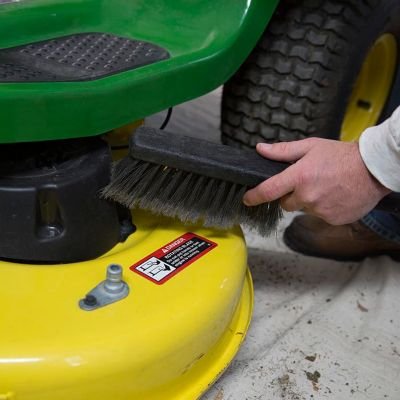
- Brush away loose debris. A stiff brush helps remove grass from corners, around the blade mount, and near the discharge opening.
- Wash carefully. Use a damp cloth or light rinse on the deck. Avoid soaking the engine, air intake, electrical parts, and bearings.
- Clean the blade. Wipe off residue and check for nicks, bends, or heavy wear. A dull or damaged blade can leave ragged cuts even when the mower is clean.
- Clear the cooling fins and air intake. Use compressed air or a soft brush to remove dust and grass.
- Dry everything fully. Water left in tight spots can start rust and corrosion.
One non-obvious point: a mower deck does not need to look shiny to work well. What matters most is airflow. Even a thin wet layer under the deck can change how grass lifts and exits, so clean removal is better than a quick rinse.
Another useful detail is timing. Cleaning right after mowing is easier than waiting until the grass hardens. Fresh clippings come off faster, while dried clumps can take three times as much scraping.
Credit: mowersboy.com
How to handle the blade safely
The blade is the most dangerous part of the mower, even when the engine is off. Wear gloves and keep your hands away from the sharp edge. If you need to rotate the blade for access, move it only after confirming the power is disconnected.
Look for three things while cleaning: heavy buildup, bends, and chips. A slightly bent blade can create vibration that feels like a loose engine. Many people miss that clue and spend time checking the wrong parts.
When a blade should be replaced instead of cleaned
- The edge has deep nicks or cracks.
- The blade is bent or out of balance.
- The metal is heavily rusted.
- The mower shakes more than usual during operation.
Cleaning the air filter, cooling area, and wheels
The top side of the mower needs cleaning too, especially around the air filter and cooling openings. These areas affect engine life in a direct way. When dirt blocks airflow, the engine can run hotter than normal, and heat is one of the fastest ways to shorten engine life.
For foam or paper air filters, follow the mower manual. Foam filters are often washable, while paper filters are usually replaced when dirty. If the filter is badly clogged, cleaning the outside of the mower will not fix poor starting or rough running.
Wheels and height adjusters collect mud, string, and grass wraps that change cutting height. If one wheel sticks, the mower may scalp the lawn on one side. That problem is easy to blame on deck level, but the wheel itself is often the real issue.
Simple cleaning order for the top side
- Brush off loose grass from the engine cover and handle area.
- Clean around the air intake and cooling fins.
- Check the air filter housing for dust and debris.
- Wipe wheel hubs and adjusters.
- Remove wrapped grass from the drive area if the mower is self-propelled.
Gas mowers need special care around the engine area because water and fuel do not mix well. Keep spraying light and controlled. If you are unsure where it is safe to clean, use the manufacturer’s support page or owner’s manual before adding water.
How often to clean it based on use
The right cleaning schedule depends on how often you mow and what kind of grass you cut. A mower used weekly on dry grass may only need a quick cleanup after each use and a deeper cleaning every few weeks. A mower used on wet or thick grass may need attention after almost every mow.
A good rule is simple: wipe and brush after every use, then do a deeper clean after 3 to 5 mowing sessions. If you mow in dusty conditions, or if clippings stick badly to the underside, clean more often. Waiting too long makes the job harder and increases the chance of rust.
Seasonal cleaning matters too. At the end of the mowing season, give the mower a full cleaning before storage. That is when leftover grass and moisture cause the most damage. It also helps you spot worn parts before the next season starts.
| Cleaning task | How often | Why it matters |
|---|---|---|
| Brush off clippings | After every use | Prevents buildup and rust |
| Clean deck underside | Every 3 to 5 mowings | Protects airflow and cut quality |
| Clean air filter area | Monthly during mowing season | Helps engine breathe properly |
| Deep seasonal cleaning | Before storage | Reduces corrosion and startup issues |

Credit: lawn.com.au
Common cleaning mistakes that hurt performance
Some cleaning habits do more harm than good. The most common one is using too much water near the engine, battery compartment, or electrical connections. Water can push dirt deeper into places you cannot reach, and that may create new problems later.
Another mistake is using metal tools to scrape aggressively. Metal scrapers can gouge the deck coating, and those scratches become rust points. A plastic tool is slower, but it is safer for the surface.
People also forget to check the mower after cleaning. If a grass clump stays wrapped around a wheel or drive cable, the mower may still feel sluggish. Clean the machine, then inspect it. Do not assume the problem is gone just because the deck looks better.
Problems that often show up after a poor cleaning job
- Engine starts but runs rough because the air filter got wet.
- The mower vibrates because the blade was bent during removal.
- Rust appears under the deck after water was left behind.
- Self-propelled drive feels weak because debris is still packed in the wheel area.
One subtle issue many owners miss is balance. If you remove the blade for deep cleaning, mark its position first. Reinstalling it the wrong way can change cutting quality, and on some models it can also affect airflow under the deck.
Storage and maintenance habits that keep the mower cleaner longer
Cleaning works better when you pair it with a few storage habits. A mower stored in a dry shed stays cleaner than one left outside under a tarp, especially if the tarp traps moisture. Damp air under a cover can speed up rust more than open storage in a dry place.
Before storage, make sure the underside, blade area, and handle are completely dry. Then check for loose fasteners, worn belts, cracked wheels, and damaged cables. Cleaning is the easiest time to inspect because dirt no longer hides the weak spots.
If your mower has a washout port, use it only if the manual says it is safe. A washout port can help remove debris, but it is not a complete cleaning method. It also works best immediately after mowing, before clippings dry hard.
Extra habits that reduce future buildup
- Mow when grass is dry whenever possible.
- Keep the blade sharp so it cuts cleanly instead of tearing grass.
- Do not cut more than one-third of the grass height at a time.
- Store the mower on a flat, dry surface.
- Wipe down the deck after mowing in wet or sticky conditions.
These habits matter because cleaner mowing creates less mess in the first place. A sharp blade and dry grass can cut cleanup time noticeably. In many cases, the best cleaning job starts before you even turn the mower on.
Final takeaways for better cutting and longer mower life
Knowing how to clean lawn mower parts correctly gives you better cutting performance, fewer startup issues, and a machine that lasts longer. Focus first on the deck underside, blade, air filter area, and cooling fins, because those are the spots that affect performance the most.
Keep the process simple: disconnect power, let the mower cool, scrape off buildup, brush away dust, dry everything fully, and inspect for wear. That routine takes less time than most people think, and it can prevent bigger repairs later.
A clean mower is not just easier to maintain. It also leaves a better-looking lawn, runs more efficiently, and gives you a clearer view of parts that may need repair soon.

Credit: trimyxs.com
FAQs
How often should I clean my lawn mower deck?
For most homeowners, clean the deck underside every 3 to 5 mowings. If you cut wet, thick, or muddy grass, clean it more often. A quick brush after each use also helps a lot.
Can I spray my lawn mower with a hose?
You can use water lightly on some mower parts, but avoid soaking the engine, battery area, air filter, and electrical connections. A damp cloth and brush are usually safer than heavy spraying.
Do I need to remove the blade to clean the mower?
Not every time. You can clean most buildup without removing the blade. Remove it only when you need a deeper clean, sharpening, or replacement, and always disconnect the power first.
What is the best way to clean grass buildup under the mower?
Use a plastic scraper first to lift the packed grass, then brush away the loose debris. If needed, finish with a light rinse and dry the deck completely to reduce rust.
Why does my mower still cut poorly after cleaning?
If cleaning does not fix the problem, the blade may be dull, bent, or out of balance. A clogged air filter, uneven wheels, or a deck height problem can also affect cut quality.