
Yes, you should winterize your mower before cold weather hits. How to winterize a lawn mower is mostly about cleaning, fuel care, and protecting the engine so it starts easily next spring.
The good news is that this job is simple. With about 30 to 60 minutes, you can reduce rust, prevent stale fuel problems, and avoid hard starting after months in storage.
A few small mistakes cause most spring startup issues: old gas, dirty air filters, wet grass stuck under the deck, and batteries left to die all winter. The steps below show you how to avoid those problems in a clean, practical way.
Get the mower ready before you touch fuel or oil
Start with a cool engine and a flat, open area. If the mower ran recently, let it sit for at least 20 to 30 minutes so the muffler and engine parts are safe to handle.
Gather what you need first. That keeps the job moving and helps you avoid leaving fuel open longer than necessary.
- Work gloves
- Safety glasses
- Socket wrench or screwdriver set
- Fuel stabilizer
- Drain pan or approved fuel container
- Rag or shop towel
- Fresh engine oil, if needed
- New spark plug, if you plan to replace it
- Air filter, if the old one is dirty
If you have a battery-powered mower, you will also need the charger and a dry storage spot. For gas mowers, check the owner’s manual before starting. Manufacturer instructions can vary for fuel shutoff, oil type, and blade removal, so the official owner’s manual is worth checking when your model has special steps.
One detail many people miss: winter storage is easier if you do the dirty work now. A clean mower does not trap moisture and grass juice, which means less rust and less odor in spring.
Clean the deck and exterior so moisture cannot sit all winter
Grass clumps under the deck hold moisture like a sponge. That moisture speeds up rust and can make the mower work harder next season, so cleaning is not just cosmetic.
Turn the mower off, remove the key if it has one, and disconnect the spark plug wire on gas models. For battery mowers, remove the battery before cleaning. Then tilt the mower carefully, following the manual’s recommended side if it mentions one.
Remove grass buildup the safe way
Use a plastic scraper, putty knife, or stiff brush to clear the underside of the deck. Avoid aggressive scraping on painted surfaces, because deep scratches expose bare metal.
Wipe the deck, top cover, wheels, and handle area with a damp rag. If you use water, keep it light and dry everything fully afterward. Standing water in seams and bolt heads is a common rust starter.
For extra protection, many owners spray a light coat of silicone or mower-safe protectant on the underside of the deck. Do not use heavy oil or random household sprays on belts, pulleys, or friction surfaces.
Inspect for wear while the mower is clean
This is the best time to look for cracked belts, bent blades, loose bolts, or fuel leaks. Dirt hides damage, so a clean mower gives you a more honest view.
Check these points:
- Blade edge and blade balance
- Loose handle bolts or wheel fasteners
- Cracks in the fuel line
- Air filter condition
- Oil level and oil color
If you spot fuel smell, oily buildup, or a wet area near the carburetor, do not ignore it. Small leaks often become bigger storage problems because they spread dirt and can damage rubber parts over time.
Handle the fuel correctly to prevent spring starting problems
Fuel is the biggest winter storage issue for gas mowers. Gasoline starts to break down in as little as 30 days, and old fuel can leave sticky residue in the carburetor and fuel system.
There are two safe ways to deal with it: stabilize the fuel or drain it. The right choice depends on your mower type, storage space, and how much fuel is left in the tank.
Add stabilizer if you plan to leave fuel in the tank
If your mower manual allows fuel storage with stabilizer, add the correct amount to fresh gas before your last use of the season. Run the mower for about 5 to 10 minutes so treated fuel reaches the carburetor.
This works best when you know the mower will sit for several months and you want an easy spring startup. A stabilized full tank also reduces air space, which can limit condensation inside the tank.
Drain the tank if your manual recommends storage without fuel
Some owners prefer to run the fuel level very low, then drain what remains into an approved container. This makes sense if you store equipment in a small shed, use ethanol fuel that degrades quickly, or have had carburetor issues before.
Never pour old fuel onto the ground, into a drain, or into household trash. Follow local disposal rules and use an approved site for gasoline waste if needed.
For fuel handling and disposal, EPA guidance is a reliable reference for homeowners. If you are unsure about local rules, see the EPA guidance on recycling and disposal before getting rid of old gas.
Empty the carburetor if the mower has a drain or shutoff
Some mowers have a fuel shutoff valve or a carburetor drain screw. If yours does, you can clear fuel from the bowl so old gas does not sit inside the carburetor over winter.
This matters because carburetor varnish is one of the most common reasons a mower cranks but will not start in spring. Even a few ounces of stale fuel can clog small jets and passages.
Change the oil, spark plug, and air filter if they need it
Not every mower needs all three items every winter, but they are smart maintenance points before storage. Fresh oil, a clean filter, and a good spark plug make the engine easier to start and run.
Think of this as low-cost prevention. A mower that starts on the first or second pull in spring usually had clean basics going into winter, not a last-minute rescue job.
Credit: bobvila.com
Replace the oil if it is dark, dirty, or overdue
Used oil holds combustion byproducts and moisture. Leaving that inside the engine all winter is not ideal, especially if the mower saw heavy use during wet grass season.
Warm the engine briefly before draining oil if the manual recommends it, because slightly warm oil flows out more completely. Use the oil grade listed by the manufacturer, and refill to the correct level without overfilling.
Overfilling is a common mistake. Too much oil can cause smoking, fouled plugs, and hard starting when the mower comes back into service.
Inspect the spark plug for carbon and wear
A worn spark plug may still fire in summer but struggle after months of storage. Look for heavy carbon buildup, damaged electrodes, or cracked porcelain.
If the plug looks questionable and the mower is already apart, replacing it is often the easiest choice. It is a small part, but it can make a big difference at the first spring start.
Check the air filter before storage
A dirty air filter restricts airflow and can make a mower run rich, which leaves more residue in the engine. If the filter is paper and badly dirty, replace it. If it is foam and washable, clean and dry it fully before reinstalling.
Here is a simple rule: if the filter looks gray, clogged, oily, or damaged, do not store it that way. A clean filter helps the engine breathe better after months of sitting.
| Part | What to look for | Why it matters in winter |
|---|---|---|
| Oil | Dark color, grit, low level | Old oil can hold moisture and contamination |
| Spark plug | Carbon buildup, cracks, worn electrode | A weak plug can make spring starts harder |
| Air filter | Dirt, oil, tears, collapse | Restricted airflow affects starting and performance |
Protect the battery, cables, and controls during storage
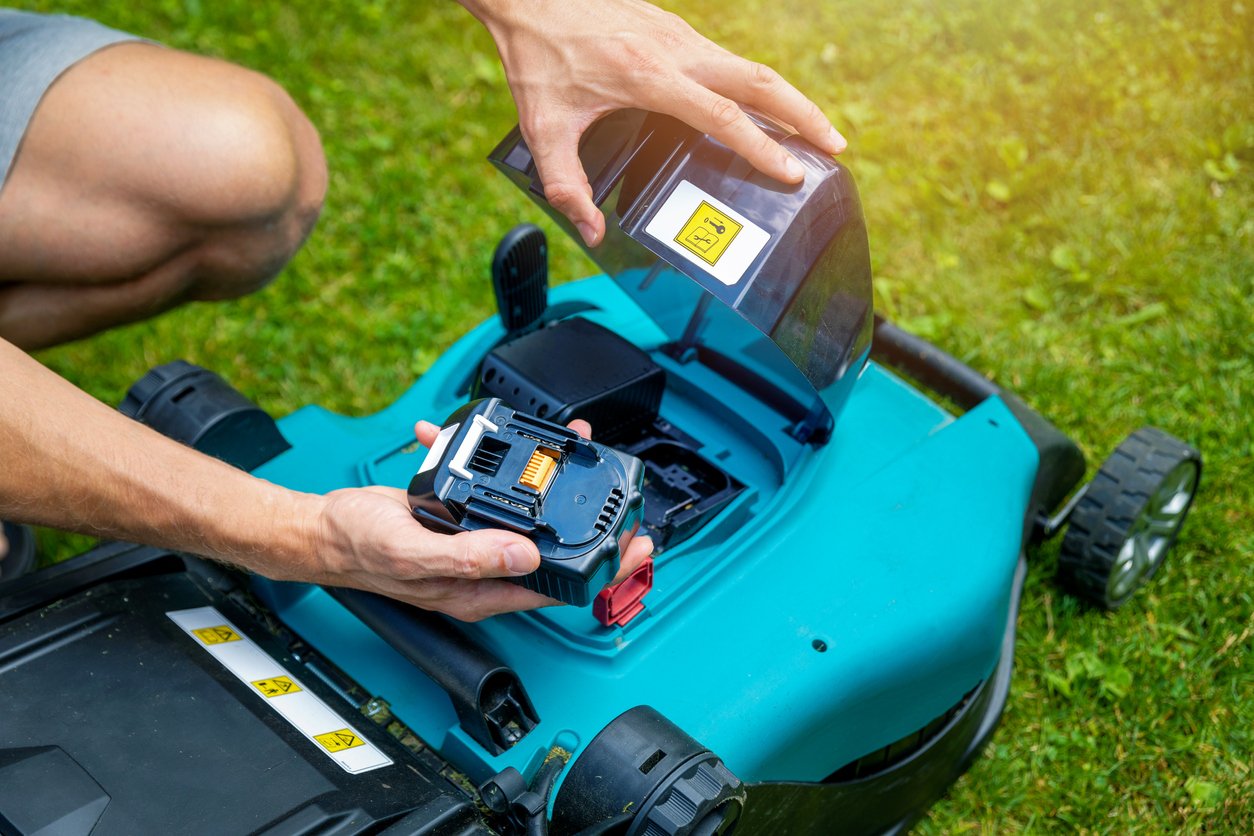
Battery care depends on the mower type. A battery that sits discharged for months can lose capacity, and in some cases it may not recover well enough for normal use.
If you have a cordless mower, remove the battery, wipe it clean, and store it in a dry place with moderate temperature. Avoid freezing sheds and direct heat sources. A cool, dry indoor shelf is usually better than a garage corner that swings from hot to freezing.

Credit: lawnlove.com
Store batteries at a partial charge
Most lithium batteries do best when stored around a mid-level charge, not empty and not full for long periods. If the manufacturer gives specific storage guidance, follow that first.
Do not leave the battery on a charger all winter unless the manual says the charger is designed for maintenance storage. That is a common error that shortens battery life.
Check cables, switches, and safety features
Look at visible wires, connectors, and the starter switch for damage. Small cracks or loose connections can become bigger electrical problems after months of storage.
If your mower has a blade-control bar, safety key, or electric start button, make sure those parts move freely. Sticking controls often come from dirt, corrosion, or a battery that was stored incorrectly.
Sharpen or replace the blade before the mower goes away
A sharp blade helps the mower cut cleanly, which is why it matters before storage too. A damaged blade can vibrate, create stress on the spindle, and leave you with a rough first cut in spring.
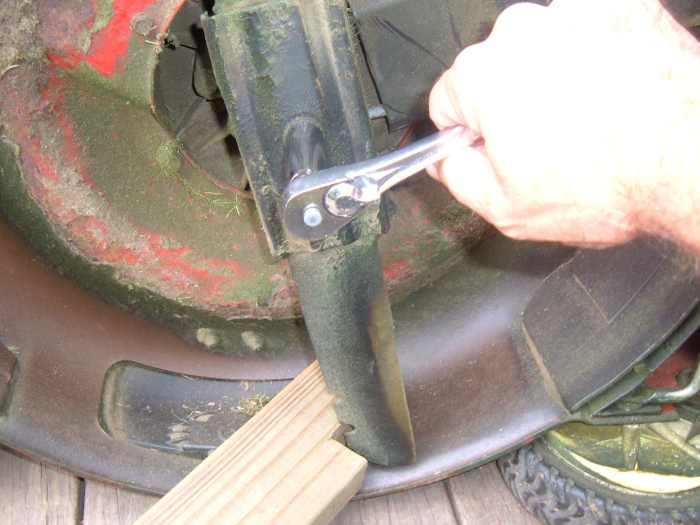
If the blade is only dull, sharpen it now and balance it before reinstalling. If it has deep nicks, bends, or cracks, replace it instead. Blade repair is not worth the risk when the metal is already compromised.
Why blade balance matters more than many owners realize
An unbalanced blade can shake the mower enough to loosen fasteners over time. That vibration also wears bearings and makes the machine feel rougher to run.
One non-obvious point: a blade that looks “sharp enough” may still be too thin at the edge or uneven from previous sharpening. That unevenness can cause poor cutting even if the blade does not look obviously damaged.
Use safe handling practices
Wear gloves and secure the blade properly before removing it. If the blade bolt is tight, use the correct tool instead of forcing it with a slippery grip.
After sharpening, reinstall the blade in the correct orientation. A reversed blade can still spin, but it will cut poorly and may throw the mower out of balance.
Store the mower in the right place and cover it the right way
Storage location matters almost as much as maintenance. A clean mower can still corrode if it sits in damp air, near fertilizer, or on bare concrete where moisture collects.
Pick a dry spot with good ventilation. A shed, garage, or covered utility area works well as long as it stays reasonably dry and free from rodent nesting. Keep the mower away from lawn chemicals, which can corrode metal and damage plastic parts over time.
Use a breathable cover, not a sealed plastic trap
A breathable mower cover helps keep dust off while allowing trapped moisture to escape. Thick plastic sheeting can hold condensation underneath it, especially if the mower is stored while still slightly damp.
If you must use a tarp, do not wrap it tightly around a wet mower. Leave some airflow so the machine can dry fully and avoid mildew smells.
Prevent small storage mistakes
Do not stack heavy items on the mower. Do not leave the key in place. Do not store it with a partially open fuel cap. These are little things, but they create big spring annoyances.
Also keep the mower on a level surface if possible. This reduces oil seepage and keeps fuel from resting in odd positions inside the tank or carburetor.
Use a final winterizing checklist before you lock up the shed
A quick final check prevents the “I thought I already did that” problem later. The best winterizing routine is one you can repeat without guessing.
- Clean the deck, body, and wheels.
- Remove grass clumps and dry all wet spots.
- Add stabilizer or drain fuel as your manual directs.
- Run the engine briefly if stabilized fuel was added.
- Change oil if it is dirty or due.
- Inspect or replace the spark plug.
- Check or replace the air filter.
- Sharpen, balance, or replace the blade.
- Remove and store the battery, if equipped.
- Store the mower in a dry, covered place.
If you want one simple rule to remember, it is this: clean the mower, protect the fuel system, and store it dry. Those three actions prevent most spring startup headaches.
How to winterize a lawn mower is really about giving the machine a clean, stable break until spring. When fuel is fresh, parts are clean, and the battery is protected, the first start of the season is usually quick and calm.
Spend the hour now, and you save time, frustration, and repair costs later. That is the whole point of winter storage done right.
Credit: discover.hubpages.com
FAQs
How long does it take to winterize a lawn mower?
Most mowers take about 30 to 60 minutes to winterize. If you also change oil, replace the spark plug, or sharpen the blade, plan for a little longer.
Can I leave gas in my mower over winter?
Yes, if you use fresh fuel and add stabilizer as directed by the manufacturer. If your mower has had fuel system problems before, draining the tank may be the safer choice.
Should I remove the battery from my mower for winter?
Yes, for most battery mowers. Store the battery indoors in a dry place, away from freezing temperatures and direct heat. A partial charge is usually better than storing it empty.
Do I need to change the oil before winter storage?
Not always, but it is a good idea if the oil is dirty, old, or near the service interval. Fresh oil helps protect the engine during long storage.
What is the most common reason a mower will not start in spring?
Old fuel is the most common cause. Stale gas can clog the carburetor or leave residue in the fuel system, which makes starting difficult or impossible.