
If you want to learn how to start a lawn mower, the good news is that most mowers follow the same basic pattern. The exact steps change a little between gas, electric, and riding models, but the process is simple once you know what to check first.
Most starting problems come from small things: an empty tank, a loose safety lever, a dead battery, or old fuel. A few minutes of prep can save you from pulling the cord 20 times or thinking the mower is broken when it is not.
This guide walks you through the full starting process in a clear order, explains the common differences between mower types, and shows you what to do when the engine still will not start. You will also learn the mistakes beginners make most often, so you can avoid them on the first try.
Check the mower before you try to start it
Before you pull a cord or press a button, do a quick safety and setup check. This step matters more than many beginners think, because a mower can refuse to start even when nothing is actually broken. In many cases, the issue is a safety control that is not engaged, or a simple mechanical problem you can spot in 30 seconds.
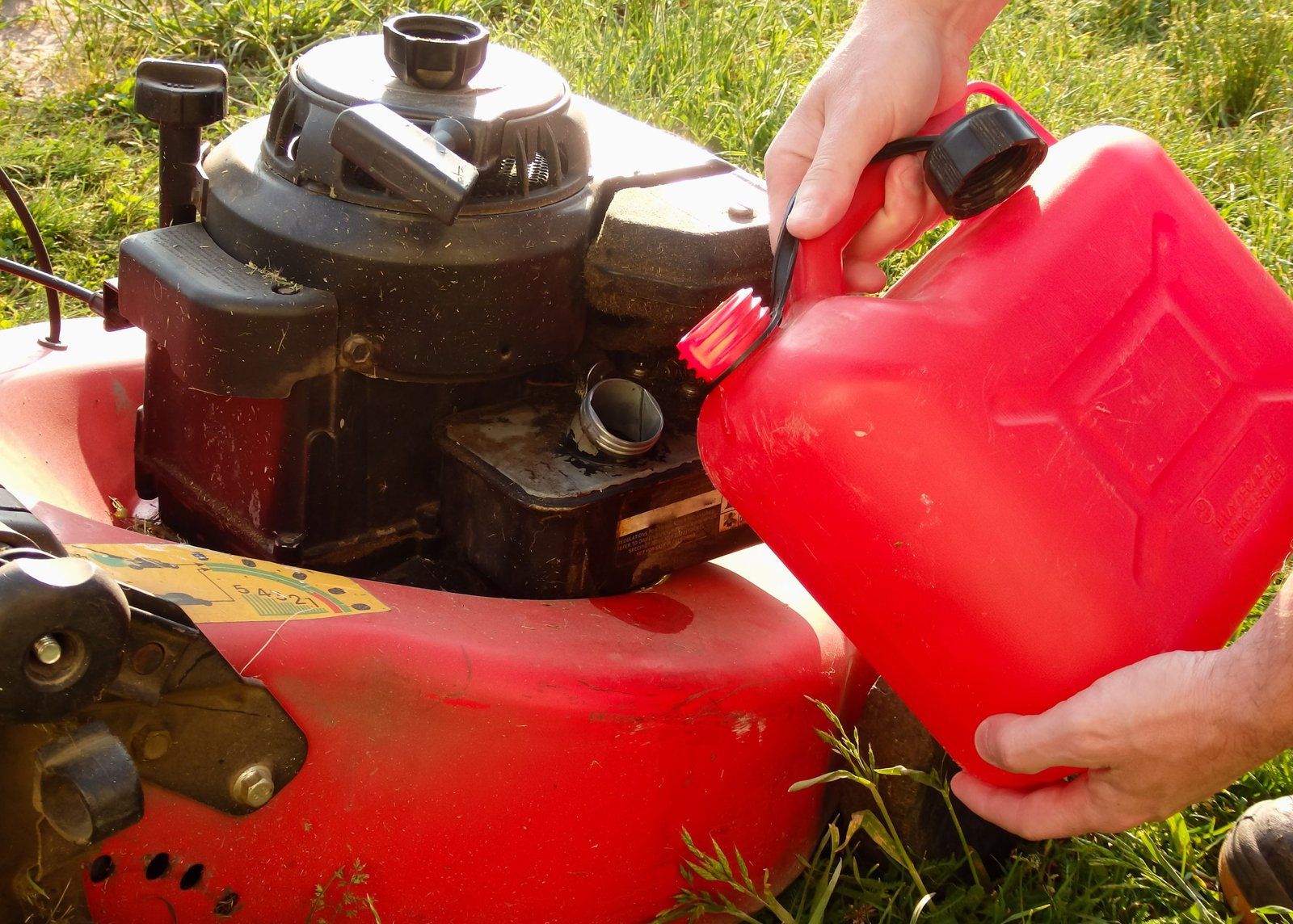
Start with the basics: the mower should be on flat ground, the area around the blade should be clear, and no one should stand near the discharge area. If you are using a gas mower, confirm that the fuel tank is not empty and that the gas is fresh. Old fuel can go bad in about 30 days if it sits in hot weather, and that alone can cause hard starting.
Also check the oil level on gas mowers. Running low on oil can stop some engines from starting, and even if it does start, low oil can damage the engine. For safe handling and storage guidance, the official mower safety guidance from the CPSC is a useful reference.
Look for these quick issues first
- Fuel: Tank has gas, and the gas is not stale.
- Oil: Level is within the safe range on gas mowers.
- Battery: On electric and riding mowers, the battery has enough charge.
- Controls: Safety bar, start switch, ignition key, or seat switch is engaged.
- Blade area: No grass clumps, sticks, or debris are jammed underneath.
One non-obvious point: thick grass packed under the deck can make starting harder on some mowers, especially after the last use. Cleaning the underside after mowing keeps the blade from binding and helps airflow the next time you start the machine.
How to start a gas lawn mower
Gas models are still the most common type of push mower, and they usually start in a few simple steps. The exact controls vary by brand, but the logic is the same: fuel, airflow, ignition, and a safety release all need to work together.
Most gas mowers use either a recoil start, also called a pull start, or an electric start button. If your mower has a primer bulb, you will need to press it before pulling the cord. If it has a choke, you may need to set that before the first start of the day, especially in cool weather.
Step-by-step starting process
- Set the mower on flat ground. Keep the blade area clear and make sure no one is near the mower.
- Check fuel and oil. Add fresh gasoline if needed, and make sure the oil level is correct.
- Open the fuel valve, if your mower has one. Some mowers have a small fuel shutoff switch near the tank or carburetor.
- Set the choke. Use full choke for a cold start if the mower has one. Warm engines often need less choke or none at all.
- Press the primer bulb. Usually 2 to 3 presses is enough. Too many presses can flood the engine.
- Hold the safety bar. Most push mowers will not start unless the operator presence bar is held against the handle.
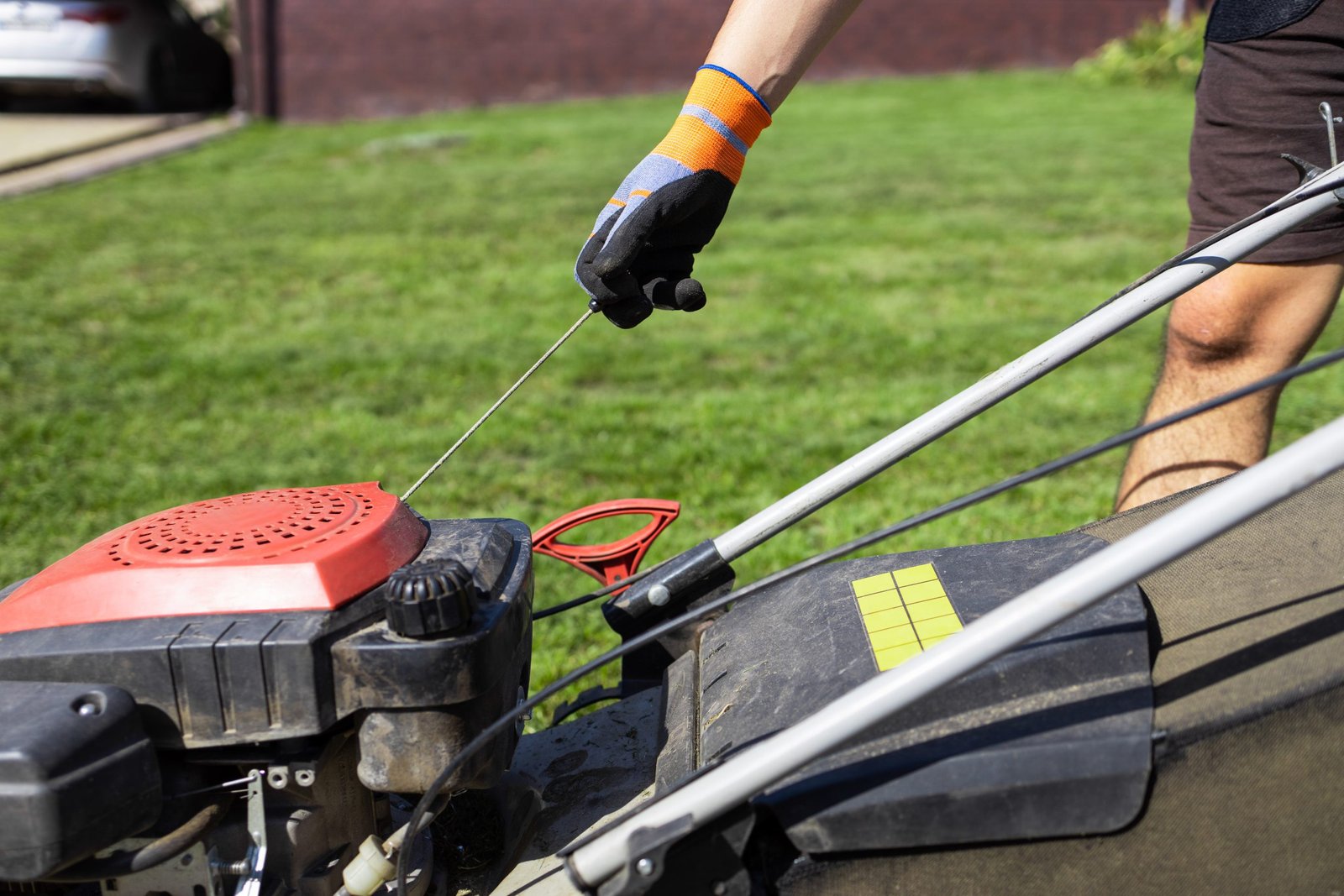
- Pull the starter cord firmly. Use a smooth, quick motion. Do not yank hard with your arm alone.
- Adjust the choke after it starts. Move it off choke as the engine warms up, usually within 10 to 30 seconds.
If the mower starts and then dies, the choke may still be too far closed, or the primer may have been pressed too many times. That flood-and-stall pattern is very common for beginners. It does not always mean the mower is faulty.
What the controls really do
The choke limits air to help a cold engine start. The primer pushes a little fuel into the carburetor so the first ignition happens faster. The safety bar tells the mower it is safe to run, and the pull cord spins the engine enough to begin combustion.
Many new users miss one detail: the safety bar usually has to stay held in the correct position the whole time the engine starts. Releasing it too early can shut the engine off before it stabilizes.
How to start an electric lawn mower
Electric mowers are easier to start than gas models, but they still have a few starting rules. Some use a cord, while others use a removable battery. In both cases, the machine will not run unless its safety switch or start button is engaged properly.
Battery mowers are especially simple, but a weak battery can still make them seem dead. A full charge matters more than many beginners expect. If the battery is partly drained, the motor may click, hesitate, or stop immediately under load.
Credit: myhometurf.com.au
For corded electric mowers
- Plug the mower into a grounded outdoor outlet.
- Keep the extension cord behind you and out of the blade path.
- Hold the safety switch or start handle.
- Press the start button if the model has one.
- Release the blade engagement lever only after the motor is running.
For battery-powered mowers
- Insert the battery fully until it clicks into place.
- Confirm the battery is charged enough to run the mower.
- Hold the safety bar or start lever.
- Press the start button or trigger.
- Wait for the blade to reach full speed before cutting grass.
One thing beginners often miss: a battery mower can fail to start if the battery is inserted almost correctly but not fully locked. That tiny gap can break the connection even though it looks seated from the outside.
Another useful habit is to keep the battery indoors when not in use during very hot or very cold weather. Extreme temperatures reduce battery performance, and cold batteries can act weak even if they were charged the night before.
How to start a riding mower safely
Riding mowers have more safety switches than push mowers, so they often fail to start for simple reasons. The seat switch, brake pedal, parking brake, PTO switch, and gear selector all matter. If one is in the wrong position, the mower may seem broken when it is actually protecting you.
Because riding mowers are larger and heavier, make sure the area around the machine is clear before starting. Keep feet away from the deck, set the parking brake, and sit fully in the seat. A partial seat position can prevent the ignition circuit from working.
Typical start sequence for riding mowers
- Sit in the seat and make sure the brake is fully pressed.
- Set the parking brake.
- Make sure the blade engagement switch is off.
- Move the throttle to the recommended start position.
- Turn the key or press the start button.
- Let the engine warm briefly before engaging the blades.
If the engine cranks but will not catch, the battery may be weak, or the mower may be set in a gear that blocks starting. Some riding mowers also need the PTO disengaged before they will crank. PTO means power take-off, which is the system that sends power to the mower deck.
Non-obvious insight: many riding mower “no start” problems come from a bad seat switch, not the engine itself. If the mower dies the moment you lift off the seat, that switch may be dirty, loose, or worn.
What to do if the mower will not start
When a mower will not start, begin with the most likely cause and work outward. In the majority of cases, the fix is simple. That means you should not jump straight to spark plugs, carburetor repair, or battery replacement unless the basics have already been checked.
The table below shows the most common causes and the first thing to check for each one.
| Symptom | Most likely cause | First fix to try |
|---|---|---|
| No crank, no sound | Dead battery or safety switch not engaged | Check battery charge, seat switch, brake, and start lever |
| Cranks but will not start | Old fuel, wrong choke setting, or flooded engine | Use fresh fuel, reset choke, wait 10 minutes |
| Starts then dies | Choke left on too long or fuel flow issue | Move choke off gradually and check fuel cap vent |
| Hard pull on cord | Blade jam, wet grass buildup, or engine resistance | Disconnect power, clean deck, inspect blade area |
| Clicking sound only | Weak battery or bad connection | Charge battery and check terminals |
Simple troubleshooting steps
- Check the fuel. Replace old gas with fresh fuel if it has been sitting for weeks.
- Inspect the safety controls. Make sure the bar, brake, seat switch, or key is in the correct position.
- Reset the choke. Too much choke can flood the engine. Too little choke can make cold starts hard.
- Check the air path. Clean the air filter if it is clogged with dust or grass.
- Look at the spark plug area. A loose or dirty plug can stop ignition.
- Charge or test the battery. Weak voltage is a common cause on electric and riding mowers.
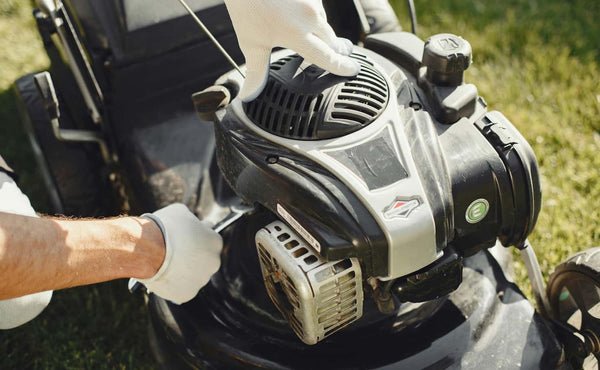
If you have tried the simple checks and the mower still refuses to start, the problem may be deeper. A clogged carburetor, bad spark plug, damaged starter cord, or failed battery can all stop startup. But in many beginner cases, the issue is still fuel, safety switches, or choke position.
When to stop and get help
Call a professional if you smell strong fuel leaks, see damaged wiring, or notice smoke, repeated backfiring, or a cord that will not retract. Also stop if the blade is stuck and you cannot move it safely by hand after disconnecting power. Safety should come first every time.
Common mistakes beginners make
Most startup problems are avoidable. Beginners usually do not break the mower; they just miss one small step. Once you know the pattern, starting the mower becomes routine.
One common mistake is pressing the primer too many times. That can flood the engine and make it harder to start. Another is pulling the starter cord too slowly. Gas engines usually need one strong, smooth pull rather than several weak tugs.
People also forget that mowers need seasonal care. A mower that ran fine in spring can be hard to start in late summer if fuel has gone stale, the air filter is dirty, or the battery has sat unused for weeks. That is why starting problems often appear after storage, not during regular weekly use.
- Using old fuel from last season.
- Starting with the choke in the wrong position.
- Not holding the safety lever long enough.
- Ignoring weak battery signs like slow cranking.
- Trying to start with the blade jammed by wet grass.
Another detail beginners miss is that wet grass on the deck can make the engine sound weak or “locked up.” In reality, the blade may just be fighting extra drag. Let the mower dry, clear the deck, and try again.
Credit: myhometurf.com.au
Keep the mower easier to start next time
A mower that starts easily usually gets a little routine care after each use. Clean the deck, check the fuel system, and store the machine in a dry place. These small habits reduce startup trouble more than most people realize.
For gas mowers, use fresh fuel and consider emptying the tank before long storage if your model and manual recommend it. For electric mowers, keep batteries charged and stored at moderate temperatures. For riding mowers, check battery terminals and seat switches from time to time, because vibration can loosen connections.
Maintenance does not need to be complicated. A clean air filter, a sharp blade, and a healthy battery can make the next start much easier. On many mowers, these three things prevent more problems than any fancy repair.
It also helps to follow the manufacturer’s starting instructions for your exact model. Start procedures can differ slightly, especially with newer machines that use electronic ignition or battery management systems. If you want the most reliable reference, the mower’s official owner’s manual is usually the best source.
Start the mower with confidence
Once you understand the basic sequence, how to start a lawn mower becomes a simple process instead of a guessing game. Check fuel or battery power, engage the safety controls, set the choke or start button correctly, and use a firm pull or press.
Most startup failures come from a small list of causes, not serious damage. Fresh fuel, a charged battery, and the right safety setup solve many problems right away. If the mower still will not start after those checks, then it is time to look deeper.
The key is to stay calm and work step by step. That saves time, protects the mower, and helps you spot the real issue faster the next time you mow.
Credit: eufy.com
FAQs
Why does my lawn mower start and then die?
This usually happens when the choke stays on too long, fuel flow is weak, or the engine is flooded. Try moving the choke off gradually, wait a few minutes, and use fresh fuel if the gas is old.
How many times should I press the primer bulb?
Most mowers need only 2 to 3 presses. Pressing it too many times can flood the engine and make starting harder, especially on a cold morning.
Why will my electric mower not start even with a charged battery?
The battery may not be fully locked in place, or a safety switch may not be engaged. Check the battery connection, start lever, and any blade or seat safety controls on the mower.
Can old gas stop a lawn mower from starting?
Yes. Fuel that sits too long can break down and cause hard starting or stalling. If gas has been stored for weeks or months, replace it with fresh fuel.
What should I check first if the mower will not crank at all?
Start with the battery, safety switches, and start controls. On riding and electric mowers, a dead battery or one missed safety step is one of the most common reasons for no crank at all.