
A lawn mower that will not start usually has one simple cause, and you can often fix it in minutes. If you are asking why a lawn mower Won’t start, the answer is usually fuel, spark, air, or a basic safety switch.
The good news is that most startup problems do not mean the mower is ruined. A clogged air filter, old gas, a loose spark plug wire, or a safety lever that is not fully engaged can stop the engine before it even turns over. A few checks, done in the right order, can save you a trip to the repair shop.
Below, you will find the 10 most common causes, how to spot each one, and the easiest fix to try first. The goal is simple: help you get the mower running again without guesswork.
Start with the simplest checks
Before you remove parts or buy replacements, look at the basics. Many no-start problems come from things that take less than 5 minutes to check. A mower can act dead even when the fix is very small.
Start with the fuel level, the ignition key or start switch, the handle safety bar, and the spark plug wire. On many walk-behind mowers, the engine will not start unless the blade-control lever is held down correctly. On riding mowers, the seat switch, brake switch, or PTO switch may be stopping the engine on purpose.
If your mower has been sitting for more than 30 days, stale fuel moves to the top of the list. Gas starts breaking down fast, especially in hot weather. That one detail causes more startup problems than many people expect.
Quick first-pass checklist
- Make sure the fuel shutoff valve is open, if your mower has one.
- Check that the spark plug wire is fully attached.
- Confirm the safety bar, brake, or seat switch is engaged.
- Look for old fuel or a nearly empty tank.
- Try starting with the choke set correctly.
1. Old or bad fuel is the most common problem
If a mower ran fine last season but will not start now, stale fuel is the first thing to suspect. Gasoline can begin to degrade in as little as 30 days, and ethanol-blended fuel absorbs moisture over time. That can make the engine hard to start or impossible to start.
Bad fuel often causes a strong varnish smell. You may also see darker fuel, gummy residue, or water droplets in the tank or carburetor bowl. If the mower tries to fire once and then dies, fuel quality is still a likely culprit.
The easy fix is to drain the old gas and refill with fresh fuel. If the fuel is only slightly old, some owners try a stabilizer, but that works better as prevention than as a cure. If the gas smells sour, replace it rather than hoping it will recover.
What to do
- Drain the tank into an approved container.
- Inspect the fuel line for cracks or clogging.
- Refill with fresh gasoline recommended by the mower maker.
- Prime the engine only as directed by the manual.
2. The spark plug is fouled, loose, or worn out
The spark plug creates the spark that ignites the fuel-air mix. If it is dirty, cracked, or badly worn, the engine may crank but never catch. This is one of the easiest parts to inspect, and it is often overlooked.
Pull the spark plug wire first, then remove the plug. Look for black soot, wet fuel, rust, or a damaged electrode. A plug that is drenched in gas may point to flooding, while a dry, chalky plug can suggest a fuel delivery issue.
If the plug looks poor, replace it. Many small engines use inexpensive plugs, and a new one can solve the problem right away. Make sure the plug is tightened properly, but do not overtighten it. A loose plug can leak compression and make starting harder.
Easy signs the plug is the issue
- The engine cranks but never fires.
- There is a fuel smell, but no ignition.
- The plug tip is black, wet, or cracked.
- The plug wire feels loose when touched.
3. The air filter is clogged and choking the engine
Engines need clean air to start. If the air filter is packed with dust, grass, or oil, the engine may get too much fuel and too little air. That rich mix can make starting rough or stop it completely.
This happens often on mowers used in dry, dusty yards. It also happens when the filter is not changed for a long time. A filter that looks only a little dirty can still restrict airflow enough to cause trouble.
Remove the filter and inspect it. If it is paper-based and heavily dirty, replace it. If it is foam, wash and dry it only if the mower manual allows that. Do not start the mower with the filter removed for long periods, because that can let dirt into the engine.
4. The mower is flooded with too much fuel
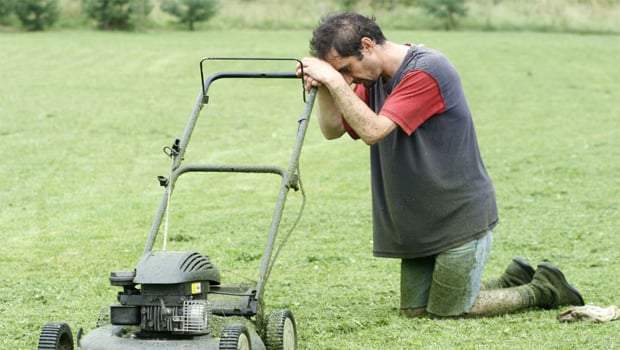
Flooding means the engine has too much fuel and not enough air to ignite it. This often happens after repeated pull starts, too much priming, or using the choke the wrong way. You may notice a strong gas smell and a wet spark plug.
Flooding is common after several failed starting attempts. At that point, the engine is already wet with fuel, so more priming makes it worse. The fix is usually to stop adding fuel and let the engine dry out a bit.
To clear a flooded engine, turn off the choke, hold the throttle open if your mower design allows it, and pull the starter several times. On some models, removing and drying the spark plug helps. If fuel has spilled under the mower, keep sparks away until the area is dry.
Credit: jackssmallengines.com
Signs of flooding
- Strong gasoline smell
- Wet spark plug
- Engine tries to start, then quits
- Black smoke on one or two startup attempts
5. The safety switch is stopping the engine
Modern mowers are built with safety switches so the engine cannot start in unsafe conditions. That is a good thing, but it can also confuse people. A seat switch, brake switch, blade-control lever, or blade engagement switch can prevent starting if it is not set correctly.
On riding mowers, a bad seat switch is a common hidden issue. The mower may seem dead even though the battery and starter are fine. On push mowers, the operator presence control must often be held in the proper position or the ignition circuit stays open.
Check every required safety position one at a time. Do not bypass these switches unless the manufacturer specifically allows a test procedure. If the switch is worn or loose, it may need adjustment or replacement.
6. The spark plug wire or ignition connection is loose
A mower can have a good spark plug and still fail because the wire is not fully connected. Vibration, age, and repeated maintenance work can loosen the connection at the plug or coil. Sometimes the wire looks attached but is not seated tightly enough to transfer spark.
This is a quick check, but it matters. A slightly loose wire can create an intermittent no-start problem, which is frustrating because the mower may work one day and fail the next. If the boot is cracked, burned, or oily, the problem can be worse than it looks.
Push the wire firmly onto the spark plug until it clicks or seats fully. Also inspect the wire route for cuts, rubbing, or melted spots near the engine. Damaged ignition wiring usually needs replacement rather than repair.
7. The carburetor is clogged
When fuel sits in a mower, it can leave sticky deposits inside the carburetor. Those deposits block the tiny passages that control fuel flow. The engine may crank, sputter once, or only run on choke before dying.
This problem is common after winter storage. Even a small amount of gum in the carburetor can stop a mower from starting. If the air filter and spark plug are fine, carburetor clogging moves high on the list.
Some people spray cleaner into the intake and hope for the best, but that only works in light cases. A proper fix may involve cleaning the carburetor bowl, jet, or internal passages. If the mower is older and the carburetor is badly varnished, replacement is often faster than full cleaning.
For official maintenance guidance, the mower safety guidance from the U.S. Consumer Product Safety Commission is a useful place to review safe service habits before you work near the blade or engine.
Common carburetor clues
- Engine starts only with choke on
- Engine runs for a few seconds, then stalls
- Fuel is fresh, but the mower still will not fire
- The spark plug is dry after repeated start attempts
8. The blade or deck is jammed
Some mowers have trouble starting because the engine is under load before it even runs. A stuck blade, packed grass under the deck, or a damaged belt can make the engine hard to turn. In severe cases, the starter may not overcome the resistance at all.
This is more common after mowing wet grass or hitting hidden debris. You may hear a strained crank, clicking, or a sluggish pull cord. If the blade cannot move freely, the engine may refuse to start as a protective response.
Disconnect the spark plug wire first, then check for packed grass, sticks, string, or other debris under the deck. On riding mowers, inspect the belt path and pulleys if you are comfortable doing so. Always keep hands away from sharp edges.
9. The battery is weak or dead
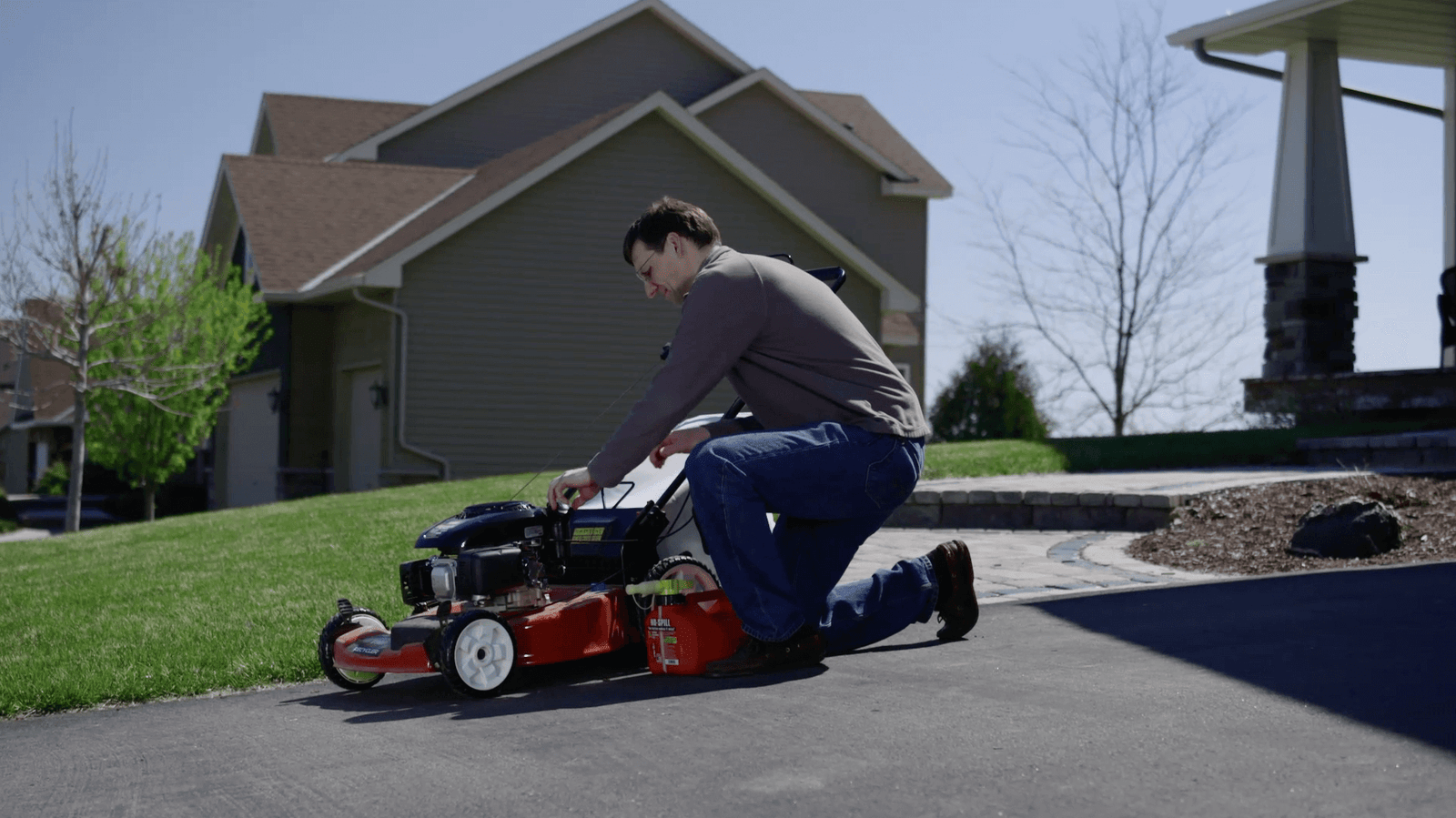
Battery issues matter on electric-start push mowers and especially on riding mowers. If the starter only clicks or turns very slowly, the battery may not have enough power to crank the engine. A weak battery can also make safety switches and electric fuel systems act unreliable.
Many people assume a battery is fine if the lights work, but starting takes much more current than lights do. A battery can show some power and still fail under load. Cold weather makes this worse.
Check the battery terminals for corrosion first. Clean white or green buildup can block power flow. Then test the battery charge with a multimeter if you have one. If the battery is old, swollen, or will not hold a charge, replacement is usually the best fix.
Credit: yardcare.com
Battery warning signs
- Starter clicks but does not turn over
- Engine cranks slowly
- Dash lights are dim
- Battery terminals look corroded
10. The starter, recoil, or ignition system has failed
If the basic fuel and spark checks all pass, the starting system itself may be the problem. On pull-start mowers, the recoil spring can break or the rope can slip. On electric-start models, the starter motor, solenoid, or ignition coil may have failed.
This is the point where diagnosis gets more specific. A rope that pulls with no resistance or does not retract normally often points to recoil damage. A starter that clicks but does not spin may mean the solenoid is bad, the battery is weak, or the motor has worn out.
These parts can be tested, but if you are not used to working with small engines, this may be the stage to call a repair shop. The issue may require electrical testing, part replacement, or internal engine inspection.
How to diagnose the problem faster
The easiest way to avoid random part swapping is to follow the starting path in order: air, fuel, spark, compression, and safety controls. That sequence saves time because it mirrors how the engine works. If one part of the chain fails, the mower will not start.
Use this simple logic. If the engine cranks strongly but never fires, think spark or fuel. If it cranks poorly, think battery, starter, or a mechanical jam. If it starts briefly and dies, think fuel delivery, choke use, or a clogged carburetor.
The table below shows the most common pattern and the most likely fix to try first.
| Symptom | Most likely cause | First fix to try |
|---|---|---|
| No crank, no click | Battery, safety switch, or wiring | Check charge, switch positions, and terminals |
| Cranks but will not fire | Old fuel, spark plug, or carburetor | Replace fuel, inspect plug, check air filter |
| Starts then stalls | Fuel restriction or choke issue | Inspect carburetor and fuel flow |
| Pull cord is hard to move | Deck jam or internal resistance | Clear debris and inspect blade area |
Common mistakes that waste time
One of the biggest mistakes is changing parts before checking the basics. Many owners replace the spark plug, battery, and carburetor, only to find the fuel was stale or the safety bar was not engaged. That leads to extra cost and no real fix.
Another common mistake is using too much starting fluid. A small amount may help in some cases, but repeated use can mask the real issue and make diagnosis harder. It can also be risky if the engine backfires.
People also forget to check the mower’s storage history. If it sat for an entire season with untreated fuel, the carburetor and fuel line may both be affected. A fresh tank alone may not solve a deeper fuel blockage.
When it makes sense to stop and get help
Call a professional if the mower has a broken recoil assembly, damaged starter motor, repeated electrical failures, or signs of internal engine damage. You should also stop if you smell burning wires, see fuel leaks, or notice the engine is locked and will not turn by hand.
Safety comes first when working around blades, fuel, and ignition systems. If you are unsure about a repair, it is better to pause than to force the issue. A small mistake around a mower deck or fuel system can cause a bigger problem fast.
For most owners, the first three checks solve the issue: fresh fuel, a good spark plug, and clear safety controls. If those do not work, move down the list methodically instead of guessing.
Credit: lawnlove.com
The fastest path to a running mower
If you are still wondering why a lawn mower won t start, begin with fuel age, spark plug condition, and safety switch position. Those three account for a large share of no-start problems, and they are easy to inspect without special tools. In many cases, the mower will start again after one clean fix.
When the basics check out, move to the air filter, carburetor, battery, and starter system. Work in that order and you will save time, avoid unnecessary parts, and find the real cause faster. Most mower startup problems are annoying, but they are also very solvable.
FAQs
Why does my lawn mower crank but not start?
The most common reason is fuel or spark. Old gas, a fouled spark plug, or a clogged carburetor usually causes cranking without ignition. A bad choke setting can also play a role.
Can old gas really stop a lawn mower from starting?
Yes. Gasoline can degrade in about 30 days, and ethanol blends can absorb moisture. That can weaken combustion or clog the carburetor.
Should I clean or replace the spark plug first?
If the plug is only lightly dirty, cleaning may help. If it is cracked, badly worn, or soaked with fuel, replacement is the better choice.
Why does my mower start with starter fluid but not on its own?
That usually points to a fuel delivery problem. The engine can spark, but fuel is not reaching the cylinder correctly. A clogged carburetor is a common cause.
When should I take my mower to a repair shop?
Take it in if the engine is locked, the starter system fails, the wiring looks damaged, or you find fuel leaks. Those problems often need tools or parts that go beyond basic home repair.