
If your mower starts pulling to one side, the wheel feels stiff, or the steering wheel does not respond the way it should, you are not alone. Toro TimeCutter steering problems are common enough that many owners face them at some point, especially after heavy use, rough lawns, or simple wear over time.
The good news is that many steering issues are not serious. In many cases, the cause is easy to find and fix with basic tools, careful checking, and a little patience. Some problems come from damaged parts, but others are as simple as low tire pressure, a bent linkage, or grass buildup around moving parts.
This guide explains the most common causes, the best fixes, and practical troubleshooting tips so you can get your mower steering smoothly again. It also covers a few things beginners often miss, which can save time, money, and frustration.
What steering problems usually look like
Before you open any panels or start replacing parts, it helps to understand the symptoms. Steering trouble does not always mean the same thing. The mower may still run, but the control may feel wrong.
Common signs include:
- The mower pulls left or right while driving straight.
- The steering wheel or lap bars feel loose, stiff, or jerky.
- One wheel turns faster than the other.
- The mower does not respond evenly when turning.
- The front wheels do not return to center.
- You hear clicking, rubbing, or grinding near the steering area.
One helpful detail many owners miss is that steering problems may not start in the steering system itself. Tire pressure, wheel alignment, debris around the axle, or even a weak drive belt can make the mower seem like it has a steering fault.
Main causes of Toro TimeCutter steering problems
Most toro timecutter steering problems come from a small group of causes. Some are simple and cheap to fix. Others need part replacement. The key is to inspect the system in a smart order, from easiest checks to deeper mechanical issues.
Uneven tire pressure
This is one of the most common causes and one of the easiest to overlook. If one tire has less air than the other, the mower can drift or pull to one side. Even a small pressure difference can change how the mower tracks.
Check all tires with a reliable gauge. Match them to the pressure listed in your owner’s manual, not just “close enough.”
Damaged or worn steering linkage
The linkage connects the steering controls to the front wheels. Over time, joints, rods, and bushings can wear out. When that happens, steering becomes sloppy, slow, or uneven.
Look for looseness, bent rods, cracked bushings, or play in the joints. A worn linkage may not look broken at first, but it can still cause bad steering behavior.
Loose or bent front wheels and caster components
Front wheels on a TimeCutter take a lot of stress. Hitting curbs, tree roots, or holes can bend parts or loosen hardware. If the front end no longer tracks straight, inspect the caster arms, wheel bolts, and wheel bearings.
Sometimes the wheel itself spins fine, but the mounting parts are worn. That is why a full check matters more than just spinning the tire by hand.
Air in the hydraulic system
Many zero-turn steering and drive problems are linked to hydrostatic drive performance. If air gets into the hydraulic system, the mower may move unevenly, hesitate, or steer poorly. This can happen after service, a leak, or low fluid levels.
Air in the system often shows up as weak response, loss of smooth control, or a mower that behaves differently after warming up.
Low or dirty hydraulic fluid
Hydraulic fluid keeps the drive system working smoothly. Low fluid, old fluid, or contaminated fluid can make the mower hard to control. Dirty fluid may also shorten the life of the pump and motors.
If the mower feels worse when hot, fluid quality should be high on your checklist.
Weak drive belt or pulley issues
A worn drive belt can slip, which affects power transfer and control. Pulley problems can do the same. If the belt is cracked, shiny, stretched, or noisy, it may no longer keep proper tension.
Many people focus only on steering arms, but a slipping belt can create steering-like symptoms that confuse the diagnosis.
Debris buildup around moving parts
Grass, dirt, string, and twigs can collect around linkages, axles, and pulleys. This buildup creates drag and can make one side move differently than the other.
Cleaning is not just maintenance. In some cases, it is the fix.
How to troubleshoot step by step
Use a simple process instead of guessing. Start with the easiest checks first. That approach is faster and helps avoid replacing parts that are still good.

Credit: insidetheyard.com
1. Check tire pressure on all wheels
Make sure each tire is inflated to the same level recommended in the manual. If one tire is low, correct it and test the mower again. Do not ignore rear tires, because uneven rear pressure can also affect tracking.
2. Inspect the mower on a flat surface
Park on level ground, shut off the engine, remove the key, and engage the parking brake. Then look at the mower from the front and rear. Check whether the wheels sit evenly and whether one side looks different from the other.
3. Turn the front wheels by hand
Lift the front slightly if needed and turn each wheel by hand. They should move smoothly. If one wheel feels stiff, rough, or loose, the problem may be in the bearing, spindle, or caster assembly.
4. Look for bent or loose parts
Inspect steering arms, rods, bolts, and mounting points. A bent part may not look dramatic, but even a small bend can change how the mower tracks. Tighten loose hardware only if it is supposed to be tight. If a bolt keeps loosening, there may be wear or thread damage.
5. Clean away grass and debris
Use a brush or compressed air to remove buildup around the steering area, pulleys, and front axle. Avoid forcing dirt deeper into bearings or seals. Cleaning often improves movement right away.
6. Check hydraulic fluid level and condition
Look for low fluid, leaks, or signs of contamination. If the fluid is dark, milky, or smells burnt, it may need replacement. Always follow the service instructions for your exact model.
7. Test the mower slowly
After each correction, do a short test in an open space. Drive slowly first. Watch whether the mower now tracks straight, turns evenly, and responds without delay.
One non-obvious tip: test steering both when the mower is cold and after 10 to 15 minutes of running. Some problems only appear when fluid warms up or parts expand slightly.
Simple fixes that often work
Not every steering issue needs a major repair. In fact, several common fixes can solve the problem without replacing expensive parts.
Adjust tire pressure to the correct level
Equal pressure on both sides is one of the quickest ways to improve steering. If the mower pulls after pressure correction, the issue was likely tracking, not a failed part.
Tighten hardware that has loosened
Vibration can loosen bolts, nuts, and mounting points. Tightening them can restore proper steering feel. Use the correct torque if the manual provides it. Do not overtighten, since that can damage threads or crush bushings.
Replace worn bushings or joints
If the steering feels sloppy, inspect small wear parts closely. Bushings and joints are not expensive compared with larger assemblies. Replacing them early can prevent bigger damage later.
Clean and lubricate moving points
Apply lubricant only where the manual allows it. Too much grease in the wrong place can attract dirt. A light, correct application helps parts move smoothly and last longer.
Bleed air from the hydraulic system if needed
If your model and service situation require bleeding, follow the proper procedure carefully. Air removal can restore smooth motion and reduce pulling or hesitation. If you are not sure how to do it safely, a dealer or service manual is the best guide.
Replace a worn belt
A cracked or stretched belt should not be ignored. If it slips under load, the mower may respond poorly even though the steering controls seem fine. Use the correct replacement belt for your model.
When the problem is more than a simple fix
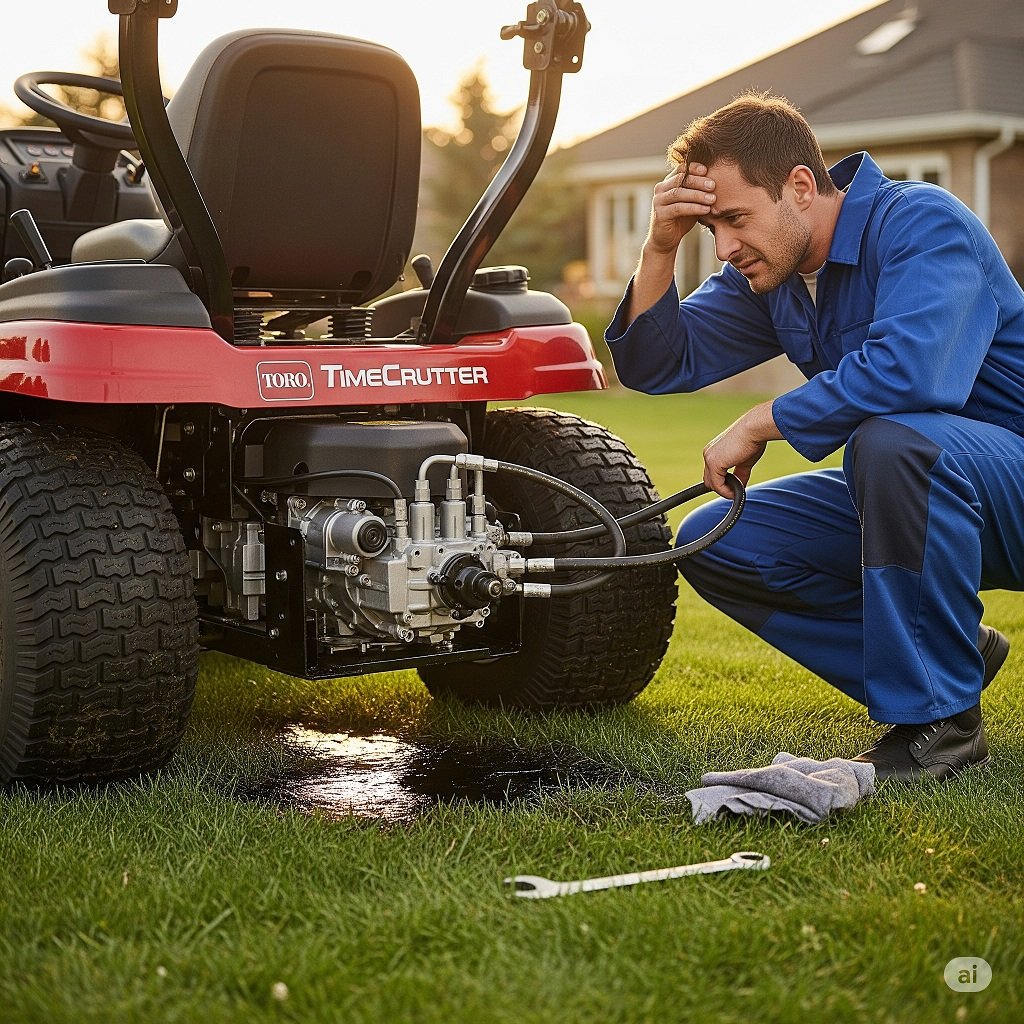
Some toro timecutter steering problems point to deeper mechanical wear. If the mower still drives badly after basic checks, the issue may be in the hydrostatic drive system, steering controls, or front-end components.
Credit: lawnmowerly.com
Signs of a hydraulic drive issue
- The mower moves weakly in one direction.
- It responds better after warming up, or worse when hot.
- You hear unusual whining from the drive system.
- The mower struggles on slopes or under load.
These signs can point to a pump, motor, fluid, or internal wear issue. At this stage, careful diagnosis matters more than guessing.
Signs of a front-end mechanical issue
- The front wheel shakes or wobbles.
- Turning feels rough or catches in places.
- There is visible damage near the caster arm or spindle.
- The mower tracks badly even after tire pressure correction.
If the front end is damaged, the mower may still run, but steering quality will stay poor until the worn parts are fixed.
Common mistakes people make during diagnosis
Many owners lose time because they start with the wrong assumption. A mower that pulls left does not always need a steering part. A noisy front wheel does not always mean the wheel itself is bad. Small clues matter.
Replacing parts before checking basics
It is easy to blame the steering assembly right away. But low tire pressure or debris buildup can create similar symptoms. Always check simple causes first.
Ignoring one side of the mower
Some people inspect only the side that looks damaged. That can miss the real cause. Problems on the opposite side, or even in the rear tires, may be the reason the mower does not track properly.
Testing only on smooth ground
A mower may seem fine on a flat driveway but fail on grass, slopes, or rough areas. Test where the problem usually happens. That gives a more accurate result.
Using the wrong fluid or belt
Not all parts are interchangeable. Wrong fluid, wrong belt length, or poor-quality replacement parts can create new problems. Always match the model specifications.
Useful maintenance habits that prevent steering issues
Regular care reduces the chance of future steering trouble. This is especially important if you mow uneven ground or use the mower often during long seasons.
- Check tire pressure before the mowing season and every few uses.
- Clean grass from the front axle and under the deck often.
- Inspect belts for wear before they fail.
- Look for leaks around hydraulic lines and fittings.
- Store the mower in a dry place to reduce corrosion.
Another detail many owners overlook is steering feel after storage. If the mower sits unused for months, seals, belts, and joints can stiffen. A careful pre-season check can catch those issues before they affect performance.
How to decide between DIY repair and professional help
Many steering issues can be handled at home. But some repairs are better left to a trained technician, especially when hydraulic systems, internal drive parts, or major alignment problems are involved.
DIY is a good choice if you are dealing with:
- Uneven tire pressure
- Loose bolts or minor debris buildup
- Easy belt replacement
- Simple worn bushings or visible loose parts
Professional help is safer when you see:
- Repeated fluid leaks
- Internal hydrostatic drive symptoms
- Severe front-end damage
- Problems that stay after basic fixes
If you need official service details, manuals, or model support, Toro’s own support resources are a helpful place to start: Toro Service and Support.
Quick reference for common symptoms and likely causes
This simple overview can help you narrow down the issue faster.
| Symptom | Likely cause | First thing to check |
|---|---|---|
| Mower pulls to one side | Uneven tire pressure or tracking issue | Front and rear tire pressure |
| Steering feels loose | Worn linkage or bushings | Joints, rods, and mounting hardware |
| Steering feels stiff | Debris, bent parts, or bearing wear | Front wheel movement and axle area |
| Weak movement after warming up | Hydraulic fluid issue or internal wear | Fluid level and condition |
| Jerky or uneven response | Belt slip or drive system problem | Belt condition and pulley movement |
Credit: troubleshootinglab.com
Final thoughts
Most toro timecutter steering problems start with something simple. Tire pressure, debris, loose hardware, or worn small parts can make the mower feel far worse than it really is. If you follow a careful step-by-step process, you can often find the cause without wasting money on unnecessary repairs.
The best approach is to start with basics, inspect the whole system, and test after each fix. That method is slower than guessing, but it is much more reliable. If the problem points to hydraulic or internal drive trouble, do not wait too long. Early diagnosis can prevent a bigger repair later.
FAQs
1. Why does my Toro TimeCutter pull to one side?
The most common reason is uneven tire pressure. If pressure is correct, the next likely causes are worn linkage, bent front-end parts, or hydraulic drive issues.
2. Can low tire pressure really cause steering problems?
Yes. Even a small difference in pressure can change how the mower tracks. It is one of the easiest problems to check and fix.
3. What if the steering feels stiff only after mowing for a while?
That can point to hydraulic fluid trouble, heat-related wear, or a part that binds when warm. Check fluid level, fluid condition, and moving parts for drag.
4. Is it safe to keep using the mower with steering problems?
It depends on the cause, but it is usually not a good idea. Steering issues can get worse and may lead to more damage or unsafe control, especially on slopes.
5. When should I call a technician instead of fixing it myself?
Call a technician if you see leaks, internal drive symptoms, major front-end damage, or if basic checks do not solve the problem. Hydraulic repairs can be difficult and need proper tools.