
If you own a Kubota B3200, you already know why so many people like it. It is small, strong, and useful for many jobs. But like any compact tractor, it can still develop problems over time. Some issues are minor and easy to fix. Others point to wear, poor maintenance, or a part that needs attention.
This guide explains the most common kubota b3200 problems in simple language. You will learn what the symptoms mean, what usually causes them, and how to fix them before they turn into bigger repairs. The goal is not to scare you. The goal is to help you spot trouble early and keep your tractor working well.
If you are a new owner, one useful habit is to think in systems: engine, fuel, hydraulics, transmission, steering, and electrical. That makes diagnosis much easier. A tractor often gives small warning signs first. If you know what to look for, you can save time, money, and frustration.
What usually goes wrong first on a B3200
Most kubota b3200 problems do not begin with a major failure. They often start with small changes in how the tractor sounds, starts, shifts, or lifts. These changes may seem harmless at first, but they can point to a weak battery, dirty filters, low fluid, air in the fuel system, or a worn seal.
The B3200 is a compact tractor, so many owners use it for mowing, loader work, snow removal, and light ground work. That wide range of use means one problem can hide behind another. For example, a tractor that starts poorly may not have an engine issue at all. It may simply have a clogged fuel filter or weak battery connection.
Before you replace parts, check the basics:
- Battery condition and cable tightness
- Engine oil level
- Coolant level
- Hydraulic fluid level
- Fuel quality and filter condition
- Air filter cleanliness
Many owners skip these checks and go straight to expensive repairs. That is one of the most common mistakes.
Engine starting problems
One of the most reported kubota b3200 problems is hard starting. The engine may crank slowly, turn over without firing, or start only after several attempts. In cold weather, the issue can be worse. Sometimes the engine starts fine one day and struggles the next.
Common causes
- Weak battery
- Loose or corroded battery terminals
- Bad glow plugs or glow plug relay
- Clogged fuel filter
- Air trapped in the fuel line
- Old fuel or water in fuel
How to fix it
Start with the battery. Test voltage and inspect the terminals. A battery can look fine but still fail under load. Clean the posts and tighten the cables. If the tractor has been sitting for a while, charge the battery fully before testing again.
Next, check the fuel system. Replace the fuel filter if it is dirty or overdue. If the tractor ran out of fuel recently, you may need to bleed the system to remove air. Old diesel can also cause poor starting, especially if moisture got into the tank.
If the engine cranks normally but does not fire well in cold weather, check the glow plugs. A weak glow plug system can make a diesel tractor act lazy during startup. That problem is easy to miss because the engine may still run once it starts.
Non-obvious insight: many owners replace the battery too early when the real problem is poor cable grounding. A single corroded ground point can make a healthy battery seem weak.
Loss of power under load
If your tractor starts well but feels weak when mowing, climbing, or lifting, you may be dealing with another common issue. The engine may bog down, lose RPM, or struggle to hold power during work. This is one of the more frustrating kubota b3200 problems because it affects real job performance.
Common causes
- Dirty air filter
- Clogged fuel filter
- Restricted fuel flow
- Dirty injectors
- Low engine compression in worn engines
- Overheating under heavy use
How to fix it
Check the air filter first. A clogged air filter reduces airflow and makes the engine breathe poorly. This is especially common if you mow in dusty areas. Replace the filter if it is dirty or damaged.
Then inspect the fuel filter and fuel lines. A restricted fuel supply may let the tractor idle normally but starve it under load. If the engine improves after a filter change, you have likely found the problem.
Also pay attention to exhaust smoke. Black smoke can mean too much fuel or too little air. White smoke may point to cold combustion, water in fuel, or injector trouble. Blue smoke may suggest oil burning. The smoke color gives clues, even if it does not tell the full story.
Non-obvious insight: some loss-of-power complaints are caused by a blocked radiator screen or dirty cooling fins, not the fuel system. An engine that runs too hot can lose strength before it shuts down.
Hydraulic lift problems
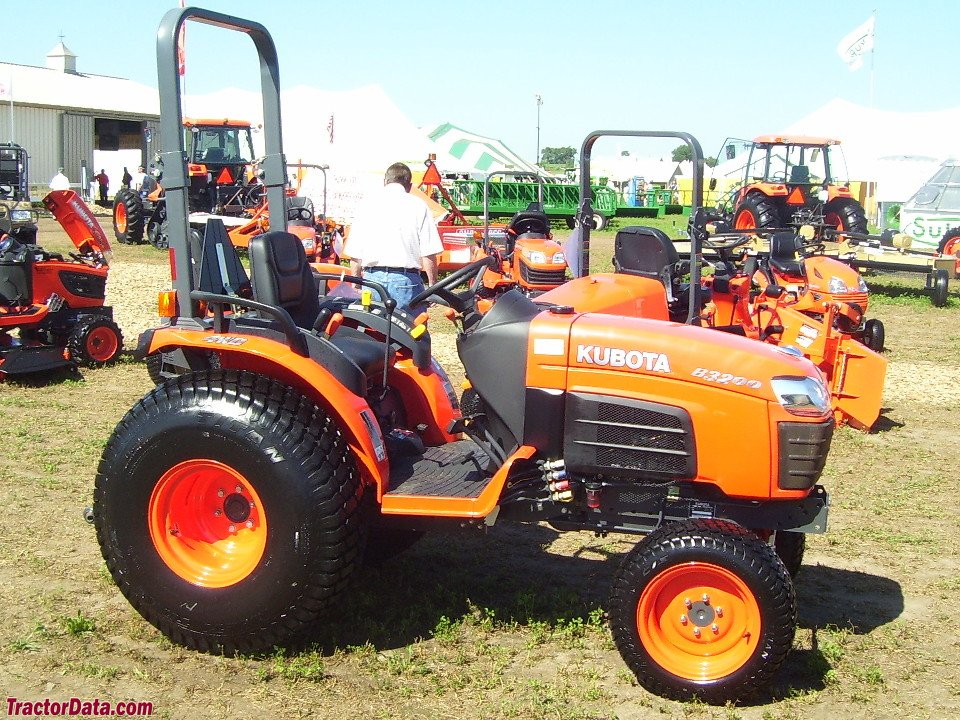
The B3200 uses hydraulics for loader work, 3-point hitch operation, and other lifting tasks. When the hydraulics become slow, weak, or noisy, the tractor can feel much less capable. Hydraulic trouble is often linked to fluid condition, air in the system, or a worn pump.
Credit: tractordata.com
Common symptoms
- Slow loader movement
- Weak 3-point hitch lift
- Jerky motion
- Whining or growling sound
- Hydraulics that work only when warm
Common causes
- Low hydraulic fluid
- Wrong hydraulic oil
- Dirty hydraulic filter
- Air trapped in the system
- Worn hydraulic pump
- Internal leak in a cylinder or valve
How to fix it
Check the fluid level first, and make sure you are using the correct type of fluid. Wrong oil can affect flow and pressure. If the hydraulic fluid looks milky, water may have entered the system. That can reduce performance and damage parts over time.
Replace the hydraulic filter if it is overdue. A clogged filter can cause slow operation and noisy pumping. If the system still feels weak after fluid and filter service, inspect for leaks around hoses, fittings, cylinders, and valve bodies.
If the hydraulics are noisy, air may be trapped in the system. This can happen after hose replacement or service work. Cycling the system carefully can help purge air, but persistent noise may point to suction-side leaks or a pump problem.
You can read more about tractor hydraulic system basics from an official source like John Deere’s hydraulic overview. The brand is different, but the hydraulic principles are similar.
Transmission and HST issues
Some owners report problems related to the hydrostatic transmission, especially a feeling of hesitation, poor response, or unusual noise. These issues can be confusing because the tractor may still move, just not the way it should.
Common symptoms
- Slow forward or reverse response
- Jerky movement
- Loss of pulling strength
- Whining noise while moving
- Tractor feels stronger when cold than when warm
Common causes
- Low or dirty hydraulic/transmission fluid
- Clogged suction screen or filter
- Air in the system
- Pedal linkage adjustment issues
- Internal wear in the HST unit
How to fix it
Check the fluid first. Hydrostatic systems depend on clean fluid at the correct level. If the tractor is low on fluid, the transmission may behave badly even though the engine is fine.
Next, inspect the filter and suction screen if your service schedule calls for it. A blocked screen can reduce flow and make the HST noisy or weak. Also examine the pedal linkage. If the pedal does not move smoothly, the problem may be mechanical rather than hydraulic.
Non-obvious insight: a hydrostatic tractor that feels weak only after long use may be overheating the transmission fluid. That means the problem is not always a failed pump. Sometimes it is a cooling, fluid, or workload issue.
Overheating problems
Overheating is a serious issue, and it should never be ignored. If the temperature rises faster than normal, the engine may lose power, shut down, or suffer long-term damage. Many kubota b3200 problems start as cooling system neglect.
Common causes
- Dirty radiator screen
- Blocked radiator fins
- Low coolant level
- Loose or slipping fan belt
- Thermostat failure
- Debris buildup from mowing or dusty work
How to fix it
Clean the radiator screen often, especially if you mow grass or work in dusty conditions. Small debris can cut airflow much more than people expect. Also clean the radiator fins carefully. Use low-pressure air or water so you do not bend the fins.
Check coolant level only when the engine is cool. Look for leaks around hoses, clamps, and the water pump area. If the tractor overheats even after cleaning, the thermostat or fan belt may need attention.
One easy-to-miss point is debris between the radiator and the screen. The front screen may look clean, while a hidden layer of dust still blocks air movement. That is why some tractors overheat even after a quick wash.
Electrical issues and dashboard warning signs
Electrical problems often show up as strange, mixed symptoms. The tractor may start one day and not the next. Lights may flicker. A gauge may stop working. The starter may click without turning. These are all common electrical-related kubota b3200 problems.
Credit: machinio.com
Common causes
- Weak battery
- Bad ground connection
- Blown fuse
- Faulty ignition switch
- Broken safety switch
- Worn wiring harness
How to fix it
Look at the battery first, then move to the fuses and grounds. A tractor can fail to start because of something very simple, like a dirty ground wire. That is why testing in order matters.
If the tractor clicks but does not crank, the starter circuit may be getting power but not enough current. Check the battery under load. If the lights dim hard when you turn the key, the battery or starter circuit may be weak.
Safety switches can also stop the tractor from starting. Seat switches, PTO switches, and neutral safety systems are there for protection, but when they fail or move out of adjustment, they can create hard-to-find no-start problems.
Non-obvious insight: vibration is a hidden enemy of electrical systems. On compact tractors, a loose connector may work fine until the tractor hits rough ground. Then the problem appears and disappears, which makes diagnosis harder.
Steering and front-end loader concerns
Steering trouble is not always dramatic, but it can make the tractor harder and less safe to use. Some owners notice stiff steering, wandering, or uneven loader response. These issues are often linked to fluid level, worn joints, or front-end wear rather than a major steering failure.
Common symptoms
- Steering feels stiff or heavy
- Tractor does not track straight
- Front wheels feel loose
- Loader movement feels uneven
- Hydraulic steering makes noise
Common causes
- Low hydraulic fluid
- Air in steering hydraulic circuit
- Worn tie rods or joints
- Uneven tire pressure
- Loose loader mounts
How to fix it
Begin with tire pressure. Uneven pressure can make the tractor pull or steer strangely. Then inspect front-end joints for wear. Small amounts of looseness can create large steering changes over time.
If the loader feels slow or uneven, check the hydraulic fluid and filter again. The steering and loader can share system behavior, so one problem may affect both. Also inspect loader mounts and pins. A loose mount can feel like a hydraulic fault even when the cylinders are fine.
Do not ignore front axle wear. A tractor that spends a lot of time with a loader can put extra stress on the front end. Early inspection can prevent larger damage.
How to diagnose problems without guessing
Good diagnosis saves money. Many people replace parts based on hope. That is expensive and often ineffective. A better method is to test one system at a time and keep notes.
- Describe the symptom clearly. Is the problem during startup, under load, or when warm?
- Check fluids, filters, and battery condition first.
- Listen for changes in sound. Whining, clicking, knocking, and surging all mean different things.
- Look for leaks, loose wires, damaged hoses, and dirty parts.
- Test after each small repair so you know what changed.
That approach matters because many kubota b3200 problems overlap. A weak battery may affect starting. Low fluid may affect hydraulics and steering. A dirty filter may make the engine seem weak. If you test in a smart order, you avoid confusion.
Preventive maintenance that avoids many common failures
The best fix is often prevention. A well-kept B3200 is far less likely to give trouble. Most major issues begin as missed service or ignored warning signs.
Simple habits that help a lot
- Change engine oil on schedule
- Replace fuel and air filters regularly
- Keep the radiator and screen clean
- Check fluid levels before use
- Inspect battery cables and ground points
- Watch for small leaks before they grow
It also helps to store the tractor properly. If you leave it unused for long periods, fuel can age and the battery can weaken. Running the tractor occasionally, or using a battery maintainer, can prevent many no-start problems.
Another smart habit is to pay attention to sound. A tractor often tells you when something changes. A new whine, a different idle, or a slower lift can be the first clue. Catching these changes early is one of the easiest ways to avoid larger repairs.
When to stop troubleshooting and call a mechanic
Some jobs are fine for a careful owner. Others need professional tools and experience. If you have already checked the basics and the tractor still has poor compression, serious hydraulic loss, repeated electrical failure, or transmission issues, it may be time for expert help.
Call a mechanic if:
- The engine knocks or makes deep internal noise
- The tractor overheats repeatedly after simple cleaning
- Hydraulic pressure is clearly low with no visible leak
- The HST slips badly or loses drive power
- Electrical faults keep returning after wire and fuse checks
A good rule is this: if the problem affects safety, drive control, or repeated overheating, do not keep guessing. Short tests are fine. Long delays are not.
Credit: tractor.com
Final thoughts on keeping the B3200 dependable
Most kubota b3200 problems are manageable when you understand the machine. The tractor may seem complex at first, but the same few causes appear again and again: weak batteries, dirty filters, low fluid, air in the system, worn connectors, and blocked cooling parts.
The real secret is not advanced repair skill. It is careful observation and regular maintenance. If you check the basics often, clean important parts, and fix small issues early, your B3200 can stay reliable for many years. That is what most owners want from a compact tractor: steady performance, fewer surprises, and less downtime.
FAQs
1. Why does my Kubota B3200 have trouble starting?
The most common reasons are a weak battery, dirty battery terminals, clogged fuel filters, air in the fuel line, or bad glow plugs. Start with the battery and fuel system before replacing larger parts.
2. What causes the tractor to lose power while mowing?
Loss of power often comes from a dirty air filter, restricted fuel flow, clogged fuel filter, or overheating. Check airflow and fuel delivery first, since those are the most common causes.
3. Why is the hydraulic lift on my B3200 slow?
Slow hydraulic action is usually caused by low fluid, dirty hydraulic oil, a clogged filter, air in the system, or a worn pump. If the fluid is old or milky, service it as soon as possible.
4. Can electrical issues make the tractor act like it has mechanical problems?
Yes. A weak battery, bad ground, blown fuse, or faulty switch can create no-start problems, weak cranking, or warning light issues that look mechanical at first.
5. How can I reduce future Kubota B3200 problems?
Follow the service schedule, keep filters clean, check fluid levels often, inspect battery connections, and clean the radiator screen regularly. Small maintenance habits prevent many bigger repairs.