
If you need to know how to cut grass without a lawn mower, the good news is that you have several real options. Some are slow but simple. Others work fast for small yards, rough edges, or emergency cleanup.
The best choice depends on your grass height, yard size, and how clean you want the result. A few tools can handle light trimming with almost no setup. Others are better when the grass is tall, wet, or mixed with weeds.
Below, you’ll find practical alternatives that actually work, plus the mistakes that make grass cutting harder than it needs to be. You’ll also see when a no-mower method makes sense and when it does not.
Start by choosing the right method for your yard
Not every grass-cutting method fits every yard. If the grass is only a little overgrown, a handheld tool can be enough. If the lawn is waist-high, you need a different approach or the job becomes tiring very fast.
A useful rule is this: the bigger the area, the more you want a tool with a wide cutting path. A tool that cuts 4 inches at a time is fine for edges, but terrible for a 500-square-foot patch. Small details matter here, because they save time and energy.
Before you choose a method, look at three things: grass height, yard size, and what is growing in the grass. Thick weeds, sticks, and wet patches change the job. So does uneven ground.
| Yard condition | Best no-mower option | What to expect |
|---|---|---|
| Short grass, small area | Grass shears or scissors | Slow but very controlled |
| Medium grass, narrow strips | String trimmer | Fast, good for edges and open patches |
| Tall grass or weeds | Scythe, sling blade, or brush cutter | More effort, better for heavy growth |
| Mixed lawn and cleanup area | Hand sickle or hedge shears | Good for targeted cutting |
One non-obvious point: cutting too much at once is harder on any tool. Even when you do not use a mower, a good rule is to remove grass in stages if it is very tall. Cutting one-third at a time reduces clogging and gives a cleaner finish.
Use handheld tools for small areas and precise trimming
For small lawns, borders, and hard-to-reach spots, handheld tools are often the easiest answer. They give control, make less noise, and do not need fuel or power in many cases. They are also useful when you only need to tidy up a section, not the whole yard.
Grass shears and garden scissors
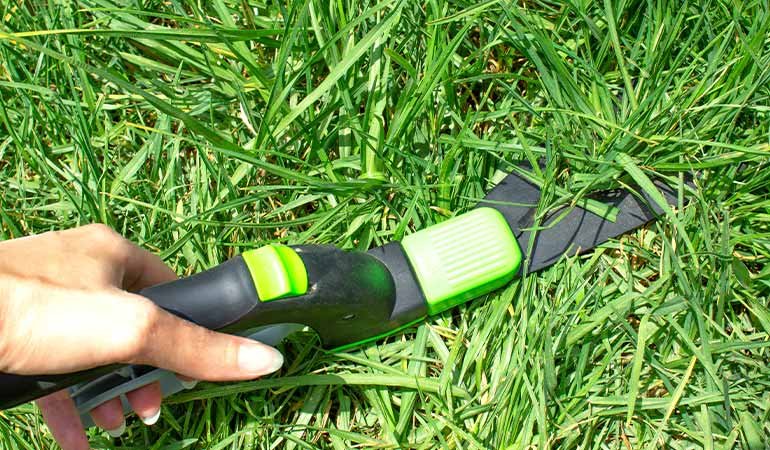
Grass shears look like oversized scissors made for lawn edges. They work best on short grass and light touch-ups around walkways, trees, and garden beds. If you have a small patch under 100 square feet, this can be a clean and simple solution.
Use short snips and keep the blades close to the base of the grass. Do not try to cut too much at once. Thick clumps will bend instead of cut, and that wastes time. A kneeling pad helps a lot if you are working close to the ground.
These tools are slow, but they are very accurate. That makes them useful where a mower would damage plants, rocks, or edging. They are also one of the quietest options, which matters in tight neighborhoods.
Hedge shears for wider thin patches
Hedge shears are not only for shrubs. They can handle thin grass patches or soft weeds when you need to cover a wider area than scissors can manage. The long blades help with a sweeping cut, especially on flat ground.
This works best when the grass is dry. Wet blades stick, and wet grass folds over instead of cutting cleanly. If the patch is uneven or filled with stems, hedge shears will feel awkward fast.
A good technique is to lift small sections of grass with one hand and cut with the other. That exposes the stem and gives a cleaner result. It also reduces the chance of dragging the blades through dirt, which dulls them faster.
Hand sickles for rougher grass
A sickle is a curved blade used with a pulling motion. It is effective for medium-height grass and mixed weeds. Many people miss this option because it looks old-fashioned, but it still works well in the right setting.
The motion takes practice. You do not chop straight down. Instead, you pull the blade in an arc through the stems. Once you get the rhythm, it can be faster than scissors for rough patches.
One practical benefit is reach. A sickle helps you work around fence lines, slopes, and corners where larger tools struggle. Still, it is not ideal for large flat lawns because the cutting path is too narrow.
Use a string trimmer for the fastest mower-free cleanup
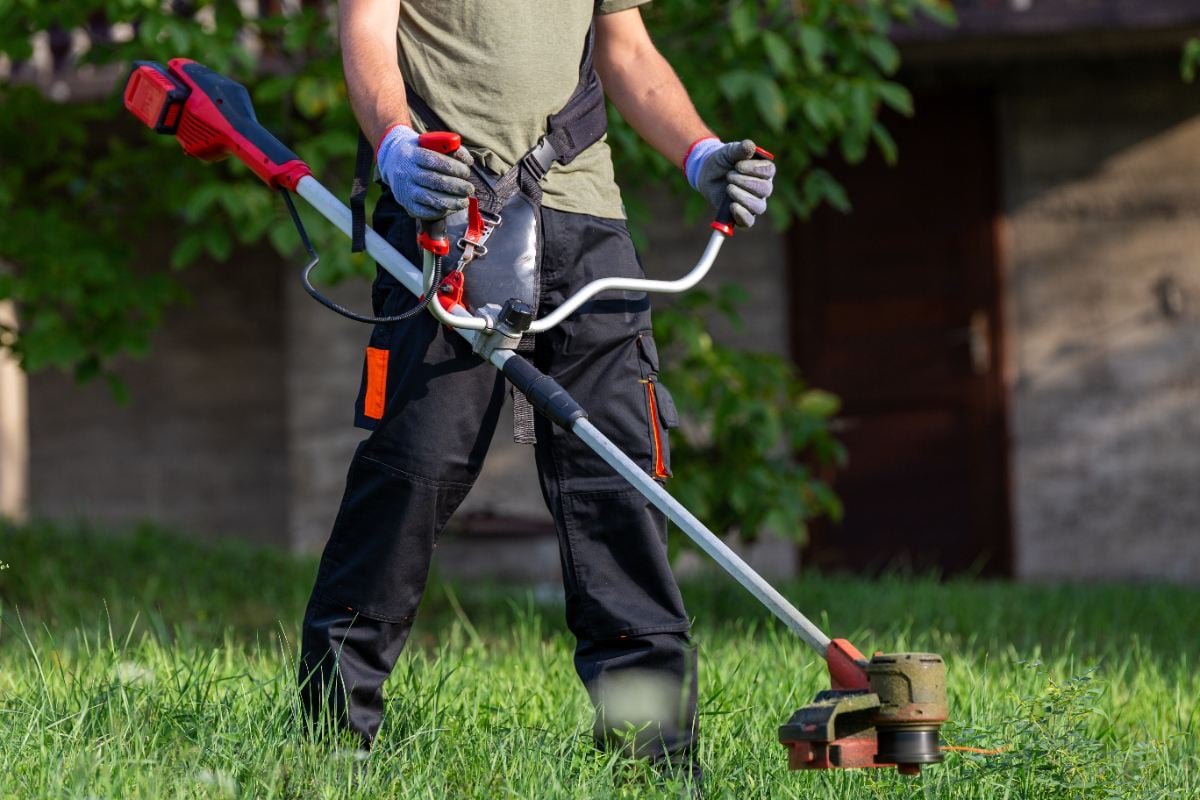
A string trimmer is one of the most effective ways to cut grass without a lawn mower. It is fast, versatile, and good for both edges and open spaces. For many homeowners, it is the best all-around backup when a mower is unavailable.
This tool uses a spinning plastic line to cut grass. It can handle light weeds, overgrowth, and uneven areas. It is also useful around mailboxes, fences, decks, and trees where a mower cannot reach.
The key is to use the right method. Most beginners swing the trimmer like a broom, which leaves uneven cuts. A steady side-to-side motion, with the cutting head just above the ground, gives much better results.
Credit: lawnmowerguru.com
When a string trimmer works best
Use it when grass is between 4 and 10 inches tall and the area is not too large. It is especially helpful for lawns with awkward borders or lots of obstacles. It also works well on slopes where pushing a mower would be difficult.
If the grass is very tall, cut in two passes. Take off the top layer first, then lower the head for the second pass. This prevents the line from jamming and keeps the motor from working too hard.
Another useful detail: thicker trimmer line is not always better. Heavier line can cut tougher growth, but it also puts more strain on the tool. Matching the line size to the trimmer matters more than going as thick as possible.
How to trim grass evenly
- Clear sticks, rocks, and toys from the area.
- Stand with your feet apart for balance.
- Hold the trimmer slightly above the soil line.
- Sweep from side to side in short, steady motions.
- Overlap each pass by a few inches.
- Take a second pass lower if the grass is still too high.
Safety matters here because trimmers can throw debris at high speed. Wear eye protection and closed-toe shoes. For manufacturer safety guidance on outdoor equipment use, the official lawn and garden outdoor power equipment safety guidance is worth reading before you start.
One detail many beginners miss is string wear. Grass near dirt or edging eats through line quickly. If your trimmer keeps stopping, the line may simply be too short, not broken.
Use long-handled cutting tools for tall or tough growth
When the grass is taller, thicker, or mixed with weeds, long-handled tools become more useful than small handheld tools. They reduce bending and let you cut more at once. They also work better when the goal is clearing, not creating a perfect lawn finish.
Scythes and sling blades
A scythe or sling blade is a traditional tool for cutting tall grass in broad sweeps. It can cover more ground than scissors and gives a cleaner cut than random chopping. For large rough patches, this can be one of the most efficient manual choices.
The blade should skim just above the ground. The motion is smooth and low, not forceful. If you swing too hard, you waste energy and dull the blade faster. A sharp blade makes a huge difference here; a dull one turns a smooth job into hard labor.
These tools are best for open spaces with few obstacles. They are not ideal around trees, fences, or rock borders. But on an open strip of overgrowth, they can be surprisingly effective.
Brush cutters for serious overgrowth
A brush cutter is more powerful than a standard trimmer and can handle heavy weeds and thick grass. It is a strong option if the lawn has been ignored for weeks or months. Some models accept different blades, which makes them more flexible than simple line trimmers.
Use this tool when the grass is dense enough to stall lighter equipment. It is also good when stems are woody or tangled. Still, it is more aggressive than most homeowners need for routine upkeep.
If you choose a brush cutter, read the tool’s manual and use the correct guard and cutting attachment. Improper setup is one of the biggest causes of poor performance and accidents. In heavy growth, take smaller bites instead of pushing through the whole patch at once.
Work in stages so the job stays manageable
One of the biggest mistakes people make is trying to cut all the grass in a single pass. That sounds efficient, but it often leads to clogging, uneven cuts, and exhaustion. Breaking the work into stages saves time in the end.
Start with the tallest sections first. Then clear the edges, and finish with the middle areas. This keeps your cutting path open and makes it easier to see where you have already worked.
Credit: lawnlove.com
Cut tall grass in layers
If the grass is very tall, do not try to cut it all down at once. Remove the top layer first, then wait a day or cut again lower. This staged approach is cleaner and less stressful on your tool.
It also reduces the chance of leaving heavy clumps behind. Those clumps can smother healthy grass underneath. That is a hidden problem many beginners do not notice until patches begin to yellow.
For extremely overgrown areas, you may need to rake the cut grass away between passes. That makes the next cut easier and improves airflow to the soil.
Keep blades and line in good shape
Sharp tools are not optional. Dull blades tear grass instead of cutting it, which leaves brown tips and makes the yard look uneven. It also takes more effort from you, which is why people assume the job is harder than it really is.
For scissors, shears, and blades, clean off sap and dirt after use. For trimmers, replace worn line before it gets too short. A tool that is in good shape can cut cleaner, faster, and with less strain.
Another overlooked point is moisture. Wet grass is heavier and clings to blades. If possible, work when the yard is dry. The result will be cleaner, and cleanup will be easier.
Reduce the work with simple ground-level techniques
Grass cutting does not begin with the tool. It begins with the yard itself. A few small changes can make no-mower cutting much easier and help you get a cleaner finish with less effort.
Clear obstacles first
Pick up branches, stones, toys, and garden tools before you start. Small objects are easy to miss, but they can damage blades or get thrown by a trimmer. Even a small stone can become a real hazard.
Check under low shrubs and around fence lines. These are common places for hidden debris. If the yard has been neglected, spend an extra 5 to 10 minutes on this step. It pays off quickly.
Work when the grass is dry
Dry grass cuts more cleanly than wet grass. Wet blades bend, clump, and stick to tools. They also create a heavier cleanup job afterward.
Late morning is often a better time than early morning, especially if dew is heavy. You want the surface dry but not burned by afternoon heat. That balance makes cutting easier and more comfortable.
Use edging to make the result look better
Even without a mower, a clean edge changes how the whole yard looks. Trimming along sidewalks, driveways, and beds gives structure to the space. A messy edge makes the lawn look unfinished even if the grass height is even.
That is why many people use a trimmer for the first pass and a smaller handheld tool for detail work. The combination gives a neater look than either tool alone.
If you want a sharper result, remove clippings from the edges after cutting. Grass left on hard surfaces makes the job look less tidy, even when the cut itself is good.
Know the common mistakes before you start
Most no-mower problems come from rushing or using the wrong tool for the job. The method is usually not the issue. The setup is.
One common mistake is using a tiny tool on too much grass. That turns a 20-minute job into a two-hour one. Another is cutting too low and hitting soil, which dulls the blade and leaves the lawn stressed.
People also often ignore safety gear because handheld tools look harmless. A trimmer line or blade can still throw dirt, wood chips, and stones. Basic eye protection is not overkill. It is part of doing the job correctly.
One more mistake is leaving clumps behind. Thick piles of cut grass can block sunlight and trap moisture. If the cut material is heavy, rake it up or spread it thinly so the soil can breathe.
Credit: blog.fantasticgardeners.co.uk
Choose the simplest method that fits the situation
If you only need to tidy a small patch, grass shears may be the easiest answer. If you need to handle edges, slopes, or a medium yard, a string trimmer is usually the most practical choice. For tall rough grass, a scythe, sling blade, or brush cutter works better than trying to force a small tool through heavy growth.
The most effective way to think about how to cut grass without a lawn mower is not by tool name alone. It is about matching the tool to the grass height, area size, and amount of cleanup needed. That simple match saves time and gives a cleaner result.
If the grass is too dense, too tall, or too wide for manual tools, it may be worth cutting in sections over two days. That is often smarter than trying to finish everything in one exhausting session.
Frequently asked questions
What is the easiest way to cut grass without a mower?
For most small jobs, a string trimmer is the easiest option. It covers more ground than scissors and works on edges, corners, and uneven areas. For tiny patches, grass shears may be even simpler.
Can I cut tall grass without a mower?
Yes, but tall grass is harder to manage. A scythe, sling blade, or brush cutter works better than small handheld tools. For very tall grass, cut in stages instead of trying to remove everything at once.
Is it safe to use scissors or shears on grass?
Yes, if you use them carefully and keep the area clear of debris. They are best for small sections and edge cleanup. Wear gloves if you are working near rough stems or thorny weeds.
Will a string trimmer damage my lawn?
It can if you cut too low or stay in one place too long. Hold the head slightly above the soil and use smooth passes. A trimmer is safer for the lawn when you remove grass in light layers.
What should I do with the cut grass afterward?
If the clippings are light, you can leave a thin layer on the lawn. If the clippings are thick or clumpy, rake them up. Heavy clumps can block sunlight and make the lawn look patchy.